
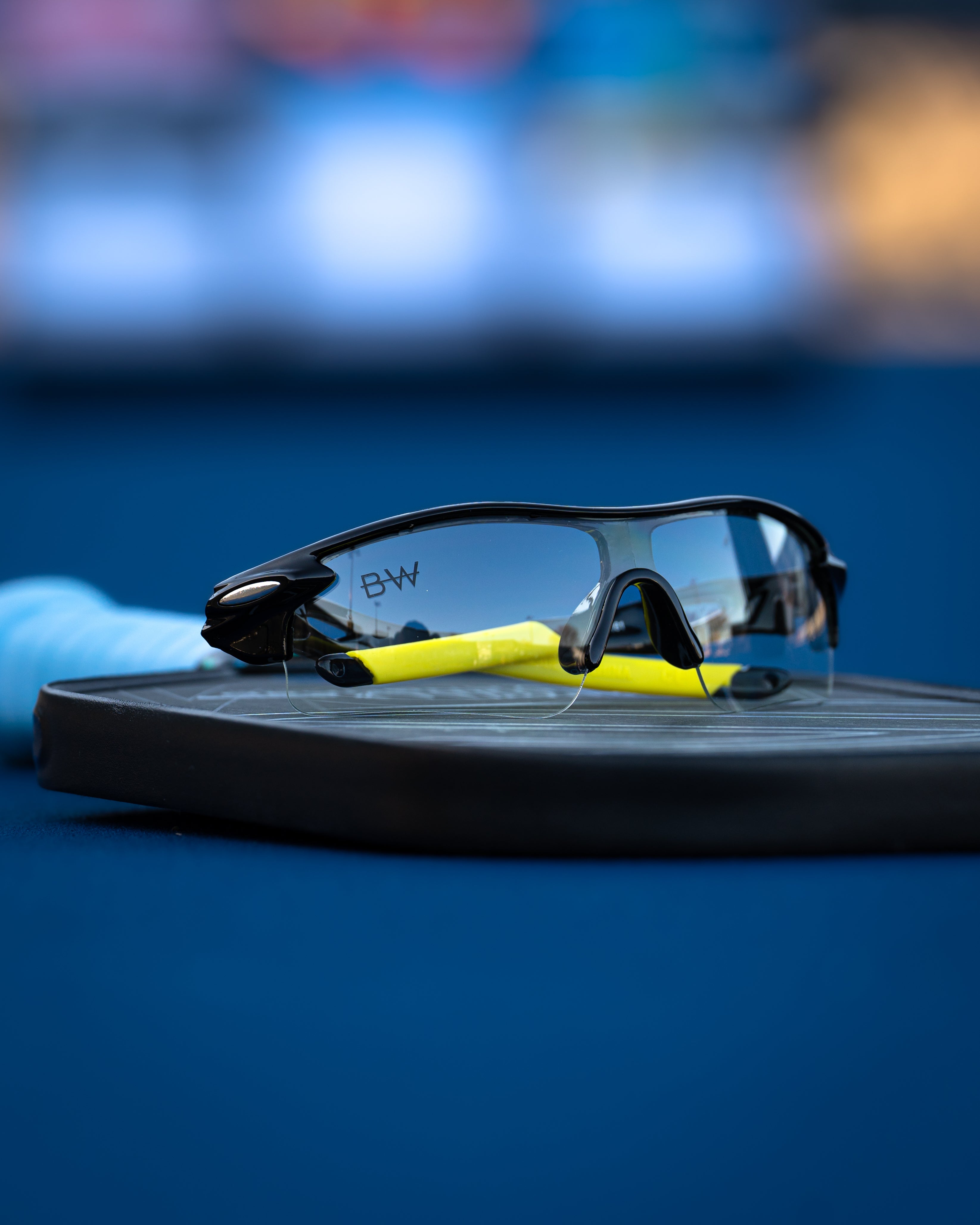
👓 Why Blinded Wear Leads in Women's Eyewear: Style, Performance & Comfort
Share
Why Blinded Wear Stands Out in Women’s Sports Eyewear: Style, Comfort & Performance
Women’s sports eyewear should do more than look good. Whether you play pickleball, run, train outdoors, or simply want eyewear that fits an active lifestyle, the right pair should balance comfortable wear, sports-focused design, appropriate lens choices, and a style you actually want to put on.
Blinded Wear approaches women’s sports eyewear with that balance in mind. Rather than treating performance and appearance as competing priorities, the brand offers lightweight sports frames, impact-resistant lenses, non-polarized lenses, prescription and non-prescription options, and pickleball-focused designs across a range of styles.
For women who need prescription correction, Blinded Wear also includes high-index prescription lenses at no additional high-index upcharge. For women who do not need corrective power, non-RX sports eyewear provides a more direct path to active-use glasses.
This 2026 guide explains what women should actually look for in sports eyewear, how fit and comfort affect the decision, when prescription eyewear makes sense, and how Blinded Wear combines performance-focused features with style without relying on exaggerated promises.
Shop RX Pickleball Eyewear | Shop Non-RX Pickleball Eyewear | Find Your Pair With the Quiz
Quick Answer: What Should Women Look for in Sports Eyewear?
Women shopping for sports glasses should prioritize fit, comfort, lens suitability, prescription needs, impact resistance, frame weight, and personal style. The best pair is not automatically the one marketed most aggressively toward women or the one with the longest feature list.
A better approach is to find eyewear that works for your face, your vision, your sport, and the environment where you will actually wear it.
| Consideration | Why It Matters |
|---|---|
| Fit | Face shape and frame preferences vary, so the eyewear should feel appropriate on the individual wearer |
| Comfort | Especially important during long pickleball sessions, workouts, and extended outdoor wear |
| Frame weight | Lightweight sports frames can be useful during active and extended wear |
| Lens choice | The lens should make sense for the environment and lighting conditions |
| Prescription availability | Essential for women who need corrective vision while playing or exercising |
| Impact resistance | Worth considering when eyewear will be used in an active environment |
| Style | A pair you enjoy wearing is more practical than eyewear you constantly leave at home |
Blinded Wear combines these priorities through sports-focused eyewear for recreational and competitive players while giving shoppers both RX and non-RX paths.
Is Women’s Sports Eyewear Actually Different?
The label “women’s eyewear” can describe style, sizing, merchandising, or the audience a product is designed to appeal to. It should not be interpreted as proof that every woman has the same facial dimensions or needs one specific frame shape.
Women’s faces vary significantly. Some women prefer smaller frames, some prefer larger coverage, and others may find traditionally unisex designs fit them best. That makes individual fit more useful than relying on broad assumptions about gender alone.
When evaluating sports eyewear, ask practical questions:
- Does the frame feel comfortable on my face?
- Does it feel appropriate while I move?
- Will I be comfortable wearing it throughout a full playing session?
- Does the lens make sense for where I play?
- Do I need prescription correction?
- Does the style fit what I actually like wearing?
- Are the product features I care about clearly stated and verified?
This approach is more useful than assuming all women require narrower bridges, specific cheek clearance, or another universal design characteristic.
Why Fit Matters in Women’s Sports Glasses
Fit becomes particularly noticeable once you start moving. Eyewear that feels acceptable while standing in front of a mirror may feel very different during a pickleball rally, run, workout, or other activity.
The goal is not necessarily to find the tightest possible frame. Instead, look for a balance between stability and comfort.
Test the Frame During Movement
Move your head from side to side, look down and back up, and simulate some of the motion involved in your activity. Notice whether you repeatedly feel the need to reposition the frame.
Check for Uncomfortable Pressure
A frame can feel secure but still create pressure that becomes distracting during longer wear. Pay attention to how the eyewear feels around your nose, ears, and sides of your head.
Consider the Length of Your Typical Session
If you routinely spend several games on a pickleball court or remain outdoors for long periods, evaluate the frame with extended wear in mind. Blinded Wear uses lightweight sports frames designed for active use and comfort during extended matches.
Remember That Fit Is Individual
No single frame can be guaranteed to fit every woman. Face dimensions, preferred coverage, frame shape, and personal comfort all influence what feels right.
Comfort Is a Performance Feature, Too
Performance eyewear discussions often focus heavily on lens technology, but comfort can be just as relevant to the actual wearing experience.
If glasses become uncomfortable, repeatedly need adjustment, or feel distracting, the wearer may be less inclined to keep them on. For women who spend substantial time playing pickleball or participating in other activities, that makes comfort a practical buying criterion rather than an afterthought.
When comparing women’s sports eyewear, evaluate:
- Overall frame weight
- How the frame rests on your face
- Whether pressure develops during longer wear
- How the glasses feel while moving
- Whether the frame or lens shape feels distracting
- Whether you would realistically want to wear the pair for an entire session
Lightweight construction can contribute to comfort, but weight alone does not determine fit. The complete frame needs to work for the individual wearer.
Do Women Have to Choose Between Style and Performance?
No. Sports eyewear can be functional without looking purely utilitarian. Style is a legitimate part of the buying decision, particularly for eyewear that may be worn both on and off the court.
Some women prefer a bold athletic look. Others want a cleaner or more understated design. Color, frame shape, lens appearance, and overall silhouette can all influence which pair someone actually enjoys wearing.
Blinded Wear offers a range of sports-focused designs so shoppers can compare aesthetics without ignoring practical considerations such as comfort, prescription needs, lens choice, and active use.
The most useful approach is to treat style as one part of the decision rather than the entire decision.
| Style Question | Performance Question |
|---|---|
| Do I like the frame shape? | Does that shape feel comfortable during movement? |
| Do I like the lens appearance? | Is the lens appropriate for my normal lighting conditions? |
| Does the eyewear match my personal style? | Does it meet my vision needs? |
| Would I wear this outside the court? | Would I also want to wear it throughout a full match? |
| Does the product look performance-focused? | Are the performance features actually verified? |
What Should Women Look for in Pickleball Eyewear?
Pickleball places players in an active court environment involving repeated lateral movement, head movement, quick exchanges, and changing visual conditions. Women choosing eyewear for pickleball should therefore think beyond ordinary fashion sunglasses.
Useful considerations include:
- Vision correction: Determine whether you need prescription lenses while playing.
- Fit: Choose a frame that feels appropriate during actual movement.
- Comfort: Consider how the glasses feel throughout extended matches.
- Lens environment: Match the lens to indoor, outdoor, bright, shaded, or lower-light conditions.
- Impact resistance: Consider lens construction for active court use.
- Frame weight: Lightweight sports frames may be preferable during longer sessions.
- Verified specifications: Do not assume features based on appearance or marketing language.
- Style: Choose eyewear you actually enjoy wearing.
Blinded Wear designs eyewear with pickleball players in mind, including both recreational and competitive players.
Prescription vs. Non-Prescription Women’s Sports Eyewear
The first major decision for many shoppers is whether the eyewear needs to provide prescription vision correction.
RX and non-RX do not describe quality levels. Prescription eyewear provides corrective power based on the wearer’s eyeglass prescription. Non-prescription eyewear does not contain corrective prescription power.
| Question | Prescription Sports Eyewear | Non-Prescription Sports Eyewear |
|---|---|---|
| Provides corrective prescription power? | Yes | No |
| Best starting point for | Women who need corrective lenses during the activity | Women who do not need corrective power in their eyewear |
| Can be sports-focused? | Yes | Yes |
| Can prioritize style? | Yes, within appropriate prescription compatibility | Yes |
| Available from Blinded Wear? | Yes | Yes |
If you need prescription correction while playing, start with the Blinded Wear RX pickleball eyewear collection. If you do not need corrective power in your glasses, explore the non-RX pickleball eyewear collection.
What Women Should Know About Prescription Sports Eyewear
Needing prescription correction should not mean giving up sports-focused eyewear or personal style. RX sports glasses combine corrective power with a frame intended for active use.
This can be particularly useful for women who normally wear glasses and prefer not to rely on contact lenses while playing pickleball or participating in other activities.
High-Index Prescription Lenses Are Included
Blinded Wear includes high-index prescription lenses without an additional high-index upcharge.
High-index refers to a category of prescription lens materials. Depending on the prescription and lens design, high-index materials can allow certain prescriptions to be made thinner than they would be with some lower-index alternatives.
High-index should not be treated as one universal numerical lens index or as a guarantee that every prescription will produce the same lens thickness.
Compare the Complete RX Price
Prescription shoppers should compare more than the advertised starting price of a frame. Ask what is included in the final configuration you actually need.
When comparing prescription sports eyewear, consider:
- Whether prescription lenses are included in the displayed price
- Whether high-index lenses create an additional charge
- Whether the frame can accommodate your prescription needs
- The intended use of the eyewear
- The current return and replacement terms
Blinded Wear’s no-additional-cost high-index inclusion can therefore be particularly relevant when comparing the total value of RX sports eyewear.
How Do You Order Blinded Wear Prescription Eyewear?
The Blinded Wear RX ordering process begins with your eyeglass prescription.
Customers upload a clear picture of their eyeglass prescription before purchasing. The prescription information can then be associated with the custom RX order.
Before submitting your prescription:
- Make sure the image is clear and readable.
- Avoid cropping out important prescription information.
- Confirm that you are submitting the prescription you intend to use.
- If you are uncertain whether your prescription reflects your current vision needs, consult an eye-care professional.
Do not guess at prescription values simply to complete an online order. Corrective eyewear should be based on appropriate prescription information.
What If You Have Astigmatism?
Astigmatism is a refractive error that can be included in an eyeglass prescription. Women who require astigmatism correction during sports should consider that need when shopping for RX eyewear.
A sports-focused frame by itself does not replace prescription correction. Likewise, a non-prescription lens does not correct astigmatism simply because it is marketed for active use.
If you are unsure what correction you require or whether a particular frame is appropriate for your prescription, consult your eye-care professional and verify prescription compatibility before ordering.
Prescription Sports Glasses vs. Contacts With Non-RX Eyewear
Women who require vision correction generally have more than one possible approach to sports eyewear. Some prefer prescription sports glasses, while others use contact lenses for correction and wear non-prescription sports eyewear over them.
Neither approach is universally superior.
| Setup | Where Correction Comes From | Primary Consideration |
|---|---|---|
| RX sports eyewear | The sports-eyewear lenses | Prescription compatibility, frame fit, comfort, and lens choice |
| Contacts + non-RX sports eyewear | The contact lenses | Contact suitability and comfort plus the fit of the sports eyewear |
| Non-RX sports eyewear without contacts | No corrective power | Appropriate for someone who does not need correction during the activity |
If you are considering contact lenses or have questions about using them during sports, an eye-care professional can provide guidance based on your individual eyes and prescription.
Why Does Blinded Wear Use Non-Polarized Lenses?
Blinded Wear uses non-polarized lenses, meaning the lenses do not add a polarization filter.
Polarized lenses are designed to reduce certain reflected glare. Non-polarized lenses preserve natural visual information without adding that filter, an approach some court players may prefer.
That distinction should be presented accurately. It would be too broad to claim that polarized lenses universally harm depth perception or that non-polarized lenses automatically make an athlete perform better.
Polarization is also separate from other lens characteristics. Whether a lens is polarized or non-polarized does not by itself tell you:
- Whether the lens is prescription
- Whether the lens is impact resistant
- How dark the lens is
- Whether it carries a specific UV rating
- Whether it meets a particular safety certification
Women comparing sports eyewear should evaluate the complete lens rather than using polarization as a universal quality score.
Why Impact Resistance Matters for Active Eyewear
Sports and active environments can expose eyewear to movement and impacts that may not occur during ordinary casual wear. Lens construction is therefore worth considering when choosing eyewear for pickleball and other activities.
Blinded Wear uses impact-resistant lenses in its performance-focused eyewear.
Impact resistant does not mean impact proof, indestructible, or automatically certified to a specific protective standard. If your sport, workplace, or other activity requires eyewear meeting a particular certification, verify that exact certification before purchasing.
This distinction matters because terms such as “sports eyewear,” “performance glasses,” and “impact resistant” should not be used as substitutes for an unstated certification.
Women’s Sports Eyewear for Indoor vs. Outdoor Play
The environment can change which lens you prefer even when the frame and prescription requirements remain the same.
Indoor Sports and Pickleball
Indoor facilities often provide less available light than bright outdoor courts. Some players therefore prefer clear or lighter-looking eyewear rather than a dark sun tint.
Outdoor Sports and Pickleball
Outdoor players may encounter direct sunlight, cloud cover, changing shadows, and different levels of visible brightness throughout a session. A lens should be selected with those conditions in mind.
If UV filtering is important for your outdoor use, verify the UV specifications for the exact product and lens rather than assuming a universal UV rating based on lens darkness, appearance, or product category.
What Blinded Wear Features Can Women Actually Compare?
Sports-eyewear marketing can quickly become crowded with claims about coatings, materials, optical technologies, and performance advantages. A stronger buying decision separates verified features from assumptions.
For Blinded Wear, verified brand-level features include:
- Prescription availability
- Non-prescription eyewear options
- High-index prescription lenses at no additional high-index upcharge
- Lightweight sports frames
- Impact-resistant lenses
- Non-polarized lenses
- Pickleball-focused designs
- Comfort for extended matches and active wear
- Options suitable for recreational and competitive players
- 50% lifetime replacement support for eligible broken eyewear, subject to current policy terms
Features such as a specific UV rating, anti-fog coating, anti-scratch coating, enhanced-contrast technology, specialized grip material, or safety certification should be verified for the exact product before being treated as part of the purchase decision.
Blinded Wear Women’s Sports Eyewear to Start Comparing
There is no single Blinded Wear frame that every woman needs. Instead, the following styles from the original women’s-eyewear guide can serve as starting points for comparison. Evaluate the current product pages for exact specifications, appearance, lens configuration, and fit considerations.
High Performance Outdoor Sunglasses
High Performance Outdoor Sunglasses provide one Blinded Wear style to consider for active use. Review the current product page for the exact lens specifications rather than assuming features from the product name alone.
Highlight Pickleball Sunglasses
Highlight Pickleball Sunglasses are another option to compare if pickleball is your primary activity. Focus on current verified product details, fit preferences, and lens configuration rather than assuming a universal performance advantage.
Miami Coast Pickleball Eyewear
Miami Coast Pickleball Eyewear offers a different aesthetic for shoppers comparing Blinded Wear pickleball styles. Consider how its current configuration fits your personal style and intended use.
Serpent Strike Pickleball Eyewear
Serpent Strike Pickleball Eyewear provides another sports-focused style to compare. Check the exact product specifications instead of relying on unsupported claims about superior protection or guaranteed visual performance.
Roses Quartz RX Prescription Sunglasses
Roses Quartz RX Prescription Sunglasses provide an RX option for shoppers who want prescription correction alongside a distinct Blinded Wear style.
These are starting points rather than a universal ranking. The right pair depends on your prescription needs, face, activity, environment, comfort preferences, and style.
Find the Right Blinded Wear Sports Eyewear for You
If you are not sure which style to start with, narrow the decision by vision requirements first and aesthetics second.
| What You Need | Where to Start |
|---|---|
| I need prescription correction | Shop RX Eyewear |
| I do not need prescription correction | Shop Non-RX Eyewear |
| I primarily need clear lenses | Browse Clear Lenses |
| I want help narrowing my choices | Take the Eyewear Quiz |
| I want a broader pickleball comparison | View the 2026 Pickleball Glasses Guide |
Once you know whether you need RX or non-RX eyewear, you can compare fit, lens choice, activity, and style without turning the decision into a competition over the longest feature list.
How Should Women Choose the Right Lens for Sports Eyewear?
The frame gets most of the visual attention when shopping online, but the lens can have just as much influence on the wearing experience. Women choosing sports eyewear should evaluate the lens based on where they play, how much visible light is available, whether prescription correction is needed, and which verified lens features matter to them.
There is no universal lens that works best for every athlete, every court, or every outdoor condition.
Start With the Environment
A lens that feels comfortable during a bright afternoon outdoors may not be the lens you prefer inside a sports facility. Likewise, a clear or lighter-looking lens that feels appropriate indoors may not reduce enough visible brightness for your preferences during intense outdoor sunlight.
Instead of choosing a lens because it is labeled “performance” or because a certain color is popular, think about the conditions in which you will actually wear it.
Separate Lens Appearance From Lens Specifications
A dark, mirrored, clear, or colorful lens does not automatically tell you all of its technical characteristics. Tint, polarization, prescription correction, impact resistance, and UV filtering are separate considerations.
If a specific feature is essential to your purchase, verify that feature for the exact lens configuration rather than inferring it from appearance.
When Does Clear Sports Eyewear Make Sense for Women?
Clear sports eyewear can make sense for women who play indoors, participate in evening activities, or simply do not need a dark sun tint for the environment in which they use their glasses.
It is important to remember that clear does not mean non-prescription. A clear-looking lens can provide prescription correction, while another clear lens can contain no corrective power.
Women who need RX vision correction for indoor pickleball or another activity should therefore look for a prescription solution appropriate to the environment rather than assuming all prescription sports glasses need to be sunglasses.
What Should Women Look for in Outdoor Sports Sunglasses?
Outdoor sports introduce variables such as direct sunlight, cloud cover, reflections, shade, and changing brightness throughout the day. The best lens for one environment may not be the lens you prefer in another.
Women shopping for outdoor sports eyewear should consider:
- How bright their normal playing environment is
- How often they move between sun and shade
- Whether prescription correction is needed
- Frame comfort during heat and extended wear
- Impact resistance for active use
- Verified UV specifications if UV filtering is important
- Whether the lens is polarized or non-polarized
- Whether the style works for both sports and everyday use, if desired
Do not use lens darkness as a substitute for verifying UV information. A darker lens primarily changes visible-light transmission; it does not, by appearance alone, prove a particular UV rating.
What Should Women Know About UV Claims in Sports Sunglasses?
UV filtering can be an important consideration for outdoor eyewear, but shoppers should distinguish between verified specifications and assumptions.
Several characteristics are commonly confused with UV protection:
- Darkness: a dark tint reduces visible light but does not by itself prove a particular UV rating.
- Polarization: polarization reduces certain reflected glare and is separate from UV filtering.
- Mirror appearance: a mirrored-looking lens does not establish a specific UV specification by appearance alone.
- Prescription correction: RX power and UV filtering are separate lens characteristics.
- Sports styling: the shape of the frame does not establish a UV rating.
If UV filtering is a priority for you, confirm the stated UV specifications for the exact product and lens you intend to order.
Polarized vs. Non-Polarized Women’s Sports Sunglasses
Polarization is often treated as though it is automatically an upgrade, but the better question is whether that lens approach matches your intended use and personal preferences.
Polarized lenses use a filter designed to reduce certain reflected glare. Non-polarized lenses do not use that filter.
Blinded Wear uses non-polarized lenses, preserving natural visual information without adding a polarization filter. Some court players may prefer that setup.
However, women should be cautious about overly broad claims on either side. It is not accurate to say that polarization universally harms depth perception, and it is not accurate to promise that non-polarized lenses automatically improve court performance.
| Lens Approach | What It Means | What It Does Not Automatically Mean |
|---|---|---|
| Polarized | Uses a filter designed to reduce certain reflected glare | It does not automatically mean better sports performance or a particular UV rating |
| Non-polarized | Does not add a polarization filter | It does not automatically guarantee better depth perception or ball tracking |
Can Sports Sunglasses Help Women See Better During Pickleball?
The answer depends on what is making vision difficult in the first place.
If a woman requires prescription correction, appropriate RX lenses can provide the corrective power she needs while playing. If strong visible brightness is uncomfortable outdoors, an appropriate tint may make the environment more comfortable to view.
That is different from claiming that sunglasses automatically improve reaction time, accuracy, depth perception, or athletic ability.
Sports eyewear can support an appropriate visual experience, but performance depends on many factors, including:
- Individual visual ability
- Prescription needs
- Training
- Technique
- Reaction and anticipation
- Playing environment
- Experience
The goal of eyewear is therefore not to manufacture athletic ability. It is to avoid creating unnecessary visual or physical distraction while providing the lens configuration the wearer needs.
Do Women Need Smaller Sports Glasses?
Not necessarily. It is too broad to assume every woman needs a smaller or narrower frame.
Some women may prefer compact frames, while others may prefer larger lens coverage or a wider sports design. Face shape and size vary considerably among women, just as they do among men.
Rather than buying purely according to a gender label, evaluate:
- Overall frame dimensions when available
- How the frame feels around the sides of your head
- Where the frame sits on your nose
- Whether the eyewear feels stable during movement
- Whether the frame causes uncomfortable pressure
- Whether you like the amount of lens coverage
A frame that technically fits within a “women’s” category is not automatically the right fit for every woman.
Should Face Shape Determine Which Sports Glasses You Buy?
Face shape can help explain why someone prefers the appearance of one frame over another, but it should not override practical fit and comfort.
Style guides sometimes create strict rules suggesting certain faces must wear certain frame shapes. Those rules can be useful as inspiration, but they are not requirements.
For sports eyewear, ask whether the frame:
- Feels comfortable
- Feels appropriate during movement
- Provides the amount of coverage you prefer
- Works with your prescription requirements, if applicable
- Matches your preferred aesthetic
If a frame checks those boxes, you do not need to reject it because a general fashion guide says your face shape should wear something else.
How Style Influences Women’s Sports Eyewear Choices
Style has practical value because eyewear only helps when someone is willing to wear it consistently.
Women may prefer very different aesthetics:
- Minimal and understated
- Bold and athletic
- Bright or colorful
- Neutral and versatile
- Sport-specific
- Frames that transition easily from the court to everyday wear
There is no reason that performance-focused eyewear has to follow one aesthetic. Blinded Wear offers multiple frame styles, allowing shoppers to compare appearance alongside practical factors such as lens configuration and vision correction.
The important distinction is that style should complement functionality rather than replace it.
What Makes Sports Eyewear Comfortable for Extended Wear?
Women who spend several hours at a tournament, open-play session, outdoor event, or active day may care about extended-wear comfort as much as initial fit.
A few factors can influence how a pair feels over time:
Frame Weight
Blinded Wear uses lightweight sports frames, which can be useful when eyewear is worn for longer periods.
Pressure Distribution
A frame should not need to feel painfully tight to remain usable during activity. Pressure that seems minor initially may become more noticeable after extended wear.
Movement
Repeatedly repositioning a frame can become distracting. Evaluate the eyewear while moving rather than judging fit solely while sitting or standing still.
Lens Suitability
Comfort is not purely physical. A lens that is excessively dark for the environment or otherwise does not suit the available light can also make the wearing experience less comfortable.
No feature guarantees all-day comfort for every face, so individual fit remains important.
Can Women Use Pickleball Eyewear for Other Sports and Activities?
Potentially, depending on the eyewear and activity. Lightweight sports frames and impact-resistant lenses can be relevant beyond pickleball, but each activity has its own demands.
A pair used for running, walking, recreational training, or another activity should still be evaluated for the environment and specific use.
| Activity | Useful Eyewear Considerations |
|---|---|
| Pickleball | Movement, comfort, lens conditions, prescription needs, and impact resistance |
| Running | Frame comfort during repeated movement and suitability for outdoor conditions |
| Walking | Comfort, style, and lens choice for the environment |
| Outdoor training | Fit, lens conditions, and verified outdoor specifications |
| Indoor activities | Clear or environment-appropriate lenses rather than unnecessary dark tint |
If an activity requires specialized certified protective eyewear, confirm that requirement separately rather than assuming general sports glasses meet it.
What Makes Women’s Sports Eyewear a Good Value?
Value is not simply the lowest purchase price. It is the relationship between price and what you actually receive.
For sports eyewear, value may include:
- Comfort during regular use
- Lightweight construction
- Impact-resistant lenses
- Prescription availability
- Lens options suitable for the intended environment
- A frame style you enjoy wearing
- Replacement support
- The total price of RX customization when applicable
Prescription customers should pay particular attention to the total cost because RX pricing can differ substantially depending on what a seller includes as standard versus what is treated as an upgrade.
Blinded Wear includes high-index prescription lenses at no additional high-index upcharge, which makes that inclusion part of the value comparison for women shopping RX sports glasses.
Do Women Need Expensive Sports Glasses?
No specific price automatically guarantees that sports eyewear will be right for you.
A more expensive pair may include features or construction that matter to a particular shopper, but price itself does not guarantee better fit, a more appropriate lens, greater comfort, or compatibility with your prescription.
Likewise, shopping based only on the lowest price can overlook factors that matter during regular use.
Rather than using price as the primary quality signal, compare:
- The features you actually need
- The total RX price, if applicable
- Frame fit and comfort
- Lens suitability
- Verified specifications
- Return and replacement support
Common Myths About Women’s Sports Eyewear
| Myth | More Accurate Explanation |
|---|---|
| Every woman needs a smaller frame | Face dimensions vary, so fit should be evaluated individually |
| Women’s sports glasses are just fashion sunglasses | Sports-focused eyewear can prioritize active-use considerations while still offering style |
| Prescription eyewear has to look medical | RX vision correction and frame style are separate considerations |
| Polarized always means better | Polarization is a lens characteristic, not a universal quality ranking |
| Non-polarized automatically improves depth perception | This is too broad; individual visual performance depends on many factors |
| Darker lenses always provide more UV protection | Visible tint and UV filtering are separate characteristics |
| Impact resistant means unbreakable | Impact resistance does not mean impact proof |
| Sports eyewear automatically meets a safety standard | A specific certification should be explicitly verified |
| The most expensive pair must fit best | Price cannot determine individual fit or comfort |
8 Mistakes to Avoid When Buying Women’s Sports Eyewear
1. Choosing Based Only on the “Women’s” Label
Use the label as a starting point, not a guarantee of fit. Individual frame dimensions and comfort matter more.
2. Prioritizing Style While Ignoring Fit
A frame can look excellent and still feel distracting during a full match or workout. Evaluate appearance and active-use comfort together.
3. Ignoring Prescription Needs
If you require corrective lenses while playing, non-RX eyewear does not provide that correction.
4. Assuming Dark Means Better Outdoors
Choose tint according to actual visible-light conditions rather than automatically selecting the darkest lens.
5. Assuming Every Product Has the Same Features
Specifications can vary by model and lens. Verify features that matter for the exact configuration you are considering.
6. Treating Marketing Terms as Certifications
Terms such as “sports,” “performance,” or “impact resistant” should not be interpreted as proof of an unstated safety certification.
7. Comparing RX Frames Only by Starting Price
Prescription shoppers should compare the total price of the finished eyewear and what is included.
8. Buying Eyewear You Do Not Actually Like Wearing
Comfort and appearance both matter. Even technically suitable glasses provide little value if they remain unused because you dislike wearing them.
How Does Blinded Wear Support Women’s Eyewear After Purchase?
Long-term support can be part of the value of sports eyewear, particularly when the glasses are used frequently in active environments.
Blinded Wear provides a 50% lifetime replacement warranty for eligible eyewear that breaks, subject to the current policy terms.
This should not be interpreted as an unconditional free replacement program. Customers should review the current policy before purchasing so they understand the applicable terms and eligibility requirements.
Women’s Sports Eyewear Buying Checklist
Before choosing your next pair, work through the decision in a practical order.
- Determine whether you need RX or non-RX eyewear.
- Identify the sport or activity where you will wear the glasses most.
- Consider the lighting conditions you encounter most often.
- Choose a frame size and shape based on individual fit rather than gender assumptions.
- Evaluate comfort during movement and extended wear.
- Consider impact resistance for active use.
- Choose polarized or non-polarized lenses according to your preferences and environment.
- Verify UV specifications if UV filtering is an important requirement.
- Check product-specific features rather than assuming every model is identical.
- Compare the complete prescription price if you need RX lenses.
- Review current return and replacement terms.
- Choose a style you are genuinely excited to wear.
Which Blinded Wear Women’s Eyewear Should You Explore First?
Your best starting point depends primarily on whether you need prescription correction and the environment where you plan to wear the eyewear.
| Your Situation | Best Starting Point |
|---|---|
| I need prescription correction during pickleball or sports | Browse RX Sports Eyewear |
| I see clearly without prescription correction | Browse Non-RX Sports Eyewear |
| I primarily play indoors or want a clear lens | Explore Clear Lenses |
| I am not sure which design fits my needs | Take the Pickleball Sunglasses Quiz |
| I want a broader pickleball eyewear comparison | Explore the 2026 Pickleball Glasses Guide |
Once those practical requirements are clear, style becomes much easier to compare because you are choosing among eyewear that already fits the way you intend to use it.
Women’s Sports Eyewear FAQ
What makes sports eyewear good for women?
Good women’s sports eyewear should fit comfortably, feel appropriate during movement, match the wearer’s vision needs, and use a lens suited to the activity and environment. Style can also matter, but it should complement fit and function rather than replace them.
Do women need smaller sports glasses?
Not necessarily. Women’s face sizes and shapes vary widely, so it is better to compare actual fit, comfort, and frame dimensions than assume every woman needs a narrow or small frame.
Can women wear unisex sports eyewear?
Yes. If a unisex frame fits comfortably and works for the intended activity, there is no reason a woman cannot wear it. The most important factors are fit, vision needs, lens suitability, and comfort.
Are Blinded Wear glasses available with prescription lenses?
Yes. Blinded Wear offers prescription sports and pickleball eyewear for customers who need corrective vision while playing or participating in other activities.
Does Blinded Wear charge extra for high-index prescription lenses?
Blinded Wear includes high-index prescription lenses at no additional high-index upcharge. High-index is a category of prescription lens materials and should not be interpreted as one universal numerical index across every prescription.
How do I order Blinded Wear prescription eyewear?
Customers upload a clear picture of their eyeglass prescription before purchasing. The prescription information can then be associated with the custom RX order.
Are Blinded Wear lenses polarized?
Blinded Wear uses non-polarized lenses. That means the lenses do not add a polarization filter. This should not be interpreted as a guarantee of improved depth perception or better athletic performance.
Is non-polarized eyewear good for pickleball?
Non-polarized eyewear can be a valid choice for pickleball. Some court players may prefer preserving natural visual information without a polarization filter, but the best choice still depends on the individual player and environment.
Does darker eyewear mean better sun protection?
No. Lens darkness affects visible-light transmission, but it does not by itself prove a specific UV rating. If UV filtering matters to you, verify the exact lens specification.
Are sports glasses supposed to be tight?
They should feel stable enough for the intended activity without creating uncomfortable pressure. Tighter does not automatically mean better.
Can women use sports eyewear for both pickleball and everyday use?
Potentially, yes. Some women prefer frames that work both during activity and for casual wear. Whether one pair works well for both depends on fit, lens choice, prescription needs, and personal style.
Do clear lenses work for women’s sports eyewear?
Yes. Clear lenses may be useful indoors, in evening settings, or in other lower-light environments. A clear lens can be prescription or non-prescription.
Do I need prescription sports glasses if I already wear contacts?
Not necessarily. Some women wear contacts for vision correction and use non-RX sports eyewear over them. Others prefer prescription sports glasses instead. The better option depends on your individual comfort and vision needs.
Are impact-resistant lenses the same as certified safety glasses?
No. Impact resistance is a lens characteristic, while certified protective eyewear may need to meet specific standards. Do not assume certification unless it is explicitly stated.
Which Women’s Sports Eyewear Setup Makes Sense for Different Situations?
Different women may need completely different eyewear even if they participate in the same sport. The most useful choice depends on the person rather than a generic “best for women” label.
| Situation | What to Consider |
|---|---|
| Outdoor pickleball player who needs glasses | Prescription compatibility, lens suitability for outdoor conditions, comfort, fit, and impact resistance |
| Indoor player with naturally clear vision | Non-RX clear or lighter-looking sports eyewear may be the most relevant starting point |
| Player who wears contacts | Non-RX sports eyewear may work over contacts, depending on comfort and individual needs |
| Woman who wants one pair for sports and casual wear | Balance activity-specific fit with a style and lens configuration suitable for everyday use |
| Frequent tournament player | Prioritize extended-wear comfort, fit, lens environment, and replacement support |
| Recreational player | Focus on the courts and lighting conditions encountered most often rather than overcomplicating the setup |
Why Women’s Pickleball Eyewear Deserves More Than a Fashion-Only Approach
Pickleball involves quick exchanges, repeated head movement, changes in direction, and long sessions for many players. That means women choosing eyewear specifically for pickleball may want to prioritize more than appearance alone.
Useful considerations include:
- Whether the frame remains comfortable during movement
- Whether the lens works for the typical court environment
- Whether prescription correction is needed
- Whether the lens is impact resistant
- Whether the frame is light enough for extended use
- Whether the wearer actually likes the style enough to use it consistently
This does not mean every woman needs eyewear marketed exclusively as women’s pickleball glasses. It means the eyewear should be selected around the actual demands of the sport and the individual wearer.
Why Prescription Value Matters for Women Shopping Sports Eyewear
Prescription sports eyewear can become expensive when the final price includes lens options that were not reflected in the initial frame price.
Women comparing RX eyewear should therefore look beyond the starting number and ask what the completed prescription pair will actually cost.
Useful questions include:
- Are prescription lenses included in the displayed price?
- Is high-index treated as an upgrade?
- Does the frame work with the prescription needed?
- Is the lens configuration appropriate for the activity?
- What replacement support is included?
Blinded Wear includes high-index prescription lenses without an additional high-index upcharge, which makes that inclusion relevant when comparing total RX value.
How to Choose a Women’s Sports Eyewear Style You’ll Actually Wear
Function matters, but eyewear is also a visible part of an outfit. Many women want sports glasses that feel intentional rather than something they wear reluctantly only during activity.
When comparing styles, consider:
- Whether you prefer bold or understated frames
- How much lens coverage you like visually
- Whether you prefer neutral or brighter colors
- Whether you want a sport-specific aesthetic or something more versatile
- How the eyewear works with the clothes and gear you typically wear
There is no single “correct” women’s sports-eyewear look. The strongest option is one that meets your practical needs while still fitting your personal style.
How to Test New Sports Eyewear Before a Full Match
New eyewear is easier to evaluate before you rely on it during an important match or long session.
- Wear it around the house or casually first. Check for immediate discomfort or pressure.
- Move your head in different directions. Notice whether the frame feels stable enough for your preferences.
- Try it in the environment where you plan to use it. A lens can feel different indoors, outdoors, in shade, or under bright sun.
- If it is prescription eyewear, pay attention to your vision. Persistent blur or unusual discomfort should be addressed rather than ignored.
- Use it in a lower-stakes session before competition. This can help you decide whether the fit and lens are comfortable during real movement.
How Should Women Care for Sports Eyewear?
Sports eyewear can collect sweat, fingerprints, dust, and debris through regular use. Simple care can help maintain a clearer view and keep the eyewear in better condition.
- Follow the manufacturer’s cleaning instructions for the exact lens.
- Avoid rubbing gritty debris across the lens surface.
- Store the eyewear where it is less likely to be crushed or damaged.
- Inspect the frame and lenses periodically for visible damage.
- If RX eyewear becomes damaged or your vision through it seems abnormal, address the issue before continuing to rely on it.
Do not assume a product has anti-scratch, anti-fog, hydrophobic, or other specialized coatings unless that feature is actually stated for the exact lens.
When Should Women Replace Sports Eyewear?
There is no universal replacement timeline that applies to every pair of sports glasses.
Instead, replacement may make sense when:
- The frame or lens is damaged
- Damage interferes with your view
- The frame no longer feels or functions appropriately
- Your prescription changes
- The eyewear no longer suits the environment where you use it
- Your activity changes enough that a different lens or frame would make more sense
Eligible Blinded Wear eyewear has 50% lifetime replacement support if the glasses break, subject to the current policy terms.
Final Checklist Before Buying Women’s Sports Eyewear
Before placing an order, make sure the pair you are considering passes the practical tests that matter most.
- Do I need prescription or non-prescription eyewear?
- Does this frame appear appropriate for my individual fit preferences?
- Will the lens make sense in the environment where I use it most?
- Have I verified any UV feature that matters to me?
- Am I comfortable with the polarized or non-polarized approach?
- Does the eyewear use impact-resistant lenses?
- Am I assuming any unverified safety certification?
- If I need RX lenses, have I compared the complete prescription cost?
- Do I understand the current return and replacement terms?
- Do I genuinely like the style enough to wear it regularly?
Blinded Wear Women’s Sports Eyewear Resources
| What You Need | Where to Go |
|---|---|
| Prescription pickleball and sports eyewear | Shop RX Eyewear |
| Non-prescription sports and pickleball eyewear | Shop Non-RX Eyewear |
| Clear lens sports eyewear | Browse Clear Lenses |
| Help narrowing down a pair | Take the Pickleball Sunglasses Quiz |
| Broader pickleball eyewear comparison | Read the 2026 Pickleball Glasses Guide |
| Return and replacement information | Review Protection Plan & Returns |
Final Verdict: Why Blinded Wear Stands Out in Women’s Sports Eyewear
Women should not have to choose between sports-focused eyewear and a frame they actually enjoy wearing. The strongest sports-eyewear decision combines fit, comfort, vision correction when needed, lens suitability, active-use construction, and personal style.
Blinded Wear stands out by giving women both prescription and non-prescription options within a performance-focused lineup. Verified brand-level features include lightweight sports frames, impact-resistant lenses, non-polarized lenses, pickleball-focused designs, and high-index prescription lenses without an additional high-index upcharge.
Just as importantly, the decision should remain individual. Not every woman needs the same frame dimensions, tint, lens appearance, or prescription setup. A women’s label should never replace actual fit and use-case considerations.
If you need corrective vision while playing, start with the prescription sports-eyewear collection. If you do not need prescription correction, explore the non-prescription pickleball eyewear collection.
If you are unsure which direction fits your needs, use the Pickleball Sunglasses Quiz or explore the 2026 Pickleball Glasses Guide.
The best women’s sports eyewear is not the pair with the biggest promises. It is the pair that fits your vision, your face, your activity, your environment, and your style.