
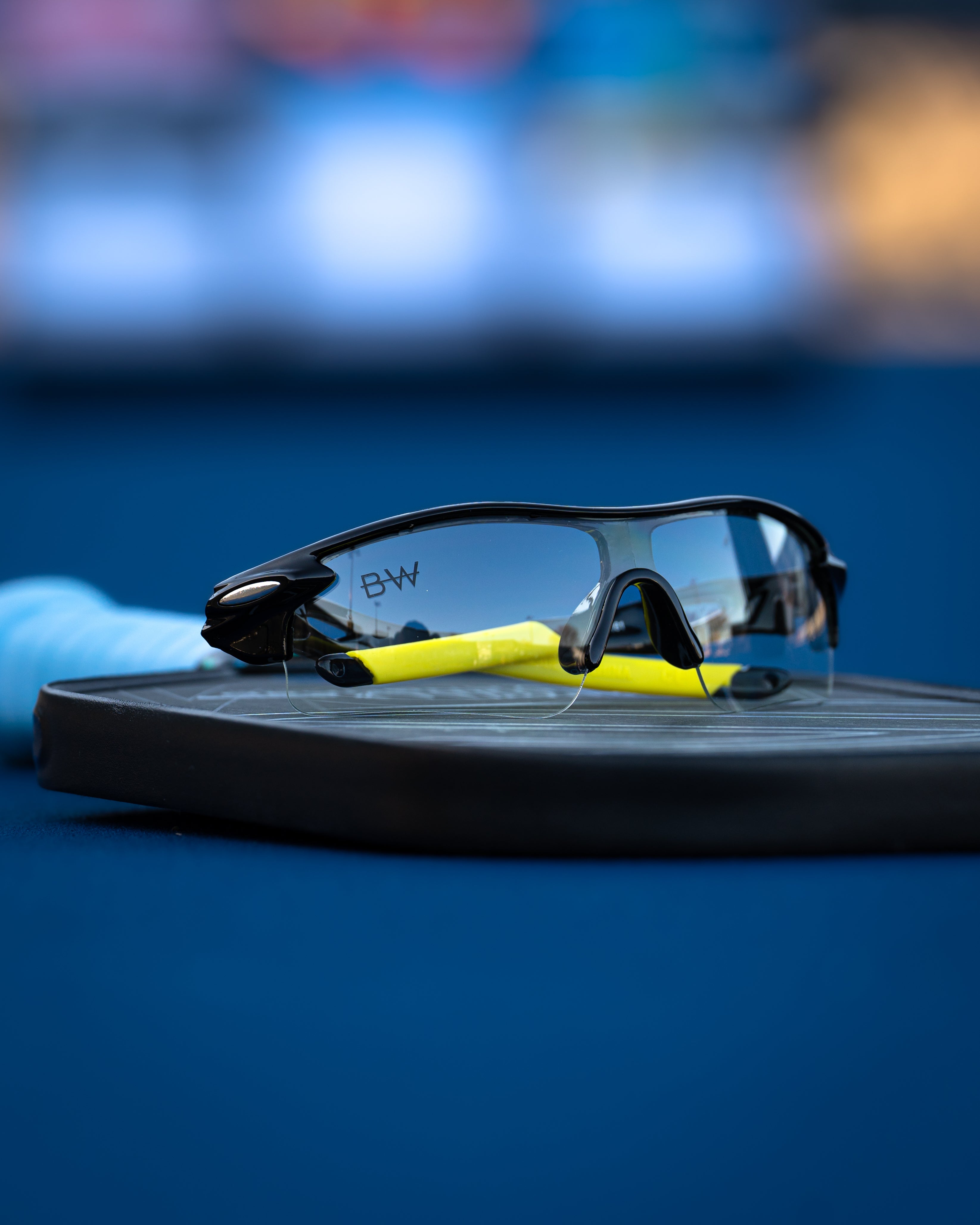
Best RX Glasses for Multi-Sport Athletes: Ultimate Guide
Share
Best RX Glasses for Multi-Sport Athletes: Ultimate Guide
If you move between pickleball, tennis, running, cycling, basketball, hiking, or other sports, your prescription eyewear needs to do more than correct your vision. The frame has to remain comfortable during movement, the lenses need to work with your prescription, and the overall setup should make sense across the environments where you actually train and compete.
The best RX glasses for multi-sport athletes combine accurate prescription correction, lightweight sports-oriented frames, impact-resistant lenses, comfortable extended wear, and a lens configuration suited to the athlete’s mix of indoor and outdoor activities.
This guide explains what matters most, how to compare lens strategies across sports, and which Blinded Wear RX options are worth considering if you want prescription sports eyewear that can work across more than one activity.
Find Your Sports Eyewear
Start with your prescription requirements, then compare frames and lens configurations based on your sports, movement, and normal playing conditions.
Why Multi-Sport Athletes Need More From Prescription Glasses
Athletes who rotate between multiple sports place very different demands on the same eyewear. A frame that feels fine during everyday wear may behave differently during lateral movement, running, cycling, or a long tournament.
For multi-sport use, prioritize:
- Appropriate prescription correction
- Lightweight frame construction
- Impact-resistant lenses
- Comfort during extended activity
- Prescription compatibility
- Coverage appropriate for active use
- A lens setup that matches indoor, outdoor, or changing-light conditions
- A frame style you are comfortable wearing across different sports
The goal is not to find one pair that magically improves every sport. It is to find prescription eyewear that remains practical across the activities you actually do.
1. Start With Your Prescription, Not the Sport
Before comparing frame shape, tint, or style, start with the vision correction you actually need.
Ask:
- Is my prescription current?
- Does the frame support my RX?
- Do I need single-vision or another available prescription configuration?
- Is lens thickness a consideration for my prescription?
- Will this setup remain practical across the sports I play most often?
If your vision has changed or you are unsure whether your current prescription is still appropriate, an eye-care professional can help determine your correction needs before you order new sports eyewear.
2. High-Index Lenses Can Matter for Active RX Eyewear
High-index lens materials can allow thinner lenses than lower-index alternatives depending on the prescription and lens design.
For athletes, that can matter when trying to keep an RX setup comfortable and visually balanced within a sports-oriented frame.
Blinded Wear includes high-index prescription lenses at no additional cost. That means there is no separate high-index upcharge when ordering RX eyewear.
When comparing sports-glasses prices, look at the complete prescription configuration instead of only the advertised frame price.
3. Lightweight Frames Matter Across Multiple Sports
A multi-sport frame may be worn during a short pickleball session one day and a longer run or tournament the next. Weight becomes more noticeable as wear time increases.
Lightweight sports-oriented frames can be especially useful when you:
- Train for extended periods
- Move quickly between directions
- Wear sports eyewear several days per week
- Switch between recreational and competitive activities
- Want one RX frame to work across multiple types of exercise
Blinded Wear focuses on lightweight sports frames designed for active use and extended matches.
4. Look for Impact-Resistant Lenses
Sports expose eyewear to movement, accidental contact, equipment bags, drops, and other conditions that everyday glasses may not regularly encounter.
Blinded Wear offers impact-resistant lenses in its performance eyewear.
However, impact resistance should not be confused with “impact-proof” or a formal protective certification. Unless a specific standard is explicitly stated and verified, do not assume that sports eyewear meets a particular safety rating.
This distinction matters when comparing products marketed with broad terms such as “protective,” “shatterproof,” or “safety eyewear.”
5. Test Fit Across Different Types of Movement
The same frame can feel different depending on what your sport requires.
A multi-sport athlete should think beyond whether glasses feel comfortable while standing still. Consider how they behave during realistic movement.
| Sport or Activity | What to Evaluate |
|---|---|
| Pickleball or tennis | Quick lateral movement, overheads, and repeated changes of direction |
| Running | Repeated motion and long-duration comfort |
| Cycling | Forward head position, coverage, and compatibility with other equipment |
| Basketball | Rapid movement and frequent directional changes |
| Hiking | Extended wear and changing outdoor conditions |
If you plan to use the same RX pair across several sports, test the frame during realistic movement before depending on it for competition.
6. Choose a Lens Strategy for Your Sport Rotation
The hardest part of multi-sport eyewear is often not the frame. It is choosing a lens configuration that works across different environments.
| Typical Environment | RX Lens Setup to Consider |
|---|---|
| Mostly bright outdoor sports | Tinted prescription lenses |
| Mostly indoor sports | Clear prescription lenses |
| Indoor + outdoor sports | Clear and tinted RX pairs, or a more versatile transition setup |
| Changing outdoor conditions | Transition RX lenses |
| Day-to-evening training | Transition RX or separate bright-light and low-light pairs |
The most versatile option is not automatically the best option. Athletes who consistently train under one type of lighting may prefer a dedicated lens configuration.
7. Clear RX Lenses for Indoor and Low-Light Sports
Clear prescription sports glasses are useful when you need RX correction without a dark sunglass tint.
They can make sense for activities such as:
- Indoor pickleball
- Indoor racquet sports
- Basketball
- Night training
- Other lower-light activities
A clear pair can also complement tinted outdoor sports glasses if your weekly routine regularly includes both bright and lower-light environments.
8. Tinted RX Lenses for Outdoor Sports
If most of your activities take place outside in bright daylight, a tinted prescription sunglass may be the simplest setup.
Fixed tints can be useful for athletes who regularly participate in:
- Outdoor pickleball
- Tennis
- Running
- Cycling
- Hiking
- Other daytime outdoor activities
Before choosing a tint, consider whether your training regularly continues toward dusk or moves indoors. A lens that works well in bright midday conditions may be less practical as available light decreases.
9. Transition RX Lenses for Changing Outdoor Conditions
Transition, or photochromic, lenses are designed to change tint as environmental conditions change.
That can make them appealing to multi-sport athletes who:
- Train outside at different times of day
- Move between areas of sun and shade
- Spend long periods outdoors
- Want to reduce the number of prescription pairs they carry
Transition lenses do not change instantaneously, and their behavior depends on the specific lens technology and environmental conditions.
For an athlete who wants one more versatile outdoor RX setup, they can be worth considering. Athletes who want maximum predictability for a specific environment may prefer dedicated clear or fixed-tint lenses.
10. Do Multi-Sport Athletes Need Polarized RX Sunglasses?
Not necessarily.
Polarized lenses can reduce certain reflected glare, which may be useful in some outdoor environments. But polarization should be evaluated according to the sports you play rather than automatically treated as a required upgrade.
Blinded Wear uses a non-polarized, performance-first approach for its pickleball-oriented eyewear. The goal is to preserve natural visual information and avoid potential depth-perception concerns associated with polarization during fast court play.
This does not mean polarization universally causes depth-perception problems. If one pair needs to serve several sports, consider which environments matter most before choosing polarized or non-polarized lenses.
Can One Pair of Prescription Glasses Work for Multiple Sports?
Yes, depending on your sports and playing environments.
One pair is most practical when your activities have similar requirements. For example, outdoor pickleball, tennis, running, and hiking may be easier to cover with one RX sunglass setup than a schedule combining bright outdoor cycling with indoor basketball and night pickleball.
- Similar sports + similar lighting: one pair may work well.
- Different sports + similar lighting: one versatile sports frame may still work.
- Similar sports + very different lighting: consider transition lenses or a second pair.
- Different sports + very different environments: specialized pairs may be more practical.
Blinded Wear RX Glasses to Compare for Multi-Sport Use
No single frame is automatically best for every athlete. Compare each option based on prescription compatibility, frame fit, style, coverage, and your particular mix of sports.
Frost RX
Frost RX is one sports-oriented prescription option for athletes comparing lightweight RX eyewear for active use.
Heatseek RX
Heatseek RX provides another RX frame option for athletes comparing sports-focused designs across multiple activities.
Runway RX
Runway RX gives athletes another prescription sports style to compare based on fit, appearance, and individual RX needs.
Crystal Wave II RX
Crystal Wave II RX is another option for athletes who want prescription sports eyewear that can be considered across more than one activity.
See the complete selection in the RX Sports Eyewear Collection →.
Start Building Your Multi-Sport RX Setup
Start with the sports you play most often, identify the lighting conditions they share, and then compare prescription frames that fit those needs.
Blinded Wear RX eyewear offers high-index prescription lenses at no additional cost, lightweight sports frames, impact-resistant lenses, and options designed for recreational and competitive athletes.
Not sure where to start?
11. How to Choose RX Glasses for Your Mix of Sports
Instead of asking which prescription sports glasses are universally best, look at the activities you do most often and identify what they have in common.
An athlete who plays pickleball and tennis has different eyewear priorities than someone who combines running, cycling, and indoor basketball.
| Sport Combination | What to Prioritize | Lens Strategy to Consider |
|---|---|---|
| Pickleball + Tennis | Lightweight comfort, active fit, impact-resistant lenses | Tinted RX for daytime outdoor play; clear RX for indoor or night play |
| Pickleball + Running | Low frame weight, extended comfort, sports-oriented coverage | Tinted or transition RX depending on normal outdoor conditions |
| Running + Cycling | Comfort during continuous movement, coverage, prescription compatibility | Outdoor tint or transition RX depending on lighting |
| Pickleball + Basketball | Active fit, impact-resistant lenses, indoor/outdoor versatility | Clear RX plus an outdoor option if needed |
| Tennis + Hiking | Extended comfort, lightweight frame, outdoor lens strategy | Tinted or transition RX |
| Indoor + Outdoor Sports | Versatility across significantly different lighting | Consider separate clear and tinted RX pairs or another suitable lens strategy |
The more similar your sports and environments are, the easier it may be to use one RX pair across them.
12. RX Glasses for Pickleball
Pickleball involves rapid ball tracking, lateral movement, overheads, and frequent changes in direction. Prescription players should prioritize appropriate vision correction along with a frame that remains comfortable during active court movement.
Useful considerations include:
- Prescription compatibility
- Lightweight sports-oriented frame construction
- Impact-resistant lenses
- Comfort during extended matches
- A lens configuration appropriate for indoor, outdoor, or night play
- A secure-feeling fit during lateral and vertical movement
Blinded Wear designs its RX sports eyewear with pickleball players in mind, making the Prescription Pickleball Glasses Collection a logical starting point for multi-sport athletes who regularly play racquet or paddle sports.
13. RX Sports Glasses for Tennis
Tennis shares several visual and movement demands with pickleball, including ball tracking, lateral movement, overhead shots, and long periods of outdoor play.
For an athlete who regularly plays both sports, one RX sports frame may be practical if the prescription, fit, and lens configuration work appropriately for both environments.
Outdoor daytime players may prefer a fixed tint, while athletes whose matches extend into changing outdoor light may consider a transition RX setup. If tennis or pickleball moves indoors or continues at night, clear RX eyewear may be useful.
14. RX Sports Glasses for Running
For runners, comfort over time becomes especially important. Even a small fit issue can become noticeable during a longer session.
When comparing RX eyewear for running, consider:
- Overall frame weight
- Comfort during repeated movement
- How the frame feels over longer distances
- Prescription compatibility
- Coverage appropriate for your environment
- Whether your normal runs happen in bright, changing, or low light
If you also play pickleball or tennis outdoors, a prescription sports frame that works comfortably for both court movement and running may reduce the need for separate eyewear.
15. RX Sports Glasses for Cycling
Cycling introduces another set of fit considerations because your head position and other equipment can differ from court sports.
If you want to use the same RX eyewear for cycling and another sport, evaluate the complete setup rather than assuming a frame that works on the court will automatically work on a bike.
Consider:
- Prescription compatibility
- Frame comfort in your riding position
- Coverage
- Compatibility with the other equipment you use
- Outdoor lighting conditions
- Whether a fixed tint or more adaptable lens strategy makes sense
Always test your eyewear with the equipment you actually use before relying on the combination during a ride.
16. RX Glasses for Basketball and Other Indoor Sports
Indoor athletes generally have different lens needs than someone training in bright outdoor sunlight.
A dark sunglass tint usually does not make sense for typical indoor conditions. Clear RX sports eyewear allows you to maintain prescription correction without unnecessarily reducing available light.
If basketball or another contact-prone activity requires eyewear meeting a particular protective standard, verify that certification specifically. Impact-resistant lenses should not automatically be treated as certified protective sports goggles.
Browse Clear Lens Eyewear → for lower-light and indoor options.
17. RX Sports Glasses for Hiking and Outdoor Training
Hiking and extended outdoor training can involve hours of wear and significant changes in available light.
For these activities, consider:
- Long-duration comfort
- Prescription compatibility
- Frame weight
- Coverage
- How frequently your lighting conditions change
A fixed tint may make sense for consistently bright conditions, while transition RX lenses may appeal to athletes who frequently encounter changing outdoor light. Actual transition behavior varies with the particular lens technology and environment.
18. Single-Vision vs. Progressive RX Sports Glasses
Your prescription format can be just as important as your frame.
| Prescription Type | What to Consider |
|---|---|
| Single-Vision | One primary corrective power across the lens |
| Progressive | Multiple viewing zones within one lens; suitability depends on individual visual needs and familiarity with progressive correction |
Progressive configurations may be available on select Blinded Wear RX products. If you are uncertain which prescription format is appropriate for your sports or vision needs, consult an eye-care professional.
Do not switch prescription configurations solely because one option is marketed as more athletic. The appropriate correction should come first.
19. Can You Use Regular Prescription Glasses for Sports?
Yes. Dedicated sports RX glasses are not mandatory simply because you are active.
If your regular prescription glasses provide the correction, comfort, fit, and functionality you need for an activity, you may be able to use them.
Dedicated RX sports eyewear becomes more appealing when you want:
- A lightweight sports-oriented frame
- Impact-resistant lenses
- More coverage
- A different tint or lens configuration
- A pair reserved specifically for training and competition
- A frame selected around active movement rather than everyday wear
For athletes who train frequently, separating everyday optical eyewear from sports eyewear can also keep each pair dedicated to a different purpose.
20. RX Sports Glasses vs. Contacts + Non-RX Eyewear
Multi-sport athletes who need vision correction generally have more than one way to build an eyewear setup.
| Setup | Potential Advantage | Consideration |
|---|---|---|
| RX sports glasses | Prescription correction and sports eyewear combined into one pair | Frame must work with your prescription and sports |
| Contacts + non-RX sports glasses | Access to non-prescription eyewear options | Requires comfortable and appropriate contact-lens use |
| Regular prescription glasses | No additional sports pair required | May not provide the sports-oriented fit or lens setup you prefer |
If you already use contacts comfortably, you can also compare Blinded Wear’s Non-RX Sports Eyewear →.
21. One RX Pair vs. Multiple Sport-Specific Pairs
The idea of one pair for every sport sounds convenient, but versatility has limits.
| Choose One Versatile Pair When... | Consider Multiple Pairs When... |
|---|---|
| Your sports happen under similar lighting | Your sports move between bright outdoor and low-light environments |
| The same frame fits comfortably across your activities | Different sports create very different fit or equipment requirements |
| Your RX works well in the selected frame | You want dedicated clear and tinted prescription setups |
| Convenience is a major priority | You want each pair optimized around a narrower use case |
For many recreational athletes, one versatile pair may be enough. Athletes with very different sports, environments, or equipment may find that two specialized pairs are more practical.
22. When a Backup RX Pair Makes Sense
If you cannot comfortably participate without prescription correction, a backup plan becomes more important.
This is particularly relevant for:
- Tournaments
- Races
- Travel competitions
- Long training days
- Multi-day sporting events
A backup does not necessarily need to duplicate your primary pair. Depending on your needs, it could be another appropriate RX sports frame, a clear prescription pair, or another vision-correction setup you already know works for you.
23. Compare the Complete Cost of Prescription Sports Glasses
Do not compare RX sports glasses using frame price alone.
The final value can depend on:
- Prescription lens pricing
- High-index lens charges
- Available prescription configurations
- Selected lens type
- Whether you need more than one pair
- Warranty and replacement terms
Blinded Wear includes high-index prescription lenses at no additional cost. That can be particularly relevant when comparing the total price of different RX sports-eyewear options.
24. Consider Long-Term Replacement Value
Multi-sport eyewear may see frequent use across training sessions, courts, trails, equipment bags, and travel.
Blinded Wear offers a 50% lifetime replacement warranty if the glasses break.
Review the current policy for complete terms before purchasing.
25. How to Care for RX Glasses Used Across Multiple Sports
Eyewear used several times per week can accumulate sweat, dust, fingerprints, and debris quickly. Basic care can help keep your prescription lenses and frame in usable condition.
- Store your glasses in a protective case when they are not being worn.
- Use a clean microfiber cloth for routine lens cleaning.
- Follow the cleaning instructions appropriate for your particular lenses.
- Avoid leaving your RX glasses loose inside an equipment bag.
- Inspect the frame and lenses periodically for damage.
- If eyewear experiences a significant impact, inspect it before continuing to use it.
Avoid assuming that every lens uses the same coatings or requires exactly the same cleaning process. Follow the care guidance for the particular eyewear you own.
7 Mistakes to Avoid When Buying Multi-Sport RX Glasses
1. Choosing the Frame Before Confirming RX Compatibility
A frame can look ideal and still be the wrong choice if it does not work appropriately with your prescription.
2. Assuming One Lens Tint Works Everywhere
A dark outdoor tint may not be practical for indoor basketball or night pickleball. Choose around the environments where you actually train.
3. Assuming Polarized Automatically Means Better
Polarization can be useful in some environments, but it is not automatically the best choice for every sport.
4. Buying Based on the Longest Feature List
More marketing terms do not necessarily mean better eyewear. Prescription compatibility, fit, lens configuration, weight, and actual use matter more.
5. Confusing Impact Resistance With Safety Certification
Impact-resistant lenses should not automatically be interpreted as certified protective eyewear.
6. Ignoring the Final RX Price
Compare the complete prescription configuration, including any lens-material upgrades or other RX charges.
7. Assuming One Pair Must Cover Every Sport
Versatility is useful, but two specialized pairs may be a better solution when your activities take place in dramatically different environments.
Multi-Sport RX Glasses Comparison Checklist
Use these questions when comparing prescription sports eyewear:
- Does the frame support my prescription?
- Is my prescription current?
- Which sports will I actually use these glasses for?
- Will I use them indoors, outdoors, or both?
- Do I need clear, tinted, or transition lenses?
- Is the frame lightweight enough for extended wear?
- Does it remain comfortable during realistic movement?
- Are the lenses impact-resistant?
- Am I assuming a safety certification that has not been verified?
- Do I want polarized or non-polarized lenses for my sports?
- Are high-index lenses included in the RX price?
- Would one versatile pair work, or do I need separate setups?
- What happens if the glasses break?
Why Compare Blinded Wear for Multi-Sport RX Eyewear?
Blinded Wear’s performance-first approach gives prescription athletes several useful features to compare:
- Prescription options for athletes who need corrective lenses
- High-index RX lenses included at no additional cost
- Lightweight sports frames for active use
- Impact-resistant lenses
- Non-polarized lens configurations
- Options for recreational and competitive athletes
- 50% lifetime replacement warranty if the glasses break
No eyewear is automatically perfect for every sport or athlete. The goal is to match your prescription, sports, lighting conditions, and fit preferences with the appropriate configuration.
Narrow Down Your RX Sports Eyewear
Think about your two or three most frequent sports first. If they share similar movement and lighting requirements, one versatile RX pair may cover much of your routine. If they are dramatically different, build your eyewear setup around those differences.
Need help narrowing your options?
Frequently Asked Questions About RX Glasses for Multi-Sport Athletes
What are the best RX glasses for multi-sport athletes?
The best prescription sports glasses depend on your prescription, the sports you play, your normal lighting conditions, and how the frame fits during movement. In general, multi-sport athletes should prioritize appropriate prescription correction, lightweight sports-oriented frames, impact-resistant lenses, comfortable extended wear, and a lens setup that works across their most common activities.
Can I use one pair of prescription glasses for multiple sports?
Yes. One pair can be practical when your sports have similar lighting, movement, and fit requirements. For example, outdoor pickleball, tennis, running, and hiking may be easier to cover with one RX sunglass setup than a combination of bright outdoor cycling, indoor basketball, and night pickleball.
Are sports prescription glasses better than regular prescription glasses?
Not automatically. Regular prescription glasses can work for sports if they provide the vision correction, fit, and comfort you need. Dedicated RX sports glasses become more useful when you want a lightweight sports frame, impact-resistant lenses, greater coverage, or a lens configuration selected specifically for active use.
What prescription lenses are best for outdoor sports?
For consistently bright daytime conditions, tinted prescription lenses can be a practical choice. Athletes who train through changing outdoor conditions may consider transition lenses. The right option depends on when and where you normally play.
What prescription lenses are best for indoor sports?
Clear RX lenses are generally the simplest option when prescription correction is needed without a dark sunglass tint. They can be useful for indoor pickleball, basketball, indoor racquet sports, and night activities.
Are transition lenses good for multi-sport athletes?
They can be. Transition lenses may appeal to athletes who regularly experience changing outdoor light and want to reduce the number of prescription pairs they carry. They do not change tint instantaneously, and their behavior depends on the particular lens technology and environmental conditions.
Should sports sunglasses be polarized?
Not necessarily. Polarization can reduce certain reflected glare, but it is not automatically the best choice for every sport. Blinded Wear uses a non-polarized, performance-first approach for pickleball-oriented eyewear to preserve natural visual information and avoid potential depth-perception concerns associated with polarization during fast court play. This does not mean polarization universally creates depth-perception problems.
Are high-index lenses good for sports glasses?
High-index materials can allow thinner lenses than lower-index alternatives depending on the prescription and lens design. Blinded Wear includes high-index prescription lenses at no additional cost, eliminating a separate high-index upcharge.
Can multi-sport athletes wear progressive lenses?
Progressive configurations may be available on select RX products. Whether they are appropriate depends on your prescription, visual needs, sports, and experience with progressive correction. An eye-care professional can help determine the appropriate prescription format if you are unsure.
Are impact-resistant sports lenses the same as protective sports goggles?
No. Impact resistance should not automatically be interpreted as a particular safety certification. If your sport or league requires eyewear that meets a specific protective standard, verify that certification before purchasing.
Do I need separate prescription glasses for every sport?
No. Many athletes can use one prescription sports frame across several activities. Separate pairs become more useful when your sports have very different lighting, equipment, fit, or protective requirements.
What happens if my Blinded Wear RX glasses break?
Blinded Wear offers a 50% lifetime replacement warranty if the glasses break. Review the current Protection Plan & Returns for complete terms.
Quick Decision Guide: Which Multi-Sport RX Setup Fits You?
| Your Training Routine | RX Setup to Consider |
|---|---|
| Outdoor pickleball + tennis | One lightweight tinted RX sports pair may cover both |
| Pickleball + running | Tinted or transition RX depending on your normal outdoor lighting |
| Running + cycling | Outdoor RX setup with fit and coverage appropriate for both activities |
| Indoor pickleball + basketball | Clear RX sports eyewear |
| Outdoor + indoor sports | Clear and tinted pairs, or another lens strategy suited to both environments |
| Day-to-evening outdoor sports | Transition RX or separate daytime and low-light prescription pairs |
| Several similar outdoor sports | One versatile prescription sports frame may be sufficient |
| Several very different sports | Consider specialized RX setups rather than forcing one pair to do everything |
The 3-Step Way to Choose Multi-Sport Prescription Glasses
Step 1: Get the Prescription Right
Start with appropriate vision correction and confirm that the frame is compatible with your RX. Sports features should never come before the prescription itself.
Step 2: Group Your Sports by Environment
Instead of treating every activity separately, group your sports according to their lighting and movement demands.
For example:
- Outdoor pickleball + tennis + running may share similar daytime lens needs.
- Indoor pickleball + basketball may work well with clear RX lenses.
- Outdoor running + night pickleball create very different lighting requirements.
Step 3: Choose the Frame and Lens Strategy
Once you know your RX and environments, compare frame weight, fit, coverage, impact resistance, lens type, style, total price, and replacement value.
Versatility vs. Specialization: Which Is Better?
Multi-sport athletes often assume the ideal solution is one pair that handles everything. Sometimes it is. Sometimes it is not.
Choose Versatility When:
- Your sports happen under similar lighting
- You prefer carrying less gear
- The same frame remains comfortable across your activities
- Your prescription works appropriately in that frame
- You are primarily a recreational athlete
Choose Specialized Pairs When:
- You regularly switch between bright outdoor and indoor environments
- One activity requires different equipment compatibility
- You want dedicated clear and tinted lenses
- A sport requires specific certified protective eyewear
- You compete frequently and want backup prescription eyewear available
The best setup is the one that solves your actual vision and sports needs, not necessarily the setup with the fewest pairs.
Before You Order: Multi-Sport RX Checklist
- Confirm your prescription. Make sure your vision correction is appropriate.
- List your most frequent sports. Prioritize what you actually do instead of rare activities.
- Identify your lighting conditions. Separate indoor, outdoor, night, and changing-light use.
- Check prescription compatibility. Make sure your preferred frame supports your RX needs.
- Choose your lens strategy. Decide between clear, tinted, transition, or multiple prescription setups.
- Consider frame weight. Long sessions can make unnecessary bulk more noticeable.
- Evaluate fit during movement. Think about court movement, running, riding position, and other realistic activity.
- Look for impact resistance. Do not confuse it with an unverified protective certification.
- Compare the complete RX price. Check for lens-material and prescription upcharges.
- Review replacement coverage. Active eyewear may experience more wear than everyday glasses.
Blinded Wear RX Models to Start Comparing
The best model depends on your prescription, fit, style, and activities rather than a universal ranking.
| RX Model | How to Use It in Your Comparison |
|---|---|
| Frost RX | Compare as a sports-oriented RX option for active use across court and other activities |
| Heatseek RX | Compare based on frame style, prescription compatibility, and your particular sports rotation |
| Runway RX | Consider when comparing prescription sports styles for active and everyday-adjacent use |
| Crystal Wave II RX | Another RX frame option to compare according to prescription, fit, coverage, and style |
| Lava Rock RX | Compare as another sports-oriented prescription style for recreational or competitive use |
| Cold Slate RX | Another frame choice for athletes comparing RX compatibility and personal style |
Key Takeaways for Multi-Sport Athletes
- Your prescription comes first. Sports features do not replace appropriate vision correction.
- You may not need different glasses for every sport. Similar activities and lighting can often share one RX setup.
- Clear, tinted, and transition lenses solve different problems.
- Lightweight frames matter when your eyewear is used for long training sessions and multiple activities.
- Impact-resistant lenses are useful for active eyewear, but they should not automatically be treated as certified protective goggles.
- Polarization is not automatically better for every sport.
- High-index lens pricing matters when comparing RX value.
- Blinded Wear includes high-index prescription lenses at no additional cost.
- One versatile pair can be convenient, but specialized pairs can make more sense for dramatically different environments.
- Blinded Wear offers a 50% lifetime replacement warranty if the glasses break.
Explore More Sports Eyewear Resources
Final Verdict: What Are the Best RX Glasses for Multi-Sport Athletes?
The best RX glasses for a multi-sport athlete are not necessarily the pair marketed for the largest number of activities.
The best pair is the one that correctly handles your prescription while matching the sports, lighting conditions, movement, and fit requirements you encounter most often.
If your sports are similar, one versatile pair may cover much of your routine. If you regularly move between bright outdoor courts, indoor gyms, night play, cycling, and other very different environments, multiple prescription setups may be more practical.
Start with your prescription. Then consider frame weight, impact-resistant lens construction, lighting, fit, total RX cost, and replacement value.
That approach gives you a more useful multi-sport eyewear setup than choosing based on exaggerated claims about speed, performance, or one frame being universally best.
Find Your Blinded Wear RX Sports Glasses
Blinded Wear gives multi-sport athletes a prescription sports-eyewear option built around lightweight sports frames, impact-resistant lenses, non-polarized configurations, and high-index prescription lenses included at no additional cost.
Whether you primarily play pickleball or rotate through several activities, compare frames according to your prescription, fit, lighting, and actual training routine.
Need help narrowing your options?
Blinded Wear also offers a 50% lifetime replacement warranty if your glasses break, giving active athletes additional long-term replacement value.