
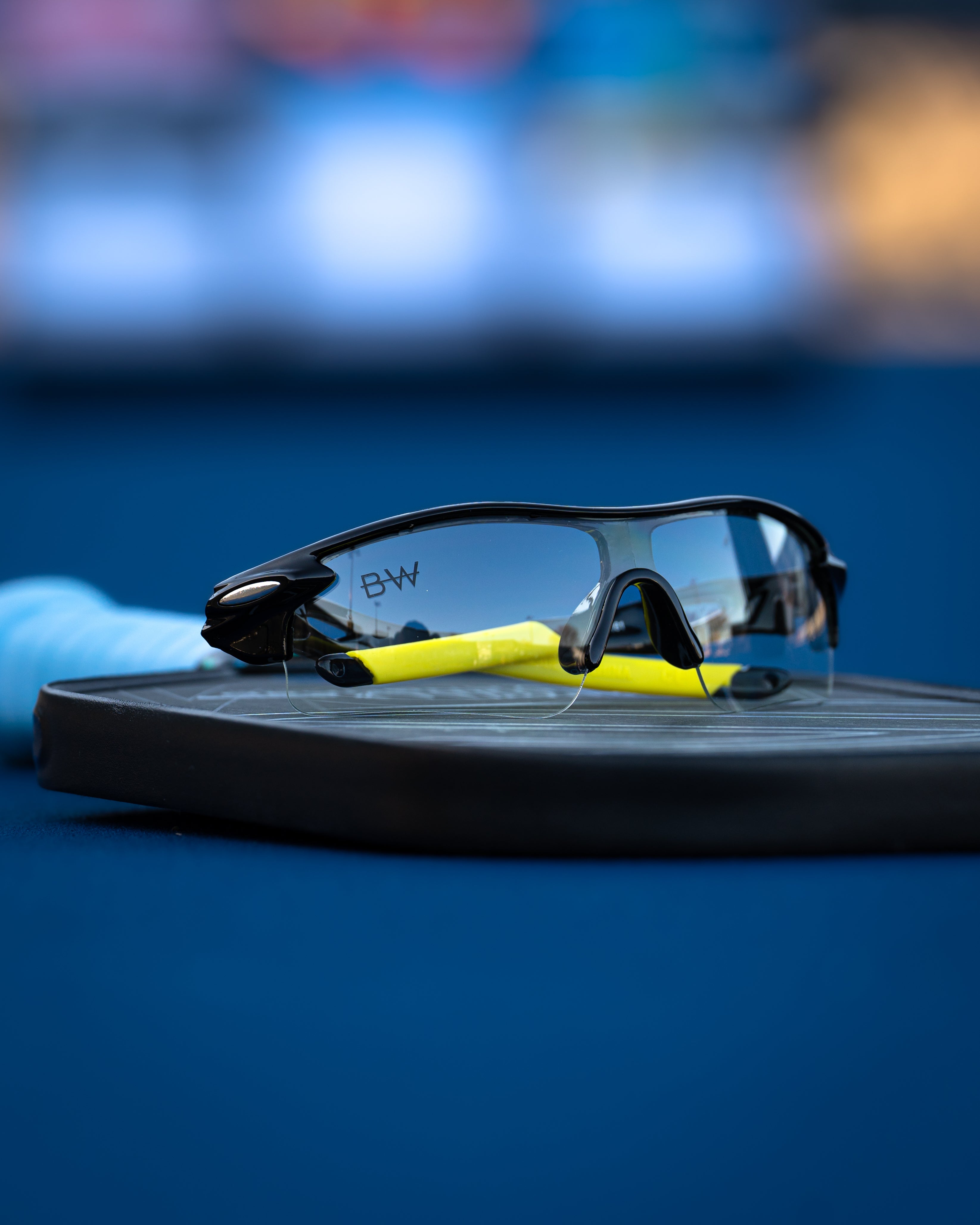
How to Break in a New Pair of RX Sports Glasses
Share
Find Prescription Pickleball Glasses That Fit Your Game
New RX sports glasses should feel clear, secure, and comfortable before you rely on them in a match. Compare Blinded Wear Co. prescription pickleball eyewear and find a frame designed around active use.
How to Break in a New Pair of RX Sports Glasses
You just received a new pair of prescription sports glasses. Maybe you're upgrading from everyday glasses, replacing an older prescription, or buying dedicated RX pickleball glasses for the first time.
Now comes the adjustment period.
“Breaking in” prescription sports eyewear does not mean aggressively bending the frame or trying to reshape it at home.
It means giving yourself time to evaluate three things:
- Prescription clarity: Does the new RX feel clear at the distances you actually use?
- Frame fit: Does the eyewear sit securely and comfortably on your face?
- Sports performance: Does the setup work when you move, sweat, track the ball, and play at normal speed?
A new prescription may feel different at first, especially if the correction changed or you switched lens types. Minor adjustment can be normal, but persistent problems should not simply be ignored.
This guide shows you how to transition into new RX sports glasses safely and practically before using them in league play or tournaments.
Shop Prescription Pickleball Glasses →
Do Prescription Sports Glasses Actually Need to Be “Broken In”?
Not in the same way as a pair of shoes.
Your frame should not need to be repeatedly bent or stretched before it becomes usable.
What usually needs time is your comfort and visual adaptation.
A new pair can feel unfamiliar because:
- Your prescription changed
- The lens shape is different
- The frame sits differently from your old glasses
- The lenses have more curvature
- You changed lens type
- The frame provides more sport-oriented coverage
The goal during your first several wears is to determine whether the eyewear feels unfamiliar because it is new—or because something actually needs to be corrected.
How Long Does It Take to Adjust to New Prescription Glasses?
Adjustment varies from person to person.
Some people feel comfortable almost immediately, while others notice that a new prescription feels different for several days.
A larger prescription change, different lens design, or different frame geometry may make the transition more noticeable.
Instead of focusing on an exact number of hours, pay attention to whether things are steadily improving.
Normal Early Adjustment Can Include
- A slightly different sense of distance
- Noticing the frame more than usual
- Mild visual unfamiliarity
- Needing time to get comfortable with a new lens shape
Problems Worth Checking
- Persistent blurry vision
- Significant headaches
- Ongoing dizziness
- Double vision
- A frame that causes significant pain
- Vision that does not seem to improve as you adjust
If the new glasses continue to feel wrong, have the prescription, measurements, lens placement, and frame fit checked instead of assuming you simply need more break-in time.
Step 1: Inspect Your New RX Sports Glasses Before Wearing Them
Before taking them onto the court, perform a basic inspection.
Check the Lenses
Look for:
- Unexpected scratches
- Chips
- Visible coating issues
- Anything that looks unusual in the lens
Check the Frame
Make sure:
- The temples open and close normally
- The frame appears symmetrical
- The lenses appear seated correctly
- Nothing feels obviously loose
If something looks wrong out of the box, address it before trying to “break it in.”
Step 2: Clean the Lenses Before Your First Wear
Shipping, handling, fingerprints, or packaging residue can make a perfectly good prescription lens appear less clear than it actually is.
Before evaluating your new glasses, clean the lenses using a method appropriate for your eyewear.
A basic approach includes:
- Remove loose dust or debris carefully.
- Use a lens-safe cleaner if needed.
- Use a clean microfiber cloth.
- Avoid household glass cleaners or abrasive materials.
You want to evaluate the prescription—not fingerprints.
Step 3: Wear Your New RX Glasses in a Familiar Environment
Before wearing new prescription sports glasses in a competitive match, try them somewhere familiar.
Wear them while:
- Walking around your home
- Looking across a room
- Doing normal daily activities
- Looking between near and far objects
This makes it easier to notice whether the prescription feels generally clear before adding the speed and movement of sports.
If basic everyday vision already feels significantly wrong, there is little benefit in immediately testing them at full pickleball speed.
Step 4: Check Distance Vision
Pickleball requires clear vision across several distances.
Before playing, look at:
- A far wall
- Signs or text at distance
- Objects across a room
- The far side of the pickleball court
The image should look as clear as expected for your prescription.
If one eye seems dramatically different, the image appears doubled, or distance blur persists, get the eyewear checked rather than assuming sports use will solve it.
Step 5: Test Near-to-Far Focus Changes
During pickleball, your attention constantly shifts.
You may look at:
- The ball near your paddle
- Your opponent at the kitchen line
- The baseline
- Your partner
- The scoreboard
Before playing a full match, casually shift your gaze between closer and farther targets.
You are not trying to “train” your prescription.
You are simply checking whether the new RX setup feels usable across the distances that matter to you.
Step 6: Check Peripheral Comfort
Sport-oriented RX frames can look and feel different from everyday prescription glasses.
A larger lens, wrap-style design, or different curvature can make the edges of your visual field feel unfamiliar at first.
Turn your head normally and look around rather than forcing extreme eye movements.
Ask:
- Does the frame block anything unexpectedly?
- Do the lens edges feel distracting?
- Does vision remain comfortable while moving?
- Does the frame stay positioned correctly?
If edge distortion is severe or persistent, have the setup checked instead of trying to compensate by changing how the glasses sit on your face yourself.
Step 7: Check Frame Fit Before You Play
Prescription sports glasses should feel secure without creating excessive pressure.
Pay attention to three areas:
Bridge and Nose
The glasses should sit in a stable position without constantly sliding.
Temples
The arms should feel secure without causing significant pressure or pain.
Behind the Ears
The frame should remain stable when you move your head without digging uncomfortably into the skin.
A new frame may feel different from your old pair, but pain is not something you should simply “break through.”
Don't Heat or Aggressively Bend Your New RX Frames
One of the biggest mistakes in DIY sports-eyewear adjustment is trying to reshape a frame using hot water, hair dryers, aggressive bending, or repeated flexing.
Different frame materials respond differently to heat and pressure.
Improper adjustment can:
- Warp the frame
- Change how the lenses sit
- Damage hinges
- Alter the intended fit
- Potentially damage the eyewear
If a frame requires a meaningful adjustment, an optician or appropriate eyewear professional is a better choice than forcing the material at home.
Step 8: Start With a Light Pickleball Practice
Once your new RX glasses feel comfortable during normal wear, take them onto the court.
Do not make your first test a tournament.
Start with:
- Easy ball tracking
- Cooperative dinking
- Short volleys
- Serve and return practice
- Controlled rallies
Gradually increasing movement makes it easier to identify whether a problem comes from your prescription, frame fit, or simply the new feel of the eyewear.
Step 9: Test the Glasses During Real Movement
Once you're comfortable at lower intensity, increase your movement.
Test:
- Lateral shuffles
- Quick stops
- Forward movement toward the kitchen
- Head turns
- Overheads
- Normal rally speed
Your RX pickleball glasses should remain reasonably stable without requiring constant adjustment.
If you're pushing them back up your nose every few points, that is a fit issue worth addressing.
Step 10: Test Them in the Lighting Where You Actually Play
A prescription can feel clear while the lens configuration is still wrong for your environment.
Outdoor Players
Test the glasses in the level of sunlight you usually encounter.
Indoor Players
Check how the lens looks under your facility's overhead lighting.
Evening Players
Make sure the lens is not unnecessarily dark once the sun begins to drop.
If you use transition or tinted prescription lenses, evaluate them based on their actual performance in the environments where you play rather than relying solely on product labels.
RX Sports Frames to Compare
If you're still choosing your first dedicated prescription pickleball setup, Blinded Wear Co. offers multiple RX frame styles.
Frost RX
Frost RX is one option to compare based on fit, prescription compatibility, and available lens choices.
Zebra II RX
Zebra II RX provides another RX sports-frame option to compare for active pickleball use.
Havana Melt RX
Havana Melt RX is another option for players comparing prescription sports eyewear by frame style and available lens configuration.
What If Your New Prescription Feels Wrong?
Do not assume every uncomfortable visual symptom is simply part of “breaking in” new glasses.
A short adjustment period can occur with a new prescription, but symptoms that persist or feel significant deserve attention.
Have your eyewear checked if you continue experiencing:
- Blurry vision
- Double vision
- Significant dizziness
- Persistent headaches
- Difficulty focusing
- Vision that feels noticeably worse than expected
The prescription, pupillary distance, lens positioning, frame fit, or manufacturing may need to be reviewed.
Your First-Week RX Sports Glasses Checklist
- ✓ Clean lenses before evaluating clarity
- ✓ Wear the glasses during familiar everyday activities
- ✓ Check near and distance vision
- ✓ Make sure the frame is comfortable
- ✓ Test low-intensity pickleball first
- ✓ Progress into normal movement
- ✓ Evaluate indoor or outdoor lighting
- ✓ Do not force frame adjustments yourself
- ✓ Have persistent visual or fit problems checked
Ready for RX Pickleball Glasses That Fit Your Game?
If your current everyday glasses are not giving you the fit, coverage, or court-oriented setup you want, compare Blinded Wear Co.'s prescription pickleball collection.
Not sure which style to choose?
Take the Pickleball Eyewear Quiz →
How to Tell Whether the Problem Is the Prescription or the Frame
When new RX sports glasses feel “off,” the fastest way to troubleshoot them is to separate visual problems from fit problems.
Signs It May Be a Prescription or Lens Issue
- Blur that does not improve with normal adjustment time
- Double vision
- Significant eye strain
- Persistent headaches
- One eye seems noticeably clearer than the other
- Objects look unusually distorted
- You struggle to judge distance even after several wears
Signs It May Be a Frame-Fit Issue
- Glasses slide down your nose during movement
- Pressure builds behind the ears
- The bridge feels pinched
- The frame tilts or sits unevenly
- The temples feel excessively tight
- You constantly reposition the glasses during rallies
These two categories require different fixes.
A frame adjustment will not correct an inaccurate prescription, and simply waiting for your eyes to “adapt” will not fix a frame that does not fit correctly.
How to Break In RX Sports Glasses for Pickleball
Once your prescription feels generally clear and your frame feels comfortable, start adapting the eyewear to the visual demands of pickleball.
Phase 1: Static Ball Tracking
Stand on the court and track a ball being tossed slowly between you and a partner.
Pay attention to:
- Clarity
- Depth
- Peripheral awareness
- Whether the frame stays centered
Phase 2: Cooperative Dinking
Move to the kitchen line and hit controlled cross-court and straight-ahead dinks.
This gives you a low-speed way to evaluate your prescription while tracking the ball over short distances.
Phase 3: Volleys
Add moderate-speed volleys and check whether your new RX glasses remain stable as your head and body move more quickly.
Phase 4: Serves and Returns
Serve, return, and track deeper shots across the full court.
Phase 5: Normal Rally Speed
Once everything feels comfortable, progress into normal points and competitive movement.
This gradual approach is more useful than wearing new glasses for the first time during an important tournament.
How to Test New RX Glasses for Ball Tracking
Your prescription sports glasses should help you see the ball as clearly as your correction allows across the distances used during play.
During practice, watch the ball through:
- The opponent's serve
- Your return
- Kitchen exchanges
- Fast volleys
- Overheads
- Deep baseline shots
You should not have to repeatedly move your head into an unnatural position just to find a clear area of the lens.
If clarity seems limited to one narrow zone or you notice persistent distortion, have the eyewear evaluated.
What About Progressive RX Sports Glasses?
Progressive lenses can require a different adjustment experience than single-vision prescription lenses because different portions of the lens provide different viewing powers.
If you're using progressive sports eyewear, spend extra time learning where your most comfortable viewing zones are during:
- Distance play
- Looking at your paddle
- Checking a phone or scoreboard
- Walking around the court
Do not aggressively tilt or reshape the frame in an attempt to “move” the progressive zones yourself.
If the placement feels wrong, have the measurements and frame fit checked.
What About Transition Lenses?
If your RX sports glasses use transition or light-adaptive lenses, your break-in process should include testing them in the conditions where you actually play.
Try them:
- Outdoors in direct sunlight
- In shade
- During cloudy conditions
- When moving between indoor and outdoor environments
Do not judge transition performance from one brief indoor test.
What matters is whether the lens works comfortably for your actual schedule and playing environment.
What About Clear RX Lenses?
Clear prescription lenses can be a strong option for indoor pickleball, night play, or players who simply do not want a sunglass tint.
When breaking in clear RX sports glasses, focus on:
- Clarity under indoor lighting
- Reflection from overhead lights
- Peripheral comfort
- Frame stability
- Whether the lens stays visually comfortable during fast rallies
How Tight Should RX Sports Glasses Feel?
Sports eyewear should generally feel more secure than loose everyday glasses, but secure does not mean painful.
A good fit should:
- Stay in place during normal movement
- Not create sharp pressure points
- Not pinch the bridge excessively
- Not dig painfully behind your ears
- Not require constant adjustment
If your frame causes discomfort that increases over time, that is a fit problem worth correcting rather than something to tolerate indefinitely.
How to Reduce Slipping During Sports
If your RX glasses feel clear but move too much during pickleball, first make sure the frame fits your face properly.
Helpful factors can include:
- Correct bridge fit
- Temple alignment
- Frame size appropriate for your head
- Clean nose and temple contact areas
- Sport-oriented frame design
Sweat and sunscreen can make any frame more slippery, so keeping contact points reasonably clean can also help.
What If Your RX Glasses Hurt Behind Your Ears?
Persistent pressure behind the ears is usually a frame-fit issue rather than a normal part of visual adaptation.
Possible causes include:
- Temple arms that are too tight
- Improper temple curvature
- A frame that is too narrow
- Poor overall alignment
Rather than repeatedly bending the temples yourself, have the fit evaluated if the discomfort does not resolve.
What If the Nose Bridge Hurts?
The bridge should support the frame without concentrating excessive pressure in one small area.
If you notice red marks, tenderness, or pain after short wear, the frame may sit too tightly or unevenly.
Comfort matters even more in sports because you may wear the glasses for several hours at a time.
Should You Wear New RX Sports Glasses All Day?
If the prescription is intended for full-time wear and feels comfortable, consistent use may help you become accustomed to the new correction.
However, there is no advantage to forcing yourself through significant discomfort or severe visual symptoms.
If something feels clearly wrong, have it checked.
When Should You Test New RX Glasses in a Tournament?
Ideally, not for the first time on tournament day.
Use several practice sessions first so you already know:
- The prescription feels clear
- The frame stays secure
- The lens works in your expected lighting
- You are comfortable with the field of view
- The glasses do not create distracting pressure points
Your tournament should confirm a setup you already trust—not become the first experiment.
How to Care for New RX Sports Glasses During the Break-In Period
New prescription lenses are easiest to evaluate when they are clean and undamaged.
During your first several sessions:
- Use a clean microfiber cloth
- Use lens-safe cleaning products
- Avoid rubbing dusty lenses dry
- Store the glasses in a protective case
- Do not leave them lens-down on benches
- Avoid unnecessary heat exposure
For a complete maintenance routine, see:
RX Lens Care Hacks for Clearer, Longer-Lasting Vision →
Do New RX Sports Glasses Need Anti-Fog Treatment?
Not every player experiences fogging, and not every lens requires an additional treatment.
Test your new eyewear during real activity before assuming you need one.
If fog becomes a recurring problem, consider:
- Frame ventilation
- How close the lenses sit to your face
- Humidity
- Temperature changes
- A lens-compatible anti-fog product
Avoid applying random household products to new prescription lenses without confirming compatibility.
Signs Your New RX Sports Glasses Are Fully Working for You
You know the adjustment is going well when you stop thinking about the glasses during play.
Ideally:
- The court looks clear
- You track the ball naturally
- The frame stays in place
- You do not constantly notice the lens edges
- The temples and bridge remain comfortable
- You can move between normal court distances without feeling disoriented
The goal is not to make the glasses feel “broken in.”
The goal is to make them feel like normal equipment.
When New Glasses Aren't Getting Better
If your symptoms are not improving, continuing to force yourself to wear the glasses is not always the right solution.
Consider getting them checked if you experience ongoing:
- Blur
- Headaches
- Dizziness
- Double vision
- Eye strain
- Frame pain
- Persistent distortion
Possible issues can include the prescription itself, frame fit, lens measurements, or how the lenses are positioned in front of your eyes.
Should You Upgrade From Everyday Glasses to RX Sports Glasses?
Everyday prescription frames can work for many daily activities, but players may prefer dedicated sports eyewear if ordinary glasses:
- Slide during movement
- Feel too fragile for active use
- Provide less coverage than desired
- Become uncomfortable during long sessions
- Do not offer the lens options you want for outdoor play
Dedicated prescription pickleball glasses allow you to choose a frame around both vision correction and active use.
Compare RX Pickleball Glasses →
How to Choose Your Next RX Sports Frame
If your current pair still does not fit well after adjustment, use what you learned to make the next purchase more precise.
Consider:
- Your prescription requirements
- Frame width
- Bridge fit
- Temple comfort
- Lens shape
- Indoor vs. outdoor play
- Clear, tinted, or transition lens preferences
- How much coverage you want
Instead of buying only by appearance, build the decision around the way you actually play.
Find Your RX Pickleball Fit
If you're not sure which prescription frame suits your game, start with the Blinded Wear Co. eyewear quiz.
Take the Pickleball Eyewear Quiz →
Or compare the complete prescription collection:
Shop All RX Pickleball Glasses →
10. RX Sports Glasses Break-In Checklist
Before considering your new prescription sports glasses fully court-ready, run through this quick checklist:
- Prescription: Vision feels consistently clear at the distances you use during play
- Bridge: No painful pressure or excessive slipping
- Temples: Secure without digging behind your ears
- Peripheral vision: You can track the ball comfortably toward the edges of your field of view
- Stability: Frames remain positioned during serves, volleys, running, and quick direction changes
- Lighting: Lenses feel comfortable in your normal indoor or outdoor conditions
- Fogging: Moisture does not repeatedly interrupt your vision
- Endurance: The glasses remain comfortable through a complete playing session
If you can check those boxes, your new RX sports glasses should be ready for regular training and competition.
How Long Does It Take to Get Used to New Prescription Sports Glasses?
There isn't one exact break-in period for every player. A familiar prescription in a similar frame may feel natural quickly, while a new prescription, different frame geometry, stronger wrap, or progressive lens can take longer to feel normal.
Instead of focusing on a specific number of days, pay attention to whether comfort and visual adaptation are steadily improving.
For pickleball players, a practical progression is:
- First wears: Use the glasses around the house and during normal daily activities.
- First practice: Try controlled drills, dinking, and light rallies.
- Next practices: Add serves, returns, volleys, lateral movement, and faster ball tracking.
- Full play: Wear them through complete games and longer sessions.
- Competition: Use them in tournaments once you already trust the fit and vision.
Do not treat severe headaches, dizziness, double vision, or persistent blur as something you simply have to “push through.” If significant symptoms continue, have the prescription and eyewear checked.
Can Wraparound RX Sports Glasses Feel Different?
Yes. Sports frames can use more wrap than conventional everyday eyeglasses, giving athletes additional coverage and a sport-oriented field of view.
That different geometry can make a new pair feel unfamiliar at first, particularly if you're moving from a relatively flat everyday frame.
During your first few practices, test the glasses while:
- Looking straight ahead
- Tracking balls toward both sidelines
- Moving your eyes between the kitchen and baseline
- Turning your head quickly
- Looking down toward your paddle and feet
If the visual experience becomes increasingly natural, that's a good sign. If significant distortion remains, the eyewear should be evaluated rather than physically modified at home.
Breaking In Prescription Pickleball Glasses: Indoor vs. Outdoor
Your eyewear should be tested where you actually play because indoor and outdoor pickleball create different visual conditions.
Indoor Pickleball
During an indoor session, pay attention to:
- Overhead lighting and reflections
- Ball visibility against walls and court surfaces
- Lens fog during long rallies
- Peripheral awareness in crowded facilities
- Comfort under consistent artificial lighting
Outdoor Pickleball
Outdoor players should test:
- Direct sunlight
- Cloud cover
- Shade
- Changing sun angles
- Sweat and humidity
- Wind and airborne debris
If you regularly play in both environments, consider whether one lens setup handles your schedule comfortably or whether different lens options make more sense.
Don't Make These New RX Sports Glasses Mistakes
1. Wearing Them for the First Time During a Tournament
Practice first. You don't want to discover a pressure point or visual issue at 8–8 in a deciding game.
2. Aggressively Bending the Frame
Trying to force a sports frame into a new shape can damage the frame or alter how the lenses sit relative to your eyes.
3. Using Household Glass Cleaner
Stick with products intended for coated eyeglass lenses and follow the care instructions supplied with your eyewear.
4. Wiping Dirty Lenses With Your Shirt
Dust and grit can be dragged across the lens surface. Rinse away loose debris when possible and use a clean microfiber cloth.
5. Assuming Every Visual Problem Is Normal Adjustment
Some initial unfamiliarity can happen with new prescription eyewear. Persistent or significant vision problems deserve attention.
6. Leaving Your New Glasses in a Hot Car
Excessive heat can be hard on eyewear materials and lens coatings. Store your glasses in their case in a temperature-controlled environment whenever possible.
How to Make RX Sports Glasses Last Longer After Break-In
Once you've found the right fit, protecting that fit is just as important.
- Store the glasses in a protective case when you're not wearing them
- Clean sweat from the frame after demanding sessions
- Keep the lenses free of abrasive dirt and debris
- Use two hands when removing the glasses when practical
- Inspect the frame periodically for loose components or changes in fit
- Keep your prescription current with routine eye exams
For a more detailed cleaning routine, read our RX Lens Care Hacks for Clearer, Longer-Lasting Vision.
Frequently Asked Questions About Breaking In RX Sports Glasses
Do prescription sports glasses need to be broken in?
Sometimes. The frame itself should fit correctly from the start, but you may need time to become comfortable with a new prescription, lens design, frame shape, or sport-specific fit.
Why do my new prescription glasses feel weird?
A new prescription, different lens geometry, frame position, or unfamiliar field of view can make new eyewear feel different. Mild unfamiliarity that improves is different from persistent blur, significant dizziness, or double vision.
Should prescription sports glasses be tight?
They should be secure, not painful. Sports eyewear needs enough stability to stay positioned during movement without creating excessive pressure at the bridge, temples, or behind the ears.
Can I play pickleball immediately in new prescription glasses?
You can test them during light activity, but it's smart to become comfortable with the prescription and frame before relying on them in competitive play.
Why do my RX sports glasses look blurry around the edges?
Lens design, prescription strength, frame geometry, positioning, and other optical factors can influence peripheral vision. If the distortion is substantial or does not improve, have the eyewear checked.
Should I bend my new sports glasses to loosen them?
Avoid aggressive DIY bending. If the frame is painfully tight or sits incorrectly, professional adjustment is safer than forcing the frame into a different shape.
Can I wear my RX pickleball glasses off the court?
If your prescription and lens type are appropriate for everyday use, you may be able to. Whether you want to will depend on the frame style, lens tint, prescription, and your normal activities.
When should I stop trying to adjust to new RX glasses?
If you experience persistent significant blur, double vision, severe headaches, dizziness, or other concerning visual symptoms, stop treating the issue as a normal break-in problem and have the eyewear or prescription evaluated.
More RX Pickleball Eyewear Guides
Building the right eyewear setup involves more than choosing a frame. Explore these Blinded Wear guides next:
- RX Lens Care Hacks for Clearer, Longer-Lasting Vision
- Do RX Glasses Expire? When to Upgrade
- Fashion Meets Function: RX Sunglasses That Look Good for Athletes
Shop Prescription Pickleball Glasses
Once you know how an RX sports frame should fit and feel, choosing your next pair becomes much easier.
Explore Blinded Wear Co.'s prescription pickleball eyewear collection to compare sport-focused frame shapes and lens options for your game.
Shop Prescription Pickleball Glasses →
Not sure where to start?
Take the Pickleball Eyewear Quiz →
Explore the 2026 Pickleball Glasses Guide
Compare RX and non-RX options, learn about lens choices, and explore more pickleball eyewear resources in our main guide.
View the Best Pickleball Glasses 2026 Hub →
Final Take: Don't Rush the Adjustment
A good pair of RX sports glasses should eventually become something you barely notice while you're playing.
Give yourself time to evaluate the prescription, frame fit, peripheral vision, stability, comfort, and performance under real court conditions. Start with everyday wear, move into controlled pickleball drills, and then progress toward full-speed play.
Most importantly, don't confuse persistent discomfort or visual problems with a required “break-in period.” The goal isn't to force yourself to tolerate your eyewear. It's to reach a point where the glasses support your vision without distracting you from the next ball.
Blinded Wear Co. — Prescription eyewear built to move with your game.