
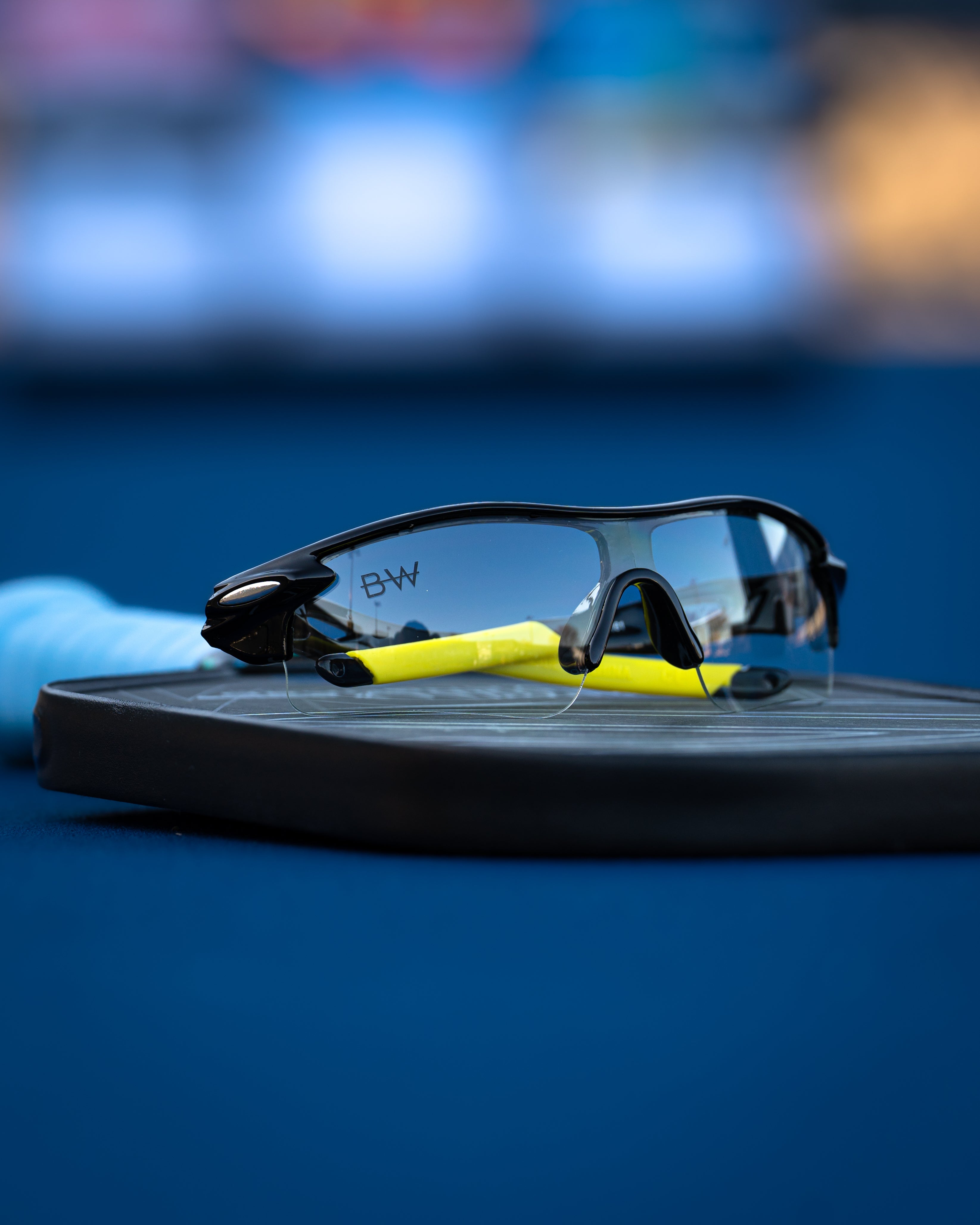
How UV Radiation Affects Athletes’ Eyes and the Best Protection Methods
Share
Find Your Perfect Pickleball Glasses
Looking for sports eyewear that protects your eyes while you play? Explore prescription and non-prescription pickleball glasses designed for outdoor performance, visual clarity, and everyday protection.
How UV Radiation Affects Athletes’ Eyes and the Best Protection Methods
Athletes spend more time outdoors than many people realize. Whether you're playing pickleball, cycling, running, golfing, playing tennis, or training on an outdoor field, your eyes can be exposed to ultraviolet (UV) radiation every time you practice or compete outside.
UV exposure isn't something you can judge by how bright the day feels. UV radiation can still reach your eyes when conditions are cloudy, and reflected light from surfaces such as water, sand, and snow can increase exposure. The American Optometric Association recommends sunglasses that block 99–100% of both UVA and UVB radiation.
For athletes, eye protection has an additional challenge: eyewear needs to protect against sunlight without interfering with the visual skills required for sport. That means choosing protection based on UV performance, coverage, optical quality, fit, impact resistance, and playing conditions—not simply choosing the darkest sunglasses you can find.
Why UV Protection Matters for Athletes
Your eyes are exposed to the same sunlight that reaches the rest of your body, but the effects of UV exposure on the eyes can be easy to overlook because the damage isn't necessarily obvious immediately.
According to the American Optometric Association, excessive UV exposure can cause short-term photokeratitis—essentially a sunburn-like injury to the eye. Longer-term exposure is associated with conditions including cataracts, pterygium, and certain cancers involving the eye and surrounding tissues.
For athletes who train outdoors regularly, the issue is cumulative exposure. A single practice session may not seem significant, but repeated exposure over months and years adds up.
That makes UV protection less about one particularly sunny afternoon and more about building a consistent habit whenever you're outdoors.
How UV Radiation Can Affect an Athlete's Eyes
1. Photokeratitis: The "Sunburn" of the Eye
Short-term exposure to excessive UV radiation can cause photokeratitis, an inflammation of the cornea caused by UV exposure.
Symptoms can include:
- Eye redness
- Excessive tearing
- Light sensitivity
- A gritty or foreign-body sensation
- Eye discomfort or pain
The American Optometric Association describes photokeratitis as typically temporary, but it can be painful and disruptive to an athlete's training or competition.
2. Long-Term UV Exposure and Cataracts
Cataracts involve clouding of the eye's natural lens and can affect vision over time. UV exposure is one of the environmental factors associated with cataract development.
For athletes, that is another reason not to treat sunglasses as an optional accessory. If outdoor training is a regular part of your lifestyle, consistent UV protection is a simple preventive habit.
3. Pterygium and Other Surface Changes
Long-term exposure to sunlight can contribute to pterygium, a growth of tissue on the eye's surface. Wind, dust, and dry outdoor conditions can add another layer of irritation for athletes who spend significant time outside.
Wraparound or close-fitting sports sunglasses can provide additional coverage by reducing the amount of light and environmental exposure entering around the sides of the frame.
4. Eye and Eyelid Damage
UV exposure doesn't only concern the eyeball itself. The delicate skin around the eyes is also exposed to sunlight, which is why broader sun protection—including sunglasses, a hat or visor, and sunscreen appropriate for the surrounding skin—is recommended.
Why Athletes Have Unique Eye-Protection Needs
A pair of everyday fashion sunglasses may provide UV protection, but athletes have additional requirements.
Sports eyewear has to stay in place while the athlete moves. It may also need to handle sweat, wind, dust, rapid head movement, and—in sports involving flying balls or equipment—potential impact.
The American Optometric Association specifically recommends impact-resistant materials such as polycarbonate or Trivex for potentially eye-hazardous outdoor sports.
In other words, UV protection and impact protection are different things. The best sports eyewear considers both when the sport and environment call for it.
UV Protection vs. Impact Protection: Know the Difference
One of the most common mistakes athletes make is assuming that any sunglasses automatically provide sufficient protection from everything that can happen on a court or field.
- UV protection helps reduce exposure to ultraviolet radiation.
- Impact-resistant construction helps protect against flying objects and accidental impacts.
- Frame coverage helps reduce exposure entering from the sides.
- Secure fit helps keep the eyewear positioned correctly during movement.
A sports-specific pair can therefore provide advantages that ordinary fashion frames may not.
What to Look for in UV-Protective Sports Sunglasses
100% UVA and UVB Protection
This should be your first checkpoint.
Look for sunglasses labeled 100% UV protection or UV400. The FDA explains that sunglasses labeled UV400 or 100% UV protection block more than 99% of UVA and UVB radiation.
Don't assume that a dark lens automatically provides UV protection. Lens darkness and UV protection are separate characteristics.
Wraparound or Close-Fitting Coverage
Coverage matters because sunlight doesn't only approach your eyes straight from the front.
A close-fitting or wraparound design can reduce exposure entering from the sides while also helping shield the eyes from wind and airborne debris. The AOA recommends close-fitting, contoured frames for additional protection.
Impact-Resistant Lenses When Appropriate
If your sport involves a realistic risk of being struck by a ball, paddle, racket, stick, or other object, consider sports eyewear designed for impact protection.
Polycarbonate and Trivex are examples of impact-resistant lens materials recommended by the AOA for potentially hazardous outdoor sports.
A Secure Athletic Fit
Your sunglasses aren't protecting your eyes effectively if they constantly slide down your nose or move out of position during play.
Look for:
- Secure nose fit
- Comfortable temple grip
- A frame that stays stable during rapid movement
- Coverage appropriate for your sport
- Enough ventilation to help manage fogging
Optical Clarity
Protection shouldn't come at the expense of your ability to see the ball.
For athletes, distorted lenses can be distracting and may interfere with visual tracking. Quality sports eyewear should provide clear, consistent optics across the useful portion of the lens.
Does Lens Color Determine UV Protection?
No.
This is one of the most important things athletes should understand before buying sunglasses.
A dark gray lens isn't automatically more protective from UV radiation than a light amber lens. Likewise, a clear lens can be engineered to provide UV protection.
The FDA specifically warns consumers not to mistake dark tint for UV protection.
Instead of choosing based on darkness, look for a verified UV-protection specification.
What Lens Tint Is Best for Athletes?
Once adequate UV protection is confirmed, tint becomes a performance and comfort decision.
Gray Lenses
Gray lenses can reduce overall brightness while maintaining relatively natural color perception. They can be a practical choice for bright outdoor conditions.
Amber, Bronze, or Copper Lenses
Warm tints can increase perceived contrast in some environments and may appeal to athletes who want help distinguishing moving objects against complex backgrounds.
Clear Lenses
Clear lenses can be useful when UV protection is needed but visible light is limited, such as certain indoor environments or low-light conditions.
The key is to match the lens transmission and tint to the actual environment rather than assuming one color is best for every sport.
Are Polarized Sunglasses Better for Athletes?
Not necessarily. Polarization and UV protection address different aspects of eyewear performance.
Polarized lenses can reduce reflected glare, which may be especially useful for athletes dealing with bright reflections from horizontal surfaces. However, polarization isn't required to achieve UV protection.
For sports, the better question is: Does the lens provide the visual performance and comfort you need in your environment?
Outdoor athletes who regularly deal with intense reflected glare may appreciate polarization, while others may prefer non-polarized lenses based on their sport, lighting conditions, or visual preferences.
UV Protection for Pickleball Players
Pickleball is a particularly useful example because players can spend hours tracking a fast-moving ball against bright skies, court surfaces, fences, and surrounding structures.
Outdoor pickleball players should consider eyewear that combines:
- 100% UVA/UVB protection or UV400-rated protection
- Appropriate tint for the lighting conditions
- Impact-resistant construction when appropriate
- Secure athletic fit
- Good peripheral coverage
- Clear, distortion-free optics
For prescription players, RX sports eyewear can combine vision correction with the protection and lens characteristics needed for outdoor play.
For players who don't need prescription correction, non-RX sports sunglasses can provide the same basic goal: comfortable, protected vision during outdoor activity.
Best UV Protection Methods for Outdoor Athletes
1. Wear UV-Protective Sunglasses Consistently
Don't save your sunglasses only for extremely bright days. UV radiation is present even when conditions don't feel intensely sunny.
The AOA recommends wearing sunglasses whenever your eyes are exposed to UV radiation, including on cloudy days and during winter months.
2. Choose Adequate Coverage
Look for frames that fit close to the face and provide useful coverage around the eyes. Wraparound designs can reduce peripheral exposure and may also help protect against wind and dust.
3. Add a Hat or Visor
Sunglasses aren't your only defense against sunlight. A hat or visor can help reduce direct overhead exposure and complement your sunglasses.
4. Use Sport-Appropriate Protective Eyewear
If your activity involves impact risk, choose eyewear designed for that hazard instead of relying on ordinary prescription glasses or casual sunglasses.
Regular prescription glasses and contact lenses should not automatically be considered substitutes for appropriate sports protection.
5. Replace Damaged or Heavily Scratched Eyewear
Sports eyewear takes a beating. Scratches, damaged frames, loose components, or compromised lenses are reasons to evaluate whether your eyewear should be replaced.
6. Get Regular Eye Exams
Preventive eye care is part of protecting your long-term vision. An eye-care professional can assess your individual vision needs and recommend appropriate eyewear based on your activities and exposure.
Do Athletes Need UV Protection on Cloudy Days?
Yes.
Cloud cover doesn't mean UV radiation disappears. The AOA recommends UV-protective sunglasses even on cloudy days, and the FDA notes that reflected sunlight from surfaces such as water, sand, and snow can increase UV exposure.
This is particularly relevant for athletes because outdoor training often lasts much longer than a normal walk outside.
Does Sweat Affect UV Protection?
Sweat itself doesn't make UV radiation stronger, but it can make poorly fitted eyewear less effective as a practical piece of sports equipment.
If sunglasses constantly slide down your face, you may be tempted to remove them or adjust them repeatedly during play. A secure athletic fit makes it easier to keep protection in place for the entire session.
Sweat-resistant nose pads, secure temples, and an appropriately contoured frame can therefore improve comfort and consistency during exercise.
UV Protection and Indoor Athletes
Most everyday UV exposure for athletes comes from sunlight, but certain artificial sources can also emit UV radiation. The AOA specifically notes that artificial sources such as welding equipment, tanning beds, and lasers can create significant UV hazards.
For ordinary indoor sports, however, the more immediate eyewear priorities may be optical clarity, impact protection, light transmission, and glare control rather than outdoor-style sun tint.
Always choose protection according to the actual hazard and environment.
Common UV Protection Mistakes Athletes Make
“My Sunglasses Are Dark, So They Must Block UV.”
False. Darkness doesn't guarantee UV protection. Look for a UV400 or 100% UV-protection claim.
“It's Cloudy, So I Don't Need Sunglasses.”
False. UV radiation can still reach your eyes under cloudy conditions.
“Any Sports-Looking Frame Is Protective.”
Not necessarily. A frame can look athletic without being designed for impact protection. Consider the actual construction and protection requirements of your sport.
“My Regular Prescription Glasses Are Enough.”
Regular prescription eyewear provides vision correction, but it isn't automatically designed to withstand sports-related impact. The AOA recommends sport-specific protective eyewear when the activity creates an eye-injury risk.
“I Only Need Protection During Competition.”
Training counts too. If you're spending hours practicing outdoors, your eyes are still being exposed to UV radiation.
Athlete's UV Protection Checklist
- ☑ Choose sunglasses that block 99–100% of UVA and UVB.
- ☑ Look for UV400 or 100% UV-protection labeling.
- ☑ Don't use lens darkness as a substitute for UV protection.
- ☑ Choose coverage appropriate for your sport.
- ☑ Consider impact-resistant materials when your sport involves flying objects.
- ☑ Make sure the frame stays secure during movement.
- ☑ Match lens tint and transmission to your lighting conditions.
- ☑ Wear sunglasses outdoors even when it's cloudy.
- ☑ Consider a hat or visor for additional sun protection.
- ☑ Replace damaged eyewear.
- ☑ Maintain regular comprehensive eye exams.
FAQ: UV Radiation and Athletes' Eyes
What does UV radiation do to your eyes?
Excessive UV exposure can cause short-term problems such as photokeratitis and, over time, contribute to conditions including cataracts and pterygium. The risk is associated with cumulative exposure over a lifetime.
What is the best UV protection for athletes?
Start with sunglasses that provide 99–100% UVA and UVB protection or are labeled UV400. Then choose sport-appropriate coverage, fit, optics, tint, and—when needed—impact-resistant construction.
Does UV400 mean 100% UV protection?
UV400 is a commonly used designation for sunglasses intended to block ultraviolet wavelengths through 400 nanometers. The FDA advises consumers to look for UV400 or 100% UV-protection labeling when selecting sunglasses.
Are dark sunglasses better for UV protection?
No. A dark tint does not automatically mean stronger UV protection. UV protection should be verified separately from lens darkness.
Do athletes need sunglasses on cloudy days?
Yes. UV radiation is still present outdoors on cloudy days, so consistent UV-protective eyewear is recommended whenever your eyes are exposed to UV radiation.
Are polarized lenses necessary for UV protection?
No. Polarization is primarily a glare-management feature. Sunglasses can provide UV protection whether they are polarized or non-polarized.
Are prescription sunglasses safe for athletes?
Prescription sports eyewear can provide vision correction and UV protection, but athletes should also consider whether the frame and lenses provide the impact protection appropriate for their specific sport.
What type of sunglasses are best for outdoor sports?
Look for verified UV protection, appropriate lens transmission, good optical clarity, secure fit, adequate coverage, and impact-resistant construction when the sport presents an impact hazard.
Protect Your Vision. Protect Your Performance.
Your eyes are part of your athletic equipment. Every time you track a ball, judge distance, read an opponent's movement, or react to a fast-changing play, you're relying on your visual system.
UV protection doesn't have to be complicated. Choose eyewear with verified UV protection, match the lens to your environment, make sure the frame stays secure, and use sport-appropriate impact protection when necessary.
For outdoor pickleball players, that means choosing eyewear that can handle both the sun and the demands of the court.
Explore the Best Pickleball Sunglasses for Outdoor Play
Take the Pickleball Sunglasses Quiz
Final Takeaway
UV radiation is an everyday environmental exposure that athletes shouldn't ignore. Short-term overexposure can cause painful eye irritation, while cumulative exposure is associated with longer-term eye-health risks.
The best protection strategy is straightforward: wear quality sunglasses with verified UVA/UVB protection, choose coverage and fit appropriate for your sport, use impact-resistant sports eyewear when needed, and match your lens to your playing conditions.
For athletes, protecting your eyes isn't just about seeing better today. It's about protecting the vision you depend on for every practice, match, and competition in the years ahead.