Mission vs Brand: Why Blinded Wear Co. Walk
Share
Mission vs. Brand: Why Blinded Wear Co. Walks the Talk
A brand is what a company sells. A mission is why it exists. The strongest companies connect the two so customers understand not only what they are buying, but what the business is trying to stand for.
For Blinded Wear Co., that means combining performance-focused eyewear with a broader mission centered on vision and access. The brand side focuses on helping players find prescription and non-prescription pickleball eyewear that fits their needs. The mission side explains the values and purpose behind the company.
Those two ideas should support each other without relying on exaggerated product claims or vague promises.
Find Your Pickleball Glasses
If you are here primarily to shop, start with the collection that matches your vision needs.
What Is the Difference Between a Brand and a Mission?
A brand includes the products, positioning, visual identity, customer experience, and reputation associated with a company.
A mission explains the purpose or values the company wants to pursue beyond simply completing a sale.
| Brand | Mission |
|---|---|
| What customers buy | Why the company exists |
| Product experience | Purpose and values |
| Design and positioning | Long-term impact goals |
| Customer expectations | Principles behind business decisions |
For a mission-driven business, the goal is for those two sides to stay aligned.
What Does the Blinded Wear Brand Stand For?
Blinded Wear is built around sports eyewear with a strong focus on pickleball players.
Verified product characteristics include:
- Prescription eyewear options
- Non-prescription eyewear options
- High-index prescription lenses included at no additional cost
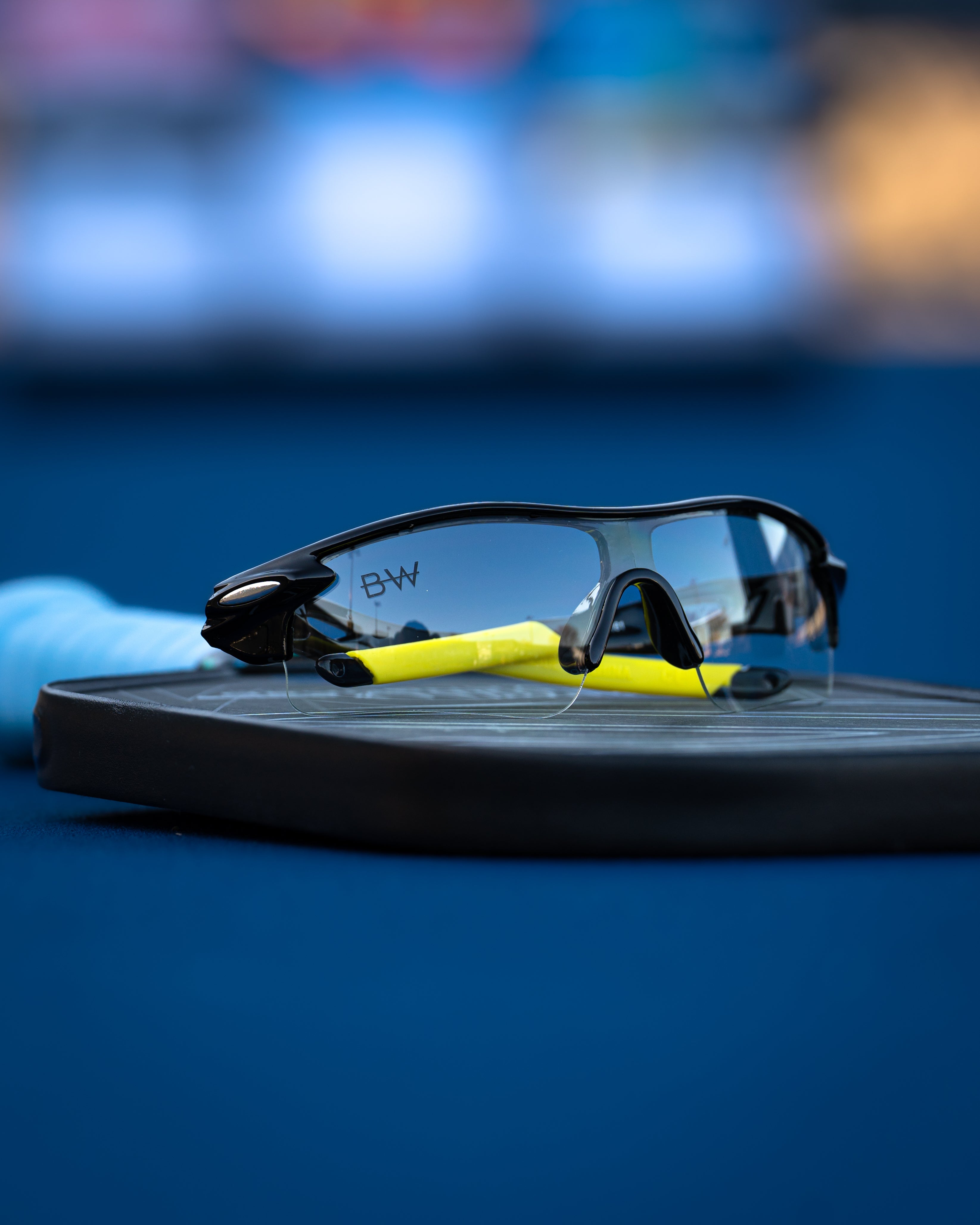
- Lightweight sports frames
- Impact-resistant lenses
- Non-polarized lenses
- Comfort for extended matches
- Performance-first design
- Suitability for recreational and competitive players
The brand promise should begin with those tangible product characteristics rather than unsupported claims about guaranteed athletic performance.
What Is the Blinded Wear Mission?
Blinded Wear presents its mission around supporting children's vision and connecting eyewear purchases with a broader social purpose.
The most accurate way to understand that mission is through the company's dedicated mission page, where current initiatives and commitments can be described directly.
Learn About the Blinded Wear Mission →
For mission-driven claims, current published information should always take priority over broad statements that cannot be independently verified.
Why Mission and Brand Alignment Matters
Customers can usually tell when a company's mission feels disconnected from what it actually sells.
Mission-brand alignment is stronger when:
- The product category naturally connects to the cause.
- The company explains its mission clearly.
- Product claims remain accurate.
- Impact claims are specific rather than vague.
- Customers can find more information about the initiative.
- The company avoids turning the mission into exaggerated marketing.
Because Blinded Wear sells eyewear, a mission centered on vision creates a natural connection between product and purpose.
Performance and Purpose Should Support Each Other
A social mission does not replace the need for a useful product.
Customers shopping for sports eyewear still need clear answers about:
- Whether they need RX or non-RX eyewear
- Whether a frame supports their prescription
- How the eyewear fits
- Whether the lenses are impact-resistant
- Whether the lens configuration fits indoor or outdoor play
- Which features are verified on the exact product
The mission can strengthen the reason a customer chooses a brand, but the eyewear itself still needs to meet the shopper's practical needs.
Prescription Eyewear Is a Core Part of the Brand
For players who need vision correction, Blinded Wear offers prescription pickleball eyewear rather than requiring customers to rely on ordinary everyday frames for court use.
RX customers also receive high-index prescription lenses at no additional cost.
To order Blinded Wear RX eyewear, customers upload a clear photo of their eyeglass prescription before purchasing.
The Brand Also Serves Players Who Do Not Need Prescription Lenses
Not every athlete needs built-in prescription correction.
Non-RX sports eyewear can make sense for players who:
- Do not need corrective lenses
- Wear contact lenses during play
- Want dedicated pickleball eyewear
- Prefer to keep vision correction separate from their sports glasses
What Can Customers Verify About Blinded Wear?
| Brand Promise | Verified Offering |
|---|---|
| Prescription options | Yes |
| Non-prescription options | Yes |
| High-index RX lenses | Included at no additional cost |
| Lightweight sports frames | Yes |
| Impact-resistant lenses | Yes |
| Non-polarized lenses | Yes |
| Pickleball-focused design | Yes |
| Extended-match comfort | Yes |
| 50% lifetime replacement warranty if glasses break | Yes |
Why Mission-Driven Brands Still Need Accurate Product Claims
A strong mission does not make unsupported product claims more acceptable.
Blinded Wear should avoid presenting unverified collection-wide claims such as:
- ANSI certification without documentation
- Shatter-proof or unbreakable lenses
- Universal anti-fog technology
- Universal scratch-resistant coatings
- Guaranteed no-slip fit
- Guaranteed improvement in reaction time
- Guaranteed improvement in depth perception
- Guaranteed athletic performance gains
Trust is stronger when product claims are specific, verifiable, and separated from aspirational brand language.
Why Does Blinded Wear Use Non-Polarized Lenses?
Blinded Wear uses non-polarized lenses as part of its pickleball-focused approach.
Non-polarized lenses preserve natural visual information without adding a polarization filter, which avoids potential depth-perception concerns some players may associate with polarization during court sports.
This should not be turned into a universal claim that polarized lenses are bad for pickleball or always reduce depth perception.
The brand position is about offering a non-polarized court-focused option, not claiming that one lens technology is universally superior for every athlete.
Why Impact-Resistant Lenses Fit a Sports-Eyewear Brand
Sports eyewear experiences movement and active use, which makes lens construction relevant.
Blinded Wear uses impact-resistant lenses, but that term should be used accurately.
Impact-resistant does not automatically mean:
- Shatter-proof
- Unbreakable
- Impact-proof
- ANSI-certified
- Certified to another named safety standard
If a customer requires a specific certification, it should be verified for the exact product.
A Product Example: Crystal Wave II RX
Crystal Wave II RX is one of the verified Blinded Wear prescription options customers can compare when shopping for sports-focused RX eyewear.
Rather than labeling it with unsupported claims such as “best-selling,” “professional favorite,” or guaranteed performance advantages, shoppers should evaluate it based on:
- Prescription compatibility
- Frame fit
- Current lens options
- Playing environment
- Personal style preferences
Another RX Option: Frost RX
Frost RX gives prescription shoppers another verified frame to compare within the Blinded Wear lineup.
The decision between RX models should be based on the exact frame, prescription compatibility, fit, and currently available lens configuration rather than broad claims that one design is best for every player.
What Makes a Mission Credible?
A mission becomes more credible when customers can understand what the company is trying to accomplish and where to find current information about it.
Useful signs include:
- A dedicated mission page
- Specific descriptions of the cause being supported
- Clear separation between product facts and mission language
- No fabricated impact statistics
- No invented testimonials
- No vague claims presented as measurable facts
Mission credibility comes from transparency, not from making the mission sound larger than the available evidence supports.
How Is a Real Mission Different From Cause Marketing?
Cause marketing is primarily a campaign. A company mission is broader and should influence how the company communicates, positions its products, and makes decisions over time.
| Short-Term Cause Marketing | Long-Term Mission |
|---|---|
| Often tied to a campaign | Part of the company's broader identity |
| Can be temporary | Intended to persist over time |
| Often focused on promotion | Should influence broader brand decisions |
| May center on one event | Should remain visible beyond a single campaign |
Customers should still evaluate the actual published mission details rather than assuming every purpose-driven statement represents a specific measurable impact.
Should a Company's Mission Affect Which Eyewear You Buy?
That depends on what matters to you.
A practical order of priorities is:
-
Make Sure the Product Fits Your Needs
Start with prescription, fit, lens construction, and your playing environment.
-
Compare Value
Evaluate what is included in the purchase, including prescription lens options and warranty terms.
-
Consider Brand Values
If two options both meet your practical needs, the company's mission may help determine which brand you prefer to support.
A mission should strengthen a good product decision rather than replace one.
How Does the Replacement Warranty Fit the Brand Promise?
Blinded Wear offers a 50% lifetime replacement warranty if the glasses break.
A replacement policy matters because brand trust is shaped not only by marketing before the purchase, but by what happens after the customer owns the product.
Customers should review the current terms before ordering.
Why We Avoid Invented Testimonials
Customer trust should be built with real customer feedback rather than quotations that cannot be verified.
That is especially important for a mission-driven brand. A company cannot credibly emphasize integrity while using fabricated testimonials, unverified athlete endorsements, or invented impact stories.
Product facts, genuine customer feedback, and published mission information should remain clearly distinguishable.
Why Impact Claims Should Be Specific
Statements such as “every order changes a life,” “every sale funds an eye exam,” or exact donation totals should only be used when the company can support those statements with current information.
A more trustworthy approach is to explain the mission accurately and direct readers to the current mission page for details.
From Brand Purpose to the Right Pair
If the Blinded Wear mission resonates with you, the next step is still choosing eyewear that matches your actual needs.
| Your Situation | Starting Point |
|---|---|
| I need prescription correction | RX pickleball glasses |
| I already wear contacts | Non-RX pickleball glasses |
| I do not need corrective lenses | Non-RX pickleball glasses |
| I mostly play indoors | Clear lens eyewear |
| I am not sure which pair fits my needs | Take the pickleball glasses quiz |
Shop the Brand. Understand the Mission.
If you want performance-focused pickleball eyewear, start with the collection that fits your vision needs.
Shop Non-RX Pickleball Glasses →
If you want to understand the purpose behind the company:
Explore the Blinded Wear Mission →
Still deciding which eyewear fits your needs?
How Can Customers Tell Whether a Mission-Driven Brand Is Genuine?
A mission becomes more credible when customers can see a clear connection between what a company says and how it operates.
Useful trust signals include:
- A dedicated mission page
- Specific explanations of the cause being supported
- Accurate product claims
- Clear warranty and return information
- No fabricated testimonials
- No invented donation totals or impact statistics
- Consistent messaging across the website
A mission does not become more believable because it sounds emotional. It becomes more believable when the details are clear and consistent.
Why Product Quality Still Matters in a Purpose-Driven Brand
Customers should not have to choose between supporting a mission and buying a useful product.
The product should stand on its own first.
For Blinded Wear, that means focusing on verified sports-eyewear characteristics such as:
- Prescription availability
- Non-prescription availability
- High-index RX lenses included at no additional cost
- Lightweight sports frames
- Impact-resistant lenses
- Non-polarized lenses
- Pickleball-focused design
- Comfort for extended matches
The mission can add another reason to support the company, but it should never be used to distract from whether the eyewear actually fits the customer's needs.
Should You Buy From a Brand Because of Its Mission?
A mission can be part of your buying decision, but it should not be the only factor.
A practical order is:
-
Confirm the Product Fits Your Needs
Check prescription compatibility, frame fit, lens construction, and playing environment.
-
Compare Value
Look at what is included in the price, including high-index RX lenses, warranty terms, and the type of sports frame.
-
Evaluate the Mission
If the product already fits your needs, the company's values and social purpose can help you decide which brand you prefer to support.
A mission is strongest when it adds meaning to a solid purchase rather than trying to compensate for a weak one.
How Does Blinded Wear Add Value for Prescription Athletes?
Prescription sports eyewear can become expensive when lens upgrades are added separately.
Blinded Wear includes high-index prescription lenses at no additional cost for RX customers.
That gives shoppers a clearer way to compare total purchase value rather than looking only at the initial frame price.
RX customers also upload a clear photo of their eyeglass prescription before purchasing.
What About Players Who Do Not Need an RX?
Blinded Wear also offers non-prescription sports eyewear for players who:
- Do not need corrective lenses
- Already wear contact lenses
- Prefer a dedicated non-RX sports setup
- Want pickleball-focused eyewear without built-in prescription correction
Does the Brand Serve Different Playing Environments?
Yes. The right sports eyewear depends partly on where you play.
| Playing Environment | Practical Starting Point |
|---|---|
| Indoor courts | Clear lens eyewear |
| Night play | Clear or another appropriate low-light setup |
| Bright outdoor courts | An appropriate sunglass tint |
| Mixed environments | Consider separate clear and tinted pairs or another verified lens option |
The brand's role is to give players options. The customer's job is to choose the setup that matches the actual environment.
What Does It Mean to “Walk the Talk” as a Brand?
For a mission-driven company, “walking the talk” should mean more than repeating a slogan.
It means aligning:
- What the company says it believes
- What the company sells
- How accurately the products are described
- How transparent the mission is
- How customers are treated after purchase
That is why both the mission page and the product experience matter.
A Brand Promise Continues After the Sale
Mission and brand trust are not limited to the checkout page.
Customers also judge a company by:
- Whether product descriptions were accurate
- Whether the frame and lenses match what was promised
- How clear replacement and return policies are
- Whether customer expectations were set realistically
Blinded Wear offers a 50% lifetime replacement warranty if the glasses break, subject to the current policy terms.
Why Transparency Is Part of Brand Integrity
A trustworthy brand should be willing to say both what is verified and what still needs to be checked on the exact product.
For example, Blinded Wear can confidently communicate collection-wide verified facts such as:
- Prescription options are available.
- Non-prescription options are available.
- High-index prescription lenses are included at no additional cost.
- The lenses are impact-resistant.
- The lenses are non-polarized.
- The frames are lightweight and sports-focused.
But claims such as universal anti-fog treatment, scratch-resistant coatings, specific UV ratings, and named protective certifications should only be made when they are verified for the exact product.
What Mission-Driven Brands Should Avoid Saying
Purpose-driven marketing should not become a reason to exaggerate.
| Weak Claim | Better Approach |
|---|---|
| “Every purchase changes a child's life.” | Explain the current mission accurately and link to the mission page. |
| “Every pair is ANSI-certified.” | Only state a certification when it is documented for that product. |
| “Our lenses never fog.” | Verify whether anti-fog treatment exists on the exact lens. |
| “Our glasses improve your reaction time.” | Focus on verified product characteristics instead of guaranteed performance. |
| “Our customers all buy because of our mission.” | Use genuine customer feedback rather than invented sentiment. |
How Should Social Impact Be Communicated?
Social-impact language is most credible when it is specific and current.
Good mission communication should answer questions such as:
- What cause does the company support?
- How does the initiative relate to the brand?
- Where can customers read the current details?
- Are any impact claims measurable and documented?
- Are old claims being updated when the program changes?
Customers who want the latest information should use the dedicated mission page rather than relying on outdated marketing copy.
Why Brand Values Matter to Some Customers
Two products can meet similar practical needs while coming from companies with very different priorities.
For shoppers who care about brand values, factors may include:
- The company's social mission
- How transparent its claims are
- How it treats customers
- Whether the product category connects naturally to the cause
- Whether the company avoids misleading marketing
That does not mean every shopper has to prioritize mission. It means values can become a meaningful differentiator once the product itself meets the buyer's needs.
Why Pickleball Is Central to the Blinded Wear Brand
Blinded Wear has positioned its sports eyewear around pickleball players rather than presenting every frame as a universal solution for every sport.
That focus helps the brand organize products around common pickleball needs such as:
- Prescription correction
- Non-RX options for contact-lens wearers
- Indoor and outdoor playing conditions
- Lightweight comfort
- Impact-resistant lens construction
- Non-polarized lens options
Players who want a broader comparison can use the 2026 pickleball glasses guide.
How Do Non-Polarized Lenses Fit the Brand Positioning?
Blinded Wear uses non-polarized lenses in its pickleball-focused eyewear.
Non-polarized lenses preserve natural visual information without adding a polarization filter.
For court play, some athletes prefer that setup because they want to avoid potential depth-perception concerns they may associate with polarization.
This is a preference and design approach, not proof that polarized lenses are universally bad for pickleball.
How Does Impact Resistance Fit a Sports Brand?
Sports eyewear is exposed to active movement, making lens construction an important consideration.
Blinded Wear uses impact-resistant lenses across its sports-focused eyewear.
That claim should remain distinct from stronger terms such as:
- Unbreakable
- Shatter-proof
- Impact-proof
- ANSI-certified
Those stronger claims require their own supporting evidence.
Why High-Index Lenses Matter to the Brand Experience
High-index lens material can be an important consideration for some prescription customers, especially when comparing total RX pricing.
Blinded Wear includes high-index prescription lenses at no additional cost rather than presenting them as a separate paid upgrade.
That is a concrete part of the customer experience that can be evaluated independently of the company's mission language.
How Does the Blinded Wear RX Ordering Process Work?
For prescription orders, customers upload a clear photo of their eyeglass prescription before purchasing.
- Choose a prescription frame.
- Prepare a clear photo of your eyeglass prescription.
- Make sure the prescription information is readable.
- Upload the image before purchasing.
- Complete the order with the selected frame and available lens configuration.
This keeps the prescription process directly connected to the customer's RX order.
Compare Verified Blinded Wear RX Options
Different players may prefer different frame designs, so there is no need to declare one model universally best.
| RX Model | Best Way to Evaluate It |
|---|---|
| Frost RX | Compare fit, current lens options, and prescription compatibility. |
| Smoked Shadow RX | Compare frame design, dimensions, and current RX options. |
| Lava Rock RX | Evaluate fit, prescription compatibility, and personal style. |
| Sea Sand RX | Compare fit and available prescription configuration. |
| Blue Shield RX | Review frame fit and currently available RX options. |
| Crystal Wave II RX | Compare prescription compatibility, fit, and current lens options. |
| Heatseek RX | Evaluate fit and available prescription setup. |
| Runway RX | Compare frame design, fit, and RX compatibility. |
| Cold Slate RX | Review prescription compatibility and fit. |
Why We Avoid Calling Products “Best-Selling” Without Proof
Terms such as “best-selling,” “most trusted,” “athlete favorite,” and “number one” sound persuasive, but they should only be used when the brand has data that supports them.
A more useful approach is to help shoppers compare actual product characteristics rather than relying on popularity claims.
That keeps product marketing aligned with the same transparency expected from a mission-driven company.
How Should Customer Feedback Fit Into a Mission-Driven Brand?
Customer feedback can be valuable when it is genuine and clearly presented.
It should not be fabricated to make a product or mission appear more popular than it is.
When evaluating testimonials, shoppers should distinguish between:
- Verified product facts
- Individual customer opinions
- Brand messaging
- Mission claims
Each serves a different purpose and should not be presented as interchangeable evidence.
Does Supporting a Better Brand Mission Mean Better Athletic Performance?
No. A company's mission and an athlete's performance are separate issues.
Likewise, sports eyewear should not be expected to guarantee:
- More wins
- Faster reaction time
- Better rankings
- Improved depth perception
- Better ball tracking
- Higher athletic skill
Eyewear can provide the correction, lens setup, and frame characteristics it is designed to provide. Athletic performance still depends on the player.
Not Sure Which Blinded Wear Pair Fits You?
Start with three questions:
- Do you need prescription correction?
- Where do you play most often?
- What type of frame and lens setup fits your needs?
If you still are not sure, use the Blinded Wear pickleball sunglasses quiz as a starting point.
Choose the Product First, Then Decide Whether the Mission Matters to You
If you need prescription sports eyewear:
If you need non-prescription sports eyewear:
Shop Non-RX Pickleball Glasses →
If you want to compare the wider pickleball lineup:
View the 2026 Pickleball Glasses Guide →
If the company's purpose is part of your buying decision:
Frequently Asked Questions About Blinded Wear’s Brand and Mission
What is Blinded Wear Co.?
Blinded Wear Co. is a sports-eyewear brand with a strong focus on pickleball players. The company offers both prescription and non-prescription eyewear and positions its brand around performance-focused design, vision, and a broader social mission.
What is the Blinded Wear mission?
Blinded Wear presents its mission around supporting children's vision and connecting the eyewear category with a broader purpose. For the current details, customers should use the dedicated mission page rather than relying on older marketing copy.
Read the Blinded Wear Mission →
Is Blinded Wear only a mission-driven brand?
No. The mission is part of the company identity, but the product itself still needs to serve practical needs such as prescription correction, fit, lens construction, comfort, and playing environment.
Does every purchase support children's vision?
Customers should refer to the current Blinded Wear mission page for the most accurate description of how purchases connect to the company's social-impact initiative. Broad claims about the exact impact of every order should only be made when the current mission details support them.
Does Blinded Wear sell prescription pickleball glasses?
Yes. Blinded Wear offers prescription pickleball eyewear and includes high-index prescription lenses at no additional cost.
How do prescription customers order?
RX customers upload a clear photo of their eyeglass prescription before purchasing and select the frame and available lens configuration for their order.
Does Blinded Wear sell non-prescription pickleball glasses?
Yes. Non-RX options are available for players who do not need vision correction or who already use contact lenses.
Are Blinded Wear lenses polarized?
No. Blinded Wear uses non-polarized lenses in its pickleball-focused eyewear.
Why does Blinded Wear use non-polarized lenses?
Non-polarized lenses preserve natural visual information without adding a polarization filter. Some court players prefer this setup because they want to avoid potential depth-perception concerns they may associate with polarization. This does not mean polarized lenses universally cause depth-perception problems.
Are Blinded Wear lenses impact-resistant?
Yes. Blinded Wear uses impact-resistant lenses. Impact resistance should not automatically be interpreted as shatter-proof, unbreakable, or certified to a named protective standard.
Are Blinded Wear glasses ANSI-certified?
Do not assume a particular ANSI certification unless it is documented for the exact product.
Are Blinded Wear glasses anti-fog or scratch-resistant?
Those features should be verified for the exact product or lens configuration rather than assumed across the entire collection.
Does Blinded Wear offer a warranty?
Yes. Blinded Wear offers a 50% lifetime replacement warranty if the glasses break, subject to the current policy terms.
Is Blinded Wear only for competitive pickleball players?
No. Blinded Wear eyewear is suitable for both recreational and competitive players.
Can a company mission make the eyewear perform better?
No. Brand purpose and athletic performance are separate. The mission may influence which company a customer wants to support, but it does not guarantee better reaction time, rankings, depth perception, or athletic ability.
How Should You Evaluate a Mission-Driven Eyewear Brand?
A useful way to evaluate a purpose-driven company is to separate three questions.
-
Does the Product Meet My Needs?
Start with prescription compatibility, frame fit, lens construction, comfort, and playing environment.
-
Are the Claims Accurate?
Look for specific, verifiable product and mission statements rather than exaggerated promises.
-
Do the Values Matter to Me?
If the product already works for your needs, the company mission can become an additional reason to choose one brand over another.
What Evidence Should Support a Brand Mission?
Mission-driven businesses are strongest when customers can separate aspiration from evidence.
| Type of Claim | What Customers Should Look For |
|---|---|
| Mission statement | A clear explanation of the company's purpose |
| Impact claim | Specific and current supporting information |
| Donation claim | Clear description of what is donated or supported |
| Product claim | Evidence that applies to the exact product |
| Customer testimonial | Genuine feedback rather than invented quotations |
| Certification claim | Documentation naming the exact applicable standard |
What Is “Purpose-Washing” and Why Should Brands Avoid It?
Purpose-washing happens when a company makes its social mission sound larger, more specific, or more measurable than the available evidence supports.
That can include:
- Using vague impact language without details
- Claiming every order produces a specific result without proof
- Inventing donation numbers
- Using emotional stories that cannot be verified
- Presenting marketing slogans as measurable impact
A stronger approach is to state the mission clearly, keep the details current, and avoid pretending the company has achieved more than it can substantiate.
Why Product Accuracy Is Part of the Mission
A company cannot build long-term trust around purpose while exaggerating what its products do.
For Blinded Wear, that means keeping verified claims separate from claims that require product-specific confirmation.
| Verified Brand-Wide Fact | Should Be Verified Per Product |
|---|---|
| Prescription options available | Specific UV specification |
| Non-RX options available | Scratch-resistant treatment |
| High-index RX lenses included at no extra cost | Anti-fog treatment |
| Lightweight sports frames | Anti-reflective coating |
| Impact-resistant lenses | Photochromic availability |
| Non-polarized lenses | Progressive compatibility |
| Pickleball-focused design | Named protective certification |
Can a Strong Mission Build Brand Loyalty?
Yes, but only when customers also have a good product and ownership experience.
Mission can strengthen loyalty when:
- The products meet expectations
- The company's values are clear
- The social purpose feels relevant to the category
- The company communicates honestly
- The after-purchase experience matches the pre-purchase promise
Brand loyalty is rarely created by a mission statement alone. It is built through repeated alignment between product, service, values, and trust.
What Kind of Social Proof Should a Mission-Driven Brand Use?
Useful social proof can include genuine customer reviews, documented partnerships, current impact reporting, and accurate product information.
It should not include:
- Invented five-star testimonials
- Unverified athlete endorsements
- Fabricated donation statistics
- Unsupported claims that “everyone” loves the brand
- False popularity labels such as “number one” or “best-selling” without evidence
Real proof is more persuasive over time than manufactured credibility.
What Makes a Mission Sustainable Over Time?
A sustainable mission needs to remain understandable even as the company grows.
That means:
- Keeping mission language current
- Updating impact information when programs change
- Removing outdated claims
- Separating measurable impact from aspiration
- Making it easy for customers to find mission details
- Keeping product marketing accurate at the same time
A mission should become clearer as a company grows, not more vague.
Why Does a Vision-Focused Mission Fit an Eyewear Brand?
The strongest mission-brand relationships usually have a logical connection between the product and the cause.
For an eyewear company, a mission related to vision has that natural connection.
Customers can understand the relationship immediately:
- The brand sells eyewear.
- The products relate directly to vision.
- The mission also centers on vision.
That connection can make the mission feel more coherent than an unrelated cause added only for marketing.
Why Might Athletes Care About the Brand Behind Their Gear?
Performance needs come first, but some athletes also care about what the companies they support represent.
A player may consider:
- Product quality
- Price and value
- Prescription options
- Warranty terms
- Company transparency
- Social mission
- Whether the company's values align with their own
The best outcome is not choosing between performance and purpose. It is finding a product that fits your needs from a company you are comfortable supporting.
Brand Promise Checklist: Does a Company Really Walk the Talk?
- Does the company clearly explain its mission?
- Can customers find the current mission information?
- Are impact claims specific rather than vague?
- Are product claims accurate?
- Are testimonials genuine?
- Are certifications only used when verified?
- Are return and replacement policies easy to find?
- Does the product itself meet the customer's needs?
- Does the cause logically connect with the company's category?
- Does the brand avoid guaranteed performance claims?
How Blinded Wear Connects Product and Purpose
| Area | Blinded Wear Approach |
|---|---|
| Product focus | Prescription and non-prescription sports eyewear with a strong pickleball focus |
| Prescription value | High-index RX lenses included at no additional cost |
| Sports design | Lightweight frames and impact-resistant lenses |
| Lens approach | Non-polarized lenses |
| Customer support | 50% lifetime replacement warranty if glasses break |
| Mission | Vision-focused social purpose described through the dedicated mission page |
Choose Blinded Wear Based on Your Actual Needs
| What You Need | Where to Start |
|---|---|
| Prescription pickleball eyewear | RX Pickleball Glasses |
| Non-prescription eyewear | Non-RX Pickleball Glasses |
| Indoor or low-light eyewear | Clear Lens Eyewear |
| Help choosing a pair | Pickleball Glasses Quiz |
| Compare the broader lineup | 2026 Pickleball Glasses Guide |
| Learn about the mission | Blinded Wear Mission |
Final Checklist Before Supporting a Mission-Driven Eyewear Brand
- Make sure the eyewear fits your prescription needs.
- Compare frame dimensions.
- Choose a lens setup appropriate for where you play.
- Verify any optional coating you care about.
- Verify any required protective certification.
- Review the warranty.
- Read the current mission information.
- Separate verified impact from aspirational language.
- Avoid relying on unsupported testimonials or popularity claims.
- Choose the company only after the product itself meets your needs.
Key Takeaways: Mission vs. Brand
- A brand explains what a company sells; a mission explains what it wants to stand for.
- The strongest companies align product, customer experience, and purpose.
- Blinded Wear's product focus is sports eyewear, particularly prescription and non-prescription pickleball eyewear.
- The company's broader mission centers on vision and social impact.
- A mission should complement a useful product, not replace one.
- Mission claims should be specific and current.
- Product claims should remain verifiable.
- Blinded Wear includes high-index RX lenses at no additional cost.
- Blinded Wear uses lightweight sports frames, impact-resistant lenses, and non-polarized lenses.
- RX customers upload a clear photo of their eyeglass prescription before purchasing.
- Blinded Wear offers a 50% lifetime replacement warranty if glasses break.
- Testimonials, certifications, impact numbers, and performance claims should never be invented.
- The most credible version of “walking the talk” is consistency between what a company says and what customers can verify.
Explore Blinded Wear
Final Verdict: Does Blinded Wear’s Mission Match Its Brand?
The most useful way to judge Blinded Wear is not by slogans alone, but by whether its product positioning, customer experience, and stated mission point in the same direction.
The product side focuses on sports eyewear and vision: prescription and non-prescription options, high-index RX lenses at no additional cost, lightweight frames, impact-resistant lenses, non-polarized lenses, and pickleball-focused design.
The mission side also centers on vision, creating a logical connection between what the company sells and what it wants to support.
That connection is strongest when the company keeps mission details current, avoids exaggerated impact language, and continues to separate verified product facts from marketing claims.
That is what “walking the talk” should mean: not being perfect, not making the biggest promises, but keeping the brand, product, and mission aligned in ways customers can actually understand and verify.
See the Product. Read the Mission. Decide What Matters to You.
Need prescription pickleball eyewear?
Need non-prescription eyewear?
Shop Non-RX Pickleball Glasses →
Want help choosing?
Take the Pickleball Glasses Quiz →
Want to compare the broader lineup?
View the 2026 Pickleball Glasses Guide →
Want to understand what the brand stands for?