
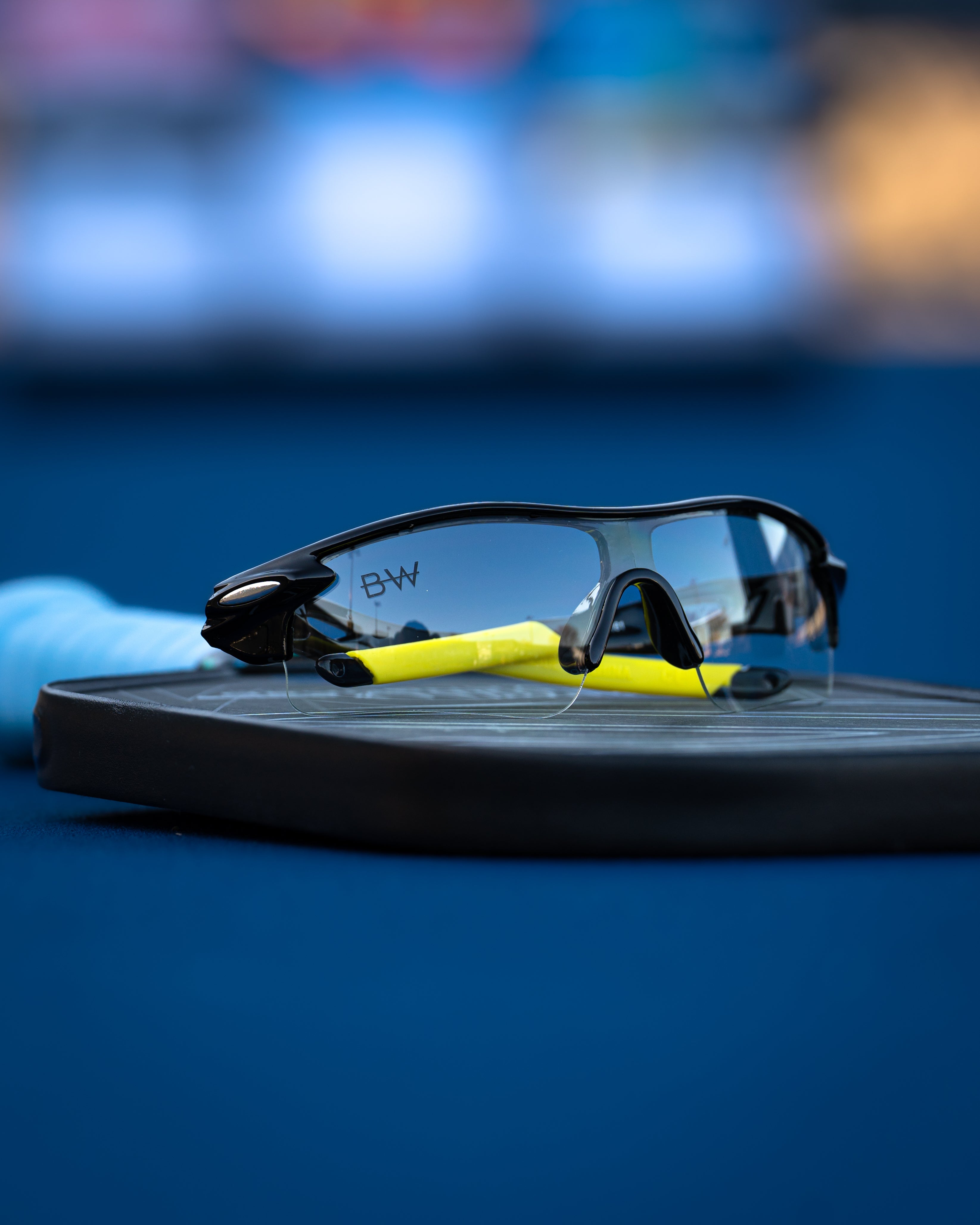
How Prescription Sunglasses Can Reduce Eye Fatigue in Outdoor Sports
Share
Find Prescription Sports Glasses for Outdoor Play
Outdoor athletes who need vision correction have to consider more than frame style alone. Your prescription, lens configuration, environmental brightness, fit, physical coverage, and individual comfort can all influence how your eyewear feels during extended activity.
Can Prescription Sunglasses Reduce Eye Fatigue During Outdoor Sports?
Prescription sunglasses can address several factors that may contribute to visual discomfort during outdoor activity, particularly when an athlete needs vision correction and is also dealing with bright conditions.
However, the relationship between prescription sunglasses and eye fatigue is more nuanced than simply putting on a pair of dark RX lenses.
Eye fatigue, eye strain, or visual discomfort can have multiple potential contributors, including:
- Uncorrected or inadequately corrected vision
- Extended visual demands
- Bright environmental light
- Frequent squinting
- Dryness or irritation
- Wind and environmental conditions
- Eyewear fit
- Individual eye and vision factors
An appropriate pair of prescription sunglasses can combine your required vision correction with a sunglass lens configuration, potentially addressing more than one part of that outdoor-eyewear equation.
They should not, however, be described as a guaranteed treatment for eye fatigue or as a way to automatically improve athletic performance.
What Is Eye Fatigue?
"Eye fatigue" is a broad phrase commonly used to describe tired, strained, or uncomfortable eyes after visually demanding activity.
People may describe experiences such as:
- Tired-feeling eyes
- Visual discomfort
- Difficulty maintaining comfortable focus
- Dry or irritated eyes
- Squinting
- Headaches associated with visual tasks
These symptoms can have different causes. Persistent, severe, sudden, or unexplained symptoms should not automatically be attributed to sports, sunlight, or eyewear.
If symptoms continue or interfere with your vision or activities, appropriate eye-care evaluation is more useful than simply changing sunglasses.
Why Outdoor Sports Can Feel Visually Demanding
Outdoor sports can combine several visual and environmental demands at once.
A pickleball player, runner, cyclist, tennis player, or golfer may spend extended periods looking across different distances while also experiencing bright environmental conditions, wind, changing backgrounds, and continuous movement.
That does not mean outdoor sports inherently damage or exhaust the eyes. It means the visual environment can differ substantially from sitting indoors or performing less visually dynamic activities.
1. Bright Outdoor Light Can Lead to Squinting
Bright environmental light can cause people to squint or otherwise change how they hold their eyes.
A sunglass lens reduces the amount of visible light reaching the eyes according to the characteristics of that lens, which may make bright conditions more comfortable for some wearers.
This is one reason prescription sunglasses can be practical for athletes who both:
- Need prescription vision correction
- Want a sunglass lens for bright outdoor conditions
However, lens darkness should not automatically be interpreted as greater UV protection, polarization, glare reduction, or better sports performance. Those are separate characteristics.
2. An Appropriate Prescription Addresses Refractive Error
If you need prescription correction, wearing the appropriate prescription addresses the refractive error for which it was prescribed.
That is the fundamental role of RX eyewear.
It should not be exaggerated into claims that prescription sunglasses automatically provide:
- Faster reaction time
- Better ball tracking
- Improved depth perception
- Greater accuracy
- Better coordination
- Improved athletic performance
Appropriate vision correction and sports performance are related concepts, but they are not interchangeable.
3. Prescription Sunglasses Combine Correction With a Sunglass Lens
One practical benefit of prescription sunglasses is that the vision correction and outer sunglass function can exist within the same eyewear system.
Instead of wearing contacts with separate Non-RX sunglasses, an athlete can potentially use prescription sports sunglasses when that configuration is appropriate for the individual's prescription.
This can be convenient for athletes who:
- Prefer glasses over contacts
- Do not wear contact lenses
- Want prescription correction integrated into their outdoor sports eyewear
- Want a dedicated RX setup for outdoor activity
4. Sunglass Tint Can Make Bright Conditions More Comfortable
Tint and prescription correction perform different functions.
Your prescription addresses your refractive correction needs. Sunglass tint changes how much visible light passes through the lens according to the lens characteristics.
For someone who finds bright outdoor conditions uncomfortable, an appropriate sunglass tint may make the environment feel more comfortable.
That does not mean a tint automatically:
- Improves contrast
- Improves ball visibility
- Improves reaction time
- Improves depth perception
- Prevents eye fatigue
- Provides a particular UV specification
Those characteristics should be evaluated separately.
5. Reduced Squinting Is Different From Improved Athletic Performance
If a sunglass lens makes bright outdoor conditions more comfortable for a particular wearer, that person may find themselves squinting less.
That is a reasonable comfort consideration.
It should not be turned into a claim that reduced squinting automatically makes an athlete react faster, track the ball better, or play at a higher competitive level.
Comfort and athletic performance are different outcomes.
6. Physical Lens Coverage Can Matter Outdoors
Sports sunglasses place a physical frame and lenses in front of the eye area. Depending on the specific design, the eyewear may provide different amounts of front and side coverage.
That can be relevant in outdoor environments involving wind or airborne material.
However, physical coverage should not be exaggerated into claims that a frame:
- Completely blocks wind
- Seals out dust
- Prevents dry eyes
- Prevents eye fatigue
- Provides certified impact protection
The amount of coverage depends on the actual frame and lens geometry.
7. Wind and Dry Conditions Can Affect Eye Comfort
Outdoor athletes may encounter wind, dry air, heat, dust, or other environmental conditions that affect how their eyes feel.
Sports eyewear with more physical lens coverage may place more of an outer barrier between the eye area and the surrounding environment than wearing no glasses at all.
But sports sunglasses should not automatically be treated as a solution for persistent dryness or irritation.
If dry, irritated, painful, or red eyes are persistent or significant, consider appropriate eye-care guidance rather than assuming a different frame will resolve the issue.
8. Frame Fit Can Affect Physical Comfort During Long Sessions
Not all sports-related discomfort comes from the eyes themselves.
A poorly fitting frame can create physical discomfort during extended wear.
When comparing prescription sunglasses for longer outdoor sessions, consider:
- Frame width
- Bridge fit
- Temple positioning
- Frame dimensions
- Finished eyewear weight
- Weight distribution
Physical frame discomfort and visual eye fatigue are different issues, even though wearers may sometimes describe both simply as their glasses or eyes feeling uncomfortable.
9. Lightweight RX Eyewear May Feel More Comfortable to Some Athletes
Less total eyewear mass means less mass is being supported by the face.
Some athletes may prefer that during long practices, matches, races, or tournament days.
However, lightweight eyewear does not automatically:
- Prevent eye fatigue
- Prevent headaches
- Prevent facial pressure
- Improve reaction time
- Improve visual endurance
- Improve athletic performance
Fit and weight distribution can matter alongside total weight.
10. High-Index Prescription Lenses Can Help Manage Lens Thickness
Blinded Wear RX products include high-index prescription lenses at no additional cost.
High-index refers to a category of prescription lens material commonly used to help manage lens thickness, particularly as prescription strength increases.
Finished lens thickness depends on factors including:
- Your individual prescription
- Frame dimensions
- Lens dimensions
- Lens shape
- Lens design
- Other optical requirements
A higher refractive index should not automatically be interpreted as greater durability, greater impact resistance, better visual performance, or lower finished eyewear weight.
Eye Fatigue vs. Frame Fatigue: Know the Difference
When athletes say their glasses make them feel tired after several hours, it helps to identify what kind of discomfort they actually mean.
| Possible Issue | What It May Feel Like | What to Evaluate |
|---|---|---|
| Visual discomfort | Eyes feel strained or vision feels uncomfortable | Prescription and individual visual needs |
| Bright-light discomfort | Frequent squinting or discomfort in bright conditions | Appropriate sunglass configuration and environmental conditions |
| Bridge pressure | Physical discomfort around the nose | Frame fit and weight distribution |
| Temple pressure | Physical pressure around the sides of the head or ears | Frame width and temple fit |
| Dryness or irritation | Dry, irritated, or uncomfortable eyes | Environment and individual eye factors |
Different problems call for different solutions. A darker lens will not correct an inappropriate prescription, and a lighter frame will not necessarily address visual discomfort.
Can Prescription Sunglasses Reduce Squinting?
A sunglass lens that appropriately reduces visible light can make bright conditions more comfortable for some wearers, which may reduce the tendency to squint.
The prescription component simultaneously provides the wearer's prescribed refractive correction.
This combination is one reason prescription sunglasses can be practical for outdoor athletes who require vision correction.
Still, reduced squinting should not be presented as proof that the eyewear improves reaction time, endurance, accuracy, or other athletic outcomes.
Does Lens Color Affect Eye Fatigue?
Lens color changes the appearance of the environment through the lens and can be associated with different levels of visible-light transmission depending on the specific lens.
However, color alone does not establish how comfortable a lens will be for every athlete.
Do not assume that gray, amber, yellow, blue, or another lens color universally:
- Reduces eye fatigue
- Improves contrast
- Improves ball tracking
- Improves depth perception
- Provides better protection
Your environment, individual vision, prescription, and complete lens characteristics also matter.
For a broader explanation, read the Pickleball Performance Lens Guide.
Do Polarized Prescription Sunglasses Reduce Eye Fatigue?
Polarized lenses are designed to reduce certain reflected light.
For people bothered by reflected light in a particular environment, that characteristic may affect visual comfort.
But polarization should not automatically be described as reducing eye fatigue for every athlete.
It also does not automatically improve:
- Reaction time
- Ball tracking
- Depth perception
- Contrast
- Athletic performance
Some court-sport players may prefer non-polarized eyewear. Polarization and prescription correction should be evaluated as separate characteristics.
Can Non-Polarized Prescription Sunglasses Be Comfortable Outdoors?
Yes. Non-polarized simply means that the lens does not contain an added polarization filter.
It does not mean the lens is clear, inappropriate for outdoor use, or automatically lacking other characteristics.
Likewise, non-polarized lenses should not automatically be described as better for depth perception, contrast, reaction time, or ball tracking.
The appropriate choice depends on your prescription, environment, visual preferences, and available lens configuration.
Does UV Protection Reduce Eye Fatigue?
UV protection and immediate visual comfort are related to different lens considerations and should not be treated as interchangeable.
A verified UV specification addresses ultraviolet exposure. Sunglass tint affects visible-light transmission.
A lens can appear very dark without that appearance alone proving a particular UV specification.
Do not assume that a lens's UV characteristics can be determined from:
- Darkness
- Color
- Mirrored appearance
- Polarization
- Prescription status
UV specifications should be verified for the actual lens or product rather than inferred from appearance.
Prescription Sunglasses for Pickleball and Eye Comfort
Pickleball combines extended visual attention with frequent changes in ball position, player movement, and court positioning.
If you need prescription correction, RX pickleball sunglasses can combine that correction with an outdoor sunglass configuration.
When choosing a pair, consider:
- Your current prescription
- Prescription compatibility
- Frame fit
- Lens configuration
- Physical coverage
- Frame and finished RX weight
- How long you typically play
- Your usual court conditions
Do not choose solely based on promises that a particular lens will make the pickleball easier to track or make your reactions faster.
Prescription Sunglasses for Tennis and Eye Comfort
Tennis players who require vision correction face many of the same outdoor-eyewear decisions as pickleball players.
A prescription sunglass setup can combine correction with a lens configuration intended for bright outdoor conditions.
Consider fit, prescription compatibility, physical coverage, lens characteristics, and extended-wear comfort rather than assuming a specific tint or frame automatically improves tennis performance.
Prescription Sunglasses for Running and Eye Comfort
Runners may spend extended periods outdoors while encountering changing brightness, wind, and other environmental conditions.
Prescription sunglasses can be practical for runners who require correction and prefer not to use contacts.
When comparing frames, consider:
- Prescription compatibility
- Fit
- Physical lens coverage
- Finished eyewear weight
- Weight distribution
- Lens configuration
- Your typical running environment
No frame should automatically be described as eliminating wind, sweat, dryness, or eye fatigue.
Prescription Sunglasses for Cycling and Eye Comfort
Cyclists may encounter wind, changing outdoor brightness, long periods of wear, and interaction between eyewear and other equipment.
Prescription sports sunglasses can combine correction with outer lens coverage, while contacts can provide correction separately from Non-RX cycling eyewear.
Neither approach is universally more comfortable.
Consider:
- Your prescription
- Frame fit
- Physical coverage
- Helmet compatibility
- Environmental conditions
- Lens configuration
- Contact-lens suitability if comparing contacts
Prescription Sunglasses for Golf and Eye Comfort
Golf can involve several hours of outdoor wear, making frame fit, environmental brightness, and overall comfort relevant considerations.
Prescription sunglasses can provide correction within the same eyewear used outdoors, but they should not automatically be described as improving distance judgment, putting accuracy, depth perception, or overall golf performance.
Choose according to your prescription, lens preferences, fit, and typical playing conditions.
Prescription Sunglasses for Long Outdoor Tournament Days
Long competition days can make small eyewear issues more noticeable.
A frame that feels acceptable for 20 minutes may feel different after several hours of wear.
Before a long event, evaluate:
- Whether your prescription is appropriate
- Whether the frame fits comfortably
- Whether the lens configuration suits the expected conditions
- Whether you are already familiar with the eyewear
- Whether you have backup vision correction available
Whenever practical, become familiar with new RX sports eyewear before relying on it for an important tournament or event.
Direct RX vs. RX Clip for Outdoor Sports
Blinded Wear prescription sports eyewear can use different prescription configurations.
| RX Configuration | Where Is the Prescription? | What to Consider |
|---|---|---|
| Direct RX | Prescription correction is incorporated into the primary prescription lenses | Prescription compatibility, frame geometry, lens dimensions, fit, and available options |
| RX Clip | Prescription correction is located in a separate inner prescription insert | Prescription compatibility, insert configuration, outer lens, complete eyewear fit, and available options |
Neither configuration is automatically better for reducing eye fatigue. The appropriate choice depends on the complete prescription and eyewear setup.
Prescription Sunglasses vs. Contacts for Outdoor Eye Comfort
Outdoor athletes who need correction can also compare prescription sports sunglasses with contact lenses and separate Non-RX eyewear.
Prescription sunglasses keep correction within the eyewear system. Contacts place the correction directly on the eye and allow separate Non-RX outer eyewear to be selected.
Neither option is universally more comfortable.
Contact-lens comfort can vary with the wearer, lens type, wear duration, and environment. Prescription-eyewear comfort can vary with the prescription, frame fit, lens configuration, weight, and weight distribution.
When Prescription Sunglasses May Be Worth Considering
Prescription sunglasses may be worth exploring if you:
- Need prescription vision correction
- Spend substantial time playing sports outdoors
- Prefer glasses instead of contact lenses
- Want prescription correction and sunglass function within the same eyewear system
- Want a dedicated prescription setup for outdoor activity
The decision should still be based on your prescription, available lens configuration, fit, and individual needs rather than promises of enhanced athletic performance.
When Prescription Sunglasses May Not Solve the Problem
A new pair of prescription sunglasses is not the answer to every form of eye discomfort.
Changing eyewear alone may not resolve symptoms related to:
- An inaccurate or outdated prescription
- Persistent dry-eye symptoms
- Eye irritation
- Underlying eye-health concerns
- Headaches unrelated to frame fit or visual demands
- Other individual medical or visual factors
Persistent or concerning symptoms deserve appropriate evaluation rather than repeated trial-and-error eyewear purchases.
Blinded Wear Prescription Sports Glasses to Compare
Blinded Wear offers multiple prescription sports-eyewear designs for pickleball players and other athletes who prefer a glasses-based correction setup.
Rather than ranking individual models by unsupported eye-fatigue or performance claims, compare them according to your prescription, frame preferences, fit, intended environment, and verified current product characteristics.
Frost RX
Frost RX is a direct RX design with a white sports frame and bright blue lens appearance. Compare it according to your prescription requirements, fit preferences, and intended use.
Steel Ice RX
Steel Ice RX is another direct RX sports-eyewear option to evaluate according to prescription compatibility, frame design, fit, and verified lens characteristics.
Crystal Wave II RX
Crystal Wave II RX provides another direct prescription option for athletes comparing sports-frame designs.
Zebra II RX
Zebra II RX is a direct RX design with a distinctive sports-eyewear aesthetic.
Product-specific lens technologies and configurations should be verified on the individual product page rather than assumed across the entire collection.
How to Choose RX Sunglasses for Outdoor Comfort
Use this framework when comparing prescription sports sunglasses:
- Start with your prescription. Make sure you know the correction you currently require.
- Check prescription compatibility. Not every prescription necessarily works with every sports frame.
- Consider your environment. Think about brightness, indoor versus outdoor use, and how long you are normally outside.
- Evaluate the lens configuration. Verify the actual characteristics instead of assuming them from color or appearance.
- Evaluate frame fit. Consider width, bridge fit, temple positioning, and overall dimensions.
- Consider physical coverage. Choose the frame geometry that fits your preferences.
- Consider extended wear. Evaluate weight and weight distribution if you regularly play for several hours.
- Separate comfort from performance claims. Do not expect a lens or frame to automatically improve reaction time, tracking, or accuracy.
- Address persistent symptoms appropriately. Do not assume every form of eye discomfort is an eyewear problem.
Outdoor Sports Eye-Comfort Checklist
If your eyes frequently feel uncomfortable during outdoor sports, ask:
- Is my prescription current?
- Does my current eyewear fit appropriately?
- Am I frequently squinting in bright conditions?
- Is my lens configuration appropriate for the environment?
- Am I experiencing dryness or irritation?
- Does wind seem to affect my comfort?
- Is the discomfort visual, or is it physical pressure from the frame?
- Does the issue occur only during sports or at other times as well?
- Are symptoms persistent enough to warrant professional evaluation?
Answering those questions can help separate an eyewear-selection problem from an issue that deserves a different solution.
How to Order Blinded Wear Prescription Sports Glasses
- Browse the Prescription Sports Glasses Collection.
- Select your preferred RX product and available options.
- Have your current eyeglass prescription ready.
- Upload a clear photo or picture of your eyeglass prescription on the product page before adding the eyewear to your cart.
- Your prescription information will be associated with your custom RX order.
For RX Clip products, your prescription information will be associated with the custom RX clip included with your order.
For additional details, read How to Order Your Prescription Pickleball Glasses.
Can an Outdated Prescription Contribute to Eye Fatigue?
If your prescription no longer matches your current vision needs, changing the frame or choosing a darker sunglass tint may not address the underlying issue.
For athletes who require prescription correction, the prescription itself should be evaluated before treating specialized sports features as the solution.
Consider having your vision needs reassessed if you notice persistent changes such as:
- Vision that no longer seems as clear as expected
- New difficulty seeing clearly at certain distances
- Persistent visual discomfort
- Difficulty adapting to your current correction
- New or recurring symptoms associated with visual tasks
A new pair of prescription sunglasses can only provide the correction built into those lenses. It cannot compensate for an inaccurate or outdated prescription.
Can Wearing the Wrong Prescription Cause Visual Discomfort?
Prescription eyewear is designed around an individual's refractive correction needs. If the correction is not appropriate for the wearer, the visual experience may be uncomfortable or unclear.
That is one reason athletes should avoid choosing RX sports glasses based only on frame appearance, lens color, or marketing claims.
The prescription remains the foundation of the eyewear.
Do Prescription Sunglasses Prevent Eye Strain?
No pair of prescription sunglasses should be described as guaranteeing that eye strain or fatigue will not occur.
Appropriate RX sunglasses can address refractive correction while a sunglass lens can make bright outdoor conditions more comfortable for some wearers. But eye discomfort can have many possible contributors.
Think of prescription sunglasses as one part of an outdoor vision setup rather than a universal treatment for tired or uncomfortable eyes.
Can Prescription Sunglasses Help With Bright-Light Discomfort?
A sunglass lens reduces visible-light transmission according to its characteristics. For someone who finds bright outdoor conditions uncomfortable, an appropriate sunglass configuration may make those conditions easier to tolerate.
When prescription correction is also required, RX sunglasses can combine both functions within the same eyewear.
That practical benefit is different from claiming that sunglasses medically treat light sensitivity or prevent every form of eye fatigue.
Does Squinting Cause Eye Fatigue During Outdoor Sports?
People commonly squint in bright conditions, and prolonged visual effort can feel uncomfortable for some individuals.
A sunglass lens that makes the environment more comfortable may reduce how often a wearer feels the need to squint.
However, frequent or unusual light sensitivity, pain, or persistent visual symptoms should not simply be attributed to needing darker sunglasses.
Can Glare Contribute to Outdoor Visual Discomfort?
Reflected light from surfaces can be visually uncomfortable for some people, especially during prolonged outdoor activity.
Polarized lenses are designed to reduce certain reflected light, but polarization is only one lens characteristic and should not automatically be treated as necessary for every athlete.
For pickleball and other court sports, some players may prefer non-polarized eyewear.
Neither polarized nor non-polarized lenses should automatically be described as preventing eye fatigue or improving athletic performance.
Eye Fatigue During Pickleball: What Should Players Evaluate?
If your eyes consistently feel tired or uncomfortable during pickleball, avoid immediately assuming you need a particular lens color or premium feature.
Work through the possible eyewear-related factors systematically:
- Prescription: Is your current correction appropriate?
- Brightness: Are bright conditions causing frequent squinting or discomfort?
- Lens configuration: Is your current lens appropriate for where you play?
- Fit: Is physical pressure from the frame contributing to what you are calling fatigue?
- Wear duration: Does discomfort appear only after extended periods?
- Environment: Are wind, dryness, heat, or other conditions affecting your eyes?
- Symptoms: Are the symptoms persistent or concerning enough to warrant professional evaluation?
This approach is more useful than assuming one "performance lens" will solve every problem.
Eye Fatigue During Tennis: Similar Causes, Different Environment
Tennis players may experience many of the same outdoor conditions as pickleball players, including bright light, wind, extended play, and continuous visual attention.
Prescription sunglasses can provide required refractive correction while also providing a sunglass lens for outdoor conditions.
The best eyewear configuration still depends on the individual rather than the sport name alone.
Eye Fatigue During Running: Think Beyond the Lens
Runners may spend long periods exposed to bright conditions, wind, heat, and changing environments.
If eyewear becomes uncomfortable during a long run, consider whether the issue comes from:
- The prescription
- Frame fit
- Physical pressure
- Finished eyewear weight
- Environmental brightness
- Dryness or irritation
- Another individual factor
A new tint or lighter frame may help with a specific preference, but neither should be presented as a guaranteed solution to eye fatigue.
Eye Fatigue During Cycling: Consider Coverage and Environment
Cyclists can experience substantial airflow around the face in addition to bright outdoor conditions.
Frame and lens geometry can influence the amount of physical coverage around the eye area, but sports eyewear should not be described as completely sealing out wind or preventing dryness unless such a characteristic has specifically been established.
Cyclists should also consider how the eyewear interacts with helmets and other equipment.
Eye Fatigue During Golf: Extended Wear Matters
A round of golf can involve several hours outdoors, making both visual and physical eyewear comfort relevant.
If you require prescription correction, an outdoor RX setup can combine that correction with a sunglass lens.
Evaluate your prescription, lens configuration, frame fit, environmental brightness, and how the eyewear feels over several hours rather than assuming one lens color is universally best for golf.
Eye Fatigue vs. General Athletic Fatigue
Feeling tired after several hours of competition does not necessarily mean your eyes are the cause.
General athletic fatigue can involve physical exertion, heat, hydration, sleep, nutrition, and many other factors.
Likewise, discomfort around the nose or temples may come from frame fit rather than the eyes themselves.
Separating these experiences can help you identify whether changing eyewear is actually likely to address the problem.
Visual Fatigue vs. Dry Eyes
Dryness and visual fatigue can sometimes be described similarly by wearers, but they should not automatically be treated as the same problem.
If your primary symptoms involve persistent dryness, burning, irritation, redness, or another concerning eye symptom, a new pair of sunglasses may not address the underlying cause.
Outdoor eyewear can provide physical lens coverage, but it should not be presented as treatment for an eye condition.
Visual Fatigue vs. Headaches
Headaches can have many possible causes. Do not automatically assume a headache during outdoor sports means your lenses are too dark, your frame is too heavy, or your prescription is wrong.
If headaches are new, persistent, severe, or recurring, appropriate evaluation is more useful than repeatedly changing eyewear based on guesswork.
Can Dirty Lenses Make Sports Eyewear Less Comfortable to Use?
Smudges, dirt, moisture, and debris on a lens can interfere with how clearly you see through the eyewear.
Keeping prescription sports lenses appropriately clean is therefore a practical part of maintaining the eyewear.
Use cleaning methods suitable for the lenses and avoid assuming that every sports lens has scratch-resistant, hydrophobic, or other specialized coatings unless those characteristics are verified.
Can Scratched Lenses Contribute to Visual Discomfort?
Damage in the viewing area can affect the experience of looking through a lens.
If your prescription sports glasses become significantly scratched or damaged, evaluate whether the eyewear remains suitable for use.
Do not assume every lens is scratch-resistant simply because it is designed for sports.
Can Frame Pressure Be Mistaken for Eye Fatigue?
Yes. Discomfort around the bridge, temples, ears, or sides of the head can sometimes be broadly described as eyewear fatigue even though the issue is physical frame fit rather than visual strain.
When comparing RX sports frames, ask:
- Does the frame feel too narrow?
- Is there uncomfortable pressure at the temples?
- Does the bridge feel uncomfortable?
- Does the eyewear feel front-heavy?
- Does discomfort increase with wear duration?
These are fit considerations, not problems that a different lens tint will necessarily solve.
Does Eyewear Weight Cause Eye Fatigue?
Eyewear weight is primarily a physical comfort consideration rather than a direct measure of visual fatigue.
Less eyewear mass may feel preferable to some athletes during extended wear, but weight alone does not determine whether your eyes become tired.
It is useful to separate:
- Visual comfort: related to your vision and viewing experience
- Physical comfort: related to how the frame feels on your face
- General fatigue: related to the broader demands of the activity
Does a Heavier Prescription Automatically Mean Heavier Glasses?
Prescription strength can influence the finished lens configuration, but it is not the only factor affecting eyewear weight.
Finished weight can also depend on:
- Lens material
- Frame dimensions
- Lens dimensions
- Lens shape
- Frame construction
- Direct RX versus prescription-insert design
That is why the appearance of a frame alone does not reliably tell you how a completed prescription pair will feel.
Do High-Index Lenses Reduce Eye Fatigue?
High-index is a lens-material category, not an eye-fatigue treatment.
Its primary relevance is the ability to help manage prescription lens thickness in appropriate configurations.
High-index lenses should not automatically be described as:
- Reducing eye fatigue
- Reducing headaches
- Improving visual endurance
- Improving clarity beyond appropriate prescription correction
- Improving athletic performance
Blinded Wear includes high-index prescription lenses with RX products at no additional cost, but that feature should be understood in the context of prescription lens construction rather than as a performance enhancement.
Can a Strong Prescription Still Work in Sports Sunglasses?
Prescription compatibility depends on the specific prescription, frame, lens dimensions, lens geometry, and available RX configuration.
A stronger prescription does not automatically rule out sports eyewear, but it can make frame and lens selection more important.
High-index lens material may help manage lens thickness, while the finished result still depends on the complete prescription and eyewear design.
Do Wraparound Prescription Sunglasses Reduce Eye Fatigue?
Wraparound-style eyewear curves farther around the sides of the face and can provide more physical side coverage than some flatter designs.
That geometry may be relevant to athletes who prefer greater physical coverage outdoors.
But wraparound construction does not automatically:
- Prevent eye fatigue
- Prevent dryness
- Block all wind
- Block all peripheral light
- Improve peripheral vision
- Improve ball tracking
Prescription compatibility also matters because highly curved frame geometries can create different optical and lens-design considerations.
Do Larger Lenses Reduce Eye Fatigue?
Larger lenses can provide more physical coverage, but more coverage is not automatically equivalent to greater visual comfort.
Larger lens dimensions can also affect the completed prescription configuration.
Choose lens size according to fit, coverage preference, prescription compatibility, and the overall eyewear system rather than assuming bigger is always better.
Are Darker Prescription Sunglasses Better for Eye Fatigue?
Not necessarily.
A darker tint reduces more visible light than a lighter tint when comparing otherwise appropriate lenses, but the darkest possible lens is not automatically the most comfortable choice for every environment.
A lens that is appropriate in intense daylight may be unnecessarily dark in cloudy, shaded, evening, or indoor conditions.
Match the lens configuration to the environment rather than simply choosing the darkest option available.
Can Sunglasses Be Too Dark for Sports?
A dark sunglass tint may be poorly suited to an environment with limited available light.
This is especially relevant for athletes who:
- Play into the evening
- Move between outdoor and indoor courts
- Train in heavily shaded environments
- Compete under changing weather conditions
Do not assume that a lens optimized for bright daytime conditions will remain appropriate as the environment changes.
Clear vs. Tinted Prescription Lenses for Eye Comfort
A clear lens does not have a dark sunglass tint, while a tinted lens changes visible-light transmission according to its characteristics.
| Consideration | Clear Lens | Tinted Lens |
|---|---|---|
| Dark Sunglass Tint | No | Yes, depending on configuration |
| Potential Environment | Indoor or lower-light use may be considered | Brighter outdoor conditions may be considered |
| Prescription Correction | Depends on whether the product is RX | Depends on whether the product is RX |
| Guaranteed Eye-Fatigue Reduction | No | No |
Blinded Wear's Clear Lens Collection is Non-RX and should not be confused with clear prescription eyewear.
What About Photochromic Prescription Lenses?
Photochromic lenses change tint in response to certain light conditions and may appeal to athletes who regularly encounter changing environments.
They should not automatically be described as reducing eye fatigue or providing ideal tint in every situation.
Photochromic behavior can depend on the specific lens technology and environment.
Do not assume photochromic technology is available for a particular Blinded Wear RX model unless that option is currently verified for the product.
Prescription Sunglasses for Morning-to-Afternoon Play
Outdoor lighting can change substantially over several hours.
If you begin playing early and continue into brighter daytime conditions, consider whether your chosen lens configuration suits the range of conditions you expect to encounter.
This does not necessarily mean you need adaptive lenses or multiple pairs. It means environmental range should be part of your eyewear decision.
Prescription Sunglasses for Afternoon-to-Evening Play
A different issue occurs when a match begins in bright daylight and continues as available environmental light decreases.
A dark sunglass lens that feels appropriate at the beginning of play may become less appropriate later.
Possible strategies include:
- Using another appropriate RX configuration
- Choosing an available lens configuration suited to the expected conditions
- Using contacts with appropriate separate Non-RX eyewear if contacts are suitable for you
Prescription Sunglasses for Hot and Humid Outdoor Sports
Heat and humidity can affect overall comfort during outdoor activity, but prescription sunglasses should not automatically be described as sweat-proof, anti-fog, hydrophobic, or resistant to every hot-weather condition.
When comparing eyewear for hot environments, consider:
- Frame fit
- Physical coverage
- Weight
- Weight distribution
- Wear duration
- Your individual experience in those conditions
If anti-fog or another specialized feature matters to you, verify that characteristic for the exact product rather than assuming it from sports styling.
Prescription Sunglasses for Windy Outdoor Sports
Frame and lens geometry can affect how much physical coverage exists around the eye area.
Some athletes may prefer more coverage in windy conditions.
However, even high-coverage sports eyewear should not automatically be described as creating a complete wind seal.
If wind consistently causes significant eye irritation or discomfort, the issue may deserve consideration beyond simply changing frames.
Prescription Sunglasses for Dusty Outdoor Conditions
Outer eyewear places a physical lens between part of the eye area and the surrounding environment, but standard sports sunglasses should not automatically be treated as sealed protective equipment.
If your activity involves a meaningful risk from dust, debris, or impact, select eyewear according to the actual protective requirements of the activity.
Sports styling alone does not establish a protective rating.
Eye Comfort During Multi-Hour Pickleball Sessions
Long pickleball sessions can make both visual and physical comfort more noticeable.
Before assuming that tired eyes mean you need a new pair, evaluate:
- Prescription accuracy
- Environmental brightness
- Lens configuration
- Frame fit
- Wear duration
- Dryness or irritation
- General physical fatigue
If you regularly play long sessions, choose eyewear based on how the complete RX setup works over time rather than a single specification.
Should You Take Vision Breaks During Long Sports Sessions?
Long events naturally include changes in activity, rest periods, hydration breaks, and time between games or matches.
Use normal breaks to assess how you feel rather than forcing yourself through persistent eye discomfort.
If symptoms repeatedly return during activity, identifying the cause is more useful than relying on a fixed break schedule as a universal solution.
Does Hydration Prevent Eye Fatigue?
Hydration is important for general athletic health, particularly during prolonged outdoor activity, but it should not be marketed as a guaranteed prevention or treatment for eye fatigue.
Likewise, persistent eye dryness should not automatically be assumed to result from inadequate hydration.
Can a Hat or Visor Help With Bright Outdoor Conditions?
A hat or visor can provide shade from some overhead or directional light and may complement outdoor eyewear for athletes who prefer that setup.
It does not replace prescription correction or establish the protective characteristics of your eyewear.
Think of headwear and sunglasses as separate tools with different physical functions.
Prescription Sunglasses vs. a Hat or Visor
These are not direct substitutes.
A prescription sunglass lens can provide refractive correction while changing visible-light transmission. A hat or visor provides physical shade according to its design and the direction of the light.
Some outdoor athletes may choose to use both.
Prescription Sunglasses vs. Contacts for Eye Fatigue
Neither prescription sunglasses nor contacts can be declared universally better for reducing eye fatigue.
| Consideration | Prescription Sunglasses | Contacts + Non-RX Sunglasses |
|---|---|---|
| Prescription Correction | Built into the RX eyewear | Provided by contact lenses |
| Sunglass Function | Part of the eyewear configuration | Provided by separate Non-RX sunglasses |
| Contact-Lens Wear | Not required | Required |
| Outer Physical Coverage | Provided according to the RX frame and lens geometry | Provided by separate outer eyewear |
| Guaranteed Eye-Fatigue Reduction | No | No |
Contact-lens wearers can experience their own comfort considerations, while prescription-glasses wearers have frame and lens considerations. Individual suitability matters more than a universal ranking.
Direct RX vs. RX Clip for Long Outdoor Sessions
Direct RX and RX Clip systems place the prescription in different locations within the eyewear.
With direct RX, correction is incorporated into the primary prescription lenses. With an RX Clip system, correction is placed in a separate inner prescription insert.
Neither format should automatically be described as reducing eye fatigue more effectively.
Compare:
- Prescription compatibility
- Complete eyewear fit
- Lens and insert dimensions
- Finished eyewear configuration
- Physical coverage
- Available lens characteristics
- Your individual preferences
How to Tell Whether Your Current Sports Sunglasses Need an Upgrade
An upgrade may be worth considering when:
- Your prescription has changed
- Your current correction no longer seems appropriate
- Your frame no longer fits comfortably
- Your eyewear is damaged
- Your playing environment has changed
- Your current lens configuration does not suit where you normally play
- You need a dedicated outdoor RX setup
- You need an appropriate backup pair
You do not need to replace functioning RX sports glasses simply because a newer model or lens feature becomes available.
When Eye Fatigue Is a Reason to Look Beyond Your Sunglasses
Eyewear can be part of the conversation, but persistent symptoms should not automatically be blamed on the glasses.
Consider appropriate eye-care evaluation if you experience persistent or concerning symptoms such as:
- Ongoing eye pain
- Significant or persistent redness
- New or persistent changes in vision
- Persistent irritation or dryness
- Recurring visual discomfort despite appropriate correction
- Symptoms that interfere with normal activities
The purpose of sports eyewear is not to diagnose or treat an underlying eye condition.
Common Myths About Prescription Sunglasses and Eye Fatigue
Myth: Prescription Sunglasses Automatically Prevent Eye Fatigue
Reality: They can address prescription correction and provide a sunglass lens, but eye fatigue can have multiple causes.
Myth: Darker Lenses Always Mean Less Eye Strain
Reality: The darkest lens is not automatically the most appropriate choice for every environment.
Myth: Polarized Lenses Are Always Best for Tired Eyes
Reality: Polarization reduces certain reflected light but does not guarantee reduced eye fatigue.
Myth: High-Index Lenses Reduce Eye Strain
Reality: High-index primarily describes a category of lens material relevant to prescription lens construction and thickness management.
Myth: Lightweight Glasses Prevent Eye Fatigue
Reality: Low eyewear mass relates more directly to physical frame comfort than to visual fatigue.
Myth: Wraparound Glasses Stop Dry Eyes
Reality: More physical coverage may affect exposure to the environment, but sports eyewear should not be treated as a dry-eye treatment.
Myth: The Right Lens Color Makes Ball Tracking Easier for Everyone
Reality: Lens color alone should not be credited with universally improving ball tracking.
Prescription Sunglasses and Eye Fatigue: Claims vs. Reality
| Claim | More Accurate Explanation |
|---|---|
| "RX sunglasses eliminate eye fatigue." | They can address refractive correction and provide a sunglass lens, but they cannot guarantee freedom from eye fatigue. |
| "Corrected vision makes reactions faster." | Prescription correction addresses refractive error; it does not automatically increase neurological reaction speed. |
| "Tinted lenses improve ball tracking." | Lens tint should not automatically be credited with improving tracking ability. |
| "Dark lenses provide maximum UV protection." | Lens darkness does not establish UV specifications. |
| "Polarization prevents eye strain." | Polarization reduces certain reflected light but does not guarantee prevention of eye strain. |
| "Wraparound frames block all wind." | Frame geometry affects physical coverage but does not automatically create a complete wind seal. |
| "High-index lenses are better for eye fatigue." | High-index describes a lens-material category and is not an eye-fatigue treatment. |
Outdoor Eye-Comfort Buying Checklist
Before buying prescription sunglasses specifically because your eyes feel tired outdoors, ask:
- Is my current prescription appropriate?
- Am I primarily experiencing visual discomfort or physical frame discomfort?
- Are bright conditions causing me to squint frequently?
- Does the lens configuration suit the environment where I actually play?
- Do I prefer polarized or non-polarized eyewear based on my actual environment and preferences?
- Does the frame fit appropriately?
- How much physical coverage do I want?
- How long will I normally wear the eyewear?
- Are specialized features actually verified for the product?
- Are my symptoms persistent enough that I should investigate something beyond eyewear?
Choosing Blinded Wear RX Eyewear for Outdoor Sports
Blinded Wear's prescription collection includes sports-oriented RX eyewear for pickleball players and other active users.
When comparing models, focus on your prescription, frame preferences, intended environment, and verified product characteristics rather than treating any single pair as a guaranteed solution for eye fatigue.
Useful starting points include:
- Frost RX — a direct RX design with a white sports frame and bright blue lens appearance.
- Steel Ice RX — a direct RX sports-eyewear option to compare according to prescription compatibility, fit, and verified lens characteristics.
- Crystal Wave II RX — another direct prescription sports-eyewear design.
- Zebra II RX — a direct RX option with a distinctive sports-oriented design.
For the full range, browse the Blinded Wear Prescription Sports Glasses Collection.
FAQ: Prescription Sunglasses and Eye Fatigue in Outdoor Sports
Can prescription sunglasses help reduce eye fatigue outdoors?
They can address factors that may contribute to visual discomfort for some people. An appropriate prescription corrects the refractive error for which it was prescribed, while a suitable sunglass lens can make bright outdoor conditions more comfortable. They do not guarantee that eye fatigue will disappear because discomfort can have multiple causes.
Are prescription sunglasses better than regular sunglasses for eye fatigue?
If you require prescription correction, RX sunglasses provide something standard Non-RX sunglasses do not: your prescribed refractive correction. If you do not require prescription correction, RX eyewear does not provide an inherent eye-comfort advantage simply because it contains a prescription.
Can Non-RX sunglasses help with outdoor visual comfort?
Yes. Someone who does not require prescription correction, or someone who wears contacts, may prefer appropriate Non-RX sunglasses for bright outdoor conditions. Browse the Blinded Wear Non-RX Pickleball Sunglasses Collection for available options.
Do prescription sunglasses improve reaction time?
No automatic improvement should be assumed. Prescription correction addresses refractive error. Neurological reaction time also involves visual detection, processing, decision-making, and physical response.
Do prescription sunglasses improve ball tracking?
Prescription sunglasses should not automatically be described as improving ball tracking. Tracking a moving object involves individual vision, attention, eye and head movement, experience, lighting, and other factors.
Do prescription sunglasses improve depth perception?
An appropriate prescription addresses the refractive error for which it is prescribed, but prescription sunglasses should not automatically be described as enhancing depth perception. Depth perception involves binocular vision and multiple visual cues.
Do prescription sunglasses make vision sharper?
An appropriate prescription is intended to correct the refractive error specified by that prescription. It should not be described as making vision universally "sharper" than appropriate correction through another suitable method.
Can an outdated prescription make outdoor sports less comfortable?
If your prescription no longer matches your current correction needs, changing tint, frame style, or other sports-eyewear features may not address the issue. Persistent changes in vision are a reason to reassess your vision needs rather than simply choosing darker sunglasses.
Does bright sunlight cause eye fatigue?
Bright conditions can be visually uncomfortable and can lead some people to squint. A suitable sunglass lens can make bright conditions more comfortable, but outdoor eye fatigue can have multiple potential contributors.
Does glare cause eye strain?
Reflected light can be uncomfortable for some people. Polarized lenses are designed to reduce certain reflected light, but polarization does not guarantee that eye strain will be eliminated.
Are polarized prescription sunglasses best for outdoor sports?
Not universally. Polarization can reduce certain reflected light, while some court-sport players may prefer non-polarized eyewear. The appropriate choice depends on the environment, individual preferences, prescription needs, and complete lens configuration.
Are non-polarized sunglasses better for pickleball?
Some pickleball players may prefer non-polarized eyewear, but non-polarized lenses are not automatically better for reaction time, contrast, depth perception, or ball tracking.
What lens color is best for reducing eye fatigue?
There is no single lens color proven to be universally best for every athlete or environment. Consider visible-light conditions, your individual preferences, your prescription, and the verified characteristics of the specific lens.
Are gray lenses best for eye fatigue?
Gray is a common sunglass-lens color, but color alone does not establish whether a lens will reduce eye fatigue for a particular wearer.
Are clear lenses good for outdoor sports?
Clear lenses do not have a dark sunglass tint. Whether they are appropriate depends on the environment and what you need from the eyewear. A clear lens should not automatically be described as increasing contrast, reaction time, or ball visibility.
Do darker lenses protect your eyes better?
Lens darkness alone does not establish UV specifications, impact performance, polarization, or protective certification. These characteristics must be evaluated separately.
Can sunglasses be too dark?
A dark sunglass tint can be poorly suited to environments with limited available light. Consider where and when you will actually use the eyewear rather than simply choosing the darkest option.
Do prescription sunglasses block UV?
Prescription status alone does not establish a lens's UV specifications. UV characteristics should be verified for the actual lens rather than inferred from prescription status, tint, darkness, color, or polarization.
Do wraparound sunglasses prevent dry eyes?
No. Wraparound-style eyewear may provide greater physical side coverage than some flatter designs, but it should not be treated as a treatment or guaranteed prevention for dry eyes.
Can wraparound frames block wind?
Frame and lens geometry can influence physical coverage around the eye area. Standard sports eyewear should not automatically be described as completely blocking wind or creating a sealed environment.
Can lightweight prescription sunglasses reduce fatigue?
Some athletes may prefer less eyewear mass during long periods of wear. However, lightweight construction primarily relates to physical eyewear comfort and should not automatically be described as reducing visual eye fatigue.
Are high-index lenses better for eye fatigue?
No such general conclusion should be made. High-index describes a category of prescription lens material commonly used to help manage lens thickness. It is not an eye-fatigue treatment.
Are high-index lenses lighter?
Not necessarily. A higher refractive index can help manage lens thickness in comparable prescriptions, but thinner does not automatically mean lighter. Finished weight depends on the prescription, lens material, dimensions, frame, and complete eyewear configuration.
Are high-index lenses more impact-resistant?
Refractive index is not an impact-resistance score. A higher-index material should not automatically be described as tougher or more impact-resistant than another lens material.
Are Blinded Wear RX lenses shatterproof?
No lens should be described as shatterproof without evidence supporting that exact claim. Impact-resistant does not mean shatterproof and does not establish a particular protective-eyewear certification or safety rating.
Are sports sunglasses protective eyewear?
Sports-oriented styling and physical coverage do not automatically establish a particular protective standard. If your activity requires a specific safety certification, verify that certification for the complete product.
Are prescription sunglasses good for long pickleball tournaments?
They can be a practical option for players who require prescription correction and prefer glasses outdoors. For long events, consider prescription compatibility, frame fit, lens configuration, weight distribution, physical coverage, and your individual comfort.
Can I use the same prescription sunglasses for pickleball, tennis, running, and golf?
Potentially, if the prescription, frame, lens configuration, fit, and environmental use are appropriate for you. Different sports do not automatically require different prescription glasses.
Should I have separate indoor and outdoor prescription glasses?
Not necessarily. Separate setups can be practical when your indoor and outdoor environments require meaningfully different lens configurations, but not every athlete needs multiple pairs.
Should I have backup prescription sports glasses?
If you depend on prescription correction, having access to an appropriate backup can be useful during tournaments, travel, or long events. Your backup may be another RX pair or another appropriate correction method you already use.
Prescription Sunglasses vs. Non-RX Sunglasses for Outdoor Athletes
The central difference is vision correction.
| Feature | Prescription Sunglasses | Non-RX Sunglasses |
|---|---|---|
| Prescription Correction | Yes | No |
| Suitable for Someone Who Needs RX Correction Without Contacts | Potentially, depending on prescription compatibility | No |
| Can Be Used Over Contacts | Generally unnecessary because both would provide correction | Potentially, when contacts provide the required correction |
| Sunglass Tint | Depends on product configuration | Depends on product configuration |
| Guaranteed Eye-Fatigue Reduction | No | No |
| Guaranteed Performance Improvement | No | No |
For a broader comparison of the two categories, read the RX vs. Non-RX Pickleball Glasses Guide.
When Contacts Plus Non-RX Sports Sunglasses May Make Sense
Athletes who already wear contact lenses may choose to keep prescription correction in the contacts and use separate Non-RX sports sunglasses outdoors.
This setup can make it possible to change outer eyewear without changing the prescription correction itself.
Contacts are medical devices, however, and their prescription, fit, replacement schedule, hygiene, and appropriate wear should follow eye-care guidance.
For a deeper comparison, read Prescription Sunglasses vs. Contact Lenses for Athletes.
How to Build an Outdoor RX Eyewear Setup Around Comfort
- Start with your vision correction. Make sure your prescription reflects your current needs.
- Choose your correction method. Compare direct RX, RX Clip, or contacts with separate Non-RX eyewear when appropriate.
- Identify your primary environment. Consider whether you usually play in bright sun, mixed conditions, evening light, or multiple environments.
- Choose an appropriate available lens configuration. Do not select a lens solely because of unsupported performance claims.
- Evaluate frame fit. Consider width, bridge fit, temple positioning, dimensions, and weight distribution.
- Evaluate physical coverage. Decide how much front and side coverage you prefer.
- Consider wear duration. A frame used for several hours should be evaluated over more than a few minutes.
- Verify specialized features. Confirm polarization, photochromic technology, UV specifications, coatings, and other characteristics for the actual product.
- Separate physical and visual discomfort. Determine whether the problem is your vision, the frame, the environment, or something else.
- Have a backup strategy. This can be particularly useful when prescription correction is essential during competition or travel.
How to Order Blinded Wear Prescription Sunglasses
Blinded Wear makes the RX ordering process straightforward:
- Browse the Prescription Pickleball Glasses Collection.
- Select your preferred RX product and available options.
- Have your current eyeglass prescription ready.
- Upload a clear photo or picture of your eyeglass prescription on the product page before adding the eyewear to your cart.
- Your prescription information will be associated with your custom RX order.
For an RX Clip product, your prescription information will be associated with the custom RX clip included with your order.
Blinded Wear RX products include high-index prescription lenses at no additional cost.
For more information, visit How to Order Your Prescription Pickleball Glasses.
Prescription Eyewear Returns and Replacement Support
Customized prescription eyewear is final sale and excluded from Blinded Wear's standard 30-day return policy.
Because RX eyewear is customized, review your prescription, product selection, and available options carefully before ordering.
RX final-sale status does not eliminate applicable 50% lifetime replacement support for eligible broken glasses.
For an eligible replacement claim, damaged eyewear must be returned. Once the claim and returned eyewear meet current policy requirements, the customer can receive 50% credit toward a replacement pair.
This is not a free full-replacement guarantee.
Review the Blinded Wear Protection Plan, Replacement & Returns information for current eligibility and policy details.
Related Prescription Sports Eyewear Guides
- Best Pickleball Glasses 2026 — explore the main Blinded Wear guide to RX and Non-RX pickleball eyewear.
- Pickleball Performance Lens Guide — understand lens colors, prescription options, and important lens terminology.
- RX vs. Non-RX Pickleball Glasses — compare prescription and non-prescription eyewear setups.
- Lightweight RX Sports Glasses — understand eyewear weight, weight distribution, frame comfort, and prescription-lens considerations.
- Prescription Sunglasses vs. Contact Lenses — compare two different approaches to athletic vision correction.
- RX Sunglasses for Long Tournaments — explore extended-wear considerations for competition days.
- How to Choose a Lens Shape for Fast-Paced Sports — compare lens geometry and physical coverage without performance hype.
- Outdoor Sports Eye Protection Guide — learn how physical coverage, environmental conditions, and verified protective characteristics differ.
When to Look Beyond Sports Eyewear
Prescription sunglasses can be useful outdoor eyewear, but they are not a diagnosis or treatment for unexplained eye symptoms.
Consider appropriate professional evaluation when symptoms are persistent, significant, new, or otherwise concerning, particularly if you experience:
- Persistent changes in vision
- Eye pain
- Significant or recurring redness
- Persistent irritation
- Ongoing visual discomfort despite appropriate correction
- Symptoms that interfere with everyday activities
The goal is to identify the actual cause rather than assuming every symptom can be solved by changing lens color, tint, frame shape, or eyewear weight.
Final Checklist: Reducing Outdoor Eyewear Discomfort
Before your next long outdoor session, review the fundamentals:
- Prescription: Is your vision correction current and appropriate?
- Brightness: Is your lens configuration appropriate for the environment?
- Fit: Does the frame sit comfortably without unwanted pressure?
- Coverage: Does the eyewear provide the physical coverage you prefer?
- Weight: Is the complete RX setup comfortable over longer periods?
- Lens characteristics: Have you verified important features instead of assuming them?
- Condition: Are the lenses clean and free from significant damage?
- Environment: Are wind, dryness, heat, or changing light contributing to discomfort?
- Backup: Do you have another appropriate correction option if your primary eyewear becomes unavailable?
- Symptoms: Is persistent discomfort telling you to investigate something beyond the sunglasses?
Final Takeaway: Prescription Sunglasses Can Support Outdoor Visual Comfort
Prescription sunglasses can be a practical choice for outdoor athletes who require vision correction. They combine the correction prescribed for your refractive needs with an outer sunglass configuration designed for outdoor wear.
For some wearers, an appropriate setup may help address factors associated with outdoor visual discomfort, such as the need for prescription correction and discomfort in bright conditions.
But the most accurate takeaway is not that prescription sunglasses automatically eliminate eye fatigue.
Prescription accuracy, lens configuration, frame fit, physical coverage, environmental conditions, wear duration, and individual eye comfort all matter.
They also do not replace skill or automatically improve reaction time, ball tracking, depth perception, accuracy, or athletic performance.
The best outdoor RX setup is the one that appropriately addresses your vision-correction needs while fitting the conditions in which you actually play.
Explore Prescription Sports Glasses at Blinded Wear
Compare Blinded Wear RX sports eyewear based on your prescription, preferred frame design, playing environment, and available lens configuration.