Playing Sports Without the Right Glasses? Here's Why Your Performance Might Be Suffering
Share
Playing Sports Without the Right Glasses? Here's Why Your Performance Might Be Suffering
The wrong eyewear can make sports harder than they need to be. If you require vision correction, wear a frame that constantly shifts, use a lens that does not suit the lighting, or play without appropriate sports eyewear, you may spend more time compensating for your setup instead of focusing on the game.
That does not mean sports glasses automatically make you faster, improve your ranking, or create better athletic ability. The real goal is simpler: give yourself an eyewear setup that matches your vision needs, sport, environment, and comfort requirements.
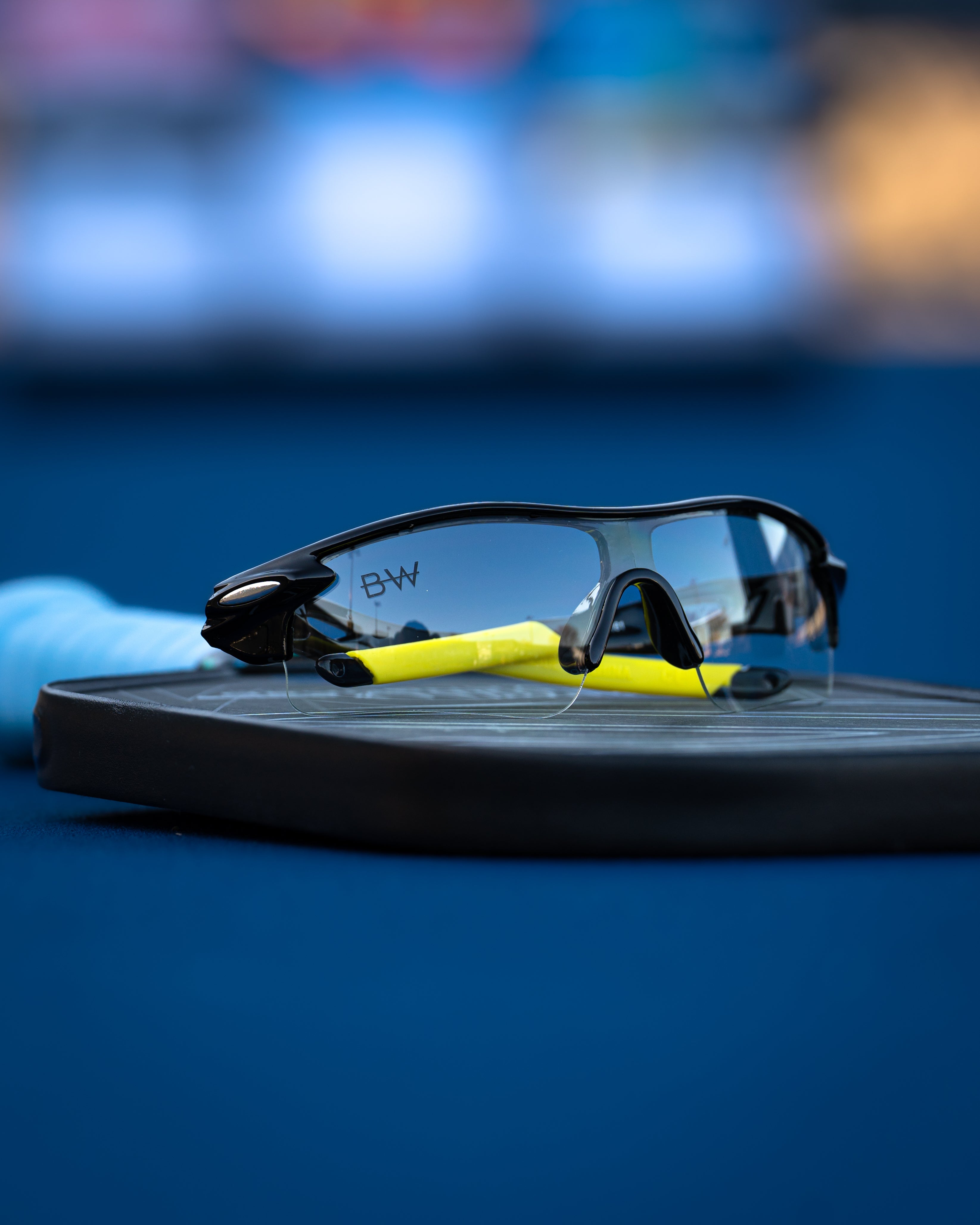
For pickleball players, Blinded Wear offers prescription and non-prescription sports eyewear built around lightweight frames, impact-resistant lenses, non-polarized optics, extended-match comfort, and performance-first design.
Find the Right Pickleball Glasses for Your Vision
Start with the eyewear category that matches how you see and how you play.
Can the Wrong Glasses Affect Sports Performance?
They can affect how comfortable and appropriate your visual setup feels during play.
Common problems include:
- Playing without prescription correction you normally need
- Using a frame that moves during activity
- Wearing a dark tint in low-light conditions
- Using eyewear that becomes uncomfortable during longer sessions
- Choosing lens characteristics that do not match the environment
- Using everyday frames when you would prefer sports-focused construction
These issues do not automatically cause poor performance, but they can create distractions or make your eyewear less suited to the sport.
What Does “The Right Sports Glasses” Actually Mean?
The right sports glasses are not necessarily the most expensive pair or the product with the boldest performance claims.
A better sports-eyewear setup matches:
- Your prescription needs
- Your face and frame fit
- Your playing environment
- Your preferred lens type
- The demands of your sport
- Your comfort during extended activity
For some athletes, that means prescription sports glasses. For others, it may mean contact lenses with non-RX sports eyewear.
Problem #1: You Need Vision Correction but Are Playing Without It
If you normally require prescription correction, skipping it during sports means you are not using the correction prescribed for your vision.
Depending on the individual, uncorrected vision can affect how clearly certain details are seen at different distances.
In pickleball, you may need to look between:
- The ball
- Your opponent
- Your partner
- The kitchen line
- The baseline
- Different areas of the court
Prescription sports glasses do not create athletic skill. They provide the correction your prescription is intended to provide while giving you a frame designed around active use.
Does a Mild Prescription Still Matter During Sports?
It can.
Prescription strength alone does not tell you whether you should play without correction. Some people function comfortably with mild refractive error, while others notice blur or visual discomfort.
If you have been prescribed glasses and are unsure whether correction is appropriate during sports, an eye-care professional can evaluate your individual vision needs.
Do Prescription Sports Glasses Make Your Reaction Time Faster?
No guaranteed improvement should be claimed.
Reaction time depends on many factors, including:
- Experience
- Anticipation
- Attention
- Decision-making
- Positioning
- Physical response
Prescription eyewear can provide the visual correction you need, but it should not be marketed as automatically giving you faster reflexes.
Do the Right Glasses Improve Depth Perception?
Not automatically.
Depth perception depends on the visual system as a whole. Corrective lenses may address refractive error, but no sports frame should promise universally better distance judgment.
If you have persistent or unexplained difficulty judging distance, consider discussing it with an eye-care professional rather than assuming a new frame alone will solve the issue.
Problem #2: Your Glasses Keep Moving During Play
A frame that constantly shifts can become distracting.
Common fit problems include:
- Sliding down the nose
- Excessive temple pressure
- A frame that feels too wide
- A frame that feels too narrow
- Repeated adjustment during rallies
Sports eyewear should feel secure and comfortable without needing to feel painfully tight.
How to Test Whether Your Sports Glasses Fit Correctly
Do not judge sports fit only while standing still.
Test the frame while:
- Turning your head
- Looking up and down
- Moving laterally
- Serving
- Returning
- Playing through a longer practice session
Pay attention to frame movement, bridge comfort, temple pressure, and whether you repeatedly notice the glasses while playing.
Problem #3: Your Eyewear Feels Heavy During Longer Sessions
Frame weight can become more noticeable as playing time increases.
A pair that feels fine for five minutes may feel different after multiple games or a tournament session.
Blinded Wear uses lightweight sports frames designed with extended-match comfort in mind.
Lightweight construction does not guarantee perfect fit, but it can be a useful factor when comparing sports eyewear.
Everyday Glasses vs. Sports Glasses
| Everyday Glasses | Sports-Focused Glasses |
|---|---|
| Primarily designed for daily wear | Designed around active use |
| Frame weight varies | May prioritize lightweight construction |
| Lens durability varies | Can use impact-resistant lenses |
| May not be designed around repeated movement | Built with athletic use in mind |
| Can still provide correct prescription vision | Can combine prescription correction with sports-focused design |
Everyday glasses do not stop working during sports. The question is whether a sports-focused frame better matches the way you move and play.
Problem #4: Your Lens Does Not Match the Lighting
A good frame with the wrong lens setup can still be uncomfortable for the environment.
Sports can take place under:
- Bright outdoor sun
- Overcast skies
- Indoor gym lighting
- Nighttime court lighting
- Mixed sun and shade
The right lens setup depends on where and when you actually play.
Are Dark Sunglasses a Bad Choice Indoors?
They can be if the tint reduces more visible light than you want for the environment.
For indoor or nighttime play, clear lenses are often a practical starting point when dark tint is unnecessary.
What Should You Look for in Outdoor Sports Eyewear?
For outdoor play, consider:
- Brightness
- Time of day
- Lens tint
- Personal light sensitivity
- Verified UV specifications
Do not assume that darker automatically means better.
Do All Sports Sunglasses Have UV400 Protection?
No specific UV rating should be assumed simply because eyewear is designed for sports or outdoor use.
Verify claims such as:
- UV400
- 100% UVA protection
- 100% UVB protection
for the exact lens configuration before purchasing.
Problem #5: You Are Choosing Lens Technology Based on Marketing Alone
Terms such as “glare-free,” “high contrast,” and “performance-enhancing” sound useful, but they should be tied to actual lens specifications.
A lens should not automatically be credited with:
- Improving reaction time
- Improving depth perception
- Making the ball easier for everyone to track
- Eliminating glare in all conditions
Instead, compare verified lens characteristics with the conditions where you play.
Why Blinded Wear Uses Non-Polarized Lenses for Pickleball
Blinded Wear uses non-polarized lenses in its pickleball-focused eyewear.
Non-polarized lenses preserve natural visual information without adding a polarization filter. Some court players prefer this approach because they want to avoid potential depth-perception concerns they may associate with polarization.
That does not mean polarized lenses universally cause depth-perception problems.
Polarized lenses can be useful in environments where reflected glare is a major concern. The better option depends on the player and activity.
Problem #6: Your Eyewear Is Not Designed for Active Use
Sports involve movement, equipment, accidental contact, and the possibility of eyewear being dropped or struck.
Blinded Wear uses impact-resistant lenses, which is a relevant characteristic for sports eyewear.
However, impact resistance should not automatically be interpreted as:
- Shatter-proof
- Unbreakable
- ANSI-certified
- Certified to every sports-protection standard
If your activity requires a particular safety certification, verify the exact standard before purchasing.
Impact-Resistant vs. Certified Protective Eyewear
| Term | What It Means |
|---|---|
| Impact-resistant | The lens is designed to resist impact better than a lens without that characteristic |
| Named safety certification | The product has been documented as meeting a specific standard |
| Shatter-proof | Should not be assumed from impact resistance alone |
| Unbreakable | Should not be claimed for sports eyewear |
Problem #7: Your Glasses Fog During Play
Fogging can become distracting during sports, but no pair should automatically be described as fog-proof.
Fogging can be influenced by:
- Humidity
- Temperature
- Perspiration
- Airflow
- Frame position
- Lens treatments
If anti-fog performance is important to you, verify whether the exact lens configuration includes a relevant treatment.
Problem #8: Your Lenses Are Damaged or Scratched
Lens damage can become distracting if it interferes with your normal field of view.
Any sports lens can potentially scratch, so avoid assuming a lens is scratch-proof.
Good care includes:
- Keeping eyewear in a protective case
- Removing grit before wiping the lens
- Using an appropriate lens-cleaning cloth
- Avoiding placing lenses face-down
Can the Wrong Eyewear Contribute to Visual Discomfort?
Some athletes notice squinting, discomfort, or visual fatigue when their eyewear or lighting environment is not working well for them.
Potential contributors can include:
- Uncorrected refractive error
- An outdated prescription
- An inappropriate lens tint
- Poor frame fit
- Extended exposure to challenging lighting
Persistent headaches, eye pain, or meaningful changes in vision should be evaluated by an eye-care professional rather than attributed solely to sports eyewear.
What Role Do High-Index Prescription Lenses Play?
Blinded Wear includes high-index prescription lenses at no additional cost.
High-index material can be useful in prescription eyewear, particularly when comparing total lens cost, but it should not be marketed as guaranteeing:
- Improved reaction time
- Better athletic performance
- Zero distortion
- Identical lens thickness for every prescription
Final lens thickness and appearance can depend on prescription strength, lens shape, frame dimensions, and the exact RX configuration.
How Blinded Wear Prescription Ordering Works
If you choose RX sports eyewear from Blinded Wear, upload a clear photo of your eyeglass prescription before purchasing.
Before uploading, make sure:
- The entire prescription is visible
- The image is in focus
- Important numbers are readable
- Glare is not covering the prescription
- The image is not cropped
Your prescription information is then associated with your custom RX order.
Do You Need RX or Non-RX Sports Glasses?
| Vision Situation | Starting Point |
|---|---|
| You normally need glasses and do not want contacts | Consider prescription sports eyewear |
| You wear contacts during sports | Non-RX sports eyewear may work over your contact-lens correction |
| You do not require correction | Start with non-prescription sports eyewear |
| You are unsure whether you need correction | Consider a vision evaluation rather than guessing |
Why the Right Eyewear Matters in Pickleball
Pickleball requires frequent changes in viewing direction and body position.
Players may move between:
- Baseline rallies
- Kitchen exchanges
- Lobs
- Overheads
- Quick lateral movement
- Changing outdoor light
A useful eyewear setup should support your visual needs without becoming another distraction on the court.
Does the Same Advice Apply to Other Sports?
Yes, but the exact eyewear requirements can vary by activity.
Sports such as tennis, running, cycling, basketball, and other active pursuits can place different demands on:
- Frame stability
- Lens coverage
- Lighting
- Prescription correction
- Protective standards
Sports-focused eyewear should always be matched to the actual activity rather than treated as universally interchangeable.
What the Right Sports Glasses Can and Cannot Do
| They Can Help You Address | They Cannot Guarantee |
|---|---|
| Your prescription needs | Faster reaction time |
| Frame comfort | Higher rankings |
| Sports-focused fit | Better technique |
| Lens suitability for the environment | Improved depth perception for everyone |
| Impact-resistant lens preference | Protection from every possible impact |
| Non-polarized lens preference | Guaranteed ball tracking improvement |
8 Signs Your Current Sports Eyewear May Not Be the Right Setup
- You normally need prescription correction but play without it.
- You constantly push your glasses back into place.
- The frame becomes uncomfortable during longer sessions.
- Your lenses are too dark for the environment.
- Your lenses are visibly damaged in your normal field of view.
- You chose the glasses based on marketing claims rather than your needs.
- Your current prescription no longer seems comfortable or clear.
- You need a specific protective standard that your eyewear has not been verified to meet.
What Blinded Wear Sports Eyewear Actually Offers
| Feature | Status |
|---|---|
| Prescription options | Available |
| Non-RX options | Available |
| High-index RX lenses | Included at no additional cost |
| Lightweight sports frames | Verified |
| Impact-resistant lenses | Verified |
| Non-polarized lenses | Verified |
| Pickleball-focused design | Verified |
| Extended-match comfort | Verified design priority |
| Recreational and competitive use | Suitable for both |
| Lifetime replacement support | 50% replacement warranty if the glasses break |
Features You Should Verify Before Ordering
Do not automatically assume every model includes:
- UV400 protection
- 100% UVA and UVB protection
- Anti-fog coating
- Scratch-resistant coating
- Anti-reflective coating
- Hydrophobic treatment
- Photochromic or transition technology
- Adjustable nose pads
- Anti-slip components
- A named safety certification
Check the current specifications for the exact product and lens configuration you are considering.
What Happens if Your Blinded Wear Glasses Break?
Blinded Wear offers a 50% lifetime replacement warranty if the glasses break, subject to current policy terms.
That should not be interpreted as unlimited free replacements or automatic coverage for every type of wear.
Sports Glasses Buying Checklist
- Do you need prescription correction?
- Is your prescription current?
- Does the frame fit your face?
- Does it remain comfortable during movement?
- Does the lens suit your usual lighting?
- Do you prefer polarized or non-polarized lenses?
- Do you need a specific UV rating?
- Do you need a named protective certification?
- Have you verified any coatings you want?
- Have you reviewed the replacement policy?
Find a Better Sports-Eyewear Setup
Need prescription correction built into your glasses?
Do not need built-in prescription correction?
Explore Non-RX Sports Glasses →
Mostly play indoors or at night?
Not sure which direction fits you?
How to Tell if Your Current Glasses Are Holding You Back
You do not need to assume every missed shot or uncomfortable session is caused by eyewear. Instead, look for repeated patterns.
Your current setup may deserve a closer look if you regularly notice:
- Blur at the distances you need during play
- Repeatedly pushing the frame back into place
- Squinting in certain lighting conditions
- Pressure around the bridge or temples
- A tint that feels too dark indoors or at night
- Scratches or damage in your normal field of view
- Difficulty wearing the glasses comfortably through a full match
The goal is to identify whether the eyewear itself is creating an avoidable distraction.
Eyewear Problems and Skill Problems Are Not the Same Thing
Changing glasses will not correct poor technique, positioning, or decision-making.
It helps to separate the two:
| Possible Eyewear Issue | Possible Skill or Training Issue |
|---|---|
| Frame constantly sliding | Late preparation |
| Lens too dark for the court | Poor anticipation |
| Prescription no longer feels clear | Incorrect positioning |
| Frame becomes uncomfortable during long sessions | Fatigue from conditioning |
| Damaged lens in the field of view | Shot-selection errors |
A good sports-eyewear setup removes avoidable equipment problems. It does not replace training.
Where Eyewear Problems Can Show Up During Pickleball
Different parts of a pickleball rally can reveal different eyewear issues.
At the Baseline
Check whether your visual correction feels appropriate when viewing the opposite side of the court and whether the frame remains stable during groundstrokes.
At the Kitchen
Quick exchanges can make repeated frame adjustment especially distracting.
During Lobs
Looking upward can reveal discomfort from bright light or an inappropriate lens configuration.
During Overheads
Check whether the frame remains comfortably positioned as your head angle changes.
During Long Sessions
Pressure points and frame weight may become more noticeable after multiple games.
What Should Your Glasses Do During Serves and Returns?
Your eyewear should allow you to move naturally without demanding repeated attention.
During serves and returns, ask:
- Does the frame remain in a comfortable position?
- Does your prescription feel appropriate for the distances involved?
- Does the lens configuration match the lighting?
- Are you thinking about the rally or about adjusting your glasses?
If the frame constantly becomes part of your attention, another fit may suit you better.
Why Fit Becomes Important During Fast Kitchen Play
Kitchen exchanges involve quick head movement and rapid changes in attention.
A poorly fitting frame can become noticeable if it:
- Slides repeatedly
- Creates uncomfortable pressure
- Moves out of its normal position
- Requires frequent adjustment
The goal of a sports frame is not to create faster reflexes. It is to avoid becoming an unnecessary distraction while you use the skills you already have.
Lobs and Overheads Can Expose Lighting Problems
Outdoor players can experience a very different visual environment when looking toward the sky than when looking straight across the court.
Consider how your eyewear feels when:
- Tracking a high ball
- Looking toward bright sky
- Moving between shade and sun
- Playing near sunset
Lens tint and verified UV properties can be relevant here, but no lens should be assumed to eliminate every lighting challenge.
What if Your Court Has Both Sun and Shade?
Mixed lighting can make eyewear selection more complicated because one part of the court may be much brighter than another.
Consider:
- The difference between the brightest and darkest areas
- Your personal sensitivity to brightness
- The time of day
- Whether conditions change during your session
No fixed tint is automatically perfect for every mixed-light court.
Indoor Lighting Can Require a Different Lens Setup
Indoor courts vary widely. Some are brightly lit, while others can feel comparatively dim.
A dark outdoor sunglass may not be the best choice when you move indoors.
If dark tint is unnecessary, compare clear lens sports eyewear for indoor or nighttime use.
Can the Wrong Glasses Make Night Sports More Difficult?
A dark tint can reduce available visible light, which may make the setup less appropriate once daylight fades.
For night play, prioritize:
- Your required prescription correction
- A lens that is appropriate for lower light
- Comfortable frame fit
- A clear field of view
Clear lenses can be a practical starting point when tint is unnecessary.
Can One Pair of Sports Glasses Work Everywhere?
Sometimes, but not always.
One pair may be enough if you:
- Usually play in similar lighting
- Use the same environment consistently
- Have a lens configuration that works comfortably for those conditions
Players who frequently move between bright outdoor courts, indoor gyms, and nighttime play may prefer more than one setup.
When a Two-Pair Setup Makes Sense
Two pairs can be practical when your environments are very different.
For example:
- A suitable tinted pair for bright outdoor conditions
- A clear pair for indoor or nighttime play
Prescription wearers can apply the same concept to RX sports eyewear if their playing environments justify separate setups.
What About Transition or Photochromic Sports Lenses?
Adaptive lenses may be useful for some athletes, but availability and behavior should be verified for the exact product.
Photochromic performance can vary depending on:
- The lens technology
- Lighting conditions
- Temperature
- The surrounding environment
Do not assume every Blinded Wear model offers transition technology or that an adaptive lens will change instantly in every situation.
Non-Polarized vs. Polarized Sports Glasses
| Non-Polarized | Polarized |
|---|---|
| No polarization filter | Uses a polarization filter |
| Preserves natural visual information without polarization | Can reduce certain forms of reflected glare |
| Preferred by some court players | May be useful when reflected glare is a major concern |
| Does not guarantee better depth perception | Does not universally cause depth-perception problems |
Blinded Wear uses non-polarized lenses in its pickleball-focused eyewear.
Prescription Sports Glasses vs. Contacts With Non-RX Eyewear
| RX Sports Glasses | Contacts + Non-RX Sports Glasses |
|---|---|
| Prescription correction built into the eyewear | Contact lenses provide the correction |
| No contact lenses required while playing | Allows use of non-prescription sports frames |
| Frame must work with the prescription | Sports frame itself does not contain the prescription |
| Useful for players who prefer glasses | Useful for players who already prefer contacts |
Neither setup is universally better.
What if You Have a Strong Prescription?
Blinded Wear includes high-index prescription lenses at no additional cost.
That can be relevant when comparing RX value, but final lens thickness and appearance can still depend on:
- Prescription strength
- Frame dimensions
- Lens shape
- Differences between the two eyes
- The exact RX configuration
High-index should be treated as a useful lens-material option rather than a promise that every strong prescription will look identical.
What if You Wear Progressive Lenses?
Progressive compatibility should be confirmed for the exact frame and prescription.
Do not assume every sports frame can accommodate every progressive prescription simply because it is offered as RX eyewear.
What if You Have Astigmatism?
Astigmatism is addressed through the prescription rather than through a special sports-glasses claim.
The important question is whether the chosen RX frame and lens configuration can accommodate your exact prescription.
An Outdated Prescription Can Be Part of the Problem
If your vision no longer feels as clear or comfortable as it once did, do not assume the frame itself is the only issue.
Consider having your vision evaluated if you experience:
- New or unexplained blur
- A meaningful change in visual comfort
- Difficulty seeing at distances that were previously comfortable
- Other noticeable changes in vision
New sports frames cannot correct an outdated prescription by themselves.
What if You Get Headaches After Playing?
Do not automatically assume sports eyewear is the cause.
Headaches can have many possible causes. If headaches are frequent, severe, new, or associated with vision changes, an eye-care or medical professional can help evaluate the issue.
Eyewear-related factors worth checking can include prescription accuracy, frame pressure, and whether the lens setup feels appropriate for your environment.
Does Squinting Mean You Need Different Sports Glasses?
Not necessarily, but repeated squinting can be a sign that your current visual setup deserves attention.
Possible factors include:
- Brightness
- Lens tint
- Prescription needs
- Visual discomfort
- Changing environmental conditions
If squinting is associated with unexplained vision changes, consider a professional vision evaluation.
Some Sports Need More Than General Sports Eyewear
Different activities can have different protective-eyewear requirements.
If a sport, league, workplace, or organization requires a named protective standard, verify that your eyewear specifically meets it.
Impact-resistant lenses alone do not establish compliance with every safety standard.
Why Impact Resistance Is Relevant in Pickleball
Pickleball is an active sport involving paddles, a fast-moving ball, partners, opponents, and repeated movement around the court.
Impact-resistant lenses are therefore a relevant eyewear characteristic.
However, the wording matters:
- Impact-resistant does not mean unbreakable
- Impact-resistant does not automatically mean certified protective eyewear
- Impact-resistant does not eliminate all risk of eye injury
Do Recreational Players Need Sports Glasses?
You do not have to compete in tournaments to consider dedicated sports eyewear.
Recreational players may still value:
- Prescription correction
- Comfort
- Lightweight construction
- Impact-resistant lenses
- A frame designed around active use
The decision should be based on your needs rather than your rating or competitive level.
What Should Competitive Players Prioritize?
Players who spend more hours on court may notice small equipment issues more often.
Useful priorities include:
- Extended-wear comfort
- Consistent personal fit
- An appropriate prescription
- Lens suitability across tournament conditions
- Backup eyewear
- Replacement support
These practical factors are more meaningful than unsupported claims about gaining a competitive advantage.
Do Beginners Need to Wait Before Buying Sports Eyewear?
No.
Skill level does not determine whether you need vision correction or whether a sports-focused frame is comfortable for you.
A beginner can evaluate eyewear using the same criteria as an experienced player:
- Vision needs
- Fit
- Comfort
- Playing environment
- Lens characteristics
What Should Older Athletes Look for?
Age alone does not determine the right sports frame.
Useful considerations include:
- Current prescription
- Progressive-lens needs if applicable
- Frame comfort
- Prescription compatibility
- Playing environment
- How the frame feels during longer sessions
If your vision has changed, consider having the prescription evaluated before ordering new RX sports eyewear.
Sports Glasses for Running, Tennis, Cycling, and More
The same basic buying framework can apply beyond pickleball, but individual sports may require different features.
| Activity | What to Evaluate |
|---|---|
| Running | Weight, fit during movement, lighting, lens coverage |
| Tennis | Fit, prescription needs, court lighting, lens configuration |
| Cycling | Coverage, airflow, lighting, fit, activity-specific protection needs |
| Basketball | Prescription correction and any sport-specific protective requirements |
| Pickleball | Comfort, impact resistance, prescription needs, lens configuration, fit |
Poor Lens Care Can Create Avoidable Visual Distractions
Even the right pair becomes less useful if the lenses are dirty or damaged.
Basic care includes:
- Using a protective case when possible
- Removing loose grit before wiping
- Using an appropriate lens-cleaning cloth
- Avoiding placing lenses face-down
- Avoiding unnecessary extreme heat
Do not assume a scratch-resistant treatment makes eyewear impossible to damage.
When Should You Replace Your Sports Glasses?
There is no universal replacement schedule for every athlete.
Replacement may make sense when:
- Your prescription has changed
- The frame is damaged
- The lenses have damage that interferes with normal use
- The frame no longer fits comfortably
- Your playing environment or needs have changed
Should You Carry Backup Sports Glasses?
A backup pair can be useful for frequent players, tournaments, and travel.
It may help if your primary pair becomes:
- Lost
- Damaged
- Unsuitable for unexpected lighting conditions
A backup is particularly useful if you depend on prescription correction while playing.
How to Read Sports-Glasses Reviews
Authentic reviews can help with subjective questions such as:
- Comfort
- Fit
- Style
- How the frame feels during activity
- Overall ownership experience
Customer reviews should not be treated as proof of:
- Safety certifications
- Exact UV ratings
- Guaranteed performance improvement
- Guaranteed anti-fog performance
- Medical outcomes
Testimonials should only be presented when they come from genuine customers.
Sports Eyewear Claims: Ask Better Questions
| Marketing Claim | Better Question |
|---|---|
| “Improves reaction time” | Does the eyewear provide the correction and fit I need? |
| “Better depth perception” | What is actually verified about the lens? |
| “No-slip” | Does the frame fit my face securely? |
| “Fog-proof” | Is an anti-fog treatment specifically documented? |
| “UV400” | Is the exact UV specification confirmed? |
| “Unbreakable” | What impact properties or certifications are documented? |
| “Win more” | Does the eyewear solve a real vision, fit, or environmental need? |
So, Is Your Performance Really Suffering Because of Your Glasses?
Possibly, but the answer should be framed carefully.
Your eyewear may be contributing to an avoidable problem if:
- You need correction and are not using it
- The frame constantly distracts you
- The lens is poorly suited to the environment
- The glasses become uncomfortable during normal play
- The lens is damaged in your field of view
That is different from saying new glasses will automatically improve your athletic ability.
The realistic goal is to remove eyewear-related obstacles so you can focus on playing.
Use This 7-Step Sports Eyewear Decision Framework
-
Determine Whether You Need Prescription Correction
If you do, decide whether you prefer RX sports glasses or contacts with non-RX eyewear.
-
Check Your Prescription
If your vision has changed, consider an updated evaluation.
-
Identify Your Main Sport
Different activities can have different fit and protective requirements.
-
Identify Your Lighting Environment
Bright outdoor, indoor, nighttime, and mixed-light settings may call for different lens choices.
-
Evaluate Fit During Movement
Test the frame during actual sports motions.
-
Verify Specific Features
Check UV ratings, coatings, lens technologies, and certifications individually.
-
Review Replacement Support
Understand the warranty before purchasing.
Deeper Sports Glasses Checklist
- Prescription correction needed?
- Current prescription available?
- RX or non-RX setup selected?
- Frame dimensions checked?
- Bridge comfort considered?
- Temple comfort considered?
- Frame tested during movement?
- Playing environment identified?
- Lens tint appropriate?
- Polarized or non-polarized preference considered?
- Required UV specification verified?
- Coatings verified?
- Any necessary safety certification verified?
- Lens damage checked?
- Warranty reviewed?
- Backup pair considered?
Build the Sports-Eyewear Setup That Fits You
Need prescription correction built into your sports glasses?
Do not need built-in RX correction?
Explore Non-RX Sports Glasses →
Mostly play indoors or after dark?
Want a broader current pickleball-eyewear comparison?
View the 2026 Pickleball Glasses Guide →
Still deciding what fits your needs?
Frequently Asked Questions About Sports Glasses and Athletic Performance
Can wearing the wrong glasses affect sports performance?
The wrong eyewear can create avoidable distractions. Examples include playing without prescription correction you normally need, wearing a frame that constantly moves, using an inappropriate lens tint, or continuing to use damaged lenses. Fixing those problems can improve the suitability of your eyewear setup, but it does not guarantee better athletic performance.
Do I need prescription sports glasses if I already wear glasses?
Not necessarily. Everyday prescription glasses can still provide vision correction. Dedicated RX sports eyewear may make sense if you prefer a lightweight, sports-focused frame and impact-resistant lenses for active use.
Can I wear contact lenses with non-prescription sports glasses?
Yes. Athletes who use contacts for vision correction can generally pair them with non-RX sports eyewear.
Do sports glasses improve reaction time?
No guaranteed improvement should be claimed. Reaction time depends on anticipation, attention, experience, decision-making, positioning, and physical response in addition to visual information.
Can sports glasses improve depth perception?
No sports frame should guarantee better depth perception. Depth perception depends on the visual system as a whole.
Do sports glasses help you track the ball better?
Appropriate vision correction and a suitable eyewear setup can address visual needs, but no pair should promise universally better ball tracking. Tracking also depends on attention, experience, lighting, anticipation, and other factors.
Are sports glasses better than regular glasses for pickleball?
They can be a better fit for players who want eyewear specifically designed around active use. Regular glasses still provide prescription correction, while dedicated sports eyewear can prioritize lightweight construction, impact-resistant lenses, and comfort during movement.
Are Blinded Wear sports glasses polarized?
Blinded Wear uses non-polarized lenses in its pickleball-focused eyewear.
Are non-polarized lenses better for depth perception?
They should not be described as universally improving depth perception. Non-polarized lenses preserve natural visual information without adding a polarization filter, and some court players prefer that setup.
Do polarized lenses hurt depth perception?
Not universally. Polarization can be useful for reducing certain types of reflected glare. The appropriate lens depends on the athlete and environment.
Are Blinded Wear lenses impact-resistant?
Yes. Blinded Wear uses impact-resistant lenses in its sports eyewear.
Does impact-resistant mean shatter-proof?
No. Impact-resistant does not mean shatter-proof or unbreakable.
Are impact-resistant sports glasses automatically safety-certified?
No. A specific safety certification should only be claimed when it is documented for the exact product.
Are sports glasses good for indoor pickleball?
Yes, when the lens configuration suits the environment. Clear lenses can be a practical choice when dark tint is unnecessary.
What sports glasses should I wear at night?
A clear or otherwise appropriate low-light lens can make more sense than dark sunglasses. The right setup depends on the lighting and your vision needs.
Are all sports sunglasses UV400?
No specific UV rating should be assumed. Verify UV400 or other UV-protection claims for the exact lens configuration.
Are sports glasses fog-proof?
No pair should automatically be considered fog-proof. Fogging can depend on temperature, humidity, perspiration, airflow, frame position, and lens treatments.
Do sports glasses prevent eye injuries?
No eyewear can guarantee prevention of every injury. If your sport or activity requires certified protective eyewear, verify the exact applicable safety standard rather than relying only on an impact-resistant lens claim.
How do I know if I need a new prescription?
If you notice new or unexplained blur or meaningful changes in your vision, consider having your vision evaluated by an eye-care professional.
How often should sports glasses be replaced?
There is no universal replacement schedule. Replacement may make sense when your prescription changes, the frame or lenses become damaged, the fit changes, or your playing needs change.
Does Blinded Wear include high-index prescription lenses?
Yes. Blinded Wear includes high-index prescription lenses at no additional cost.
How do I order Blinded Wear prescription sports glasses?
Choose an RX model and upload a clear photo of your eyeglass prescription before purchasing. Make sure the complete prescription is visible and readable.
Sports Eyewear Problem-Solver: What Should You Check First?
| What You Notice | What to Check |
|---|---|
| Distance looks blurry | Your prescription and whether you are using the correction you need |
| Glasses keep sliding | Frame dimensions and fit |
| Pressure behind your ears | Temple fit and overall frame sizing |
| Lens feels too dark indoors | Whether a clear or lower-light setup is more appropriate |
| Constant squinting outdoors | Brightness, tint, light sensitivity, and verified lens specifications |
| Fogging during activity | Humidity, airflow, frame position, and verified lens treatments |
| Scratches interfere with vision | Lens condition and whether replacement is appropriate |
| Vision suddenly feels different | Consider professional vision evaluation rather than assuming the frame is responsible |
5 Questions to Answer Before Buying New Sports Glasses
1. Do You Need Prescription Correction?
If you normally require correction, decide whether you want it built directly into your sports eyewear or prefer contacts with non-RX glasses.
2. Where Do You Play Most Often?
Bright outdoor courts, indoor gyms, and nighttime environments can call for different lens choices.
3. Does the Frame Actually Fit Your Face?
Compare dimensions and test how the frame feels during movement rather than choosing only by appearance.
4. Which Features Are Verified?
Check exact lens specifications instead of assuming features such as UV400 protection, anti-fog treatment, scratch resistance, or a named safety certification.
5. Can You Comfortably Wear the Glasses for a Full Session?
Extended comfort can matter more than how the frame feels during a quick try-on.
The Sports Glasses Practice Test
Before using new eyewear in a tournament or important match, test it during normal practice.
For pickleball, try the glasses while:
- Serving
- Returning
- Dinking
- Playing fast kitchen exchanges
- Moving laterally
- Looking up for lobs
- Hitting overheads
- Playing through multiple games
Then ask:
- Did the frame remain comfortable?
- Did you repeatedly adjust it?
- Was the lens appropriate for the lighting?
- Did your prescription feel comfortable?
- Did the eyewear become distracting?
This type of real-world test is more useful than assuming a frame will work because it is marketed for athletes.
Signs Your Sports Glasses Fit Well
- The frame feels comfortable across the bridge
- The temples do not create excessive pressure
- Normal movement does not cause excessive shifting
- You are not constantly adjusting the glasses
- You can comfortably wear them through a normal session
A secure fit should not require excessive tightness.
Signs the Frame May Not Fit You Well
- Repeated sliding
- Uncomfortable bridge pressure
- Excessive pressure behind the ears
- A frame that feels noticeably too wide or narrow
- Frequent adjustment during activity
- Discomfort that increases during longer sessions
Another frame size or shape may be more appropriate if these problems persist.
Clearer Vision and Better Athletic Performance Are Not the Same Claim
This distinction is important.
If you require prescription correction, wearing appropriate corrective lenses can provide the correction prescribed for your vision.
That does not prove that a specific pair of glasses will:
- Increase your reaction speed
- Improve your pickleball rating
- Make you hit more winners
- Automatically improve depth perception
- Guarantee better ball tracking
Sports eyewear should solve eyewear problems rather than promise athletic outcomes it cannot guarantee.
Sports Vision Involves More Than Visual Acuity
Being able to read an eye chart does not describe every visual demand involved in sports.
Athletes use multiple visual functions while playing, including:
- Visual acuity
- Depth perception
- Peripheral awareness
- Contrast perception
- Eye movements
- Visual attention
A pair of sports glasses should not be credited with automatically improving all of these functions.
Is the Problem Your Eyes, Your Prescription, or Your Eyewear?
| Possible Source | Example | Next Step |
|---|---|---|
| Frame | Repeated sliding or pressure | Compare another fit or frame size |
| Lens configuration | Dark tint feels inappropriate indoors | Compare a lens suited to the environment |
| Prescription | Vision no longer feels as clear as expected | Consider a professional vision evaluation |
| Lens condition | Damage interferes with normal viewing | Consider replacement |
| Athletic skill | Timing or positioning errors | Training and practice rather than expecting eyewear to solve it |
10 Sports Eyewear Mistakes Athletes Should Avoid
-
Playing Without Correction You Normally Need
Use an appropriate vision setup rather than assuming sports make your prescription irrelevant.
-
Choosing a Frame Only Because It Looks Good
Style matters, but fit and function matter too.
-
Ignoring the Playing Environment
A lens that works outdoors may not be ideal indoors or at night.
-
Assuming Darker Lenses Are Always Better
More tint is not automatically more appropriate.
-
Assuming Polarized Always Means Better
Polarization is a lens characteristic, not a universal performance upgrade.
-
Assuming Non-Polarized Automatically Improves Depth Perception
That should not be treated as a guaranteed outcome.
-
Ignoring Frame Movement
Repeated adjustments can become distracting during play.
-
Believing Every “Sports” Lens Has the Same Protection
Verify specific ratings and certifications.
-
Trusting Performance Claims Without Evidence
Eyewear should not promise faster reflexes, higher rankings, or guaranteed wins.
-
Skipping a Practice Test
Use new eyewear before relying on it during important competition.
Who Should Consider RX Sports Glasses?
Prescription sports eyewear may be worth comparing if:
- You normally require vision correction
- You prefer glasses instead of contact lenses
- You want your correction integrated into a sports-focused frame
- You regularly participate in active sports
- Your everyday frames are uncomfortable or distracting during activity
Who Should Consider Non-RX Sports Glasses?
Non-prescription sports eyewear may make more sense if:
- You do not require vision correction
- You already use contact lenses while playing
- You want dedicated sports eyewear without built-in prescription lenses
What Should Different Athletes Prioritize?
| Athlete | Key Eyewear Priorities |
|---|---|
| Prescription wearer | Current prescription, compatibility, fit, lens environment |
| Contact-lens wearer | Non-RX sports frame fit, comfort, and appropriate lens configuration |
| Indoor player | Appropriate low-light or clear lens setup |
| Outdoor player | Suitable tint, comfort, and verified UV specifications |
| Tournament player | Extended comfort, fit, appropriate lenses, backup eyewear |
| Recreational player | Comfort, fit, vision needs, and practical value |
When Blinded Wear May Fit Your Sports-Eyewear Needs
Blinded Wear may be worth comparing if your priorities include:
- Prescription or non-prescription sports eyewear
- Pickleball-focused design
- Lightweight sports frames
- Impact-resistant lenses
- Non-polarized lenses
- Comfort designed for extended matches
- High-index prescription lenses without an additional high-index charge
- Replacement support if the glasses break
The exact frame should still be chosen based on your individual fit, prescription needs, and playing environment.
When Blinded Wear May Not Be the Right Setup
Another option may make more sense if:
- You require a specific certification that is not documented for the product
- You specifically require polarized lenses
- The available frame dimensions do not suit your face
- Your prescription is incompatible with the frame you want
- You require a particular lens technology that is not available in the exact configuration
The best sports eyewear is the pair that meets your actual requirements, not simply the pair with the strongest marketing.
Factor Replacement Support Into the Buying Decision
Sports eyewear can be exposed to drops, impacts, travel, and repeated use.
Blinded Wear offers a 50% lifetime replacement warranty if the glasses break, subject to current policy terms.
This is a replacement benefit rather than a promise of unlimited free replacement.
Sports Glasses Claim Check: Fact vs. Overpromise
| Claim | Better Interpretation |
|---|---|
| “Corrects your prescription” | Appropriate RX lenses can provide prescribed refractive correction |
| “Lightweight sports frame” | A relevant comfort characteristic for active use |
| “Impact-resistant lenses” | A useful sports-eyewear characteristic, not proof of every safety standard |
| “Non-polarized lenses” | No polarization filter; not a guarantee of better depth perception |
| “Improves reaction time” | Should not be guaranteed |
| “Improves ball tracking” | Should not be guaranteed |
| “Eliminates eye strain” | Should not be guaranteed |
| “Prevents sports eye injuries” | No eyewear can guarantee prevention of every injury |
| “Helps you win more” | Unsupported as a guaranteed eyewear outcome |
Do You Actually Need Different Sports Glasses?
Ask yourself these questions:
- Do I normally need prescription correction?
- Does my current vision feel appropriate while playing?
- Does my frame remain comfortable during a full session?
- Am I constantly adjusting my glasses?
- Does my lens configuration match where I play?
- Are my lenses damaged?
- Do I need a specific protective standard?
- Would RX sports eyewear or contacts with non-RX eyewear better fit my needs?
If your current eyewear consistently creates problems in several of these areas, comparing a dedicated sports setup may be worthwhile.
Final Sports Eyewear Checklist
- Vision correction needs identified
- Current prescription checked if applicable
- RX or non-RX setup selected
- Frame dimensions reviewed
- Fit tested during movement
- Extended-wear comfort considered
- Playing environment identified
- Lens tint matched to the environment
- Polarized or non-polarized preference considered
- Required UV specifications verified
- Any coatings verified
- Any required safety certification verified
- Lens condition checked
- Warranty reviewed
- Practice test completed before competition
Key Takeaways: Can the Wrong Glasses Affect Your Game?
- The wrong eyewear can create avoidable visual, fit, comfort, or environmental problems during sports.
- If you require prescription correction, playing without it means you are not using the correction prescribed for your vision.
- Sports eyewear should fit comfortably during movement and extended activity.
- The lens configuration should match the lighting where you play.
- Blinded Wear uses lightweight sports frames, impact-resistant lenses, and non-polarized lenses.
- Blinded Wear includes high-index prescription lenses at no additional cost.
- Non-polarized lenses do not guarantee better depth perception.
- Impact-resistant lenses do not automatically prove a named safety certification.
- Sports glasses cannot guarantee faster reactions, better ball tracking, higher rankings, or more wins.
- The realistic goal is to remove eyewear-related distractions so you can focus on your sport.
Find the Right Sports Eyewear for Your Needs
Final Verdict: Could the Wrong Glasses Be Hurting Your Sports Experience?
Yes, the wrong eyewear can create problems—but better glasses should be viewed as better equipment, not a shortcut to better athletic ability.
If you need prescription correction, an appropriate RX setup can provide that correction during play. If your current frame constantly moves, a better-fitting sports frame can remove that distraction. If your lens is poorly suited to the lighting, a more appropriate configuration can make more practical sense.
Those are meaningful improvements without claiming that eyewear alone will make you react faster, judge every ball perfectly, or win more matches.
For pickleball players, Blinded Wear combines sports-focused design with lightweight frames, impact-resistant lenses, non-polarized optics, RX and non-RX options, and comfort designed for extended matches.
The best pair is ultimately the one that matches your vision, your face, your environment, and your sport.
Stop Compensating for the Wrong Eyewear
If your current glasses are distracting, uncomfortable, or poorly matched to the way you play, compare a sports-focused setup built around your actual needs.
Need prescription correction?
Do not need built-in prescription correction?
Play primarily indoors or at night?
Want to compare the current pickleball lineup?
View the 2026 Pickleball Glasses Guide →
Still deciding?