Visual Fatigue in Sports: Prevention with the Right RX Lenses
Share
Find Your Perfect Pickleball Glasses
Whether you need prescription (RX) or non-prescription glasses, our 2026 guide breaks down the top-performing models for clarity, comfort, and performance on every court.
Staying mentally sharp during fast-paced sports like pickleball isn’t just about physical endurance—it’s about visual stamina. After a few sets, blurry vision, double images, or headaches can undermine even the best training.
The right prescription sports lenses don’t just correct your vision—they protect it from fatigue and breakdown under pressure.
👁️ What Is Visual Fatigue on the Court?
Visual fatigue occurs when your eyes struggle to process continuous visual input—especially during:
- Long rallies and extended matches
- Indoor or low-light play requiring constant focus
- Bright glare, shade transitions, or mixed lighting
Don’t confuse it with physical fatigue. You may feel capable—but your eyes and mind are already slowing you down.
🧠 Why Visual Fatigue Happens
Key stressors include:
- Micro-eye movements straining to focus on fast-moving balls or paddle angles
- Squinting against glare or poor contrast
- Eyestrain compensating for improperly corrected prescription
- Frequent light shifts without proper transitional lenses
Over time, this leads to:
- Slowed reaction times
- Increased unforced errors
- Physical tension—neck, forehead, shoulders
🔍 How RX Lenses Combat Visual Fatigue
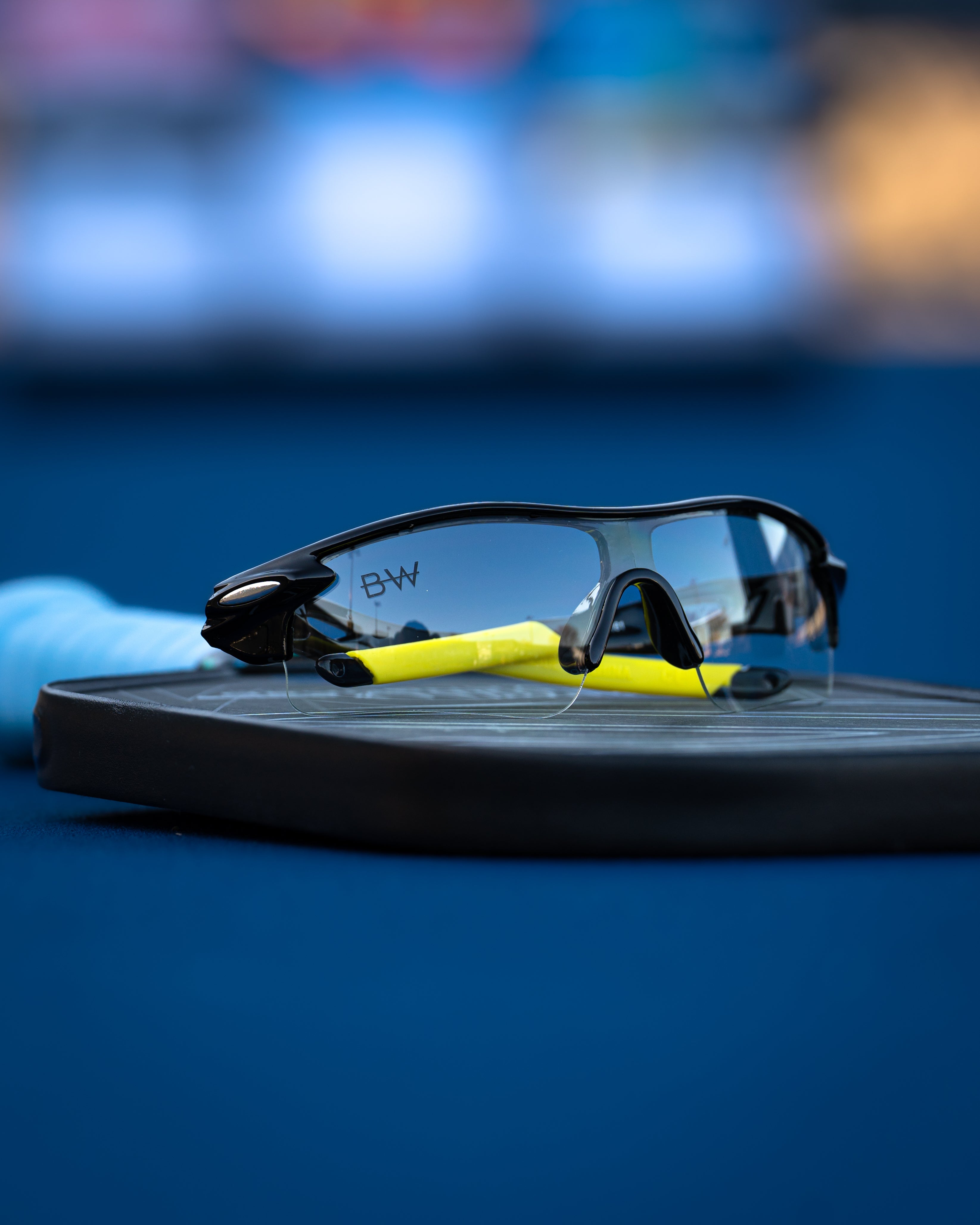
Prescription sports lenses like those at Blinded Wear offer fatigue-busting features:
- 1.61 high-index lenses: lighten load and reduce distortion
- Non-polarized options: preserve depth perception
- Gray or transitional tints: reduce glare and ease light transitions
- Anti-fog coatings: eliminate distractions mid-match
- Comfort grip frames: minimize distractions and adjustments
⚙️ Real-World Impact on the Court
Players report:
- Fewer headaches and less eye soreness in later sets
- Sustained focus into 4th and 5th games
- Smoother mental recovery between rallies
“By match three my old glasses had me squinting and losing depth. My Blinded RX pair let me play through five sets without any eye strain.”
– Morgan K., CO
📊 Comparing Lens Impact on Fatigue
| Lens Type | Fatigue Reduction | When to Choose |
|---|---|---|
| Clear (1.61) | Moderate (relief indoors) |
Indoor or shaded courts |
| Gray Tint (1.61) | High (blocks harsh glare) |
Outdoor sun, midday play |
| Transitional | Very High (adapts on the fly) |
Mixed light tournaments |
🧩 Fatigue Fighters: Best Frames & Lenses to Prevent Breakdown
- Steel Ice RX + gray tint = Steady vision under glare stress
- Havana Melt RX + transitional = Automatic light adaptation
- Ocean Wave RX + clear = Comfortable indoor clarity
📚 Related Reads to Build on This
- Transition Speed in RX Lenses: Why It Matters for Tournaments
- Light Transmission in RX Sports Eyewear
- Does Prescription Eyewear Enhance Hand‑Eye Coordination?
- Comparing Lens Clarity Across RX Options
- Why 1.61 High‑Index Lenses Are the Unsung Hero
❓ FAQ: Visual Fatigue & RX Eyewear
How fast do eyes show fatigue?
Symptoms can appear after just 30 minutes on court in bright or contrast-heavy environments.
Is transition better than fixed tint?
Transition lenses provide the most consistent relief across mixed conditions—but gray tint works best under full sun.
Will 1.61 lenses help fatigue?
Yes—they’re lighter, reduce distortion, and lessen strain compared with standard lenses.
Are anti-fog coatings worth it?
Absolutely—they prevent interruptions and help maintain steady concentration during fast play.
🎯 Next Steps: Prevent Fatigue from Point One
🏁 Final Word
Visual fatigue is real, and it can be the silent match-breaker you don’t see coming. But the right RX lenses? They help preserve your vision, focus, and performance through every set—so fatigue never steals your game.
Make eye endurance your new competitive edge.