
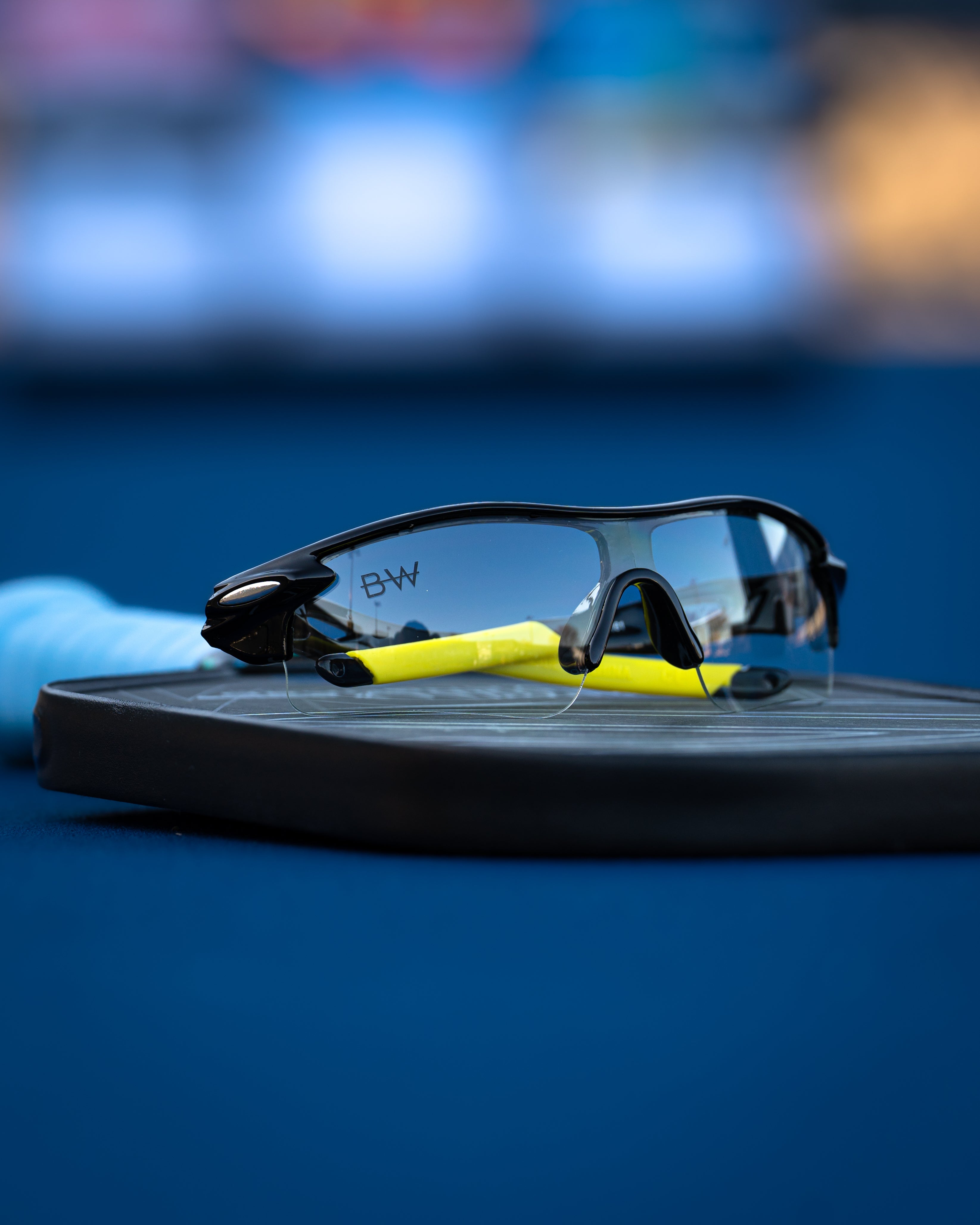
Why Eye Protection Is Essential for Pickleball Players
Share
Find Your Perfect Pickleball Glasses
Looking for prescription (RX) or non-prescription pickleball eyewear? Our 2026 guide helps you compare options for eye protection, visibility, comfort, and performance across indoor and outdoor courts.
Why Eye Protection Is Essential for Pickleball Players
Pickleball may look like a relatively low-contact sport, but the speed of the ball, compact court, and close playing distances create a real risk of eye injury. A ball or paddle can reach the face before a player has enough time to turn away, blink, or react.
That is why eye protection deserves a place alongside your paddle, shoes, and other essential pickleball equipment. The right protective eyewear can create a physical barrier between your eyes and an unexpected impact while also helping you maintain clear vision during play.
Recent medical research has brought more attention to pickleball-related eye injuries. The American Medical Association has highlighted the growing number of ocular injuries associated with the sport and supported greater awareness of eye-injury prevention. Researchers have reported injuries ranging from bruising and corneal abrasions to more serious ocular trauma.
For players who want to stay on the court while protecting their vision, the takeaway is simple: eye protection should be treated as part of pickleball safety, not just as an optional accessory.
Why Pickleball Can Be Hard on Your Eyes
Pickleball creates a unique combination of speed, proximity, and unpredictable movement. Players can be positioned only a few feet apart at the kitchen line, leaving very little time to respond when a ball is deflected directly toward the face.
According to an American Medical Association summary of recent research, pickleballs traveling at 25 mph or more can fit within the orbital opening, creating a risk of blunt-force eye trauma. The same research identified injuries involving structures including the cornea, lens, retina, and surrounding orbit.
Common Situations That Can Put Your Eyes at Risk
- Fast drives at the kitchen line — A ball can reach your face before you have time to react.
- Deflections off a paddle — Balls can change direction suddenly after contact.
- Overheads and high balls — A poorly timed or misdirected shot can travel directly toward another player.
- Partner or opponent contact — Close positioning increases the possibility of accidental paddle contact.
- Recreational play — Players of different skill levels may generate unpredictable shots and reactions.
- Outdoor conditions — Wind, dust, and sunlight can add additional visual distractions.
The important point is that an eye injury does not have to come from an unusually hard competitive shot. A routine rally can change direction in an instant.
Eye Protection Is About More Than Blocking the Sun
One of the biggest misconceptions about pickleball eyewear is that any pair of sunglasses automatically provides adequate eye protection.
Sun protection and impact protection are not the same thing.
UV-blocking lenses can help protect your eyes from ultraviolet radiation during outdoor play, while appropriately designed protective eyewear can help reduce the risk of injury from an impact. Players should therefore look beyond lens tint and appearance when choosing eyewear for pickleball.
The American Medical Association's discussion of pickleball safety specifically points to ASTM F3164-24, a standard specification for eye protectors used in racket sports including pickleball, racquetball, squash, and tennis.
If impact protection is your primary reason for wearing eyewear, look for a product that is specifically designed and appropriately rated for sports eye protection rather than assuming that ordinary fashion sunglasses provide the same level of protection.
5 Eye-Tracking Drills Pickleball Players Can Practice
Protective eyewear is only one part of playing confidently. Pickleball also requires players to continuously track a moving ball, recognize changes in direction, and coordinate their eyes with their hands and feet.
The following drills can help you practice those visual skills while keeping the emphasis on controlled, safe training.
1. Ball Tracking Drill: Improve Your Visual Tracking
Ball tracking is fundamental to pickleball. Before you can return a shot effectively, you need to locate the ball, follow its movement, and recognize where it is likely to go.
How to Perform the Ball Tracking Drill
- Stand in a comfortable ready position with a partner several feet away.
- Have your partner gently toss a pickleball from different directions.
- Keep your eyes on the ball from the beginning of the toss until it reaches you.
- Move your feet to stay positioned behind the ball rather than reaching unnecessarily.
- Gradually vary the height, direction, and speed of the toss as your tracking improves.
The goal is not simply to watch the ball. Practice maintaining visual attention while your body adjusts to its changing position.
2. Peripheral Vision Drill: Build Court Awareness
Pickleball players rarely have the luxury of focusing exclusively on one object. You need to track the ball while remaining aware of your opponent, partner, court boundaries, and developing play.
How to Perform the Peripheral Vision Drill
- Stand in a ready position facing the net.
- Choose a fixed point to look toward.
- Have your partner move slowly from one side of your field of view to the other.
- Try to recognize the direction of their movement without turning your head toward them.
- Repeat from different positions and gradually increase the speed of the movement.
This is a simple awareness exercise rather than a substitute for normal pickleball practice. Keep the movement controlled and avoid introducing a ball until you can perform the drill comfortably.
Why Protective Eyewear Matters Even for Recreational Players
You do not have to play tournaments or compete at a high level to benefit from taking eye safety seriously.
In fact, unpredictable recreational play can make protective habits especially valuable. Players may have different skill levels, reaction times, shot selection, and control over the ball. A ball that was never intended to travel toward your face can still end up there.
A 2025 survey presented at the American Public Health Association's annual meeting found that 15% of 419 surveyed adult pickleball players reported an eye injury, although the survey design means those findings should not be interpreted as a population-wide injury rate. The study also found that competitive players reported more injuries than recreational players in that sample.
The broader medical evidence is enough to make eye protection worth considering as part of a responsible pickleball setup. The AMA has specifically called for greater education around pickleball-related eye-injury prevention.
3. Reaction-Time Drill: Practice Responding to the Ball
Pickleball can force you to make decisions in a fraction of a second, particularly during fast exchanges at the non-volley zone. A reaction drill can help you practice responding to unpredictable ball movement while maintaining a balanced ready position.
How to Perform the Reaction-Time Drill
- Stand in a ready position several feet from your partner.
- Have your partner use controlled tosses toward your forehand, backhand, and center.
- Do not predict the direction before the toss. Wait until you can see the ball moving.
- Move your paddle and feet into position as quickly as you can while maintaining control.
- Begin with slow, predictable feeds and gradually introduce more variation.
Keep the drill controlled. The objective is to practice visual recognition and movement rather than simply making the ball travel as fast as possible.
4. Moving-Ball Tracking Drill: Follow the Shot Through Contact
In a real rally, the ball is rarely stationary. It can accelerate, slow down, bounce, change direction, or pass through your peripheral field of view. Practicing tracking while the ball is moving can help you become more comfortable maintaining visual attention during active play.
How to Perform the Moving-Ball Drill
- Have a partner stand on the opposite side of the court.
- Begin with controlled cross-court feeds.
- Follow the ball from your opponent's contact point through its flight and bounce.
- Move into position while continuing to visually track the ball.
- Progress to alternating directions and different shot heights as your control improves.
One useful habit is to avoid looking away immediately after your opponent makes contact. Keeping the ball within your visual attention for as much of its flight as practical gives you more information about its direction and speed.
5. Eye-Protection Habit Drill: Make Safety Automatic
The most useful eye-protection habit is also the simplest: put your protective eyewear on before you begin playing and keep it on during active play.
Instead of treating protective eyewear as something you reach for only during tournaments or particularly fast games, make it part of your normal equipment routine.
Build the Habit
- Put your eyewear on before warm-ups begin.
- Check that the frame fits securely and does not obstruct your vision.
- Make sure the lenses are clean before stepping onto the court.
- Replace damaged eyewear rather than continuing to play with compromised lenses or frames.
- When impact protection is the priority, verify that the product is specifically designed for the relevant sport and meets an appropriate safety standard.
The American Academy of Ophthalmology's EyeWiki recommends appropriate protective eyewear for sports in which balls, bats, or player contact can create eye-injury hazards.
What Should You Look for in Pickleball Eye Protection?
Not every pair of sunglasses is designed for the same purpose. When choosing pickleball eyewear, consider impact protection, fit, lens coverage, optical clarity, UV protection, and whether you need prescription lenses.
1. Impact-Appropriate Construction
If your main concern is protecting your eyes from a pickleball or paddle, prioritize eyewear specifically intended for sports eye protection. The ASTM F3164-24 specification covers eye protectors for racket sports including pickleball, racquetball, squash, and tennis.
This distinction matters because a pair of ordinary lifestyle sunglasses may provide UV protection without being designed or tested for the same type of impact hazard.
2. Secure, Comfortable Fit
Protective eyewear only works as intended when you can comfortably keep it on while playing. Look for a stable fit that does not slide down your nose, bounce excessively during movement, or create distracting pressure points.
A secure frame can also reduce the temptation to repeatedly adjust your glasses during rallies.
3. Adequate Eye Coverage
Coverage matters because pickleballs do not always approach from directly in front of your face. Wraparound or sport-oriented designs can provide additional coverage around the sides of the eyes compared with conventional narrow frames.
However, more coverage does not automatically mean a product meets an impact-protection standard. Check the manufacturer's specifications rather than judging protection solely by appearance.
4. UV Protection for Outdoor Pickleball
If you regularly play outside, UV protection is another important consideration. Sunglasses designed for outdoor use can reduce exposure to bright sunlight and make extended daytime play more comfortable.
Keep UV protection separate from impact protection when comparing products: a lens can block UV radiation without being certified as protective sports eyewear.
5. Prescription Compatibility When Needed
Players who need vision correction do not have to choose between seeing clearly and wearing sport eyewear. Prescription-compatible sports frames can combine vision correction with the features needed for active play.
If you wear prescription lenses, make sure the specific frame and lens configuration are appropriate for your prescription and intended activity.
Prescription vs. Non-Prescription Pickleball Eye Protection
The best option depends on whether you need vision correction.
| Option | Best For | What to Consider |
|---|---|---|
| Prescription (RX) | Players who normally require corrective lenses | Prescription compatibility, fit, optical clarity, and sport suitability |
| Non-Prescription | Players who do not require corrective lenses | Impact protection, coverage, UV protection, fit, and lens characteristics |
If you are deciding between the two, our guide to prescription vs. non-prescription pickleball glasses can help you compare the differences.
Indoor vs. Outdoor Pickleball: Does Eye Protection Change?
The need for eye protection does not disappear when you move indoors. The primary impact hazard remains: a ball or paddle can still strike the eye.
What changes is the visual environment.
Indoor Play
- Artificial lighting can create reflections and glare.
- Clear or lightly tinted lenses may be more appropriate than dark outdoor lenses.
- Lens clarity and a secure fit become particularly important during fast indoor rallies.
Outdoor Play
- Bright sunlight can make tracking the ball more difficult.
- UV protection becomes an important consideration.
- Wind and airborne dust can create additional irritation and distraction.
- A sport-oriented frame can help provide greater coverage around the eyes.
For players who regularly switch between environments, the goal is not necessarily to own the darkest lens available. Instead, choose eyewear that matches your lighting conditions while still providing the protection and fit appropriate for your game.
Why Eye Protection Should Be Part of Your Pickleball Routine
The strongest safety habit is the one you actually follow consistently.
Pickleball-related ocular injuries are not limited to professional competition. A 2025 JAMA Ophthalmology study reviewed emergency-department data from 2005 through 2024 and found that estimated pickleball-related ocular injuries increased substantially in recent years. The American Medical Association reported that more than 1,200 such eye injuries were estimated for 2024, with being struck by the ball accounting for 43% of reported injury mechanisms in the study.
Those numbers do not mean that every pickleball player is likely to experience an eye injury. They do demonstrate why eye safety deserves attention as participation in the sport continues to grow.
For that reason, protective eyewear should be considered before—not after—a close call.
How to Choose the Right Pickleball Eye Protection
Choosing pickleball eyewear should go beyond finding a pair that looks good on the court. The right option should match your playing environment, vision needs, comfort preferences, and the level of protection you are looking for.
Indoor Players
If you primarily play indoors, prioritize optical clarity, a secure fit, comfortable coverage, and lenses suited to the available lighting. You generally do not need a dark sunglass tint simply because you are wearing protective eyewear.
Outdoor Players
Outdoor players should consider UV protection in addition to impact protection. Bright sunlight, wind, and airborne debris can make outdoor play more challenging, so coverage and a stable sport-oriented fit are particularly useful.
Players Who Need Prescription Lenses
If you normally rely on corrective lenses, prescription-compatible pickleball eyewear can help you maintain clear vision without having to choose between your prescription and sport-specific eyewear.
Blinded Wear Co. offers both prescription pickleball eyewear and non-prescription pickleball eyewear for players with different vision needs.
Common Mistakes Players Make With Pickleball Eye Protection
Using Ordinary Sunglasses as a Substitute for Protective Eyewear
Sun protection and impact protection are not the same thing. A pair of everyday sunglasses may reduce brightness and provide UV protection while not being designed or tested for sports-related impacts.
If impact protection is your priority, look for eyewear specifically identified by the manufacturer as protective sports eyewear and check the applicable safety specifications.
Choosing a Frame That Moves During Play
Even high-quality lenses are less useful if the frame repeatedly slides, bounces, or requires adjustment. A secure fit helps you maintain your attention on the rally rather than your eyewear.
Ignoring Side Coverage
A pickleball can approach from different angles, especially during doubles play and fast exchanges at the kitchen. Sport-oriented frames with greater coverage can help shield more of the area around the eyes.
Waiting Until After an Injury
Eye protection is preventive equipment. You do not need to experience a close call before making it part of your regular pickleball setup.
What the Research Says About Pickleball Eye Injuries
The growing popularity of pickleball has also brought increased attention to ocular safety. A study published in JAMA Ophthalmology examined U.S. emergency-department data from 2005 through 2024 and found a marked increase in estimated pickleball-related ocular injuries during the 2021–2024 period. The American Medical Association reported that more than 1,200 pickleball-related eye injuries were estimated for 2024.
The reported mechanisms included being struck by the ball, falls, and being struck by a paddle. Reported injuries ranged from corneal abrasions and periocular lacerations to more serious ocular trauma.
This does not mean that every pickleball player will experience an eye injury. It does, however, reinforce an important point: eye safety deserves to be part of the conversation as the sport continues to grow.
Protective Eyewear vs. Performance Eyewear
It is useful to distinguish between two related goals when shopping for pickleball glasses.
- Protective eyewear: designed with impact protection and relevant sports-safety requirements in mind.
- Performance eyewear: designed to improve comfort, visual conditions, glare management, fit, and usability during play.
The ideal product can address both goals, but players should not assume that a stylish sports frame automatically meets an impact-protection standard.
The American Medical Association has highlighted ASTM F3164-24 as a standard specification for eye protectors intended for racket sports including pickleball, tennis, squash, and racquetball.
Eye Protection Should Not Distract From Your Game
The best eyewear is something you can wear comfortably throughout a match without constantly thinking about it.
Your glasses should sit securely, provide an unobstructed field of view, and remain comfortable when you move, sweat, serve, volley, or change direction.
For outdoor play, appropriate UV protection is another important consideration. For indoor play, optical clarity and a lens tint suited to the lighting environment may matter more.
And if you need prescription correction, your eyewear should provide the visual clarity you normally rely on while remaining appropriate for active play.
Make Eye Protection Part of Your Pickleball Gear
A pickleball paddle, shoes, balls, and comfortable clothing are all standard parts of a player's equipment. Eye protection deserves the same consideration.
Before your next match, ask yourself:
- Does my eyewear stay securely in place when I move?
- Does it provide the coverage I want around my eyes?
- Does it provide appropriate UV protection for outdoor play?
- Do I need prescription lenses?
- Is the eyewear specifically designed for sports and impact protection?
- Are the lenses clean and free of damage that could interfere with my vision?
If you cannot confidently answer those questions, it may be time to reconsider what you are wearing on the court.
Find Pickleball Eyewear Built Around Your Game
Blinded Wear Co. offers pickleball eyewear for players looking for a combination of clear vision, comfortable fit, and sport-focused design.
Explore the full collection:
- Shop Prescription Pickleball Eyewear
- Shop Non-Prescription Pickleball Sunglasses
- See the 2026 Pickleball Glasses Guide
Whether you play casually, compete in leagues, or spend several days a week on the court, protecting your eyes is a simple step that can help you stay focused on what matters: seeing the ball and enjoying the game.
Frequently Asked Questions About Pickleball Eye Protection
Do I really need eye protection for pickleball?
Pickleball involves fast-moving balls, paddles, player movement, and close-range exchanges, all of which can create an eye-injury risk. The American Academy of Ophthalmology's EyeWiki recommends appropriate protective eyewear for sports where balls, equipment, or player contact can create eye hazards.
Are regular sunglasses enough for pickleball?
Not necessarily. Regular sunglasses may provide UV protection, but UV protection and impact protection are different features. If impact protection is important to you, choose eyewear specifically designed and tested for the relevant sports use.
Should I wear eye protection indoors?
Indoor courts can still involve the same ball and paddle impact hazards. The difference is primarily the lighting environment, so choose a lens tint and optical configuration that work well indoors while maintaining the level of protection you need.
Can I wear prescription pickleball glasses?
Yes. Prescription-compatible sports eyewear allows players who need vision correction to maintain clear vision while using a sport-oriented frame. Always confirm that the specific frame and lens configuration are compatible with your prescription.
What should I look for in pickleball glasses?
Consider impact protection, fit, coverage, optical clarity, UV protection for outdoor play, lens tint, durability, and prescription compatibility if needed. The most important features depend on where and how you play.
Final Thoughts: Protect Your Vision Before You Need To
Pickleball is fast, social, and easy to get hooked on. But the same speed and close-range action that make the sport exciting can also create avoidable risks for your eyes.
Training your visual skills can help you become more comfortable tracking and responding to the ball. Wearing appropriate protective eyewear adds another important layer of prevention.
Do not wait for a ball to come inches from your eye to start thinking about eye protection.
Choose eyewear that fits securely, gives you the vision you need, and is appropriate for the environment and level of protection you expect.
Ready to find your pair? Explore Blinded Wear Co.'s pickleball sunglasses or shop prescription pickleball eyewear and make eye protection part of your game.