
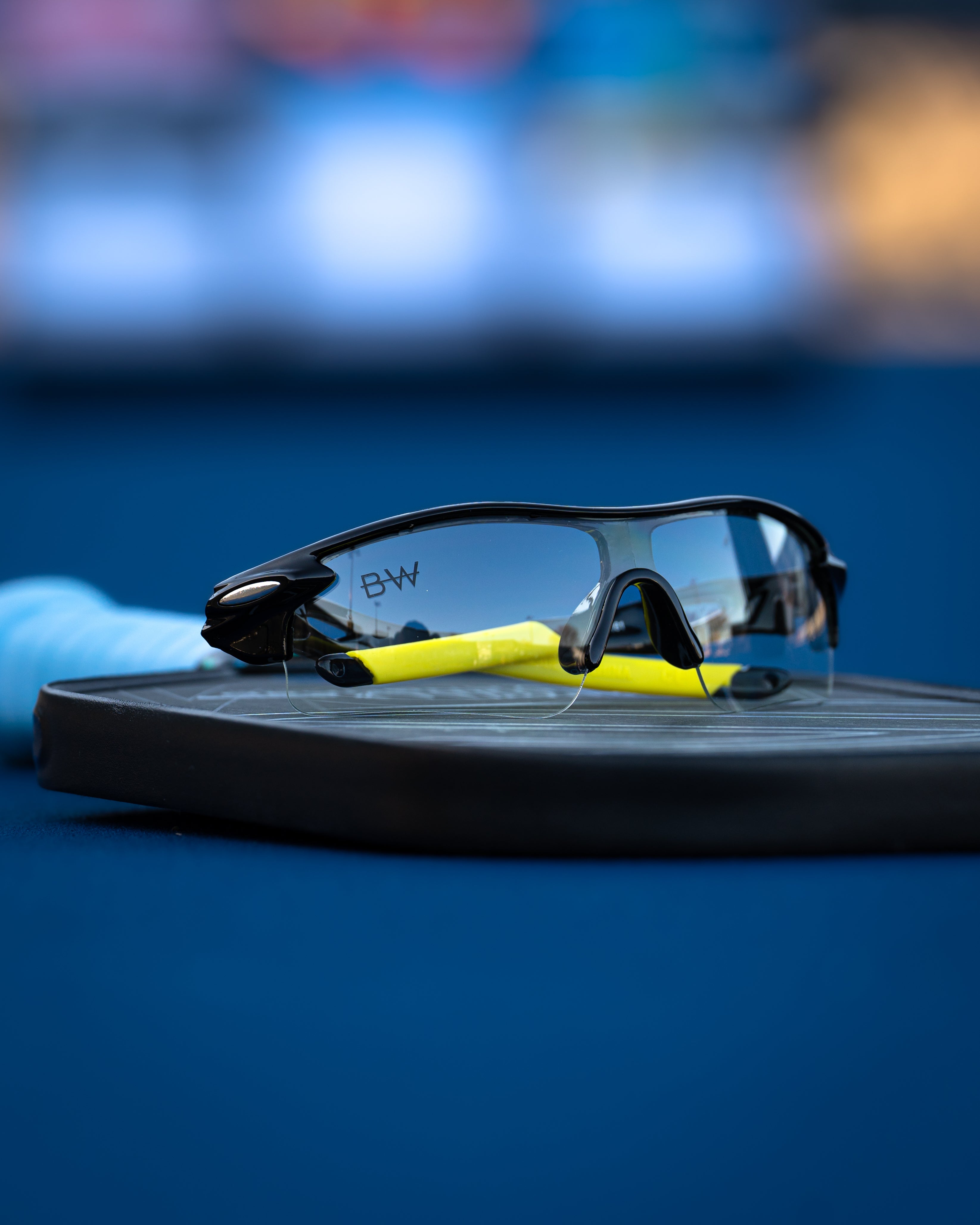
Why Glasses Are Essential for Every Sport
Share
Why Sports Glasses Matter Across Different Sports and Activities
Sports glasses can serve different purposes depending on the activity: prescription vision correction, impact resistance, comfortable active fit, or a lens setup suited to indoor and outdoor conditions. The right eyewear is not identical for every athlete, but vision and fit are important considerations across many sports.
A pickleball player may prioritize prescription correction and court-friendly lenses. A runner may care more about lightweight comfort. A cyclist may prioritize coverage and outdoor conditions. An indoor athlete may prefer clear lenses that do not unnecessarily darken the environment.
This guide explains when sports glasses are worth considering, what different athletes should look for, and how to separate useful eyewear features from exaggerated performance claims.
Why Do Athletes Wear Sports Glasses?
Athletes may wear sports glasses for several practical reasons:
- Prescription vision correction
- Impact-resistant lenses
- A frame designed for active use
- Comfort during extended activity
- A lens setup appropriate for indoor or outdoor conditions
- Coverage from environmental conditions depending on the frame
Sports glasses should not be treated as a guaranteed way to run faster, react quicker, improve depth perception, or become a better athlete. Their job is to provide an eyewear setup appropriate for the person, prescription, sport, and environment.
Looking for Pickleball Glasses?
Blinded Wear offers both prescription and non-prescription eyewear for pickleball players. Compare the two based on whether you need built-in vision correction and the conditions in which you play.
1. Vision Matters in Many Sports
Different sports place different demands on vision.
Depending on the activity, athletes may need to see:
- A moving ball
- Other players
- Court or field boundaries
- Obstacles
- Terrain
- Equipment
- Changes in the surrounding environment
If you normally require prescription correction to see clearly, participating without the correction you need may make visual tasks more difficult.
Clear Vision Is Important, but Eyewear Does Not Guarantee Better Performance
It is reasonable to want appropriate vision correction during sports. It is not reasonable to assume that a particular pair of glasses will automatically make you react faster, track a ball better, or improve your athletic ability.
Performance depends on many factors, including:
- Vision
- Skill
- Practice
- Technique
- Physical conditioning
- Decision-making
- The demands of the sport
Sports eyewear should therefore be evaluated as equipment that supports your vision and active-use needs rather than as a shortcut to better performance.
2. Prescription vs. Non-Prescription Sports Glasses
One of the first decisions is whether you need prescription correction built directly into your sports eyewear.
| RX Sports Glasses | Non-RX Sports Glasses |
|---|---|
| Include prescription vision correction | Do not include prescription correction |
| Can suit athletes who prefer glasses over contacts | Can suit athletes who do not require correction |
| Require prescription compatibility | Prescription compatibility is not a concern |
| Lens thickness can vary with prescription | Prescription-related thickness is not a factor |
| May eliminate the need for contacts during play | Can be worn over vision corrected by contacts when appropriate |
Who Should Consider Prescription Sports Glasses?
Prescription sports eyewear may make sense if you:
- Need prescription correction during your sport
- Prefer glasses instead of contact lenses
- Want a dedicated pair for active use
- Play frequently enough to justify separate sports eyewear
- Want prescription lenses paired with a lightweight sports frame
3. High-Index Lenses Can Matter for Prescription Athletes
High-index is a category of prescription lens material that bends light more efficiently than lower-index materials. Depending on the prescription and frame, this can allow lenses to be made thinner.
That can become increasingly relevant for athletes with moderate or stronger prescriptions, where lens thickness may otherwise be more noticeable.
What High-Index Does and Does Not Mean
| High-Index Can | High-Index Does Not Automatically |
|---|---|
| Reduce lens thickness in many prescriptions | Improve reaction time |
| Help manage visible lens bulk | Improve depth perception |
| Be useful for stronger prescriptions | Make every prescription lighter |
| Work with appropriate sports-frame designs | Establish impact resistance |
Blinded Wear Includes High-Index Prescription Lenses at No Additional Cost
Blinded Wear includes high-index prescription lenses with its RX eyewear without a separate high-index upcharge.
The exact numerical refractive index should be confirmed for the specific product or order rather than assuming every RX configuration uses the same numerical index.
For shoppers comparing prescription sports glasses, the important pricing question is not only the starting frame price. Compare what the complete RX configuration actually costs.
4. Sports Glasses Should Fit During Movement
Fit matters because athletes rarely remain still.
Depending on the sport, you may be:
- Running
- Jumping
- Turning your head quickly
- Bending forward
- Moving laterally
- Sweating
- Wearing the eyewear for extended periods
A frame that feels fine while standing still may become uncomfortable or distracting once you start moving.
What Makes a Good Sports-Glasses Fit?
Evaluate:
- Overall frame width
- Bridge comfort
- Temple pressure
- Frame weight
- Stability when turning your head
- Comfort during extended wear
The goal is a frame that feels stable without becoming excessively tight.
Why Lightweight Sports Glasses Can Be Useful
Lightweight eyewear can reduce unnecessary bulk during long practices, games, rides, runs, and training sessions.
Blinded Wear uses lightweight sports frames designed for active use.
Individual fit still matters. A lightweight frame that does not fit your face properly is not automatically the right choice.
5. Impact Resistance Matters in Active Eyewear
Sports eyewear can encounter accidental contact, drops, equipment, balls, and other impacts. That makes lens impact resistance an important feature to evaluate.
Blinded Wear uses impact-resistant lenses in its sports eyewear.
However, impact-resistant does not mean unbreakable, and it does not automatically establish compliance with a particular sports-safety standard.
Impact-Resistant vs. Safety-Certified Sports Eyewear
These terms should not be used interchangeably.
| Term | What to Know |
|---|---|
| Impact-resistant | Describes resistance to impact |
| Safety-certified | Indicates documented compliance with a named standard |
| Unbreakable | Should not be assumed from either description |
If your sport, league, workplace, or activity requires a particular eyewear standard, verify that certification for the exact product.
6. What to Look for in Glasses for Different Sports
There is no single pair of sports glasses that is automatically ideal for every activity. Start with the demands of your sport.
| Sport or Activity | Eyewear Considerations |
|---|---|
| Pickleball | Active fit, RX needs, impact resistance, indoor or outdoor conditions |
| Tennis | Frame stability, prescription correction, lighting conditions |
| Running | Lightweight comfort, stability, outdoor conditions |
| Cycling | Coverage, prescription needs, wind and environmental conditions |
| Basketball | Prescription correction, active fit, impact considerations, indoor lighting |
| Volleyball | Comfort, movement, prescription needs, indoor or outdoor conditions |
| Gym training | Comfort, stability, prescription correction |
| Higher-impact activities | Any sport-specific protection or certification requirements |
Sports Glasses for Pickleball
Pickleball combines quick movement, a relatively small ball, close-range play, and both indoor and outdoor environments.
For players who need eyewear, useful considerations include:
- Prescription vs. non-prescription lenses
- Comfort during extended matches
- Frame stability
- Impact-resistant lenses
- Clear vs. tinted lenses based on playing conditions
- Total RX cost if prescription correction is required
Blinded Wear designs sports eyewear specifically with pickleball players in mind.
Sports Glasses for Running
Runners may prioritize lightweight comfort and frame stability because eyewear can be worn continuously for extended periods.
Outdoor runners should also think about:
- Time of day
- Brightness
- Weather
- Wind
- Whether prescription correction is needed
The right lens configuration depends on those conditions rather than on appearance alone.
Sports Glasses for Cycling
Cyclists often encounter changing outdoor conditions, airflow, and environmental debris.
When comparing cycling eyewear, consider:
- Coverage
- Frame stability
- Prescription compatibility
- Lens tint
- Lighting conditions
- Documented lens specifications
A specific cycling frame may require different features than eyewear intended primarily for an indoor court.
Sports Glasses for Basketball
Basketball involves frequent changes in direction and potential contact, so prescription compatibility, fit, and appropriate protection can be important considerations.
If you need eyewear that meets a particular basketball or protective-eyewear standard, verify that certification for the exact product rather than assuming all sports glasses qualify.
Sports Glasses for Volleyball
Volleyball players may want eyewear that remains comfortable through jumping, lateral movement, and quick head movement.
Indoor players should also consider whether a dark tint is necessary. If it is not, clear lenses may be a more appropriate starting point.
7. Clear-Lens Sports Glasses for Indoor Sports
Dark sunglasses are generally unnecessary in many indoor environments. Clear sports lenses can provide prescription correction when needed without unnecessarily reducing available light.
Clear lenses may be worth considering for:
- Indoor pickleball
- Basketball
- Volleyball
- Indoor training
- Gyms
- Other lower-light activities
What Clear Sports Lenses Do Not Automatically Do
Clear lenses should not automatically be described as providing:
- Better reaction time
- Improved depth perception
- Better ball tracking
- Reduced LED glare
- Anti-reflective performance
- Enhanced contrast
Those characteristics depend on the athlete, prescription, lens technology, and any documented treatments. The straightforward benefit of a clear lens is that it avoids adding an unnecessary dark tint.
8. What to Look for in Outdoor Sports Glasses
Outdoor athletes encounter conditions that indoor athletes may not, including bright sunlight, wind, changing weather, and environmental debris.
When shopping for outdoor sports eyewear, evaluate:
- Lens tint
- Coverage
- Comfort
- Frame stability
- Prescription needs
- Any verified UV specification
- Any documented coatings or treatments
Do Not Judge Outdoor Lenses by Appearance Alone
A dark or mirrored-looking lens does not by itself tell you whether the lens is polarized, what UV specification it carries, whether it has an anti-reflective treatment, or how impact-resistant it is.
Verify the specifications that matter to you for the exact lens configuration.
Verify UV Protection Claims
If a particular UV specification is important for your outdoor activity, verify it for the exact lens.
Do not assume that every tinted sports lens automatically has the same UV rating.
9. Polarized vs. Non-Polarized Sports Glasses
Polarized and non-polarized lenses are different options rather than a universal good-versus-bad choice.
Polarized lenses filter certain reflected light and can be useful in some bright environments. Non-polarized lenses preserve natural visual information without adding a polarization filter.
Blinded Wear's pickleball-focused eyewear uses non-polarized lenses, and some court players may prefer this configuration.
Neither lens type should be claimed to universally improve depth perception or athletic performance.
10. Verify Sports-Lens Coatings Before Buying
Sports eyewear is frequently marketed using coating terminology. These treatments should be verified for the exact lens instead of assumed from the words “sports glasses.”
| Feature | What to Do |
|---|---|
| Anti-fog | Verify whether the exact lens has a documented anti-fog treatment |
| Scratch-resistant | Verify the treatment rather than assuming impact resistance provides it |
| Anti-reflective | Confirm whether the selected lens includes it |
| Hydrophobic | Confirm the treatment if moisture management matters to you |
| UV protection | Verify the specific rating if it is an important requirement |
| Photochromic | Confirm availability and compatibility with the selected configuration |
Why Sports Glasses Can Fog
Fogging can be influenced by:
- Perspiration
- Humidity
- Temperature changes
- Airflow
- Frame position
No sports eyewear should be assumed to be universally fog-proof unless that performance is specifically documented.
11. Style Still Matters—After the Functional Requirements
Sports glasses do not need to look purely utilitarian. If you like the way a frame looks, you may be more likely to wear it consistently.
But style should come after the questions that determine whether the eyewear actually works for you:
- Does it support your prescription if you need RX lenses?
- Does it fit comfortably?
- Is it appropriate for your sport?
- Does the lens configuration match your environment?
- Does it provide the lens properties you actually require?
Once those questions are answered, frame appearance becomes a useful final differentiator.
Can Sports Glasses Be Worn Outside of Sports?
They can be, provided the lens setup is appropriate for the environment and you are comfortable wearing the frame.
Some athletes prefer having dedicated sports eyewear, while others want a pair they can also use before and after activity. Neither approach is inherently better.
Does Every Athlete Need Sports Glasses?
No. Sports glasses are useful for many athletes, but they are not literally required for every person participating in every sport.
You may have a stronger reason to consider them if you:
- Need prescription correction
- Prefer glasses instead of contacts
- Want impact-resistant lenses
- Need a dedicated frame for active use
- Frequently participate in a sport where your everyday glasses are inconvenient
- Need eyewear suited to particular indoor or outdoor conditions
This distinction is important because choosing sports eyewear should be based on your needs rather than on an exaggerated claim that every athlete must own a pair.
Sports Glasses vs. Everyday Glasses
| Everyday Glasses | Sports Glasses |
|---|---|
| Primarily intended for normal daily wear | Designed with active use in mind |
| May work for casual activity | Can make more sense for frequent sports participation |
| Impact properties vary | Impact resistance can be specifically prioritized |
| Fit may not prioritize movement | Movement-related comfort and stability are important considerations |
Prescription Sports Glasses vs. Contacts
If you require prescription correction, you generally have more than one way to approach sports eyewear.
| RX Sports Glasses | Contacts + Non-RX Sports Glasses |
|---|---|
| Correction is built into the eyewear | Correction comes from contact lenses |
| No contacts required during activity | Allows use of non-RX sports frames |
| RX compatibility must be considered | Sports frame does not need prescription lenses |
| Useful for athletes who prefer glasses | Useful for athletes comfortable wearing contacts |
What Blinded Wear Sports Eyewear Offers
When comparing Blinded Wear with other sports-eyewear options, focus on documented features rather than unsupported performance promises.
| Feature | Blinded Wear |
|---|---|
| Prescription eyewear | Available |
| Non-prescription eyewear | Available |
| High-index RX lenses | Included at no additional cost |
| Lightweight sports frames | Yes |
| Impact-resistant lenses | Yes |
| Non-polarized lenses | Yes |
| Pickleball-focused design | Yes |
| 50% lifetime replacement warranty if glasses break | Yes, subject to current policy terms |
Features to Verify for the Exact Pair
Do not automatically assume a Blinded Wear model includes any of the following unless the exact product or lens configuration documents it:
- A specific numerical high-index value
- UV400 or a particular UV rating
- Polarization
- Anti-fog treatment
- Scratch-resistant coating
- Anti-reflective coating
- Hydrophobic or sweat-resistant treatment
- TR90 construction
- Adjustable nose pads
- A named sports-safety certification
- Photochromic technology
How to Order Blinded Wear Prescription Sports Glasses
Blinded Wear RX customers upload a clear photo of their eyeglass prescription before purchasing.
Before uploading it, make sure:
- The entire prescription is visible
- The image is clear and in focus
- The prescription values are readable
- Nothing important is cropped
- Glare is not covering the information
The prescription information is associated with the custom RX order.
12. Compare the Complete Cost of Prescription Sports Glasses
If you need RX eyewear, compare the complete prescription price rather than only the advertised frame price.
A useful framework is:
Total RX Cost = Frame + Prescription Lenses + Lens-Material Upgrades + Optional Features + Shipping
Blinded Wear includes high-index prescription lenses at no additional cost, removing one potential lens-material upcharge from the purchase.
13. Consider Long-Term Replacement Support
Sports eyewear may be used frequently and carried between courts, gyms, practices, and events, so replacement terms can matter when comparing value.
Blinded Wear offers a 50% lifetime replacement warranty if the glasses break, subject to current policy terms.
This does not mean unlimited free replacements or that every form of damage is automatically covered.
Sports Glasses Buying Checklist
- Identify whether you need RX or non-RX eyewear
- Confirm full prescription compatibility if needed
- Review frame dimensions
- Consider bridge and temple comfort
- Look for a frame suited to active use
- Evaluate impact resistance
- Check whether your sport requires a particular safety certification
- Match the lens to indoor, outdoor, or nighttime conditions
- Verify UV specifications if important
- Verify coatings instead of assuming they are included
- Compare the complete RX price
- Review replacement and return terms
Find Sports Eyewear for Your Pickleball Setup
Need prescription correction built into your eyewear?
Don't need prescription lenses?
Shop Non-RX Pickleball Glasses →
Primarily play indoors or in lower-light conditions?
Want help comparing your options?
14. Different Sports Create Different Eyewear Priorities
The phrase sports glasses covers a wide range of activities, so there is no single feature list that applies equally to every athlete.
A useful way to shop is to identify the primary demands of your sport first, then choose eyewear around those demands.
| Sport Type | Typical Eyewear Priorities |
|---|---|
| Court sports | Movement stability, prescription correction, impact resistance, lighting conditions |
| Running | Low weight, comfort, outdoor conditions, frame stability |
| Cycling | Coverage, environmental exposure, RX compatibility, changing light |
| Indoor training | Clear vision, comfort, appropriate low-light lens setup |
| Higher-impact sports | Sport-specific protection requirements and documented certifications where applicable |
Sports Glasses for Court Sports
Pickleball, tennis, basketball, volleyball, and racquet sports all involve movement, but the exact eyewear requirements can differ.
Useful considerations include:
- Whether prescription correction is needed
- How securely the frame fits during rapid movement
- Impact resistance
- Indoor vs. outdoor conditions
- Whether a specific protective standard is required
- How comfortable the eyewear remains during extended play
When Clear Sports Glasses Make Sense on the Court
Clear lenses can be a practical choice when you play indoors or in conditions where a dark tint is unnecessary.
For example, an indoor pickleball or basketball player may value prescription correction and impact resistance without wanting to reduce available light.
Outdoor Court Sports Need a Different Lens Decision
Outdoor players may encounter bright sunlight, shifting shade, wind, and changing weather.
Instead of choosing solely by lens color, ask:
- How bright are the conditions in which I normally play?
- Do I play early morning, midday, or evening?
- Do I frequently move between sun and shade?
- Do I need prescription correction?
- What documented lens specifications matter to me?
15. What Runners Should Look for in Sports Glasses
For runners, comfort can become especially important because eyewear may remain on the face continuously for a long period.
A practical running-eyewear checklist includes:
- Lightweight construction
- Comfort at the bridge and temples
- Stability during repeated movement
- Lens suitability for outdoor conditions
- Prescription compatibility when needed
A runner who needs prescription correction may prefer RX sports glasses, while another runner may be comfortable wearing contacts with non-prescription eyewear.
16. What Cyclists Should Look for in Sports Glasses
Cyclists can encounter wind, airborne debris, bright light, shade, and changing weather within the same ride.
Useful considerations include:
- Coverage around the eyes
- Frame stability
- Prescription compatibility
- Lens suitability for changing light
- Comfort with a helmet or other equipment
- Any sun-related specifications important to the rider
Coverage can be useful outdoors, but more frame curvature is not automatically appropriate for every prescription. Stronger or more complex prescriptions may require additional compatibility considerations.
17. What Basketball Players Should Look for in Sports Eyewear
Basketball includes close player contact, quick changes of direction, jumping, and indoor lighting.
If you need corrective eyewear while playing basketball, consider:
- Full prescription compatibility
- Secure fit during movement
- Impact considerations
- Comfort during long sessions
- Whether a specific protective standard is appropriate or required
Do not assume that ordinary impact-resistant sports glasses meet every protective-eyewear requirement for basketball.
18. What Volleyball Players Should Look for in Sports Glasses
Volleyball athletes frequently look upward, move laterally, jump, and change direction quickly.
Eyewear that constantly shifts or creates pressure can become distracting, so fit is an important consideration.
Indoor volleyball players may also prefer clear or otherwise low-light-appropriate lenses when a dark tint is unnecessary.
19. Sports Glasses for Gym and Fitness Training
Dedicated sports glasses may also be useful outside traditional competitive sports.
For gym training, athletes who need eyewear may prioritize:
- Prescription clarity
- Lightweight comfort
- A frame that stays stable while bending or moving
- A clear lens setup for indoor environments
Not every gym user needs specialized eyewear, but athletes who find their everyday glasses inconvenient during training may benefit from a dedicated active-use pair.
20. Prescription Strength Can Affect Sports-Eyewear Selection
The stronger or more complex your prescription becomes, the more important it can be to consider lens material, frame dimensions, and compatibility together.
| Prescription Situation | Buying Consideration |
|---|---|
| Mild prescription | Fit, comfort, and environment may dominate the decision |
| Moderate prescription | Lens material and dimensions may become more noticeable |
| Strong prescription | High-index material and frame selection can become increasingly important |
| Complex prescription | Confirm compatibility before choosing primarily by frame style |
Plus and Minus Prescriptions Can Affect Lens Shape Differently
Minus prescriptions typically create greater thickness toward the lens edges, while plus prescriptions tend to create greater thickness toward the center.
That is one reason lens material and frame dimensions should be considered together instead of assuming the same sports frame is ideal for every RX wearer.
Can Athletes With Astigmatism Wear Sports Glasses?
Yes, prescription sports eyewear may be possible for athletes with astigmatism as long as the frame and lens configuration support the complete prescription.
Astigmatism correction comes from prescription values such as cylinder and axis. It is not created by simply choosing a sports frame or high-index material.
What About Progressive Sports Glasses?
Progressive prescription lenses may be possible in some sports frames, but compatibility can depend on factors such as:
- Frame dimensions
- Lens height
- Prescription strength
- ADD power
- Lens design
If you require progressive correction, confirm compatibility rather than assuming that every sports frame can support it.
Complex Prescriptions Deserve Extra Attention
If your prescription includes prism, a large difference between your two eyes, a strong cylinder value, or other complexities, frame selection should begin with RX compatibility rather than appearance alone.
If you are uncertain about your vision needs or prescription, an eye-care professional can evaluate your individual situation.
Why High-Index Pricing Matters to Athletes
When prescription athletes compare eyewear, the advertised frame price does not always represent the final amount they will pay.
Some sellers charge separately for lens-material upgrades. Blinded Wear includes high-index prescription lenses at no additional cost.
This does not mean every athlete requires high-index lenses, but it can remove a potential additional charge for shoppers who want or benefit from that lens category.
Compare the Finished RX Price, Not Just the Starting Price
| Cost Component | Question to Ask |
|---|---|
| Frame | What does the base eyewear cost? |
| Prescription lenses | Are they included or added separately? |
| High-index material | Is there an upgrade charge? |
| Optional lens features | What additional treatments are available and at what cost? |
| Shipping | Does it change the final purchase price? |
| Replacement support | What long-term support comes with the purchase? |
21. Indoor vs. Outdoor Sports Glasses
The same athlete may want different eyewear depending on where and when they participate.
| Environment | Useful Starting Point |
|---|---|
| Indoor court | Clear or low-light-appropriate lens |
| Indoor gym | Clear lens with appropriate prescription correction if needed |
| Night activity | Avoid unnecessarily dark tint |
| Bright outdoor conditions | Consider an appropriate tint and verified outdoor specifications |
| Mixed conditions | Evaluate whether one pair or multiple lens setups make more sense |
Do You Need One Pair of Sports Glasses or More Than One?
One pair may be enough if you participate mainly in one environment.
Multiple pairs may become useful if you regularly move between significantly different conditions, such as:
- Indoor and outdoor pickleball
- Daytime and nighttime running
- Indoor training and outdoor competition
The best approach depends on how often you encounter each environment and how important prescription correction is to your activity.
Can Photochromic Lenses Replace Multiple Sports Glasses?
Photochromic lenses change tint based on the specific lens technology and environmental conditions.
They may appeal to athletes who regularly move through changing light, but their behavior varies by lens technology and conditions.
Before relying on a photochromic setup, verify:
- Whether it is offered for your chosen frame
- Whether it supports your prescription
- Whether its intended use matches your activity
Do not assume every Blinded Wear model includes a photochromic option.
Do Athletes Need Polarized Sports Glasses?
Not necessarily.
Polarization can reduce certain reflected light in some environments. Non-polarized lenses do not add that polarization filter.
Blinded Wear's pickleball-focused eyewear uses non-polarized lenses, which some court players may prefer.
Neither option should be described as automatically improving reaction time, ball tracking, or depth perception for every athlete.
22. Match the Level of Protection to the Sport
Sports vary substantially in contact level, equipment speed, and injury risk.
For that reason, “sports glasses” should not be treated as a universal substitute for sport-specific protective eyewear.
Ask:
- Does my sport or league specify a safety standard?
- Is direct ball or equipment impact common?
- Am I participating recreationally or competitively?
- Do I need a specific type of protective eyewear?
If a particular certification is required, verify it directly for the exact model.
What “Impact-Resistant” Should and Should Not Tell You
| Reasonable Conclusion | Do Not Automatically Conclude |
|---|---|
| The lens has impact-resistant properties | The glasses are unbreakable |
| Impact resistance can be useful during active use | The eyewear prevents all eye injuries |
| It is a meaningful feature to compare | It meets every sport's protective standard |
Coverage Can Matter in Wind and Debris
Runners, cyclists, and outdoor athletes may encounter wind, dust, insects, and other environmental debris.
Frame shape and coverage can influence how much of the area around the eyes is physically covered, but the exact benefit depends on frame design and fit.
Do not assume every sports frame provides the same amount of coverage.
Are Wraparound Sports Glasses Better?
A more curved or wrapped frame can provide a closer sport-oriented profile, but more wrap is not automatically better for every athlete.
For prescription wearers in particular, frame curvature may affect lens compatibility.
Athletes with stronger or more complex prescriptions should prioritize a configuration that supports their RX rather than choosing maximum curvature by default.
23. Comfort Matters More the Longer You Play
A frame worn for 15 minutes may feel very different after a two-hour match, long ride, run, or tournament day.
Signs that a frame may not be a good long-duration fit include:
- Persistent temple pressure
- Bridge discomfort
- Frequent adjustments
- Excessive movement
- The frame becoming distracting as the session continues
Blinded Wear uses lightweight sports frames intended for extended active use, but individual fit should still determine whether a particular model works for you.
A Simple Sports-Glasses Fit Test
When evaluating a new pair, try movements similar to your activity:
- Turn your head quickly in both directions.
- Look upward and downward.
- Bend forward.
- Move laterally.
- Walk or jog briefly.
- Wear the frame long enough to notice pressure points.
The eyewear should feel secure without becoming excessively tight.
What About Sweat During Sports?
Sweat can affect comfort, frame stability, and lens visibility.
Instead of assuming every athletic frame is “sweat-proof,” evaluate:
- How the bridge fits your face
- Whether the frame shifts during activity
- How comfortable the temples remain
- Whether fogging becomes an issue
Any specific sweat-resistant coating or material claim should be verified for the exact product.
Practical Ways to Reduce Sports-Glasses Fogging
Fogging can be influenced by perspiration, humidity, temperature differences, frame position, and airflow.
Practical steps include:
- Keeping lenses clean
- Using lens-safe cleaning materials
- Avoiding unnecessary contact with the lens surface
- Allowing airflow around the frame where possible
- Verifying whether the exact lens includes a documented anti-fog treatment
24. Sports Glasses Need Proper Care Too
Active use can expose eyewear to sweat, dust, equipment bags, and frequent handling.
Basic care can help reduce avoidable damage:
- Avoid placing lenses face-down
- Remove loose debris before wiping
- Use lens-safe cleaning materials
- Store eyewear securely when not in use
- Avoid placing heavy equipment on top of the frame
When Athletes Should Consider a Backup Pair
A backup pair can be useful when your ability to participate comfortably depends on prescription eyewear.
It may make sense if you:
- Compete frequently
- Travel for tournaments
- Cannot comfortably play without your prescription
- Use different lens setups indoors and outdoors
A replacement warranty can provide long-term value, but it does not replace the immediate usefulness of having another wearable pair available.
25. Sports-Eyewear Claims Athletes Should Question
Sports eyewear is sometimes marketed with claims that go further than the underlying product specifications support.
Be cautious with statements such as:
- “Guaranteed faster reactions”
- “Automatically improves depth perception”
- “Makes ball tracking easier for everyone”
- “Unbreakable”
- “Fog-proof in every condition”
- “Best optical clarity” without supporting detail
- “Protects from every impact”
- “Ideal for every sport”
A stronger product comparison focuses on documented features and whether they match your actual needs.
Separate Eyewear Features From Performance Promises
| Feature | Reasonable Meaning |
|---|---|
| Prescription lens | Provides prescribed vision correction |
| High-index lens | Can reduce thickness in many prescriptions |
| Lightweight frame | Reduces unnecessary frame bulk |
| Impact-resistant lens | Provides impact resistance |
| Clear lens | Avoids unnecessary dark tint |
| Non-polarized lens | Does not add a polarization filter |
Verified Blinded Wear Features vs. Features to Confirm
| Verified Blinded Wear Feature | Confirm for the Exact Configuration |
|---|---|
| Prescription options available | Exact numerical lens index |
| Non-prescription options available | Specific UV rating |
| High-index RX lenses included at no additional cost | Anti-reflective coating |
| Lightweight sports frames | Scratch-resistant coating |
| Impact-resistant lenses | Anti-fog treatment |
| Non-polarized lenses | Hydrophobic treatment |
| Pickleball-focused design | Photochromic availability |
| 50% lifetime replacement warranty if glasses break | Named sport-specific safety certification |
26. Ordering Prescription Sports Glasses From Blinded Wear
Blinded Wear customers ordering RX eyewear upload a clear picture of their eyeglass prescription before purchasing.
Before submitting your prescription photo, check that:
- All prescription information is visible
- The image is in focus
- The values are readable
- No important information is cropped
- Glare is not obscuring the document
The prescription information is associated with the custom RX order.
Blinded Wear RX Sports Glasses to Compare
Prescription athletes can compare different Blinded Wear frame styles rather than assuming one model is best for every face or prescription.
How to Choose Between Sports-Glasses Models
Use product photos as one part of the decision—not the entire decision.
Compare:
- Prescription compatibility
- Frame dimensions
- Overall width
- Lens dimensions
- Bridge fit
- Temple comfort
- Playing environment
- Personal style preference
The best-looking pair is not automatically the best-fitting pair, and the most technical-looking sports frame is not automatically the right match for your prescription.
Need Help Narrowing Down Your Pickleball Eyewear?
If you are comparing options, the Blinded Wear pickleball glasses quiz can help narrow down the collection.
Take the Pickleball Glasses Quiz →
Use the result as a starting point, then confirm the frame, prescription, and lens configuration match your individual needs before purchasing.
27. Replacement Support Matters for Frequently Used Eyewear
Sports glasses can spend a lot of time moving between your face, equipment bag, car, locker, court, and gym.
Blinded Wear offers a 50% lifetime replacement warranty if the glasses break, subject to current policy terms.
That replacement support can be part of the long-term value calculation, but it should not be interpreted as unlimited free replacement or coverage for every possible situation.
28. Sports Glasses Decision Guide
-
Do You Need Prescription Correction?
If yes, begin with RX compatibility. If no, compare non-prescription sports eyewear.
-
What Sport Do You Play?
Identify the movement, environment, impact, and protection considerations specific to your activity.
-
Where Do You Usually Play?
Choose a lens setup suited to indoor, outdoor, nighttime, or mixed conditions.
-
Does the Frame Fit Your Face?
Review dimensions and evaluate comfort during movement.
-
What Protection Do You Need?
Look for impact resistance and verify any specific safety certification required by your sport.
-
Which Lens Features Actually Matter?
Verify coatings, UV specifications, polarization, or other options individually.
-
What Is the Complete Cost?
For RX eyewear, compare the finished prescription price rather than the frame price alone.
-
What Long-Term Support Is Included?
Review the replacement and return terms before purchasing.
Which Type of Sports Eyewear Fits Your Situation?
| Athlete | Useful Starting Point |
|---|---|
| RX pickleball player | Prescription sports frame + lens suited to indoor or outdoor play |
| Contact-lens pickleball player | Non-RX sports eyewear may be appropriate |
| Indoor athlete | Clear or low-light-appropriate lens |
| Outdoor runner | Lightweight frame + outdoor lens considerations |
| Strong-RX athlete | High-index material + careful frame selection |
| Frequent competitor | Comfort, durability considerations, backup planning, replacement support |
| Higher-impact sport participant | Verify sport-specific protective requirements |
29. Common Mistakes When Choosing Sports Glasses
- Assuming every athlete needs the same eyewear
- Choosing a frame only because it looks athletic
- Ignoring prescription compatibility
- Assuming high-index automatically improves vision quality
- Assuming impact-resistant means safety-certified
- Choosing dark lenses for indoor conditions without a reason
- Assuming every tinted lens has the same UV protection
- Assuming every sports lens is anti-fog or scratch-resistant
- Ignoring fit during movement
- Comparing only the starting frame price for RX eyewear
A Better Way to Evaluate Sports Glasses
Instead of asking, “Are these the best sports glasses?” ask a more useful set of questions:
- Are they right for my sport?
- Do they support my prescription?
- Will they fit my face comfortably?
- Are the lenses appropriate for my playing environment?
- Do they provide the impact resistance or specific protection I need?
- Are the product claims documented?
- Is the total price reasonable for what is included?
Those questions lead to a more informed purchase than relying on a generic “best for every athlete” label.
Sports Eyewear Should Match the Athlete, Not Just the Sport
Two people playing the same sport can still need different eyewear.
One may need a strong prescription and high-index lenses. Another may wear contacts and only need non-RX sports eyewear. One may play exclusively indoors, while another spends every match outdoors.
The most useful sports-glasses setup comes from matching:
- Your vision needs
- Your sport
- Your face and fit
- Your playing environment
- Your protection requirements
- Your budget
Compare Blinded Wear Sports Eyewear
Need built-in prescription correction for pickleball?
Already wear contacts or do not need prescription correction?
Shop Non-RX Pickleball Glasses →
Primarily play indoors?
Want to compare the broader pickleball lineup?
Frequently Asked Questions About Sports Glasses
Are sports glasses necessary for every athlete?
No. Sports glasses can be useful for many athletes, especially those who need prescription correction, want impact-resistant lenses, or prefer a dedicated frame for active use. They are not literally required for every person or every sport.
What are the main benefits of sports glasses?
Depending on the product, sports glasses can provide prescription correction, impact resistance, lightweight comfort, active-use fit, and a lens setup suited to indoor or outdoor conditions.
Do sports glasses improve athletic performance?
They should not be treated as a guaranteed performance enhancer. Their role is to support the athlete's vision and eyewear needs during activity.
Can sports glasses help if I need prescription correction?
Yes. Prescription sports glasses can provide built-in vision correction for athletes who prefer glasses over contact lenses.
Are high-index lenses better for athletes?
High-index lenses can reduce lens thickness in many prescriptions, especially stronger prescriptions. They do not automatically improve clarity, depth perception, reaction time, or impact resistance.
Does Blinded Wear include high-index prescription lenses?
Yes. Blinded Wear includes high-index prescription lenses at no additional cost with its RX eyewear.
What exact lens index does Blinded Wear use?
Blinded Wear's verified offering includes high-index prescription lenses. The exact numerical refractive index should be confirmed for the specific product or order rather than assumed to be identical across every RX configuration.
Are Blinded Wear lenses impact-resistant?
Yes. Blinded Wear uses impact-resistant lenses. Impact-resistant does not mean unbreakable or automatically safety-certified for every sport.
Are sports glasses the same as protective sports goggles?
No. Some sports or leagues may require eyewear that meets a specific safety standard. General sports eyewear should not automatically be treated as certified protective goggles.
Are clear lenses good for indoor sports?
They can be a practical choice when a dark tint is unnecessary. Clear lenses may suit indoor pickleball, basketball, volleyball, gym training, and other lower-light activities.
Should sports glasses be polarized?
It depends on the activity and environment. Polarized lenses can reduce certain reflected light, while non-polarized lenses preserve natural visual information without adding a polarization filter. Blinded Wear's pickleball-focused eyewear is non-polarized.
Are all sports glasses anti-fog?
No. Anti-fog treatment should be verified for the exact lens rather than assumed from the fact that the eyewear is designed for sports.
Do tinted sports glasses automatically have UV400 protection?
No. Lens tint alone does not establish a specific UV rating. If UV protection matters to you, verify the exact specification.
Can I wear sports glasses for running?
Yes, provided the fit, weight, lens setup, and prescription configuration suit your needs.
Can I wear sports glasses for cycling?
Yes. Cyclists may want to consider coverage, frame stability, prescription compatibility, and changing outdoor conditions.
Can I wear sports glasses for pickleball?
Yes. Blinded Wear designs prescription and non-prescription sports eyewear with pickleball players in mind.
Can I wear sports glasses for basketball?
Potentially, yes. If you need a specific protective standard for basketball, verify that requirement for the exact eyewear you are considering.
Can sports glasses handle astigmatism?
Prescription sports eyewear may support astigmatism as long as the complete prescription is compatible with the selected frame and lens configuration.
Can sports glasses use progressive lenses?
Some sports frames may support progressive lenses, depending on the frame dimensions, prescription, lens design, and other measurements. Compatibility should be confirmed before ordering.
Sports Glasses Myths vs. Facts
| Myth | Fact |
|---|---|
| Every athlete needs sports glasses | They can be useful, but not every athlete requires them. |
| Sports glasses automatically improve reaction time | They do not guarantee faster reactions or better athletic performance. |
| High-index lenses are always lighter | Final weight depends on prescription, frame, material density, and lens size. |
| Impact-resistant means unbreakable | Impact resistance does not mean indestructible. |
| All sports glasses are safety-certified | A named safety certification must be verified for the exact product. |
| Dark lenses automatically block all UV | Lens darkness does not establish a specific UV rating. |
| Polarized lenses are always best for sports | Polarized and non-polarized lenses suit different preferences and environments. |
| Every sports lens is anti-fog | Anti-fog treatment should be verified individually. |
Who May Benefit Most From Dedicated Sports Glasses?
Dedicated sports eyewear may make the most sense for athletes who:
- Need prescription correction during activity
- Prefer glasses instead of contact lenses
- Participate frequently in sports
- Want a frame designed for active use
- Want impact-resistant lenses
- Regularly switch between indoor and outdoor environments
- Find their everyday eyewear uncomfortable during activity
Who May Not Need a Separate Sports Pair?
You may not need dedicated sports glasses if:
- You do not require prescription correction
- Your current eyewear already works well for your activity
- You are comfortable using contact lenses with non-RX eyewear
- You participate only occasionally
- Your sport does not create a practical need for dedicated eyewear
The goal is to solve an actual eyewear problem, not to buy a separate pair simply because the product is labeled “sports.”
One Pair vs. Multiple Sports-Eyewear Setups
| One Pair May Be Enough If | Multiple Pairs May Make Sense If |
|---|---|
| You mainly play in one environment | You regularly play indoors and outdoors |
| Your lens setup works across your normal conditions | You need different lens configurations for different conditions |
| You participate casually | You compete frequently or travel for events |
| You can comfortably use the same pair for each session | You depend heavily on prescription eyewear and want a backup |
RX or Non-RX: Which Sports Glasses Should You Choose?
The decision is straightforward at a high level:
- Choose RX sports glasses if you need built-in prescription correction and prefer not to rely on contacts during activity.
- Choose non-RX sports glasses if you do not need prescription correction or already use contact lenses.
From there, compare frame fit, lens properties, activity type, and environment.
Indoor or Outdoor: Choose the Lens for the Environment
| Environment | What to Prioritize |
|---|---|
| Indoor courts | Clear or low-light-appropriate lens setup |
| Indoor gyms | Comfort and appropriate prescription correction |
| Night activities | Avoid unnecessarily dark lenses |
| Bright outdoor conditions | Appropriate tint and verified outdoor specifications |
| Changing light | Consider whether one adaptable setup or multiple pairs better suits your needs |
What Sports Glasses Can Realistically Do
| Reasonable Product Benefit | Not Automatically Guaranteed |
|---|---|
| Provide prescription correction | Faster reaction time |
| Provide impact resistance | Prevention of every eye injury |
| Provide an active-use frame | Perfect fit for every face |
| Provide a lens suited to a particular environment | Improved athletic performance |
| Provide lightweight construction | Complete elimination of discomfort |
| Provide verified lens features | Benefits that are not documented |
Why Athletes May Consider Blinded Wear
Blinded Wear is designed around sports and pickleball use and offers both RX and non-RX eyewear.
Verified features include:
- Prescription options
- Non-prescription options
- High-index prescription lenses included at no additional cost
- Lightweight sports frames
- Impact-resistant lenses
- Non-polarized lenses
- Designs intended for pickleball players
- 50% lifetime replacement warranty if glasses break, subject to current policy terms
These are useful buying factors without needing to rely on unsupported claims about reaction time, depth perception, or guaranteed performance improvement.
Compare Sports Glasses by Total Value, Not Feature Count
A product with more marketing claims is not automatically better value.
A more useful comparison includes:
- Whether the frame fits properly
- Whether the lens supports your prescription
- Whether the lens properties match your activity
- Whether important claims are verified
- The finished RX price
- Whether high-index costs extra
- Replacement support
A Simple RX Sports-Eyewear Cost Formula
Total Prescription Sports Glasses Cost = Frame + RX Lenses + Lens-Material Upgrades + Optional Features + Shipping
Blinded Wear includes high-index prescription lenses at no additional cost, so shoppers do not need to add a separate high-index upgrade fee when comparing the RX offering.
Long-Term Replacement Support Can Add Value
Sports eyewear can be exposed to frequent handling, equipment bags, travel, practices, and competition.
Blinded Wear provides a 50% lifetime replacement warranty if glasses break, subject to the current policy terms.
This does not mean:
- Free replacements forever
- Every type of damage is automatically covered
- The eyewear cannot break
- Changes in prescription are automatically included
The Sports Glasses Decision Tree
-
Do You Need Prescription Correction?
If yes, begin with RX compatibility. If no, compare non-prescription options.
-
What Activity Are You Doing?
Identify how much movement, environmental exposure, and potential impact the activity involves.
-
Where Do You Usually Participate?
Match the lens configuration to indoor, outdoor, nighttime, or mixed conditions.
-
Does Your Sport Require a Specific Safety Standard?
If yes, verify that named certification for the exact product.
-
Does the Frame Fit Properly?
Check bridge comfort, temple pressure, overall width, and stability during movement.
-
Are the Lens Claims Verified?
Confirm UV ratings, coatings, photochromic technology, or other specialized features instead of assuming they are included.
-
What Is the Finished Price?
For RX eyewear, include lenses and upgrades in the comparison.
-
What Happens if the Glasses Break?
Review the current replacement policy before purchasing.
Final Sports Glasses Buying Checklist
- Decide whether you need RX or non-RX eyewear
- Confirm prescription compatibility if needed
- Review frame dimensions
- Check bridge comfort
- Check temple comfort
- Consider frame weight
- Evaluate movement stability
- Look for impact-resistant lenses
- Verify any required safety certification
- Choose the lens for your actual environment
- Verify UV claims if important
- Verify anti-fog or other coatings if important
- Understand polarized vs. non-polarized options
- Compare the complete RX price
- Review replacement terms
- Consider whether you need a backup pair
Key Takeaways
- Sports glasses can be useful across many activities, but they are not mandatory for every athlete.
- Prescription athletes should prioritize full RX compatibility before style.
- High-index lenses can reduce thickness in many prescriptions but do not automatically improve athletic performance.
- Blinded Wear includes high-index RX lenses at no additional cost.
- Impact resistance and safety certification are different concepts.
- Clear lenses can make sense for indoor and lower-light conditions.
- Outdoor lens claims such as UV protection should be verified for the exact configuration.
- Polarized and non-polarized lenses each have different use cases.
- Fit, comfort, sport, environment, prescription, and total cost matter more than exaggerated marketing claims.
- Blinded Wear offers a 50% lifetime replacement warranty if glasses break, subject to current policy terms.
Sports Eyewear Resources
Final Verdict: Why Sports Glasses Matter
Sports glasses matter when they solve a real vision, fit, protection, or environmental need for the athlete.
The right pair can provide prescription correction when needed, impact-resistant lenses, a lightweight sports frame, and a lens configuration suited to the conditions in which you actually play.
But the best sports eyewear is not defined by the biggest list of claims. It is defined by how well the eyewear matches:
- Your prescription
- Your face
- Your sport
- Your environment
- Your protection needs
- Your budget
For pickleball players in particular, Blinded Wear offers both prescription and non-prescription options, with high-index RX lenses included at no additional cost and long-term replacement support.
Find the Right Blinded Wear Sports Eyewear
Need prescription correction for pickleball?
Do not need built-in prescription correction?
Shop Non-RX Pickleball Glasses →
Primarily play indoors or in lower-light conditions?
Want to compare the full pickleball lineup first?
View the 2026 Pickleball Glasses Guide →
Still narrowing down your options?