
Why Non-Polarized Sunglasses Are Ideal for Pickleball
Share
Find Your Pickleball Glasses
Choosing between polarized and non-polarized lenses is only one part of finding the right pickleball eyewear. Your prescription needs, playing environment, lens tint, frame fit, and personal preferences also matter.
Why Non-Polarized Sunglasses Are Popular for Pickleball
Non-polarized sunglasses are a popular option for pickleball players who prefer sports eyewear without an added polarization filter. While polarized lenses can be useful in environments with strong reflected light, polarization is not automatically necessary for every court, player, or playing condition.
For pickleball, the better question isn't simply whether polarized or non-polarized sunglasses are "better." Instead, consider how polarization fits alongside lens darkness, lens color, prescription needs, court lighting, frame comfort, and your individual visual preferences.
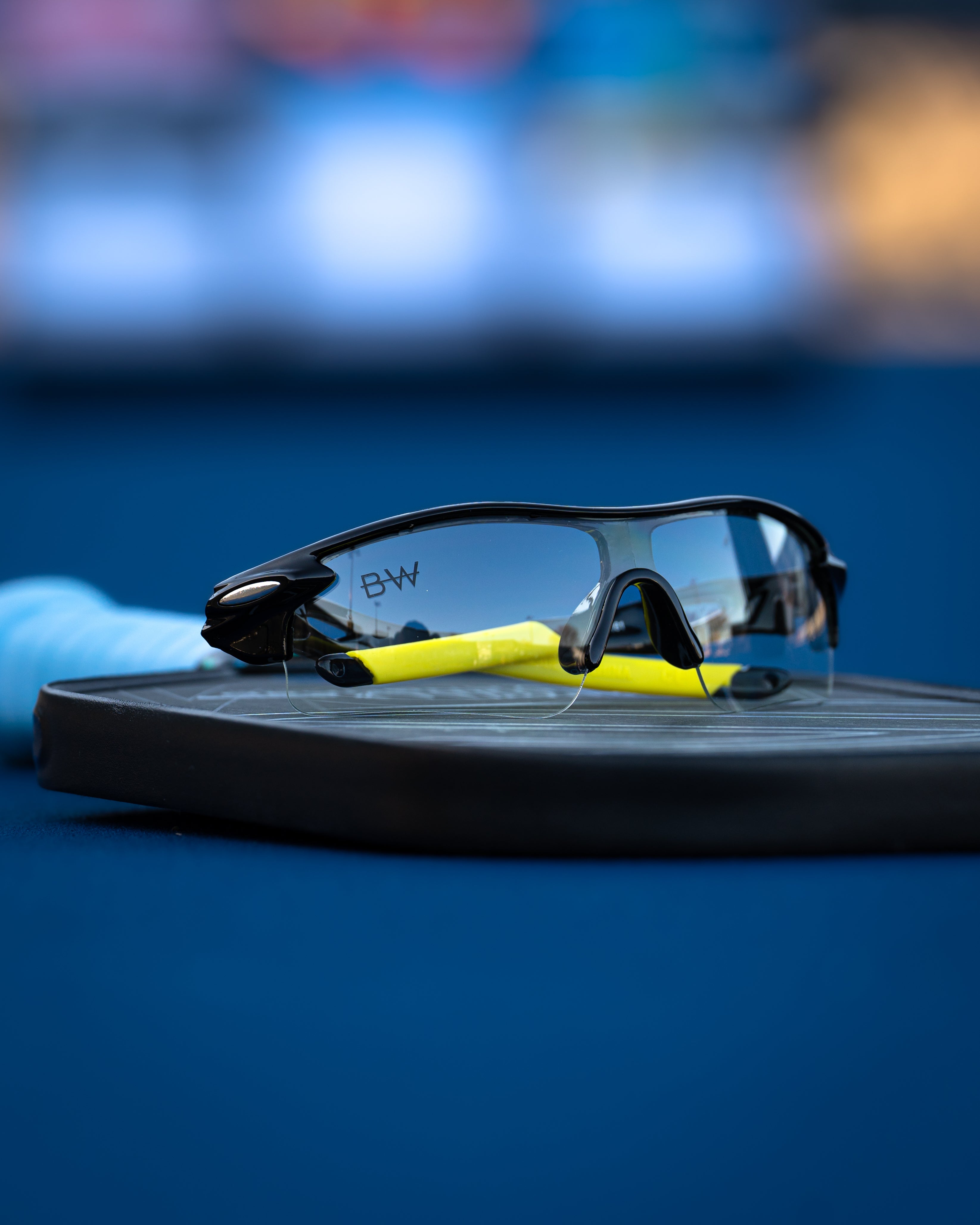
Blinded Wear Co. offers non-polarized pickleball eyewear across prescription and non-prescription options for players who prefer this lens configuration.
Polarized vs. Non-Polarized Sunglasses: What's the Difference?
The main difference is the presence of a polarization filter.
Polarized Sunglasses
Polarized lenses contain an added filter designed to reduce certain reflected light. This can be useful in environments where reflected light from surfaces is a major consideration.
Non-Polarized Sunglasses
Non-polarized lenses do not contain that added polarization filter. They can still be tinted, clear, prescription, non-prescription, impact-resistant, or designed in different colors depending on the individual eyewear model.
Polarization and tint are not the same thing. A lens can be dark without being polarized, and the presence or absence of polarization does not by itself tell you how dark a lens will appear.
Are Non-Polarized Sunglasses Better for Pickleball?
Not universally. Some pickleball and court-sport players prefer non-polarized sunglasses, while others may prefer polarized lenses in certain environments.
Claims that non-polarized lenses inherently improve depth perception, reaction time, contrast, hand-eye coordination, or ball tracking should be treated cautiously. Polarization alone does not determine those aspects of vision.
Your individual vision, prescription, lighting conditions, court environment, lens tint, and complete eyewear configuration all contribute to what you see while playing.
For that reason, Blinded Wear treats non-polarized lenses as a lens preference and configuration choice, rather than promising that they will automatically make someone a better pickleball player.
Why Do Some Pickleball Players Prefer Non-Polarized Lenses?
There are several practical reasons a player might choose non-polarized sports eyewear.
1. They Prefer Eyewear Without a Polarization Filter
The simplest reason is personal preference. Some players prefer the viewing experience of a standard non-polarized lens and don't specifically need the reflected-light filtering associated with polarization.
2. They Want More Lens Choices
Choosing non-polarized eyewear does not limit you to one lens appearance. Depending on the model, non-polarized sports glasses can be available with clear, dark, or colored lenses.
This lets players consider their typical playing environment and preferred style separately from the polarization decision.
3. They Play Across Different Court Environments
Pickleball can be played on outdoor courts, indoor courts, covered courts, and during different times of day. Players who move between environments may prioritize lens darkness and tint differently depending on where they play.
Non-polarized eyewear is available across multiple lens configurations, but the absence of polarization itself does not make one lens automatically suitable for every lighting condition.
4. They Prefer a Particular Sports-Eyewear Configuration
Polarization is only one specification. Frame weight, fit, prescription configuration, lens darkness, lens color, and overall design may matter just as much—or more—to an individual player.
Does Non-Polarized Mean Clear?
No. Non-polarized and clear describe two different lens characteristics.
Non-polarized means the lens does not contain an added polarization filter. Clear refers to a lens without a dark sunglass tint.
That means non-polarized pickleball eyewear can include:
- Clear lenses
- Dark sunglass lenses
- Colored lenses
- Prescription lenses
- Non-prescription lenses
If you primarily want eyewear without a dark tint, explore the Blinded Wear Clear-Lens Collection.
Non-Polarized Sunglasses for Outdoor Pickleball
Non-polarized sunglasses can be considered for outdoor pickleball, but polarization shouldn't be the only specification you evaluate.
Outdoor courts can involve changing brightness, direct sunlight, shade, and reflections depending on the court and time of day.
When choosing outdoor pickleball sunglasses, consider:
- Lens darkness
- Lens color
- Typical playing time
- Individual light sensitivity
- Prescription requirements
- Polarization preference
- Frame fit and weight
For a deeper comparison, read the Best Pickleball Sunglasses for Outdoor Play guide.
Non-Polarized Glasses for Indoor Pickleball
Indoor pickleball creates a different eyewear decision because courts can vary in artificial lighting, windows, shadows, wall colors, and overall brightness.
If you don't want a dark sunglass tint indoors, a clear-lens pickleball model may be worth considering.
A clear lens does not automatically improve reaction time, contrast, depth perception, or ball tracking. It primarily provides a non-dark-lens configuration for players who prefer that viewing experience.
Does Lens Color Matter for Non-Polarized Pickleball Glasses?
Lens color can change the appearance of your eyewear and your subjective viewing experience, but there is no single lens color that is universally best for pickleball.
Gray, blue, amber, yellow, pink, clear, and other lens appearances should not automatically be described as improving ball tracking, reaction time, depth perception, or contrast simply because of their color.
Your individual vision, prescription when applicable, tint characteristics, lighting conditions, playing environment, and overall eyewear configuration all contribute to what you see.
Read the Pickleball Performance Lens Guide for a more detailed breakdown of lens colors, clear lenses, polarization, and RX options.
Prescription Non-Polarized Pickleball Glasses
Players who require vision correction can also choose from Blinded Wear prescription pickleball glasses.
Blinded Wear RX products include high-index prescription lenses at no additional cost and are available in two primary prescription configurations, depending on the model.
Direct RX
Direct RX models incorporate prescription correction into the primary prescription lenses.
RX Clip
RX Clip models use a separate inner prescription insert. The individualized prescription correction is incorporated into this insert rather than directly into the primary outer sports lens.
When ordering Blinded Wear RX eyewear, upload a clear picture of your current eyeglass prescription on the product page before adding the glasses to your cart.
What to Look for in Non-Polarized Pickleball Sunglasses
If you've decided you prefer non-polarized eyewear, use these factors to narrow your options:
- Start with your prescription needs. Determine whether you need RX or Non-RX eyewear.
- Consider where you play. Indoor and outdoor environments may lead to different tint preferences.
- Choose clear or tinted lenses. Decide whether you want a dark sunglass tint.
- Compare lens colors. Consider which appearance and viewing experience you personally prefer.
- Review frame weight. Lightweight sports frames may be preferable for extended court use.
- Consider fit. Frame dimensions and individual face shape can influence comfort.
- Review impact resistance. Applicable Blinded Wear models use impact-resistant lenses.
- Check the individual product specifications. Features and configurations vary by model.
Impact-Resistant Pickleball Eyewear
Impact resistance is another characteristic worth considering when choosing eyewear for an active court environment. Applicable Blinded Wear models use impact-resistant lenses.
Impact-resistant does not mean shatterproof and does not establish a particular protective-eyewear certification or safety rating.
If you require eyewear meeting a specific safety standard, verify that certification before purchasing or using the eyewear for that purpose.
Polarized vs. Non-Polarized Pickleball Glasses at a Glance
| Feature | Polarized | Non-Polarized |
|---|---|---|
| Polarization filter | Yes | No |
| Designed to reduce certain reflected light | Yes | No added polarization filter |
| Can be tinted | Yes | Yes |
| Can be used for sports | Depending on the eyewear and activity | Depending on the eyewear and activity |
| Automatically improves depth perception | No | No |
| Automatically improves ball tracking | No | No |
| Best for every pickleball player | No | No |
Non-Polarized Pickleball Sunglasses FAQ
Are non-polarized sunglasses good for pickleball?
They can be. Some pickleball players prefer eyewear without an added polarization filter. Whether non-polarized sunglasses are right for you depends on your individual vision, playing environment, lens preferences, prescription needs, and overall eyewear configuration.
Are non-polarized sunglasses better than polarized sunglasses for pickleball?
Neither is universally better for every player. Polarized and non-polarized lenses are different configurations, and individual preferences and playing conditions should guide the decision.
Do non-polarized sunglasses improve depth perception?
Non-polarized eyewear should not be treated as inherently improving depth perception. Depth perception depends on your visual system and multiple other factors, not simply whether a lens contains a polarization filter.
Do non-polarized lenses help you track a pickleball better?
There isn't a basis for promising improved ball tracking simply because a lens is non-polarized. Your individual vision, prescription, lighting, lens configuration, and court environment also contribute to what you see.
Can non-polarized sunglasses have dark lenses?
Yes. Polarization and lens darkness are separate characteristics. A non-polarized lens can still have a dark or colored sunglass tint.
Can non-polarized glasses have clear lenses?
Yes. Clear lenses can also be non-polarized. Clear refers to the absence of a dark sunglass tint, while non-polarized refers to the absence of an added polarization filter.
Can prescription pickleball glasses be non-polarized?
Yes. Blinded Wear offers prescription pickleball eyewear with non-polarized options across applicable models.
Are non-polarized sunglasses cheaper than polarized sunglasses?
Not necessarily. Price depends on the specific eyewear, prescription requirements, frame, lens configuration, brand, and other product characteristics. Polarization alone does not determine the price.
Do non-polarized lenses automatically provide UV protection?
No. Polarization and UV protection are separate lens characteristics. You should not assume a lens has a particular level of UV protection simply because it is polarized or non-polarized.
What lens color is best for non-polarized pickleball glasses?
There is no universal best lens color. Consider your playing environment, lens darkness preference, individual vision, prescription needs, and the specifications of the particular eyewear you're considering.
Shop Blinded Wear Non-Polarized Pickleball Eyewear
Blinded Wear offers non-polarized eyewear for players looking for prescription and non-prescription pickleball glasses, lightweight sports frames, impact-resistant lens options, and different clear or tinted styles.
Rather than choosing eyewear based on polarization alone, compare the complete setup around your vision needs and the conditions where you actually play.
50% Lifetime Replacement Support
Blinded Wear offers 50% lifetime replacement support if eligible glasses break, subject to current policy terms.
Review the Blinded Wear Protection Plan, Replacement & Returns information for current eligibility and policy details.
Should You Choose Non-Polarized Pickleball Sunglasses?
Non-polarized sunglasses can be a strong option if you prefer sports eyewear without an added polarization filter. But polarization is only one part of choosing pickleball glasses.
Start with your prescription needs, indoor or outdoor playing environment, lens darkness, lens color, frame fit, and personal preferences. Then decide whether a non-polarized configuration fits what you're looking for.
Need help narrowing the options? Take the 5-question Pickleball Sunglasses Quiz or compare more options in the Best Pickleball Glasses 2026 Guide.
How Non-Polarized Pickleball Sunglasses Fit Into Your Eyewear Setup
Choosing non-polarized lenses doesn't mean every other eyewear decision is already made. Think of polarization as one specification within the complete pair of pickleball glasses.
Two non-polarized models can still feel and look very different depending on their lens tint, frame dimensions, weight, prescription configuration, and overall design.
When comparing options, evaluate the complete pair rather than choosing solely because the product is labeled non-polarized.
Non-Polarized Pickleball Glasses for Different Playing Conditions
Your usual court environment can help determine which non-polarized lens configuration makes the most sense for you.
Bright Outdoor Courts
If you frequently play outdoors in brighter conditions, you may prefer a darker sunglass tint. Compare the actual lens darkness and product specifications rather than assuming all non-polarized sunglasses provide the same viewing experience.
Indoor Courts
Indoor players who don't want a dark sunglass tint may prefer clear-lens eyewear. Indoor facilities vary considerably in lighting, so individual preference remains important.
Evening and Lower-Light Play
Players who regularly play later in the day may also prefer a lighter or clear lens rather than a dark sunglass tint.
Mixed Indoor and Outdoor Play
If you regularly switch between indoor and outdoor courts, there may not be one lens configuration that feels ideal in every environment. Some players prefer separate eyewear options for different conditions.
Do Non-Polarized Lenses Preserve Natural Depth Perception?
You may see claims online that non-polarized sports sunglasses automatically preserve or improve "natural depth perception." That claim is too broad.
Depth perception is not determined solely by polarization. It depends on the visual information processed by your eyes and brain, along with factors such as your individual vision and prescription when applicable.
A non-polarized lens simply does not contain the added polarization filter found in polarized eyewear. Some players may prefer that configuration, but it should not be presented as a guarantee of better depth judgment on the pickleball court.
Do Polarized Sunglasses Make a Pickleball Harder to See?
Not necessarily. Polarized sunglasses should not automatically be described as making a pickleball harder to track or see.
How clearly you see the ball can depend on numerous factors, including:
- Your individual vision
- Your prescription, if applicable
- Court lighting
- Background colors
- Ball color
- Lens tint and darkness
- The complete eyewear configuration
Some players prefer non-polarized lenses for court sports, but individual preference shouldn't be turned into a universal performance claim.
Non-Polarized vs. Polarized Sunglasses for Digital Screens
Polarized lenses can sometimes interact with certain digital displays depending on the display technology, viewing angle, and orientation of the polarization.
This can matter if you regularly look at a phone, scoreboard, smartwatch, or another display while wearing your sunglasses. However, the exact experience varies between displays and eyewear.
If viewing a particular screen while wearing sunglasses matters to you, testing that combination directly is more useful than assuming every polarized or non-polarized lens will behave identically.
Are Non-Polarized Sunglasses Only for Pickleball?
No. Non-polarized sports sunglasses can be used across different active environments depending on the specifications of the individual eyewear and the requirements of the activity.
When considering the same pair for running, training, recreational sports, or everyday outdoor use, review factors such as:
- Lens tint
- Frame fit
- Frame weight
- Prescription requirements
- Impact resistance
- Playing or activity environment
Pickleball may be your primary reason for choosing the eyewear, but the absence of a polarization filter does not restrict a pair of glasses to one sport.
Should Beginners Choose Non-Polarized Pickleball Sunglasses?
Beginners don't need a particular polarization configuration simply because they're new to pickleball.
A better starting point is to determine what you actually need from your eyewear:
- Do you require prescription correction?
- Do you primarily play indoors or outdoors?
- Do you want a clear or tinted lens?
- How dark do you want the lens to be?
- Do you have a polarization preference?
- Which frame dimensions and styles fit your preferences?
Once those questions are answered, you can compare individual models instead of choosing based on one feature alone.
Can Competitive Pickleball Players Wear Non-Polarized Sunglasses?
Yes. A player's competition level does not determine whether their eyewear needs to be polarized or non-polarized.
Recreational and competitive players can both choose non-polarized eyewear if they prefer that lens configuration.
Competition level also doesn't change the underlying principle: eyewear should be selected around the player's individual vision needs, environment, fit, and preferences rather than promises that one lens technology will automatically improve performance.
Non-Polarized Prescription Sunglasses for Pickleball
Needing prescription correction doesn't prevent you from considering non-polarized pickleball eyewear.
Blinded Wear's Prescription Pickleball Eyewear Collection includes RX options for players who require individualized vision correction.
Blinded Wear RX products include high-index prescription lenses at no additional cost. Depending on the model, prescription correction is provided through either direct RX lenses or a separate RX Clip insert.
If you're deciding whether you need prescription or standard sports eyewear, read the RX vs. Non-RX Pickleball Glasses Guide.
Non-RX Non-Polarized Pickleball Sunglasses
If you don't require individualized prescription correction in your court eyewear, start with the Blinded Wear Non-RX Pickleball Glasses Collection.
When comparing Non-RX models, consider the lens and frame as a complete system. Look at:
- Clear versus tinted lens
- Lens darkness
- Lens color
- Frame shape
- Frame dimensions
- Frame weight
- Impact-resistant lens specifications
- Your typical playing environment
Common Myths About Non-Polarized Pickleball Sunglasses
Myth: Non-Polarized Lenses Automatically Improve Depth Perception
Reality: The absence of a polarization filter does not automatically improve depth perception.
Myth: Polarized Lenses Are Bad for Pickleball
Reality: Polarized eyewear is not inherently bad for pickleball. Some players prefer polarized lenses, while others prefer non-polarized lenses.
Myth: Non-Polarized Means No Sun Protection
Reality: Polarization and UV protection are separate lens properties. Whether a lens is polarized does not, by itself, establish its UV characteristics.
Myth: Non-Polarized Means Clear
Reality: Non-polarized lenses can be clear, dark, or colored. Polarization describes a filter; it does not describe lens darkness.
Myth: One Lens Color Is Best for Every Pickleball Player
Reality: Different players compete in different environments and have different visual preferences. There is no universal lens color that is automatically best for everyone.
Myth: Non-Polarized Sunglasses Automatically Make Ball Tracking Easier
Reality: Ball tracking depends on more than polarization. The absence of a polarization filter should not be treated as a guarantee of improved tracking or athletic performance.
Questions to Ask Before Buying Non-Polarized Pickleball Glasses
Before choosing a pair, ask yourself:
- Do I need prescription correction?
- Will I primarily use these glasses indoors or outdoors?
- Do I want a clear lens or a sunglass tint?
- How dark do I want the lens?
- Do I have a preferred lens color?
- Do I specifically prefer non-polarized eyewear?
- What frame size and shape work for me?
- How important is frame weight to me?
- Have I reviewed the specifications of the individual model?
Answering those questions will usually narrow the selection more effectively than searching for a single universally "best" pair.
How to Compare Blinded Wear Pickleball Glasses
Blinded Wear offers several ways to narrow the catalog depending on how much research you want to do.
Shop by Prescription Need
Choose the RX Pickleball Glasses Collection if you require prescription correction or the Non-RX Pickleball Glasses Collection if you don't.
Shop Clear Lenses
If you specifically want eyewear without a dark sunglass tint, browse the Clear-Lens Collection.
Compare the 2026 Picks
Use the Best Pickleball Glasses 2026 Guide to compare different use cases and eyewear configurations.
Take the Quiz
If you'd rather answer a few questions than compare the catalog manually, take the 5-question Pickleball Sunglasses Quiz.
The Bottom Line on Non-Polarized Sunglasses for Pickleball
Non-polarized sunglasses can be a practical choice for pickleball players who prefer eyewear without an added polarization filter. Their value comes from being one available lens configuration—not from guaranteed improvements to depth perception, reaction time, contrast, or ball tracking.
When choosing your pickleball eyewear, look beyond the polarized-versus-non-polarized label. Consider your prescription, indoor or outdoor environment, lens darkness, lens color, frame fit, weight, and the verified specifications of the individual product.
That approach gives you a better chance of finding eyewear suited to your actual vision needs and playing conditions rather than relying on broad claims about one lens technology.
Explore Non-RX Pickleball Glasses or Shop Prescription Pickleball Glasses.
How to Choose Between Polarized and Non-Polarized Pickleball Sunglasses
If you're still deciding between polarized and non-polarized eyewear, avoid treating the choice as a simple "good versus bad" comparison. Both configurations can be appropriate depending on the player and environment.
A practical decision process is:
- Start with your vision needs. Determine whether you need prescription or non-prescription eyewear.
- Identify your primary playing environment. Consider whether you usually play indoors, outdoors, in bright conditions, or during evening and lower-light sessions.
- Choose your preferred lens darkness. Decide whether you want a clear lens, lighter tint, or darker sunglass tint.
- Consider lens color. Compare available colors based on your personal viewing and style preferences.
- Consider polarization separately. Decide whether you specifically want the reflected-light filtering provided by polarized lenses or prefer a non-polarized configuration.
- Compare the complete frame. Review dimensions, weight, design, and the specifications of each model you're considering.
This keeps polarization in context instead of allowing one lens characteristic to determine the entire purchase.
What Matters More Than Polarization for Pickleball Eyewear?
Polarization can matter to individual players, but several other characteristics deserve attention when comparing pickleball glasses.
Your Prescription
If you require vision correction, getting the appropriate prescription configuration is a more fundamental consideration than whether your eyewear is polarized.
Your Playing Environment
A player who primarily competes on bright outdoor courts may want a different lens configuration from someone who plays mainly indoors or in the evening.
Lens Darkness
Lens darkness and polarization are separate characteristics. Think about how much tint you actually want for the environments where you play.
Frame Fit
Sports eyewear should be evaluated for how the individual frame fits you. Frame dimensions, shape, and personal face shape can all influence comfort.
Frame Weight
Lightweight sports frames may be preferable for players who wear their eyewear throughout extended matches or training sessions.
Impact Resistance
Impact-resistant lenses can be worth considering for an active court environment. Remember that impact resistance does not mean shatterproof and does not establish a particular safety certification.
Non-Polarized Pickleball Glasses for RX and Non-RX Players
Blinded Wear offers different eyewear paths depending on whether you require prescription correction.
| Eyewear Type | Who It's For | What to Consider |
|---|---|---|
| Non-RX | Players who don't require prescription correction in their sports eyewear | Lens tint, color, frame design, playing environment, and personal preference |
| Direct RX | Players who need individualized prescription correction | Prescription, lens configuration, frame, playing environment, and personal preference |
| RX Clip | Players who prefer a separate prescription insert within the eyewear system | Prescription insert, outer sports lens, frame, playing environment, and personal preference |
| Clear Lens | Players who prefer eyewear without a dark sunglass tint | Indoor, evening, or other conditions where a dark tint may not be preferred |
Browse Prescription Pickleball Glasses, Non-RX Pickleball Glasses, or Clear-Lens Sports Glasses to compare the available options.
Why Blinded Wear Offers Non-Polarized Pickleball Eyewear
Blinded Wear Co. focuses on giving pickleball players different eyewear configurations rather than claiming that one lens technology is universally best.
Across applicable models, the collection includes features and options such as:
- Non-polarized lens configurations
- Prescription and non-prescription options
- Direct RX and RX Clip prescription designs
- High-index prescription lenses included at no additional cost on RX products
- Clear and tinted lens styles
- Impact-resistant lens options
- Lightweight sports-frame designs
- Different frame and lens aesthetics
The goal is to let players compare eyewear around their individual vision needs, playing environment, fit preferences, and personal style.
More Questions About Non-Polarized Pickleball Sunglasses
What does non-polarized mean in sunglasses?
Non-polarized sunglasses do not contain the added polarization filter found in polarized eyewear. They can still have a clear, dark, or colored lens depending on the individual product.
Are non-polarized lenses the same as regular sunglasses?
Many sunglasses are non-polarized, but "non-polarized" only describes the absence of a polarization filter. It does not tell you the lens color, darkness, material, prescription status, impact resistance, or other specifications.
Can non-polarized pickleball glasses be prescription?
Yes. Blinded Wear offers prescription pickleball eyewear with non-polarized options across applicable models. RX products include high-index prescription lenses at no additional cost.
Can I wear clear non-polarized glasses for pickleball?
Yes, if the individual eyewear is appropriate for your needs. Clear lenses may appeal to players who don't want a dark sunglass tint, particularly for indoor, evening, or other lower-light environments.
Should I wear dark sunglasses for indoor pickleball?
That depends on the facility and your personal preferences, but players who don't want a dark tint indoors may prefer clear-lens eyewear.
Are non-polarized sunglasses good for outdoor pickleball?
They can be. For outdoor play, also consider lens darkness, lens color, your individual light sensitivity, prescription requirements, frame fit, and the conditions of the courts where you normally play.
Does non-polarized mean the lens has no UV protection?
No. Polarization and UV protection are separate characteristics. The absence of a polarization filter does not by itself establish whether a particular lens provides UV protection. Check the specifications of the individual product rather than assuming based on polarization.
Do polarized lenses reduce glare?
Polarized lenses are designed to reduce certain reflected light. Whether that feature is useful to you depends on your environment and personal preferences.
Will non-polarized sunglasses improve my pickleball performance?
Non-polarized sunglasses should not be treated as a guaranteed performance enhancement. Eyewear can be selected around your vision needs, comfort, environment, and preferences, but the absence of polarization alone does not guarantee better reaction time, ball tracking, depth perception, or match performance.
Which are better for pickleball: polarized or non-polarized sunglasses?
There is no universal winner. Some players prefer non-polarized eyewear while others may prefer polarized lenses. Consider your individual vision, court environment, lens tint, prescription needs, and personal preferences.
Explore More Pickleball Eyewear Guides
If you're researching pickleball glasses before choosing a pair, these Blinded Wear resources cover the major decisions in more detail:
- Best Pickleball Glasses 2026 — compare prescription and Non-RX options for different use cases.
- Pickleball Performance Lens Guide — learn about lens colors, clear lenses, polarization, and RX configurations.
- RX vs. Non-RX Pickleball Glasses — determine which vision-correction path fits your needs.
- Best Pickleball Sunglasses for Outdoor Play — focus specifically on outdoor playing environments.
- How to Order Prescription Pickleball Glasses — follow the RX ordering process.
Find the Right Pickleball Glasses for You
Non-polarized sunglasses are one option within a much larger pickleball-eyewear decision. Rather than assuming that non-polarized lenses are automatically better, choose your eyewear around the conditions that actually matter to you.
Consider your prescription needs, court environment, lens darkness, lens color, frame fit, frame weight, and polarization preference. Then compare individual products based on their verified specifications.
If you're unsure where to begin, the Blinded Wear Pickleball Sunglasses Quiz can help narrow the available options.
Blinded Wear Replacement Support
Blinded Wear offers 50% lifetime replacement support if eligible glasses break, subject to current policy terms.
This is not a free full-replacement guarantee. Review the Blinded Wear Protection Plan, Replacement & Returns information for current eligibility, return requirements, and replacement details.
Final Takeaway: Non-Polarized Sunglasses for Pickleball
Non-polarized sunglasses are a legitimate option for pickleball players who prefer eyewear without an added polarization filter. They can be available in prescription and non-prescription configurations, with clear or tinted lenses and different sports-frame designs.
The important distinction is that non-polarized does not automatically mean better depth perception, better contrast, easier ball tracking, or improved performance. Those outcomes depend on far more than polarization alone.
Instead of searching for a universal winner between polarized and non-polarized sunglasses, choose eyewear around your own vision, prescription, playing environment, lens preferences, fit, and verified product specifications.
Shop Blinded Wear Non-RX Pickleball Glasses or Explore Prescription Pickleball Glasses to find an option that fits your needs.