
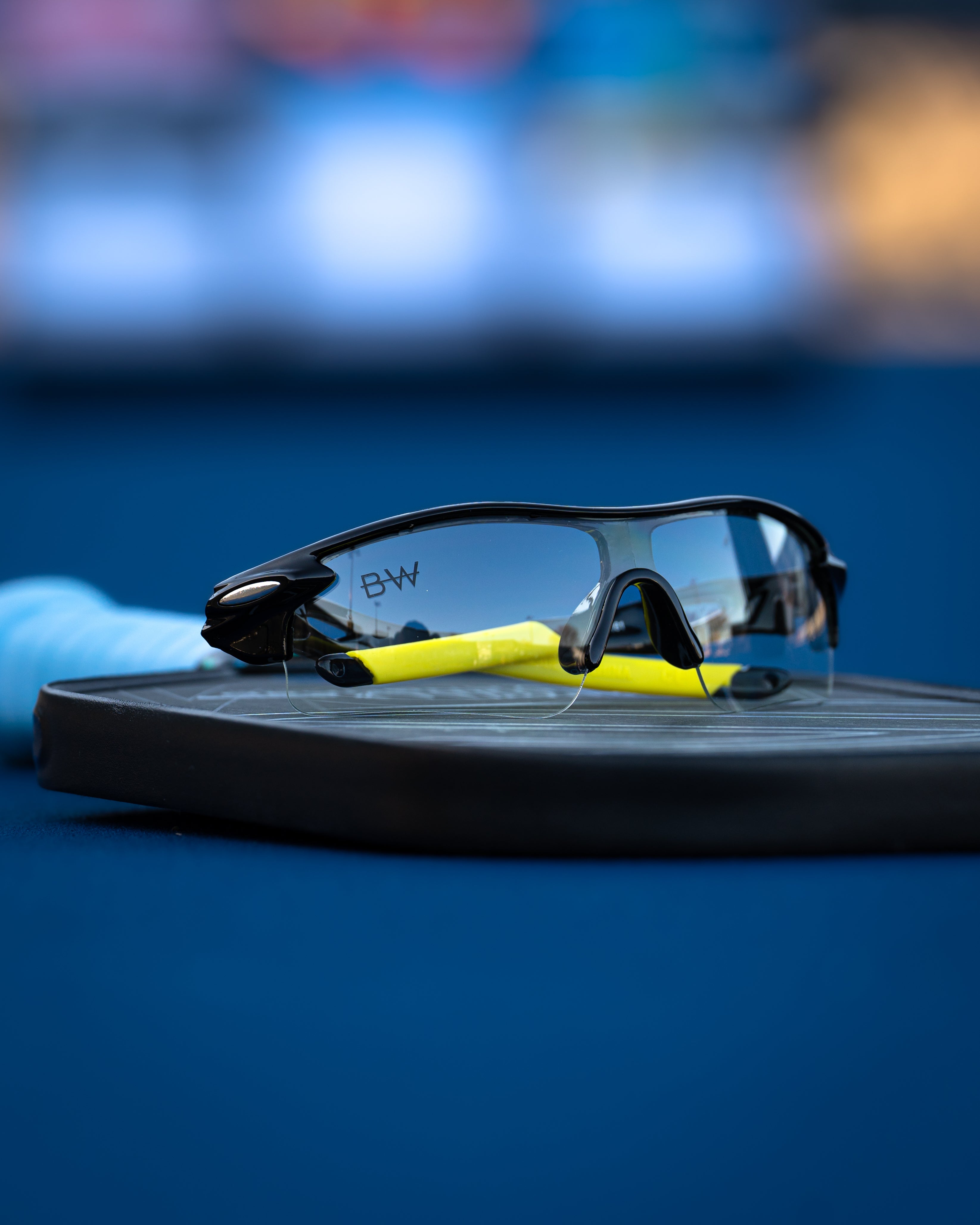
Why Sunglasses Are Essential for Sports and Outdoor Activities
Share
Why Sunglasses Are Essential for Sports and Outdoor Activities in 2026
Sunglasses can be an important part of outdoor sports gear because they help manage bright light while placing a physical lens between your eyes and outdoor elements such as wind, dust, and debris. For athletes who need corrective vision, prescription sports sunglasses can also combine their required vision correction with eyewear intended for active use.
But not every pair of sunglasses is equally suited to sports. Lens darkness, polarization, price, or a sporty appearance alone cannot tell you whether eyewear is appropriate for your activity. The better approach is to consider fit, comfort, lens conditions, impact resistance, prescription needs, verified lens specifications, and the environment where you will actually wear the glasses.
Whether you play pickleball, run outdoors, cycle, hike, train, or simply spend long periods outside, this guide explains why sports sunglasses matter, which features deserve attention, and how to choose eyewear without relying on exaggerated performance claims.
Shop Non-RX Sports Eyewear | Shop RX Sports Eyewear | Explore the 2026 Pickleball Glasses Guide
Quick Answer: Why Are Sunglasses Important for Sports?
Sports sunglasses can help athletes manage bright outdoor conditions, reduce the need to squint, create a physical barrier between the eyes and environmental debris, and provide a lens and frame configuration suited to active use. Prescription versions can also provide corrective vision for athletes who otherwise rely on glasses.
The benefits depend on the actual eyewear, activity, and environment. Sunglasses should not be expected to automatically improve reaction time, prevent every eye injury, eliminate glare, or make someone a better athlete.
| Potential Benefit | Why It Can Matter Outdoors |
|---|---|
| Visible-light management | Can make bright outdoor conditions more comfortable |
| UV filtering | Important for outdoor eyewear when the appropriate specification is verified for the lens |
| Physical coverage | Places a barrier between the eyes and some wind, dust, or airborne debris |
| Impact resistance | Worth considering in active environments where eyewear may experience impacts |
| Prescription correction | Allows athletes who need corrective vision to see according to their prescription |
| Sports-focused fit | Can make eyewear more practical during movement and extended activity |
Are Sunglasses Really Essential for Every Sport?
Not literally. The need for sunglasses depends heavily on the sport and environment.
A player on a bright outdoor pickleball court has different eyewear needs from someone playing on an indoor court. A runner outside during the day encounters different lighting than someone exercising indoors. Even within the same sport, weather and time of day can change what lens makes sense.
It is therefore more accurate to say that appropriate eyewear can be an important piece of equipment for many outdoor sports and activities. Sunglasses become especially relevant when bright visible light, outdoor exposure, prescription needs, or environmental conditions affect the wearing experience.
For indoor or lower-light environments, clear lens sports eyewear may be a more logical starting point than dark sunglasses.
1. Outdoor Sunglasses Can Provide UV Filtering
Ultraviolet exposure is one reason eye protection matters outdoors. Sunglasses can be designed with UV filtering, but shoppers should verify the actual specification rather than assuming it from lens color, darkness, price, or appearance.
A dark lens does not automatically prove a specific UV rating. Visible-light transmission and UV filtering are different lens characteristics.
That distinction matters when shopping for sports sunglasses because terms such as “dark,” “mirrored,” “performance,” or “premium” do not by themselves establish how much ultraviolet radiation a lens filters.
What Should Athletes Check?
If UV filtering is important for your outdoor activity, look for a clearly stated UV specification for the exact lens you are considering.
Do not assume a particular Blinded Wear model provides a specific UV rating unless that specification is stated for that product and lens configuration.
2. Sunglasses Help Manage Bright Outdoor Conditions
Bright sunlight can make outdoor activity uncomfortable and may cause people to squint. An appropriate sunglass lens reduces the amount of visible light reaching the eyes, which can make bright environments more comfortable to navigate.
For sports, the right amount of tint depends on the actual conditions. A lens that feels comfortable in intense midday sun may not be the lens you prefer during overcast weather, evening play, heavy shade, or indoor activity.
This is why choosing sports sunglasses should involve more than simply selecting the darkest lens available.
Does a Darker Lens Mean a Better Sports Lens?
No. Darker is not automatically better.
The goal is to choose a lens appropriate for the environment rather than reduce visible light as much as possible. Personal preference also matters, so there is no single tint level that is universally ideal for every athlete.
3. Sunglasses Can Help Athletes Deal With Brightness and Reflections
Outdoor athletes can encounter reflected light from pavement, water, vehicles, buildings, and other surfaces. How eyewear handles those conditions depends on the lens.
Polarized lenses use a filter designed to reduce certain reflected glare. Non-polarized lenses do not add that polarization filter.
Blinded Wear uses non-polarized lenses. This preserves natural visual information without adding a polarization filter, an approach some court players may prefer.
However, polarization should not be treated as universally good or bad for sports. It is also inaccurate to claim that polarized lenses always harm depth perception or that non-polarized lenses automatically improve it.
The appropriate choice depends on the activity, environment, and individual preference.
Polarized vs. Non-Polarized Sunglasses for Sports
| Lens Type | What It Does | What It Does Not Automatically Mean |
|---|---|---|
| Polarized | Adds a filter designed to reduce certain reflected glare | Better for every sport, a particular UV rating, or guaranteed better performance |
| Non-polarized | Does not add a polarization filter | Guaranteed better depth perception, ball tracking, or reaction time |
Rather than treating polarization as a universal quality ranking, consider it one feature within the larger sports-eyewear decision.
4. Sports Eyewear Creates a Barrier Against Outdoor Elements
Outdoor activities can expose your face and eyes to wind, dust, dirt, insects, and other airborne material. Eyewear places a physical lens between your eyes and some of those environmental elements.
The amount of coverage depends on the frame and lens design. A frame with greater coverage may create more of a barrier than a small casual frame, but no ordinary pair of sports sunglasses should be treated as complete protection from every object or environmental hazard.
For activities where specific eye-protection standards are required, verify that the eyewear meets the appropriate certification rather than assuming that “sports sunglasses” and certified protective eyewear are interchangeable terms.
5. Impact Resistance Matters During Active Use
Sports can expose eyewear to movement, accidental drops, equipment, and other impacts. That makes lens construction especially relevant when choosing glasses for an active environment.
Blinded Wear uses impact-resistant lenses as part of its performance-focused eyewear approach.
There is an important distinction, however:
- Impact resistant does not mean impact proof.
- It does not mean the eyewear is unbreakable.
- It does not automatically establish a specific safety certification.
- It cannot guarantee prevention of an eye injury.
Those distinctions help athletes compare eyewear based on verified characteristics rather than assuming more protection than a product actually claims.
6. Comfort Matters During Long Matches and Outdoor Sessions
Sports sunglasses can remain on your face for much longer than a quick trip outside. Pickleball sessions, runs, hikes, training sessions, and other activities can extend for hours.
That makes comfort a meaningful part of sports-eyewear performance.
Useful factors include:
- Frame weight
- Overall fit
- Pressure around the nose and sides of the head
- How the eyewear feels during movement
- Whether the frame remains comfortable as the session continues
Blinded Wear uses lightweight sports frames designed for active use and extended matches. Individual fit still matters, however, because no frame can be guaranteed to fit every face identically.
7. Sports Sunglasses Should Fit the Activity, Not Just Your Outfit
Style can absolutely matter when choosing sunglasses, but sports eyewear also needs to work during movement.
A pair may look excellent while standing still yet become distracting once you begin running, turning your head, looking down, or moving quickly around a court.
When evaluating fit, consider:
- Whether the frame feels comfortable
- Whether it feels appropriate during movement
- Whether it creates uncomfortable pressure
- Whether the coverage suits the activity
- Whether the frame works with your prescription if you need RX lenses
- Whether you actually like the appearance enough to wear it regularly
A tighter frame is not automatically a better sports frame. Stability and comfort should work together.
8. Prescription Sports Sunglasses Combine Vision Correction With Active Eyewear
For athletes who normally rely on prescription glasses, outdoor sports create an additional question: how will you get the corrective vision you need while wearing sunglasses?
Prescription sports sunglasses provide vision correction directly through the eyewear, allowing the wearer to use one sports-focused RX pair rather than relying on ordinary prescription glasses underneath sunglasses.
Blinded Wear offers prescription sports and pickleball eyewear and includes high-index prescription lenses without an additional high-index upcharge.
High-index describes a category of prescription lens materials rather than one universal numerical index. Depending on the prescription and lens design, high-index materials can allow certain prescriptions to be made thinner than they would be with some lower-index alternatives.
How Do You Order Blinded Wear Prescription Sports Sunglasses?
Blinded Wear RX customers upload a clear picture of their eyeglass prescription before purchasing. The prescription information can then be associated with the custom RX order.
Before submitting your prescription:
- Make sure the picture is clear and readable.
- Include the important prescription information in the image.
- Do not guess at prescription values.
- Confirm you are submitting the prescription you intend to use.
- If you have concerns about changes in your vision or your current prescription, consult an eye-care professional.
Prescription vs. Non-Prescription Sports Sunglasses
The main difference is straightforward: prescription sports sunglasses provide corrective vision, while non-prescription sports sunglasses do not.
| Option | Best Starting Point For | What to Consider |
|---|---|---|
| Prescription sports sunglasses | Athletes who need corrective vision in their eyewear | Prescription compatibility, lens material, fit, environment, and total RX value |
| Non-RX sports sunglasses | People who do not need correction or who obtain correction another way, such as contacts | Fit, lens environment, impact resistance, comfort, and verified specifications |
Neither category is inherently better. The right choice depends first on whether you need prescription correction.
Why Sunglasses Matter for Outdoor Pickleball
Outdoor pickleball combines bright conditions with an active court environment. Players repeatedly turn their heads, move laterally, change direction, and spend extended periods outside, making fit and lens choice particularly relevant.
A good starting checklist for outdoor pickleball sunglasses includes:
- Comfort during repeated movement
- A lens appropriate for the court’s lighting conditions
- Lightweight sports-focused construction
- Impact-resistant lenses
- Prescription correction when needed
- Verified UV specifications if UV filtering is an important purchase requirement
- A style you are comfortable wearing consistently
Do not expect sunglasses alone to guarantee improved ball tracking, reaction time, depth perception, or match performance. The purpose of appropriate sports eyewear is to meet the wearer’s visual, environmental, and comfort needs without making unsupported performance promises.
What Should You Look for in Sunglasses for Different Outdoor Activities?
The best sports sunglasses depend partly on what you are doing. Rather than assuming one feature is essential for every sport, match the eyewear to the demands of the activity.
| Activity | Useful Considerations |
|---|---|
| Pickleball | Active-use fit, comfort, lens environment, impact resistance, and RX correction if needed |
| Running | Lightweight construction, movement, comfort, coverage, and outdoor lens conditions |
| Cycling | Coverage, fit during movement, environmental conditions, and appropriate lens choice |
| Hiking | Extended-wear comfort, changing light conditions, coverage, and verified outdoor lens specifications |
| Water activities | Reflected-light conditions, fit, and activity-specific eyewear requirements |
| Outdoor training | Comfort, frame weight, fit, impact resistance, and lighting conditions |
Why Consider Blinded Wear for Sports and Outdoor Eyewear?
Blinded Wear focuses on performance-oriented eyewear for active users, with particular emphasis on pickleball and sports use.
Verified brand-level features include:
- Prescription and non-prescription options
- Lightweight sports frames
- Impact-resistant lenses
- Non-polarized lenses
- High-index prescription lenses at no additional high-index upcharge
- Designs focused on pickleball and active use
- Comfort intended for extended matches
- Options for recreational and competitive players
- 50% lifetime replacement support for eligible broken eyewear, subject to current policy terms
Features such as a specific UV rating, anti-fog treatment, anti-scratch coating, safety certification, enhanced-contrast technology, or other specialized lens treatments should be verified for the exact product rather than assumed across the entire lineup.
Blinded Wear Sports Sunglasses to Explore
The original version of this guide highlighted several Blinded Wear models for active use. They can still serve as starting points for exploring different styles, but current specifications should be checked on the individual product page rather than relying on older feature descriptions.
Trail X2 Sunglasses
Trail X2 is one Blinded Wear sports-sunglass style to explore. Check the current product page for its exact lens configuration and specifications rather than assuming older claims about polarization or activity-specific performance.
Stringer II Pickleball Sunglasses
Stringer II provides another option to compare for pickleball and active use. Evaluate its current fit, lens configuration, and product specifications without assuming unsupported anti-slip or UV claims.
Sunny Flare Pickleball Sunglasses
Sunny Flare is another Blinded Wear pickleball style to explore. Choose it based on its current verified specifications and your preferred lens appearance rather than assuming a particular tint guarantees better contrast or ball tracking.
Runway RX
Runway RX is a prescription option for shoppers who need corrective vision in their sports eyewear. Compare its current product configuration with other options in the Blinded Wear RX collection.
Sports Sunglasses Buying Checklist
Before choosing sunglasses for sports or outdoor activities, ask:
- Where will I use these glasses most often?
- How bright are those conditions?
- Do I need prescription correction?
- Does the frame feel appropriate for movement?
- Will it remain comfortable during longer sessions?
- Are the lenses impact resistant?
- Do I prefer polarized or non-polarized lenses for this activity?
- Have I verified any UV specification that matters to me?
- Am I assuming any coating or certification that is not actually stated?
- Does the style fit what I genuinely want to wear?
If you are primarily shopping for pickleball and are unsure where to start, use the Blinded Wear Pickleball Sunglasses Quiz to narrow down your options.
Sports Sunglasses vs. Regular Sunglasses: What’s the Difference?
Regular sunglasses and sports sunglasses can both reduce visible brightness, but eyewear intended for active use may place greater emphasis on movement, frame weight, coverage, impact resistance, and extended-wear comfort.
That does not mean every product labeled “sports sunglasses” is automatically superior to ordinary sunglasses. The label itself is not a certification or guarantee of quality.
| Consideration | Regular Sunglasses | Sports-Focused Sunglasses |
|---|---|---|
| Primary use | Often casual or everyday wear | Designed with active use in mind |
| Movement | May be less important to the design | Fit during movement can be a major consideration |
| Frame weight | Varies widely | Lightweight construction may be prioritized |
| Impact resistance | Should be verified if important | Especially relevant for active environments |
| Prescription availability | May be available | May combine RX correction with sports-focused construction |
| Style | Often fashion-focused | Can combine athletic styling with practical features |
The better question is not whether a pair looks athletic. Ask whether its verified features actually match your sport and environment.
Can Sunglasses Make Bright Outdoor Sports More Comfortable?
Bright outdoor conditions can cause people to squint or feel visually uncomfortable. Sunglasses reduce visible-light transmission according to the lens being used, which can make bright environments more comfortable for many wearers.
This is one reason sunglasses can be useful during long outdoor sessions. Instead of repeatedly dealing with intense visible brightness, the wearer can choose a lens suited to the conditions.
However, sunglasses should not be treated as a medical solution for persistent headaches, eye pain, unusual light sensitivity, or unexplained vision changes. If symptoms are significant or ongoing, an eye-care professional can evaluate whether something beyond ordinary outdoor brightness is contributing.
How Should Athletes Choose a Sunglass Tint?
There is no single best sunglass tint for every sport. Tint selection should begin with the amount of visible light in the environment where the eyewear will actually be used.
Factors worth considering include:
- Direct sunlight
- Cloud cover
- Shade around the playing area
- Time of day
- Whether the activity moves between brighter and darker environments
- Personal sensitivity and visual comfort
Be cautious with claims that a particular lens color universally improves contrast, ball tracking, reaction time, or athletic performance. Different athletes can prefer different lenses under the same conditions.
Should Athletes Always Choose the Darkest Tint?
No. A very dark lens may be useful in some bright conditions, but additional darkness is not automatically an advantage. The goal is appropriate visible-light management rather than maximum darkness.
What About Clear Sports Glasses?
Not every sports environment calls for sunglasses. Indoor courts, evening activities, and other lower-light environments may make clear sports eyewear more appropriate.
Clear lenses can still be relevant to active users because lens tint and sports-oriented construction are separate considerations. A clear pair can also be prescription or non-prescription.
If you need corrective vision indoors, clear prescription sports eyewear can provide that correction without adding a dark sun tint.
Indoor vs. Outdoor Sports Eyewear
One of the easiest ways to choose the wrong sports lens is to ignore the environment.
| Environment | Useful Starting Point | What to Evaluate |
|---|---|---|
| Bright outdoor conditions | Sunglass lens appropriate for visible brightness | Tint, comfort, fit, verified UV specifications, and activity |
| Overcast outdoor conditions | Environment-appropriate lens | Avoid assuming the darkest option is automatically best |
| Indoor sports | Clear or other environment-appropriate lens | Available light, prescription needs, fit, and impact resistance |
| Evening activity | Clear or lighter-looking lens may be worth considering | Available light and individual visual comfort |
| Mixed environments | Evaluate whether one lens can realistically cover both | Frequency of lighting changes and whether separate pairs make more sense |
Athletes who regularly play both indoors and outdoors may ultimately prefer different eyewear for substantially different lighting conditions.
Are Photochromic Lenses Good for Outdoor Sports?
Photochromic lenses are designed to change tint in response to environmental conditions. They can be appealing to athletes who encounter changing light, but their behavior depends on the specific lens technology and environment.
Before choosing photochromic sports eyewear, verify product-specific information about:
- How dark the lens can become
- How it behaves in different environments
- How quickly its appearance changes
- Its behavior indoors or in vehicles
- Any stated UV specifications
- Whether the option is available with your prescription, if needed
Do not assume every Blinded Wear model offers photochromic lenses unless the option is listed for that exact product.
Can Athletes Wear Contacts With Non-RX Sports Sunglasses?
Yes, some athletes obtain their corrective vision through contact lenses and then wear non-prescription sports sunglasses. Others prefer prescription sports eyewear with the correction directly in the lenses.
The two approaches solve the prescription question differently:
| Setup | Vision Correction | Eyewear |
|---|---|---|
| RX sports sunglasses | Provided by the sunglass lenses | Prescription sports eyewear |
| Contacts + non-RX sunglasses | Provided by the contacts | Non-prescription sports eyewear |
Neither setup is universally better. Contact-lens suitability and prescription needs are individual matters, so consult an eye-care professional if you need guidance about your correction.
What Should Runners Look for in Sports Sunglasses?
Running introduces repeated movement and potentially long periods outdoors. A runner may therefore care particularly about frame weight, comfort, coverage, and how the eyewear feels while moving.
A practical running-sunglasses checklist includes:
- Comfort during repeated movement
- Lightweight construction
- Appropriate coverage for the wearer’s preferences
- A lens suited to the typical outdoor environment
- Prescription correction if needed
- Verified UV specifications when UV filtering is a purchase requirement
Do not assume a frame is ideal for running simply because it has a sporty appearance. Real-world fit matters more than the category label.
What Should Cyclists Consider When Choosing Sunglasses?
Cyclists can encounter wind, changing sunlight, airborne debris, and repeated transitions between open areas and shade. Coverage and lens environment may therefore become particularly important.
Depending on the type of cycling, specialized requirements may also apply. Eyewear should be evaluated for the actual activity rather than assuming general sports sunglasses are suitable for every form of cycling.
Useful considerations include frame fit, coverage, comfort, prescription requirements, visible-light conditions, and any product-specific lens specifications important to the rider.
Why Sunglasses Matter for Hiking and Long Outdoor Activities
Hiking and similar outdoor activities can involve extended periods outside and changing environments. A trail may move between open sunlight, shade, and changing weather during a single outing.
For longer outdoor use, athletes and recreational users may want to prioritize:
- Extended-wear comfort
- Lightweight construction
- Appropriate visible-light management
- Physical lens coverage
- Prescription correction when required
- Verified outdoor lens specifications
The right setup depends on the conditions rather than one universal “hiking lens.”
What About Sunglasses for Water and Highly Reflective Environments?
Water can create significant reflected-light conditions, making lens selection especially relevant for activities near or on the water.
Polarized lenses are often considered in environments where reducing certain reflected glare is a major priority because polarization is specifically designed for that purpose. This is an example of why the best lens for one outdoor activity may not be the preferred setup for another.
Blinded Wear’s non-polarized approach can make sense for shoppers who prefer not to add a polarization filter, particularly in court-sport contexts. It should not be presented as universally superior for every outdoor activity.
What About Sunglasses for Tennis, Baseball, and Other Ball Sports?
Outdoor ball sports can combine bright conditions with frequent head movement and active play. Players may therefore prioritize comfortable fit, an appropriate lens for the environment, prescription correction when needed, and impact-resistant construction.
Claims that one tint or lens technology universally improves ball tracking should be treated cautiously. A player’s ability to follow a ball depends on many factors, including vision, experience, anticipation, lighting, and individual visual preferences.
The role of eyewear is to provide the appropriate lens and fit for the player, not to promise athletic ability.
Do Sports Sunglasses Improve Ball Tracking or Reaction Time?
Sports sunglasses should not be expected to automatically improve reaction time, depth perception, ball tracking, or athletic performance.
Appropriate eyewear can still matter. A player who requires prescription correction may benefit from having that correction available while playing, and a lens suited to bright conditions may provide a more comfortable visual environment.
Those practical benefits are different from claiming the sunglasses themselves create faster reactions or better skill.
Sports performance can depend on:
- Vision
- Training
- Technique
- Experience
- Anticipation
- Lighting conditions
- Physical ability
- Individual visual preferences
UV Protection, Lens Darkness, and Polarization Are Not the Same Thing
These three characteristics are frequently grouped together even though they describe different aspects of a lens.
| Feature | What It Relates To | What It Does Not Prove |
|---|---|---|
| UV filtering | Filtering ultraviolet wavelengths according to the stated specification | That the lens is polarized or particularly dark |
| Dark tint | Reducing visible-light transmission | A specific UV rating |
| Polarization | Reducing certain reflected glare through a polarization filter | A specific UV rating or universal sports advantage |
Separating these features makes it easier to evaluate sports sunglasses based on what the lens actually does.
Do Sports Sunglasses Need Anti-Fog Lenses?
Fogging can be frustrating during physical activity, but no anti-fog feature should be assumed simply because eyewear is marketed for sports.
Fogging can be influenced by:
- Temperature
- Humidity
- Perspiration
- Airflow
- Frame position
- Environmental changes
If an anti-fog treatment matters to you, verify whether it is included with the exact lens you are considering. Do not assume every Blinded Wear product has an anti-fog coating.
Are Sports Sunglasses Scratch-Proof?
No ordinary sports lens should be assumed to be scratch-proof.
If a product offers a specific scratch-resistant treatment, verify that feature for the exact lens. Scratch resistance and scratch proof are also not equivalent claims.
Basic care still matters regardless of the lens. Avoid grinding dust or debris across the surface, follow the manufacturer’s cleaning guidance, and store the eyewear where it is less likely to be damaged.
Are Sports Sunglasses the Same as Safety Glasses?
No. Sports sunglasses and certified protective eyewear should not automatically be treated as interchangeable.
A pair can have impact-resistant lenses without necessarily carrying a specific safety certification. If your sport, job, or activity requires eyewear meeting a particular protective standard, confirm that certification explicitly before purchasing.
Blinded Wear’s verified impact-resistant lens construction should therefore be described as impact resistant rather than expanded into an unsupported certification or guarantee of injury prevention.
Common Myths About Sunglasses for Sports
| Myth | More Accurate Explanation |
|---|---|
| Every athlete needs dark sunglasses | The appropriate lens depends on the environment and activity |
| Darker sunglasses provide more UV protection | Visible-light darkness and UV filtering are separate characteristics |
| Polarized sunglasses are always best for sports | Polarization is useful in some situations but is not universally superior |
| Non-polarized lenses automatically improve depth perception | That is too broad; individual visual performance depends on many factors |
| Sports sunglasses make you react faster | Eyewear should not be presented as guaranteeing improved reaction time |
| Impact-resistant means unbreakable | Impact resistance does not mean impact proof |
| All sports sunglasses are safety certified | Specific certifications must be explicitly verified |
| Expensive sunglasses are automatically better | Price cannot determine individual fit, comfort, or suitability |
8 Mistakes to Avoid When Buying Sports Sunglasses
1. Choosing by Appearance Alone
A sporty-looking frame is not automatically suitable for your activity. Evaluate fit, lens conditions, comfort, and verified construction.
2. Assuming Darker Is Always Better
Choose visible-light reduction according to your actual environment rather than automatically selecting the darkest lens.
3. Confusing Polarization With UV Filtering
These are separate lens characteristics. Verify each feature independently when it matters.
4. Ignoring Your Prescription
If you require corrective vision during activity, account for that need from the beginning rather than choosing a non-RX frame first and assuming it can accommodate your prescription later.
5. Assuming Sports Eyewear Is Certified Protection
Verify any required safety standard rather than inferring it from sports-oriented marketing.
6. Ignoring Fit During Movement
Evaluate how the eyewear feels while moving, not only while looking in a mirror.
7. Believing Performance Guarantees
Be cautious with claims promising faster reactions, better depth perception, improved ball tracking, or automatic athletic advantages.
8. Paying for Features You Do Not Need
The best sports sunglasses are not necessarily the pair with the longest feature list. Prioritize the features relevant to your actual activity.
What Makes Sports Sunglasses a Good Value?
Value is not simply the lowest price or the highest number of advertised features. A useful sports-sunglasses purchase gives you the characteristics you need at a price that makes sense for how often and where you will use the eyewear.
Consider:
- How often you will wear the glasses
- Whether the frame is comfortable
- Whether it works during your activity
- Whether the lens suits your environment
- Whether impact resistance matters for your use
- Whether prescription correction is required
- The total cost of RX customization
- Return and replacement support
For prescription shoppers, Blinded Wear’s inclusion of high-index lenses without an additional high-index upcharge is especially relevant when comparing the total cost of completed RX sports eyewear.
Why Replacement Support Matters for Active Eyewear
Sports and outdoor eyewear may be used in environments where accidental damage is more likely than with glasses that remain indoors. Long-term replacement support can therefore add practical value.
Blinded Wear provides 50% lifetime replacement support for eligible eyewear that breaks, subject to the current policy terms.
This is not an unconditional free-replacement promise. Review the current policy for applicable terms and eligibility.
Which Sports Eyewear Should You Choose?
| Your Situation | Best Starting Point |
|---|---|
| I need corrective vision while playing | Explore RX Sports Eyewear |
| I do not need prescription correction | Explore Non-RX Sports Eyewear |
| I primarily play indoors | Explore Clear Lenses |
| I mainly play pickleball | Read the 2026 Pickleball Glasses Guide |
| I am unsure which pair fits my needs | Take the Pickleball Sunglasses Quiz |
Start with the environment and your vision requirements. Once those are clear, frame style and individual preferences become much easier to compare.
Sports Sunglasses FAQ
Why are sunglasses important for outdoor sports?
Sunglasses can help manage bright visible light, create a physical barrier against some wind and debris, and provide a frame and lens setup suited to outdoor activity. Prescription sports sunglasses can also provide corrective vision for athletes who need it.
Do all athletes need sunglasses?
No. Sunglasses are most relevant in outdoor or bright environments. Indoor athletes and people exercising in lower-light conditions may prefer clear or lighter-looking sports eyewear instead.
Are darker sunglasses better for sports?
Not automatically. Darker lenses reduce more visible light, but the best tint depends on the environment. Lens darkness also does not prove a specific UV rating.
Are polarized sunglasses always best for sports?
No. Polarized lenses reduce certain reflected glare, which can be useful in some environments. Non-polarized lenses do not add that filter. The better choice depends on the sport, environment, and wearer.
Why does Blinded Wear use non-polarized lenses?
Blinded Wear uses non-polarized lenses, preserving natural visual information without adding a polarization filter. Some court players may prefer this approach, but it should not be interpreted as a guarantee of improved depth perception or better athletic performance.
Do sports sunglasses improve reaction time?
Sports sunglasses should not be expected to guarantee faster reaction time. Appropriate prescription correction and suitable lens conditions can support the wearing experience, but athletic reaction depends on many factors.
Can sports sunglasses improve ball tracking?
They should not be marketed as automatically improving ball tracking. Vision correction, lighting, experience, anticipation, and individual visual preferences all play a role.
Are sports sunglasses impact proof?
No. Impact-resistant lenses are not the same as impact-proof or unbreakable lenses.
Do sports sunglasses automatically meet safety standards?
No. A specific certification must be explicitly stated. Sports styling and impact resistance do not automatically establish a protective standard.
Can I get prescription sports sunglasses?
Yes. Blinded Wear offers prescription sports and pickleball eyewear for customers who need corrective vision during active use.
Does Blinded Wear charge extra for high-index prescription lenses?
Blinded Wear includes high-index prescription lenses without an additional high-index upcharge. High-index refers to a category of prescription lens materials, not one universal numerical index.
Can I wear contacts with non-prescription sports sunglasses?
Some athletes use contact lenses for vision correction and wear non-RX sports sunglasses over them. Others prefer dedicated prescription sports eyewear. The better approach depends on individual comfort and vision needs.
Are clear lenses useful for sports?
Yes. Clear lenses can make sense indoors, in evening settings, or anywhere a dark sun tint is unnecessary. Clear lenses can be prescription or non-prescription.
Do sports sunglasses prevent eye injuries?
No pair should be described as guaranteeing injury prevention. Eyewear can provide a physical barrier and may use impact-resistant lenses, but specific protective needs should be evaluated according to the activity.
The Main Benefits of Sunglasses During Outdoor Activity
The value of sports sunglasses is best understood as a combination of practical benefits rather than a single performance claim.
| Benefit | How It Can Help |
|---|---|
| Brightness management | Reduces visible-light transmission according to the lens, which can make bright outdoor conditions more comfortable |
| Physical coverage | Places a lens between the eyes and some wind, dust, insects, and airborne debris |
| Impact resistance | Provides a lens characteristic worth considering in active environments |
| Prescription correction | Allows athletes who need RX vision to receive correction through their sports eyewear |
| Comfort during activity | Lightweight sports-focused frames can be useful during extended movement |
| UV filtering | Can be relevant for outdoor use when the exact lens specification is verified |
When Sunglasses May Not Be the Best Choice
Sunglasses are useful in many outdoor environments, but they are not automatically the best option for every sport or condition.
You may prefer a different lens setup when:
- You are playing indoors
- You are training in low-light conditions
- You are active after sunset
- A dark tint reduces more visible light than you prefer
- Your activity requires a specific type of certified protective eyewear
Choosing the right sports eyewear means matching the lens to the actual environment rather than assuming sunglasses are always necessary.
How to Test New Sports Sunglasses Before a Long Session
It is easier to identify fit or lens issues before relying on new eyewear during an important match, race, ride, or long outdoor session.
- Wear the sunglasses casually first. Check for immediate pressure or discomfort.
- Move your head through different positions. Notice whether the frame feels stable and comfortable.
- Test them in the environment where you will use them. A lens can feel very different outdoors than indoors.
- If they are prescription, evaluate your vision. Persistent blur, distortion, or unusual discomfort should be addressed.
- Use them during a lower-stakes activity first. This helps reveal issues before you depend on them for a full session.
How to Care for Sports Sunglasses
Sports eyewear can collect sweat, fingerprints, dust, and outdoor debris. Basic care can help maintain a clearer view and reduce avoidable damage.
- Follow the manufacturer’s cleaning instructions.
- Avoid rubbing abrasive dirt across the lens.
- Store eyewear where it is less likely to be crushed or damaged.
- Inspect the frame and lenses after significant impacts.
- Do not assume a lens is scratch-proof because it is marketed for sports.
- Verify care instructions for any specialized lens treatment.
When Should You Replace Sports Sunglasses?
There is no universal replacement schedule that applies to every athlete or every pair of sunglasses.
Replacement may make sense when:
- The frame is damaged
- The lens is damaged enough to interfere with use
- The eyewear no longer fits comfortably
- Your prescription changes
- Your normal activity or environment changes
- You need a different lens configuration
For prescription eyewear, meaningful changes in vision are a reason to consider professional evaluation rather than simply continuing with the same corrective lenses indefinitely.
Final Checklist Before Buying Sunglasses for Sports
Before purchasing, make sure you can answer these questions:
- What sport or outdoor activity will I use them for most?
- Will I use them primarily indoors, outdoors, or both?
- How bright are the conditions where I normally play?
- Do I need prescription correction?
- Is the frame comfortable during movement?
- Are the lenses impact resistant?
- Do I understand whether the lenses are polarized or non-polarized?
- Have I verified any UV specification that matters to me?
- Am I assuming any anti-fog, anti-scratch, or other coating that is not actually stated?
- Does the activity require a specific safety certification?
- Do I like the eyewear enough to wear it consistently?
- Do I understand the current return and replacement terms?
Blinded Wear Sports Eyewear Resources
| What You Need | Where to Start |
|---|---|
| Non-prescription sports and pickleball sunglasses | Shop Non-RX Eyewear |
| Prescription sports and pickleball eyewear | Shop RX Eyewear |
| Clear lens sports eyewear | Browse Clear Lenses |
| Help choosing pickleball eyewear | Take the Pickleball Sunglasses Quiz |
| Broader 2026 pickleball comparison | Read the 2026 Pickleball Glasses Guide |
| Return and replacement information | Review Protection Plan & Returns |
Final Verdict: Why Sunglasses Matter for Sports and Outdoor Activities
Sunglasses can be an important part of outdoor sports gear when they are chosen for the athlete, the activity, and the environment. Their practical value can include managing bright visible light, providing physical coverage from some outdoor elements, offering impact-resistant lens construction, and providing prescription correction when needed.
What matters most is choosing eyewear based on verified features rather than assumptions. Dark lenses do not automatically prove UV protection. Polarization is not universally best for every sport. Non-polarized lenses do not automatically improve depth perception. Impact resistance does not mean impact proof. And no pair of sports sunglasses can guarantee better reaction time or athletic performance.
Blinded Wear focuses on active-use eyewear with verified brand-level features including lightweight sports frames, impact-resistant lenses, non-polarized lenses, prescription and non-prescription options, high-index RX lenses without an additional high-index upcharge, and pickleball-focused designs.
Outdoor athletes should choose a lens that matches their conditions, while indoor players may benefit more from clear or environment-appropriate sports eyewear. Prescription users should also make vision correction part of the decision from the start rather than treating it as a secondary upgrade.
If pickleball is your primary sport, start with the 2026 Pickleball Glasses Guide. If you already know whether you need corrective lenses, explore the RX collection or non-RX collection directly.
The best sports sunglasses are not the pair with the biggest claims. They are the pair that fits your vision, activity, environment, comfort needs, and style.