
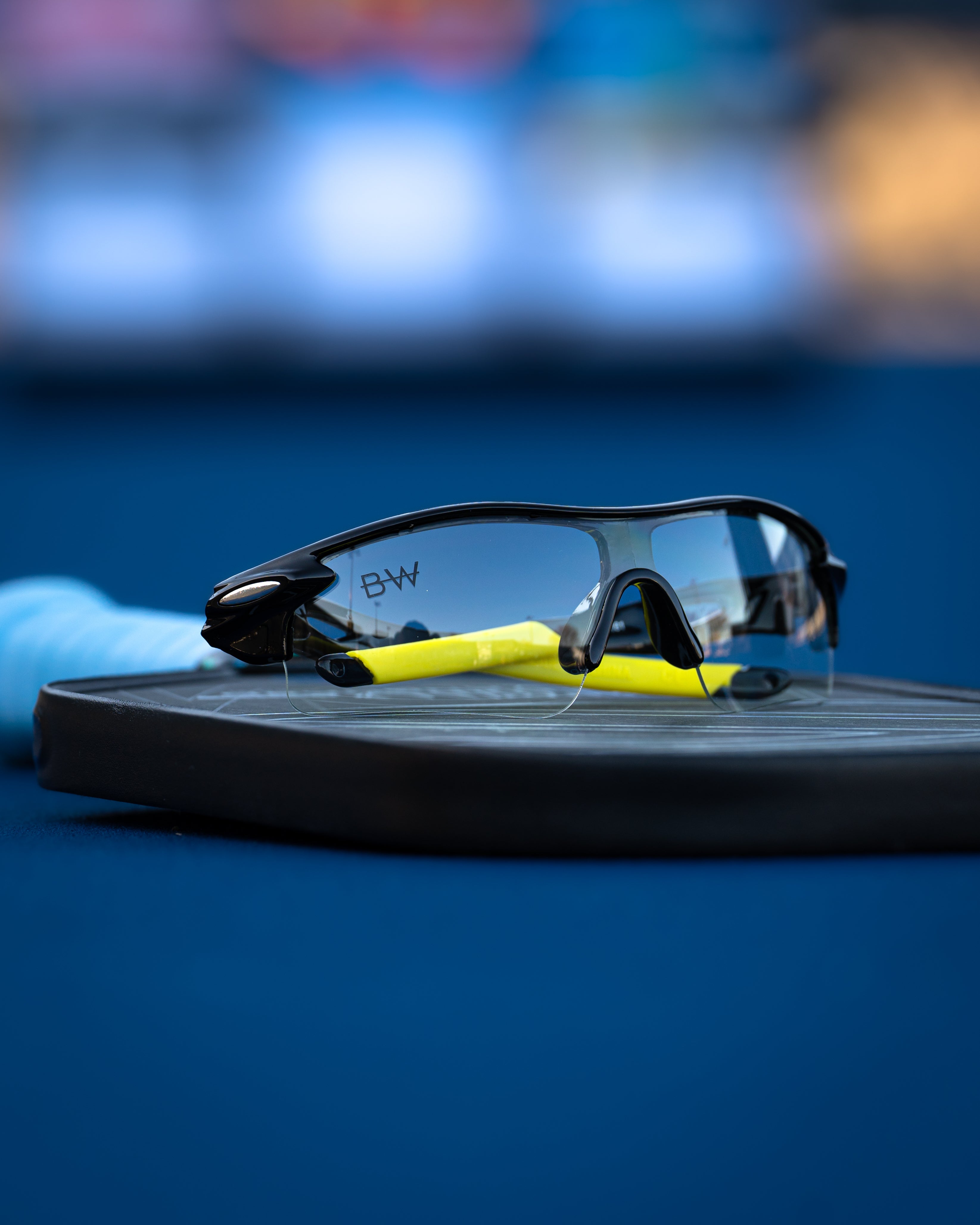
Why Top Players Are Upgrading to These RX Glasses
Share
You've upgraded your shoes. You've invested in better equipment. You've spent hours practicing your technique. But when was the last time you seriously considered upgrading your prescription glasses?
For athletes and active adults who rely on vision correction, eyewear isn't just another accessory. It's something you depend on throughout your day, whether you're playing pickleball, practicing tennis, enjoying outdoor activities, or heading out with friends afterward.
Yet many people continue wearing the same everyday glasses for every situation, even when their routines and preferences have changed.
That's why prescription sports glasses and athletic-inspired RX sunglasses are worth exploring.
The right pair should do more than look athletic. It should provide appropriate prescription correction, fit comfortably, offer suitable lens options, and complement the activities you actually enjoy.
At Blinded Wear, we offer prescription eyewear that combines athletic-inspired frame designs with everyday styling.
Our RX eyewear starts at $249, with 1.61 high-index prescription lens material included without a separate high-index upgrade charge.
So, what should you look for when upgrading your prescription eyewear? Which features matter, and how do you choose a pair that fits your lifestyle?
Let's break it down.
Find Your Next Pair of Athletic Eyewear
Whether you need prescription correction or simply want a new pair of sunglasses, start with the collection that matches your needs.
- Need prescription glasses? Explore RX Eyewear.
- Don't need prescription correction? Shop Non-RX Sunglasses.
- Not sure which frame suits you? Take Our Eyewear Quiz.
- Shopping for pickleball? Read Our Pickleball Glasses Guide.
Why More Active Adults Are Considering Prescription Sports Glasses
There's a simple reason to reconsider your eyewear when your lifestyle changes: the glasses you bought for one routine may not be your preferred choice for another.
Someone who spends most of the day indoors may prioritize different lens options from someone who regularly plays outdoor pickleball.
A tennis player may prefer a different frame design from someone who primarily wants prescription sunglasses for walking, travel, and everyday use.
And someone who wears contact lenses during recreational activities may have different priorities from someone who wants their prescription built directly into their sunglasses.
These differences make it worth comparing prescription eyewear instead of assuming one frame works equally well for every person.
Prescription Correction for an Active Lifestyle
If you have a refractive error, appropriate prescription lenses help correct your vision.
That matters whether you're reading a scoreboard, navigating an unfamiliar environment, or enjoying everyday outdoor activities.
However, prescription glasses do not automatically improve reaction time, athletic performance, or decision-making speed.
The primary purpose of prescription lenses is to provide appropriate optical correction.
For more information about how prescription lenses work, visit the National Eye Institute's guide to refractive errors.
More Choices for Different Lighting Conditions
Depending on the frame and prescription, shoppers may be able to choose between clear, gray, and photochromic lenses.
These configurations serve different purposes.
Clear lenses may be suitable for everyday indoor environments, while gray-tinted lenses reduce visible-light transmission in bright conditions.
Photochromic lenses offer variable tint behavior, although their response depends on the specific technology and environment.
Choosing the appropriate lens configuration is often more useful than relying on broad marketing promises about performance.
Eyewear That Matches Your Personal Style
Prescription eyewear is also something you wear on your face, often for hours at a time.
That makes appearance an important part of the decision.
Some people prefer bold athletic frames, while others want a more understated design that works with casual clothing.
For shoppers who want an athletic-inspired appearance, Blinded Wear offers several RX styles to explore.
Prescription Sports Glasses vs. Regular Eyeglasses: What's Actually Different?
The phrase "sports glasses" can describe several different categories of eyewear.
Some products are designed and tested as protective sports eyewear. Others are athletic-inspired prescription sunglasses or everyday frames with sporty styling.
Those categories shouldn't be treated as interchangeable.
A frame can look athletic without meeting a recognized sports protective standard.
Likewise, a larger lens or curved frame does not automatically provide better peripheral vision.
Here's what shoppers should compare.
| Feature | Everyday prescription glasses | Athletic-inspired prescription eyewear |
|---|---|---|
| Primary purpose | Prescription correction for everyday activities | Prescription correction with athletic-inspired styling |
| Frame appearance | Traditional, fashion, or casual designs | May feature sport-influenced shapes and proportions |
| Lens options | Depend on retailer and frame | Depend on retailer and frame |
| Prescription compatibility | Varies by frame and prescription | Varies by frame, curvature, and prescription |
| Sports impact protection | Not guaranteed | Not guaranteed unless verified |
| Peripheral optical performance | Depends on prescription and lens design | Depends on prescription and lens design |
| Best choice | Depends on individual needs | Depends on individual needs |
The important takeaway is that athletic styling and certified sports protection are not the same thing.
For activities with eye-impact risks, choose appropriately rated protective eyewear.
The National Eye Institute's protective eyewear guidance explains why activity-appropriate eye protection matters.
6 Reasons to Consider Upgrading Your RX Eyewear
Not everyone needs new glasses just because a new season is approaching.
But there are several situations where comparing updated prescription eyewear may be worthwhile.
1. Your Prescription Has Changed
If your vision no longer feels adequately corrected, your current prescription may need to be reviewed.
Schedule an eye examination rather than assuming a different frame will solve the problem.
Once you have an appropriate prescription, you can explore compatible RX styles.
2. You Want Prescription Sunglasses
If you regularly wear prescription glasses outdoors, prescription sunglasses may be a convenient alternative to placing non-prescription sunglasses over your everyday glasses.
With an eligible RX configuration, your vision correction and sunglass tint are incorporated into one pair.
Explore our prescription sunglasses collection to compare available models.
3. Your Current Frames Don't Fit Comfortably
Glasses that pinch, slide, or sit unevenly may become distracting during everyday activities.
Frame width, bridge dimensions, and temple length are useful measurements to compare before buying.
For additional information, read our prescription eyewear fit guide.
4. You're Spending More Time Outdoors
If you've started playing more outdoor pickleball, walking regularly, or spending weekends outside, you may want to reconsider your lens tint.
Gray prescription lenses reduce visible-light transmission, while eligible photochromic configurations can change tint under certain conditions.
Neither option is universally better.
The right choice depends on your activities and typical lighting conditions.
5. You Want a Different Look
Sometimes the reason for upgrading is simply personal style.
Maybe you've worn traditional eyeglasses for years and want something more athletic.
Or perhaps you're looking for a frame that works with casual clothing as well as recreational activities.
Blinded Wear offers models such as Crystal Wave II RX, Zebra II RX, and Runway RX.
6. You Want to Understand What You're Paying For
Prescription eyewear pricing can involve multiple components, including frames, lens material, coatings, and optional configurations.
Blinded Wear includes 1.61 high-index prescription lens material without a separate high-index upgrade charge.
That gives shoppers a clear specification to consider when comparing RX eyewear prices.
For more information, explore our guide to included high-index prescription lenses.
What Should You Look for Before Buying Prescription Sports Glasses?
Before choosing a frame, focus on the features that actually influence your purchasing decision.
Prescription Compatibility
Not every frame supports every prescription.
Highly curved frames may require specialized optical configurations or have prescription limitations.
For additional information, read our prescription lens compatibility guide.
Frame Measurements
Compare the width, bridge, and temple dimensions of a prospective frame with glasses that already fit comfortably.
Don't assume a frame will fit simply because its appearance resembles your current eyewear.
Lens Tint
Choose a lens configuration suited to your most common lighting conditions.
For example, clear lenses may be appropriate for everyday indoor activities, while tinted sunglasses may be more suitable for bright outdoor environments.
Lens Material
High-index lens materials can help manage thickness for certain prescriptions.
However, the finished result depends on prescription strength, frame dimensions, and lens design.
Learn more in our 1.61 high-index lens guide.
Protective Requirements
If your activity involves a risk of eye impact, verify whether the eyewear meets the protective requirements appropriate for that sport.
Ordinary prescription sunglasses should not automatically be treated as certified protective eyewear.
Are Prescription Sports Glasses Worth the Upgrade?
The answer depends on what you're upgrading from and what you need.
If your current prescription is accurate, your glasses fit comfortably, and they suit your activities, replacing them may not be necessary.
But if you want prescription sunglasses, prefer a different frame style, or need a configuration that better matches your routine, exploring new RX eyewear may make sense.
Instead of asking whether a pair of glasses will make you a better athlete, ask whether it provides appropriate correction, fits comfortably, and suits your lifestyle.
That's a more practical foundation for choosing eyewear.
What About the Cost of Prescription Athletic Eyewear?
When comparing prescription sunglasses, look beyond the advertised frame price.
Consider what's included and whether additional charges apply to the lens material or configurations you need.
Blinded Wear RX eyewear starts at $249 and includes 1.61 high-index prescription lens material without an additional high-index upgrade charge.
Final pricing depends on the selected product and configuration.
For a closer look at the material, read 1.61 High-Index Lenses for RX Sports Eyewear.
Start With the Right Collection
If you're ready to explore Blinded Wear eyewear, choose the collection that matches your vision needs.
| What you need | Recommended starting point |
|---|---|
| Prescription sunglasses | RX Eyewear Collection |
| Non-prescription sunglasses | Non-RX Sunglasses Collection |
| Non-prescription clear-lens glasses | Clear-Lens Collection |
| Help exploring frame styles | Eyewear Quiz |
| Prescription ordering instructions | RX Ordering Guide |
In Part 2, we'll compare specific Blinded Wear RX frames, explain clear versus gray versus photochromic prescription lenses, and help you narrow down your options for sports, outdoor activities, and everyday wear.
5 Blinded Wear RX Glasses Worth Exploring Before Your Next Upgrade
You've decided that your current prescription eyewear might not be the best match for your lifestyle anymore. Now comes the part that matters most: finding a frame you'll actually enjoy wearing.
Maybe you're playing pickleball several times a week. Maybe you've returned to tennis, started spending more time outdoors, or simply want prescription sunglasses that look good with your everyday wardrobe.
Whatever your routine, there's no reason to choose a frame based entirely on athletic marketing claims.
The better approach is to compare the designs, verify prescription compatibility, and choose lens options that match how you'll use your glasses.
Blinded Wear offers several athletic-inspired RX models, with prescription eyewear starting at $249 and 1.61 high-index prescription lens material included without a separate high-index upgrade charge.
Here are five styles worth exploring.
1. Crystal Wave II RX: Start With Our Best-Selling RX Model
When you're shopping for a new brand of prescription eyewear, starting with an established bestseller can make the selection process easier.
Crystal Wave II RX is Blinded Wear's best-selling prescription pickleball eyewear model.
Its athletic-inspired styling makes it a natural model to consider when exploring prescription sunglasses for recreational activities and everyday outdoor wear.
Whether you're heading to a pickleball court, meeting friends after a game, or enjoying a weekend outdoors, the important question is whether the frame and available lens configuration suit your needs.
Why Explore Crystal Wave II RX?
- Established model: A useful starting point within Blinded Wear's prescription collection.
- Prescription correction: Designed for eligible prescription configurations.
- Included high-index material: 1.61 high-index prescription lens material without a separate upgrade charge.
- Lens selection: Review the current product page for available tint configurations.
- Style: Athletic-inspired appearance suitable for shoppers who prefer sport-influenced eyewear.
Explore the model: Shop Crystal Wave II RX.
2. Zebra II RX: Explore an Alternative Athletic Frame
Not every shopper wants the same frame shape or appearance.
If you're comparing multiple athletic-inspired prescription styles, Zebra II RX is another model worth reviewing.
One of the most useful things you can do when comparing frames is look beyond the product photography.
Review the actual frame dimensions, supported prescription configurations, and available lens options.
For example, if you already own glasses that fit comfortably, their measurements can provide a useful comparison point.
And if you're considering a frame for a particular sport, confirm whether you need separately rated protective eyewear.
What Should You Check Before Choosing Zebra II RX?
- Frame width, bridge dimensions, and temple length.
- Compatibility with your prescription.
- Current lens tint availability.
- Comfort and fit considerations.
- Whether the product is appropriate for your intended activities.
Explore the model: Shop Zebra II RX.
3. Blue Shield RX: Another Style for Your Prescription Eyewear Shortlist
Sometimes the easiest way to choose glasses is to compare several designs side by side.
Blue Shield RX gives shoppers another option within Blinded Wear's RX collection.
Instead of assuming that a particular frame automatically improves ball tracking or peripheral vision, compare its actual specifications with the other models you're considering.
Prescription accuracy, lens design, frame dimensions, and fit all matter.
Also, the name Blue Shield RX should not be interpreted as a guarantee of blue-light filtering, glare elimination, or certified impact protection.
Those features should be verified individually through the product's available specifications.
Who Should Explore Blue Shield RX?
Blue Shield RX is worth considering if you're comparing athletic-inspired prescription eyewear and want another design option before making a final decision.
Explore the model: Shop Blue Shield RX.
4. Frost RX: Explore Another Look for Your Active Lifestyle
Some people want their prescription eyewear to complement an athletic wardrobe, while others want a frame they can wear comfortably throughout an ordinary day.
Frost RX is another model to explore when comparing RX designs.
Whether you're interested in recreational sports, outdoor activities, or casual everyday wear, the right frame depends on your individual preferences.
Review the current product information to confirm available lens configurations, measurements, and prescription compatibility.
A frame's appearance or product name does not establish that it offers superior heat resistance, anti-slip performance, or certified protective features.
What Makes Frost RX Worth Comparing?
It provides another prescription frame option for shoppers who want to evaluate several designs rather than choosing the first model they encounter.
Explore the model: Shop Frost RX.
5. Runway RX: Prescription Eyewear for Sport-Inspired Everyday Style
Here's something that often gets overlooked when shopping for athletic eyewear: most people don't spend their entire day playing sports.
You might start the morning outdoors, spend the afternoon running errands, and finish the evening meeting friends.
That's why personal style matters alongside prescription compatibility and fit.
Runway RX is another model worth exploring if you're interested in prescription eyewear that complements your preferred everyday appearance.
Compare its frame dimensions and available lens options before deciding whether it's right for you.
Why Consider Runway RX?
It gives shoppers another design to compare when looking for prescription eyewear that fits their wardrobe and routine.
Explore the model: Shop Runway RX.
Compare These 5 Blinded Wear Prescription Glasses
Not sure which model to explore first? Use this comparison as a starting point.
| RX frame | Why explore it? | What to verify |
|---|---|---|
| Crystal Wave II RX | Established best-selling RX model | Frame fit and available lens configurations |
| Zebra II RX | Alternative athletic-inspired design | Measurements and prescription compatibility |
| Blue Shield RX | Another RX style to compare | Current lens options and specifications |
| Frost RX | Additional prescription frame option | Fit, dimensions, and available configurations |
| Runway RX | Alternative styling for everyday use | Prescription compatibility and fit |
These comparisons are intended to help you explore styles, not establish unverified performance rankings.
For more options, browse the complete Blinded Wear RX collection.
Clear vs. Gray vs. Photochromic RX Lenses: Which Should You Choose?
Once you've found a frame you like, the next decision is choosing the lens configuration.
This matters because someone who spends most of their time indoors may have different needs from someone who regularly wears prescription sunglasses outdoors.
Blinded Wear offers prescription lens configurations that may include clear, gray, and photochromic options, depending on the selected frame.
Our RX eyewear uses non-polarized prescription lenses, with 1.61 high-index lens material included without a separate high-index upgrade charge.
Clear Prescription Lenses: For Indoor and Everyday Environments
Clear RX lenses provide prescription correction without a dark sunglass tint.
They may be appropriate for everyday indoor activities, work, and other settings where dark sunglasses would be inconvenient.
For example, someone who plays recreational pickleball indoors may prefer a clear prescription configuration when appropriate for the environment.
However, ordinary clear prescription glasses should not automatically be considered certified protective sports eyewear.
Important: The Blinded Wear clear-lens collection contains non-prescription eyewear. If you need vision correction, choose an explicitly labeled RX model offering a compatible clear-lens configuration.
Gray Prescription Lenses: For Bright Outdoor Conditions
Gray-tinted RX lenses reduce visible-light transmission and may be useful for bright daytime environments.
They can be worth considering for outdoor walking, recreational activities, travel, and other daytime routines.
However, gray tint does not automatically provide the same reflected-glare reduction as polarization.
It also does not independently establish UV protection or certified impact resistance.
Photochromic RX Lenses: For Changing Lighting Conditions
Photochromic prescription lenses adjust their tint in response to certain lighting conditions, commonly involving ultraviolet exposure.
They may appeal to people who regularly move between indoor and outdoor environments.
However, photochromic performance depends on the specific lens technology, temperature, and UV exposure.
Not all photochromic lenses darken equally behind vehicle windshields or in every environment.
RX Lens Comparison for Sports and Everyday Wear
| Lens configuration | Potential use | Important consideration |
|---|---|---|
| Clear RX | Indoor and everyday activities | No dark sunglass tint |
| Gray RX | Bright daytime outdoor use | Reduces visible-light transmission |
| Photochromic RX | Changing indoor and outdoor lighting | Tint behavior depends on technology and environment |
The best configuration depends on where you expect to wear your glasses most frequently.
For more information, read our guide to choosing prescription sports eyewear.
Why Non-Polarized Prescription Lenses May Appeal to Active Adults
When comparing prescription sunglasses, you'll often encounter polarized and non-polarized options.
These describe different ways lenses interact with light.
What Do Polarized Lenses Do?
Polarized lenses use a filter that can reduce certain types of reflected glare.
They may be useful in environments with strong reflected light, although they can also affect the appearance of some electronic displays.
What Do Non-Polarized Lenses Do?
Non-polarized sunglass lenses reduce visible-light transmission through their tint without using a polarization filter.
They may appeal to shoppers who prefer conventional sunglass tints or frequently use electronic displays that can be affected by polarization.
However, neither lens type automatically guarantees improved athletic performance, faster reactions, or better depth perception.
Are Blinded Wear RX Lenses Polarized?
No. Blinded Wear prescription eyewear uses non-polarized RX lenses.
Explore eligible lens configurations in our prescription eyewear collection.
Prescription Sports Glasses for Pickleball, Tennis, and Everyday Activities
One reason to compare multiple prescription eyewear styles is that your needs may change throughout the week.
Maybe you play pickleball on Saturdays, go for walks during the week, and spend the rest of your time wearing casual clothing.
Rather than choosing a frame based on promises of professional-level performance, consider what you'll actually use it for.
For Pickleball Players
Pickleball involves movement, ball tracking, and changing court positions.
If you need prescription correction, start by choosing eyewear that supports your prescription and fits comfortably.
For activities with eye-impact risks, verify whether appropriately rated protective eyewear is required.
Explore our pickleball eyewear guide for additional shopping considerations.
For Tennis Players
Tennis players may encounter different lighting conditions depending on whether they're playing indoors or outdoors.
Prescription compatibility, frame fit, lens tint, and appropriate eye protection are useful considerations.
If you're choosing prescription sunglasses for recreational tennis, review the available lens configurations rather than assuming a particular frame automatically improves ball tracking.
For Walking, Travel, and Everyday Outdoor Activities
Prescription sunglasses aren't limited to recreational sports.
They may also be useful for everyday outdoor routines, travel, and casual activities.
For these situations, frame styling, prescription correction, comfort, and lens tint may be especially important.
Models such as Crystal Wave II RX and Runway RX are worth comparing if you prefer athletic-inspired eyewear.
For Everyday Fashion and Personal Style
Sometimes your primary goal isn't athletic performance at all.
You simply want prescription eyewear that looks good with your wardrobe.
That's a valid reason to explore different frame designs.
Compare the available styles, confirm prescription compatibility, and choose a frame you genuinely enjoy wearing.
Which Blinded Wear RX Glasses Should You Explore First?
If you're still deciding, use this quick comparison to identify a sensible starting point.
| Your priority | Suggested starting point | Why |
|---|---|---|
| Explore the established bestseller | Crystal Wave II RX | Blinded Wear's best-selling RX pickleball eyewear model |
| Compare athletic-inspired designs | Zebra II RX | Another prescription frame to evaluate |
| Explore more RX styles | Blue Shield RX | Additional frame option within the collection |
| Compare different frame appearances | Frost RX | Another style worth reviewing |
| Explore everyday styling | Runway RX | Alternative styling to compare with athletic frames |
| See every available model | Complete RX Collection | Compare the wider product range |
What If You Wear Contact Lenses Instead?
If you wear contact lenses, prescription sunglasses may not be necessary for every activity.
Some contact lens wearers prefer separate non-prescription sunglasses, while others like having prescription sunglasses available as an alternative.
The right option depends on your vision needs and personal preferences.
For a more detailed comparison, read our prescription sports eyewear vs. contact lenses guide.
If you don't need prescription lenses, explore the Blinded Wear non-RX collection.
Before You Upgrade: Your Prescription Eyewear Buying Checklist
Before completing your purchase, review these important details.
- Current prescription: Make sure your prescription is appropriate and up to date.
- Frame compatibility: Confirm that the selected model supports your prescription.
- Measurements: Compare the frame dimensions with glasses that already fit comfortably.
- Lens options: Review the available clear, gray, or photochromic configurations.
- Lens material: Understand what's included in the advertised price.
- Protective needs: Verify whether your activity requires certified protective eyewear.
- Ordering process: Review how to provide your prescription information.
- Shipping and policies: Check current production, shipping, and return terms.
For ordering instructions, visit How to Order RX Glasses.
Still comparing frames? Take the Blinded Wear eyewear quiz or explore the complete RX collection.
In Part 3, we'll cover common buying mistakes, the prescription ordering process, protection and returns, eyewear care, frequently asked questions, and final recommendations for choosing your next pair.
7 Mistakes to Avoid When Upgrading Your Prescription Sports Glasses
You've explored the frames, compared lens options, and started narrowing down your favorites. But before choosing your next pair of prescription glasses, there are a few mistakes worth avoiding.
Whether you're shopping for pickleball, tennis, outdoor recreation, or everyday wear, the right decision starts with understanding what you're actually buying.
1. Buying a Frame Without Checking Prescription Compatibility
Not every frame can accommodate every prescription.
Prescription strength, lens dimensions, and frame curvature can influence whether a particular configuration is suitable.
Before ordering, review the product details and confirm that your prescription can be accommodated.
Our prescription sports sunglasses compatibility guide explains what shoppers should consider.
2. Assuming Every Athletic Frame Is Certified Protective Eyewear
A sporty appearance does not automatically mean a pair of glasses meets a recognized sports protective standard.
Even when lenses are described as impact-resistant, the complete eyewear must be evaluated against relevant standards before specific protective claims can be made.
For activities involving possible eye impacts, choose appropriately rated protective eyewear.
Learn more through the National Eye Institute's protective eyewear guidance.
3. Choosing a Frame Based Only on Appearance
Style matters, especially when you're buying glasses you plan to wear frequently.
But a frame should also suit your prescription and fit comfortably.
Before choosing between Crystal Wave II RX and Runway RX, compare their dimensions, available configurations, and your personal preferences.
4. Ignoring the Lighting Conditions Where You'll Wear Your Glasses
If you spend most of your time indoors, dark sunglasses may not be the most convenient choice.
If you're regularly outdoors during bright daylight, tinted prescription lenses may be more appropriate.
Clear, gray, and photochromic lenses offer different characteristics, so choose based on your routine rather than assuming one configuration works best everywhere.
5. Assuming High-Index Lenses Automatically Improve Athletic Performance
Blinded Wear includes 1.61 high-index prescription lens material without an additional high-index upgrade charge.
High-index materials can help manage lens thickness for certain prescriptions, but they do not independently guarantee improved reaction time, peripheral vision, or athletic performance.
For more information, read our 1.61 high-index prescription lens guide.
6. Forgetting About Frame Measurements
Frame width, bridge dimensions, and temple length can affect comfort and fit.
If you already own glasses that fit well, compare their measurements with the dimensions of the frame you're considering.
Explore our prescription frame fit guide for additional advice.
7. Skipping the Protection and Returns Policy
Prescription eyewear is customized, so it's important to understand the applicable return and replacement terms before purchasing.
Blinded Wear offers a lifetime RX store-credit policy under which qualifying returns may receive 50% store credit, subject to the current terms.
Review the Blinded Wear Protection Plan and Returns Policy for eligibility and conditions.
How to Order Blinded Wear Prescription Glasses
Ready to make the switch?
Blinded Wear offers athletic-inspired prescription eyewear starting at $249, with 1.61 high-index prescription lens material included without a separate high-index upgrade charge.
Here's how to approach your purchase.
Step 1: Start With Your Current Prescription
Before ordering, make sure you have an appropriate eyeglass prescription from your eye-care professional.
If your vision has changed or you're experiencing persistent blurry vision, consider an eye examination before purchasing new glasses.
Step 2: Explore the RX Collection
Visit the Blinded Wear prescription eyewear collection.
Compare available frames, including:
- Crystal Wave II RX — An established best-selling prescription model.
- Zebra II RX — Another athletic-inspired design.
- Blue Shield RX — An additional frame option.
- Frost RX — Another design to compare.
- Runway RX — An alternative style for shoppers exploring everyday looks.
Step 3: Check Frame Measurements and Prescription Compatibility
Before selecting a frame, review its dimensions and confirm that it can accommodate your prescription.
If you're unsure whether a particular configuration is appropriate, seek clarification before placing your order.
Step 4: Choose Your Lens Configuration
Depending on the selected RX model, available options may include clear, gray, or photochromic lenses.
Blinded Wear prescription lenses are non-polarized.
Not every lens configuration is necessarily available for every frame or prescription.
Step 5: Submit Your Prescription Information
Follow the instructions provided during checkout to supply your prescription details.
For additional guidance, visit How to Order RX Glasses.
You can also read our prescription upload guide.
Step 6: Review Production and Shipping Expectations
Blinded Wear prescription eyewear is made to order.
Check the current production and shipping information before completing your purchase.
Step 7: Review the Protection Policy
Before checkout, read the current protection and returns policy.
Qualifying RX returns may be eligible for 50% store credit under the applicable terms.
How to Care for Your New Prescription Sports Glasses
Once your new eyewear arrives, proper care can help preserve its condition.
Clean Your Lenses Carefully
Follow the lens manufacturer's cleaning instructions and use suitable lens-cleaning products.
A clean microfiber cloth may be appropriate, depending on the manufacturer's recommendations.
Avoid rubbing abrasive particles across dry lenses.
Store Your Glasses Properly
When you're not wearing your glasses, keep them in an appropriate protective case.
This can help reduce accidental scratches and unnecessary contact with abrasive surfaces.
Avoid Excessive Heat
Some lens coatings and frame materials can be affected by high temperatures.
Avoid exposing your eyewear to conditions beyond the manufacturer's recommended limits.
Check the Fit Periodically
Frames may loosen or become uncomfortable over time.
If your glasses sit unevenly or repeatedly slide, consult a qualified optical professional about possible adjustments.
Frequently Asked Questions About Prescription Sports Glasses
Why do athletes choose prescription sports glasses?
Athletes and active adults who need vision correction may prefer prescription eyewear that combines appropriate optical correction with frame styling and lens configurations suited to their routines.
Do prescription sports glasses improve athletic performance?
Appropriate prescription correction addresses refractive errors, but prescription sports glasses do not independently guarantee improved reaction time, ball tracking, or athletic performance.
What are the best prescription glasses for pickleball?
The best choice depends on your prescription, frame fit, lens preferences, and protective requirements. Blinded Wear offers models such as Crystal Wave II RX, Zebra II RX, and Blue Shield RX for shoppers comparing athletic-inspired prescription eyewear.
Can I wear prescription sports sunglasses for tennis?
Prescription sunglasses may be appropriate for certain recreational activities, depending on the product and intended use. Confirm fit, prescription compatibility, and protective requirements before wearing them for tennis.
Are athletic prescription glasses suitable for everyday wear?
Many athletic-inspired prescription frames can also be considered for everyday activities, provided the prescription, lens configuration, and fit are appropriate.
How much do Blinded Wear prescription glasses cost?
Blinded Wear RX eyewear starts at $249. Final pricing depends on the selected model and configuration.
Does Blinded Wear include high-index prescription lenses?
Yes. Blinded Wear includes 1.61 high-index prescription lens material without a separate high-index upgrade charge.
What does 1.61 high-index mean?
A refractive index of 1.61 describes a property of the lens material. For certain prescriptions, high-index material can help manage lens thickness compared with some lower-index alternatives.
Are Blinded Wear RX lenses polarized?
No. Blinded Wear prescription eyewear uses non-polarized lenses.
Can I order clear prescription lenses?
Clear RX configurations may be available on eligible prescription models. Check the selected product page for current options.
Does Blinded Wear offer photochromic lenses?
Photochromic configurations may be available on eligible RX models, depending on prescription compatibility and current product options.
Are photochromic lenses good for changing lighting conditions?
Photochromic lenses may be convenient for some people who move between indoor and outdoor environments. However, tint behavior depends on the specific lens technology, temperature, and ultraviolet exposure.
Can prescription sports glasses improve peripheral vision?
Prescription lenses correct refractive errors but do not automatically expand the anatomical visual field. Peripheral optical performance depends on prescription, lens design, and frame characteristics.
Are ordinary prescription sunglasses safe for competitive pickleball?
Ordinary prescription sunglasses should not automatically be considered certified protective sports eyewear. Choose appropriately rated protective eyewear when an activity presents an eye-impact risk.
What if I wear contact lenses?
If you wear contact lenses, you may prefer non-prescription sunglasses. Prescription sunglasses can also provide an alternative when you don't want to wear contacts.
For more information, read our prescription glasses versus contact lenses guide.
Are Blinded Wear prescription glasses made to order?
Yes. Blinded Wear prescription eyewear is made to order. Review current production and shipping information before purchasing.
What happens if my RX glasses break?
Blinded Wear offers a lifetime RX store-credit policy under which qualifying returns may receive 50% store credit toward a replacement purchase, subject to the current policy terms.
Review the official protection policy for details.
How do I know which frame fits my face?
Compare frame measurements with eyewear you already wear comfortably. Bridge size, overall width, and temple length can help you narrow down your options.
Which Blinded Wear RX frame should I explore first?
If you're unsure where to begin, Crystal Wave II RX is a useful starting point because it's an established best-selling model. However, the best frame for you depends on prescription compatibility, measurements, and personal preference.
More Prescription Eyewear Guides Worth Reading
Want to learn more before making your purchase? These Blinded Wear guides explore prescription lenses, eyewear selection, and active lifestyles.
- What to Look for in Prescription Sports Glasses — Understand the most important buying considerations.
- Best Prescription Sports Glasses for Active Adults — Compare eyewear for active lifestyles.
- How to Choose Prescription Sports Eyewear — Learn how to evaluate RX frame options.
- Why We Don't Charge Extra for 1.61 High-Index RX Lenses — Understand what's included in your purchase.
- How to Upload Your RX Safely and Accurately — Prepare for the ordering process.
- Pickleball Glasses Buying Guide — Explore additional eyewear considerations for pickleball.
Final Verdict: Is It Time to Upgrade Your Prescription Sports Glasses?
Upgrading your prescription eyewear isn't about chasing promises of faster reactions or guaranteed competitive advantages.
It's about choosing glasses that provide appropriate vision correction, fit comfortably, and suit the activities you enjoy.
If your current glasses already meet those needs, you may not need to replace them.
But if you're looking for prescription sunglasses, exploring new frame styles, or comparing lens configurations for an active lifestyle, Blinded Wear offers several RX options worth considering.
From the established Crystal Wave II RX to Zebra II RX, Blue Shield RX, Frost RX, and Runway RX, you can compare multiple designs before choosing your next pair.
Our prescription eyewear starts at $249 and includes 1.61 high-index prescription lens material without an additional high-index upgrade charge.
Whether your routine includes pickleball, tennis, walking, travel, or everyday outdoor activities, choose a frame based on your prescription, fit, and personal preferences.
Ready to Find Your Next Pair?
Explore Blinded Wear's RX and non-RX collections and choose eyewear that matches your vision needs and personal style.
- Need prescription correction? Shop Prescription Glasses.
- Don't need prescription lenses? Shop Non-RX Sunglasses.
- Need help exploring styles? Take Our Eyewear Quiz.
- Ready to order? Read Our RX Ordering Guide.
Upgrade your eyewear for the vision correction, fit, and style you actually need.