
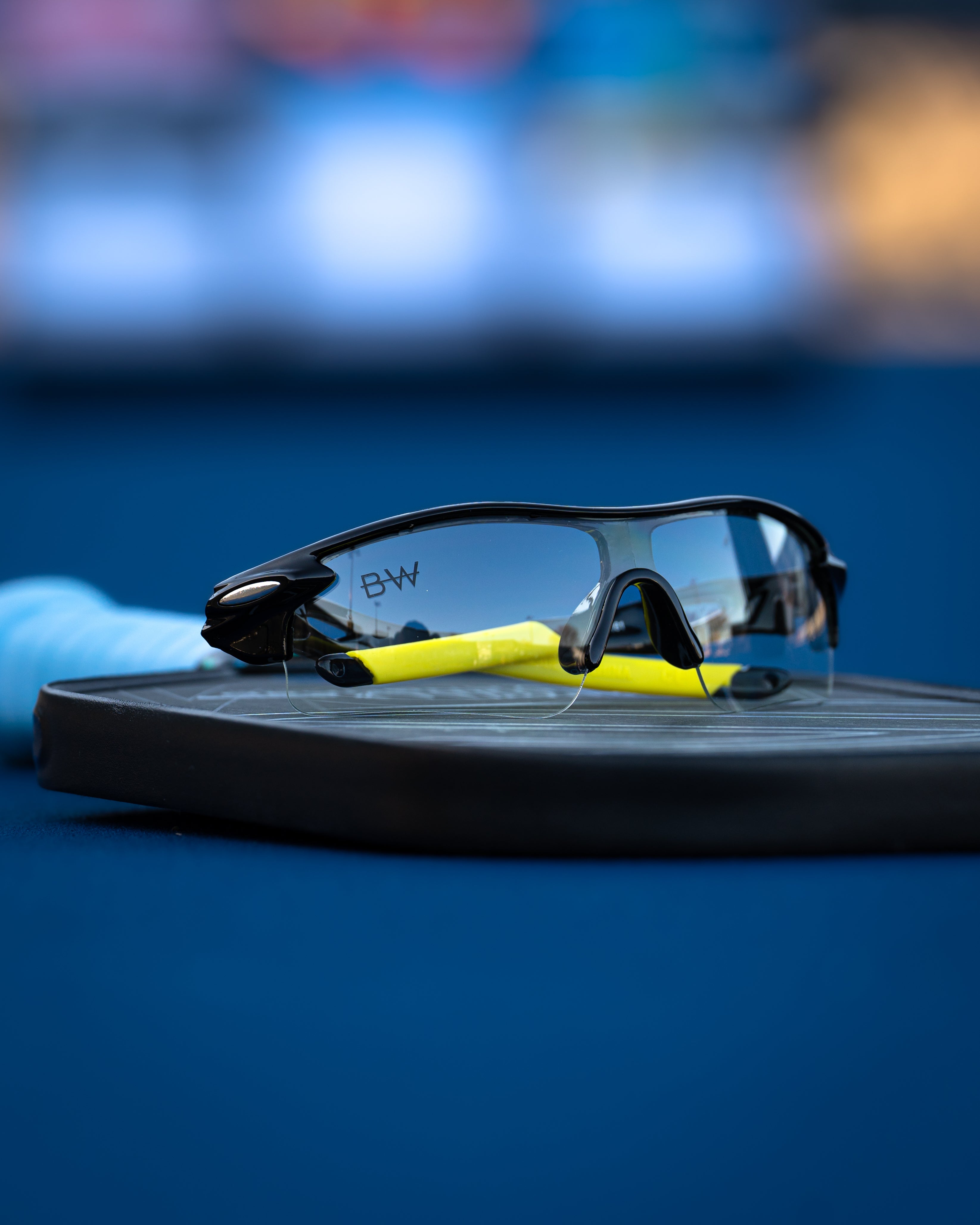
Best Prescription Cycling Glasses of 2026
Share
Best Prescription Cycling Glasses of 2026: What Cyclists Should Look For
The best prescription cycling glasses in 2026 combine the vision correction you need with a lightweight, comfortable frame and a lens setup appropriate for the conditions where you ride. Cyclists should pay particular attention to prescription compatibility, fit during movement, coverage, impact resistance, lens conditions, comfort over longer rides, and verified product specifications.
Cycling places different demands on eyewear than ordinary daily use. Road, gravel, recreational, and fitness riders can encounter wind, bright sunlight, shade, airborne debris, changing weather, and hours of continuous movement. If you normally wear prescription glasses, your eyewear also needs to provide the corrective vision required by your prescription.
This 2026 guide explains how to compare RX cycling glasses without assuming that the most expensive frame, darkest tint, polarized lens, or longest feature list is automatically the best choice.
Quick Answer: What Are the Best Prescription Cycling Glasses?
The best prescription cycling glasses are the pair that provides your required vision correction while fitting comfortably during movement and matching your typical riding environment. There is no single model that is automatically best for every cyclist.
| Priority | Why It Matters for Cyclists |
|---|---|
| Prescription correction | Provides the corrective vision required by the rider's prescription |
| Comfortable fit | Cycling can involve extended periods of continuous wear and movement |
| Lightweight construction | Can help make eyewear more comfortable during longer rides |
| Coverage | Places a physical lens between the eyes and some wind, dust, insects, and airborne debris |
| Impact resistance | Worth considering for eyewear used in an active outdoor environment |
| Appropriate lens conditions | The lens should make sense for the brightness and environments where you normally ride |
| Verified specifications | Prevents assumptions about UV filtering, coatings, polarization, certifications, or other features |
Why Do Prescription Cycling Glasses Matter?
Prescription cycling glasses solve two needs at the same time: vision correction and active-use eyewear.
A cyclist who requires prescription correction needs to account for that correction while choosing eyewear for outdoor conditions. Instead of treating the prescription as an afterthought, RX cycling eyewear allows the corrective requirement to become part of the overall frame-and-lens decision.
Depending on the rider and route, cycling eyewear may also need to account for:
- Long periods of outdoor exposure
- Wind and airflow
- Dust and airborne debris
- Changing visible-light conditions
- Repeated head movement
- Comfort during longer rides
- Impact resistance
- Compatibility with the rider's prescription
These factors are why ordinary prescription glasses and prescription eyewear intended for active use can feel very different on a ride.
1. Start With the Prescription Correction You Actually Need
The most important feature of prescription cycling glasses is easy to overlook: the lenses need to provide the corrective vision prescribed for you.
A sporty frame, specialized tint, or expensive lens technology cannot substitute for appropriate prescription correction when you require it.
This is especially important because cycling is visually demanding. Riders continually process information about their surroundings, including the route ahead, other riders, vehicles, signs, terrain, and environmental conditions.
Prescription cycling glasses should not be marketed as guaranteeing better reaction time or preventing cycling accidents. Their fundamental purpose is simpler: provide the wearer's prescribed correction in eyewear appropriate for the intended activity.
2. Consider Lens Material and High-Index Options
Prescription lens material can influence the finished eyewear, particularly for riders with stronger prescriptions.
High-index lenses are a category of prescription lens materials. Depending on the prescription and lens design, high-index materials can allow certain prescriptions to be made thinner than they would be with some lower-index alternatives.
However, high-index does not refer to one universal numerical lens index, and it does not mean every finished prescription lens will have the same thickness.
Final lens thickness can depend on factors such as:
- Your prescription
- The lens material
- Frame dimensions
- Frame shape
- Lens design
- How the prescription interacts with the selected frame
Blinded Wear includes high-index prescription lenses without an additional high-index upcharge, which can be useful when comparing the total cost of completed prescription sports eyewear rather than comparing frame prices alone.
3. Fit Matters During Long Rides
A frame can look good while standing still and still become distracting during a ride. Cycling involves head movement, changes in riding position, and potentially hours of continuous wear.
When comparing prescription cycling glasses, consider:
- How the frame feels around your nose
- Whether the sides create uncomfortable pressure
- How the eyewear feels when looking ahead and changing head position
- Whether the frame remains comfortable over time
- Whether the overall coverage suits your riding preferences
- Whether the frame works with your prescription
A tighter fit is not automatically a better fit. Stability, comfort, and individual facial dimensions all matter.
Blinded Wear uses lightweight sports frames designed for active use and extended wear, but individual fit should still be evaluated rather than assuming one frame will fit every rider identically.
4. Coverage Can Matter More on a Bike
Cyclists may encounter wind, dust, dirt, insects, and other airborne material while riding. Eyewear places a physical lens between the eyes and some of those outdoor elements.
The amount of coverage depends on the frame and lens design. Riders who value more coverage may prefer a different frame shape from someone prioritizing a smaller everyday-style frame.
Coverage should not be confused with guaranteed eye protection. Ordinary sports eyewear cannot be assumed to stop every object or prevent every injury.
If a cycling discipline or another activity requires a specific protective certification, verify that standard separately rather than assuming general sports sunglasses meet it.
5. Look for Impact-Resistant Lenses
Impact resistance is worth considering in cycling eyewear because glasses used during active outdoor activities may experience accidental drops, debris, or other impacts.
Blinded Wear uses impact-resistant lenses as part of its sports-focused eyewear design.
It is important to understand what that claim does and does not mean:
- Impact resistant does not mean impact proof.
- Impact resistant does not mean unbreakable.
- It does not guarantee prevention of an eye injury.
- It does not automatically establish a particular safety certification.
If a specific protective standard matters for your type of riding, confirm that certification for the exact eyewear before purchasing.
6. Match the Lens to Your Typical Riding Conditions
Road and trail conditions can change considerably depending on weather, time of day, shade, route, and location. That makes the visible-light environment an important part of choosing cycling glasses.
| Riding Environment | What to Consider |
|---|---|
| Bright daytime riding | A lens that reduces visible brightness to a comfortable level |
| Cloudy conditions | Avoid assuming the darkest lens is automatically best |
| Routes with frequent shade | Consider how the lens feels as visible-light conditions change |
| Evening or lower-light riding | Clear or lighter-looking eyewear may be more appropriate than a dark sunglass lens |
| Mixed conditions | Evaluate whether one lens setup realistically covers your normal range of environments |
There is no universal cycling tint that works best for every rider and every route.
7. Verify UV Specifications Instead of Assuming Them
UV filtering is relevant when shopping for outdoor eyewear, but a specific UV specification should be verified for the exact lens rather than inferred from its appearance.
Lens darkness and UV filtering are not the same characteristic. A dark-looking lens does not automatically establish a particular UV rating.
Similarly, terms such as “cycling,” “sports,” “premium,” or “performance” do not prove a specific level of UV filtering.
If a particular UV specification is important to you, check the current product information for the exact lens configuration before purchasing. Do not assume every Blinded Wear lens carries the same UV specification unless that information is explicitly stated.
8. Polarized vs. Non-Polarized Prescription Cycling Glasses
Polarization is one of the most commonly discussed features in outdoor sunglasses, but it should not be treated as a universal measure of lens quality.
Polarized lenses use a filter designed to reduce certain reflected glare. Non-polarized lenses do not add that polarization filter.
Blinded Wear uses non-polarized lenses, preserving natural visual information without adding a polarization filter.
This does not mean non-polarized lenses automatically provide better depth perception, faster reactions, or improved cycling performance. Likewise, polarized lenses should not automatically be described as the best choice for every cyclist.
| Lens Type | What It Does | What It Does Not Guarantee |
|---|---|---|
| Polarized | Uses a filter designed to reduce certain reflected glare | Better performance, a particular UV rating, or suitability for every rider |
| Non-polarized | Does not add a polarization filter | Better depth perception, reaction time, or cycling performance |
The right choice depends on the rider, environment, and personal visual preference.
Are Photochromic Prescription Lenses Good for Cycling?
Photochromic lenses are designed to change tint in response to environmental conditions, which can make the category interesting for cyclists who regularly encounter changing light.
However, photochromic behavior depends on the specific lens technology and environment. Before choosing a photochromic prescription cycling lens, verify:
- How dark the lens can become
- How it behaves under your typical riding conditions
- How quickly its appearance changes
- How it behaves in lower-light environments
- Its exact UV specifications
- Whether it is compatible with your prescription
Do not assume every Blinded Wear prescription model offers a photochromic option unless that feature is listed for the exact product.
What About Fogging and Ventilation?
Fogging can be frustrating during cycling, especially when temperature, humidity, perspiration, airflow, and riding intensity change.
However, no product should be described as fog-proof simply because it is intended for sports.
Fogging can be affected by:
- Temperature
- Humidity
- Perspiration
- Airflow
- Frame position
- Changes between environments
If ventilation design or an anti-fog treatment is important to you, verify that feature for the exact pair rather than assuming it is included across a product line.
Prescription Cycling Glasses to Compare in 2026
The original version of this guide highlighted several prescription and cycling-oriented eyewear options. For 2026, they are better treated as models to compare based on current specifications rather than declaring one universal winner for every cyclist.
| Model | Why It May Be Worth Comparing | What to Verify |
|---|---|---|
| Rudy Project Defender | Cycling-oriented option from a recognized sports-eyewear brand | Current 2026 RX configuration, lens technology, fit features, and total prescription price |
| Oakley Jawbreaker | Performance-oriented cycling style worth comparing for riders interested in larger sports frames | Current prescription availability, lens configuration, frame compatibility, and pricing |
| Madison Crypto | Another cycling-focused option from the original comparison | Current availability, prescription configuration, included lenses, and specifications |
| Blinded Wear Frost RX | Prescription sports eyewear with verified Blinded Wear RX benefits | Exact current product specifications and whether its fit works for your cycling use |
| Blinded Wear BW RX | Another RX model from the original Blinded Wear comparison | Current availability and exact product-specific specifications before ordering |
Because product configurations can change, cyclists should verify current 2026 specifications directly rather than relying on older descriptions of proprietary lens technology, coatings, polarization, adjustable components, or included accessories.
Frost RX: A Blinded Wear Prescription Sports Option to Consider
Frost RX is part of Blinded Wear's prescription sports eyewear lineup. While Blinded Wear has a strong focus on pickleball, cyclists shopping for active-use prescription eyewear may still want to compare Frost RX based on their individual fit and riding requirements.
Verified Blinded Wear brand-level benefits relevant to the comparison include:
- Prescription availability
- High-index prescription lenses without an additional high-index upcharge
- Lightweight sports frames
- Impact-resistant lenses
- Non-polarized lenses
- Performance-first design
- Comfort intended for extended active use
Do not assume Frost RX includes a specific anti-glare, anti-fog, scratch-resistant, UV, or cycling-specific technology unless that feature is currently stated for the exact product configuration.
Why Cyclists May Want to Compare Blinded Wear RX Eyewear
Blinded Wear is not positioned solely as a cycling-eyewear brand. Its prescription lineup is sports-focused, with particular emphasis on pickleball and active use. That distinction matters because cyclists should compare the eyewear according to their own riding requirements rather than assuming every sports frame was specifically engineered for cycling.
For cyclists who like the fit and styling, Blinded Wear provides several verified characteristics worth considering:
- Prescription sports eyewear
- High-index RX lenses without an additional high-index upcharge
- Lightweight sports frames
- Impact-resistant lenses
- Non-polarized lenses
- Comfort intended for extended active wear
- 50% lifetime replacement support for eligible broken eyewear, subject to current policy terms
The most important step is determining whether a particular frame works for your prescription, face, riding environment, and preferred amount of coverage.
How to Order Blinded Wear Prescription Sports Glasses
Blinded Wear RX customers upload a clear picture of their eyeglass prescription before purchasing. The prescription information can then be associated with the custom RX order.
Before submitting your prescription:
- Make sure the prescription image is clear and readable.
- Do not guess at prescription values.
- Confirm you are submitting the prescription you intend to use.
- Verify compatibility if you have specific or more complex lens requirements.
- Consult an eye-care professional if you have questions about your current prescription or notice meaningful changes in your vision.
Prescription Cycling Glasses vs. Contacts With Non-RX Sunglasses
Dedicated prescription cycling glasses are not the only way a cyclist who needs correction can wear sports sunglasses.
Some riders obtain their corrective vision through contact lenses and then wear non-prescription sports sunglasses. Others prefer having the prescription directly in their eyewear.
| Setup | Where Correction Comes From | What to Consider |
|---|---|---|
| Prescription sports glasses | Prescription lenses in the eyewear | RX compatibility, frame fit, coverage, lens conditions, and total prescription cost |
| Contacts + non-RX sports sunglasses | Contact lenses | Contact suitability and comfort plus the fit and lens configuration of the sunglasses |
Neither approach is universally better. If you have questions about whether contact lenses are appropriate for you, consult an eye-care professional.
2026 Prescription Cycling Glasses Buying Checklist
Before comparing brands or models, answer these questions:
- What prescription correction do I need?
- Is the frame compatible with my prescription?
- How long are my typical rides?
- What lighting conditions do I encounter most often?
- How much coverage do I prefer?
- Is the frame comfortable during movement?
- Are the lenses impact resistant?
- Do I prefer polarized or non-polarized lenses?
- Have I verified any UV specification that matters to me?
- Am I assuming an anti-fog, anti-scratch, or other coating that is not actually stated?
- Does my activity require a specific protective certification?
- What is the completed price with my prescription?
- What return or replacement support is available?
Using the same checklist for every pair makes it easier to compare prescription cycling glasses based on actual value rather than marketing language.
How Should Prescription Cycling Glasses Fit?
Prescription cycling glasses should feel comfortable while you are actually in a riding position, not only while standing upright. Cyclists frequently look forward while their head and upper body are positioned differently from normal walking or everyday activities.
A useful fit evaluation includes:
- Comfort around the nose and sides of the head
- How the frame feels when looking forward from a riding position
- Whether the frame becomes distracting during head movement
- Whether the lens coverage matches your preferences
- Whether the frame works with your helmet and other cycling equipment
- Whether the frame remains comfortable during longer rides
Helmet compatibility is especially important to test in practice. Helmet shapes, straps, eyewear dimensions, and individual head shapes vary, so compatibility should not be assumed from appearance alone.
Are Larger Cycling Lenses Better?
Large-lens cycling glasses are popular because some riders prefer the additional physical coverage they provide. Greater lens coverage can place more material between the eyes and some wind, insects, dust, and airborne debris.
That does not make the largest possible lens automatically best.
Frame dimensions can affect:
- Individual fit
- Helmet compatibility
- Prescription compatibility
- Frame weight
- Coverage
- Personal style
Prescription compatibility deserves particular attention. A frame that works well as non-prescription cycling eyewear may not necessarily accommodate every prescription in the same way.
What If You Have a Stronger Prescription?
A stronger prescription does not automatically prevent you from using sports eyewear, but it can make frame and lens selection more important.
Lens thickness and compatibility can depend on the prescription, frame dimensions, frame shape, lens material, and lens design. This is one reason cyclists with stronger prescriptions should compare the completed RX configuration rather than choosing a frame based solely on its appearance.
High-index lens materials may be useful for certain prescriptions because they can allow some prescriptions to be made thinner than they would be with some lower-index materials.
Blinded Wear includes high-index lenses with its prescription eyewear without an additional high-index upcharge. This can simplify the price comparison because cyclists can consider the completed RX value rather than starting with a frame price and then automatically adding a separate high-index upgrade.
Exact compatibility still depends on the individual prescription and selected frame.
Can Prescription Cycling Glasses Work With Astigmatism?
Astigmatism is addressed through the prescription rather than through a generic “cycling lens” feature. If your eyeglass prescription includes correction for astigmatism, compatibility depends on whether that prescription can be produced in the frame and lens configuration you choose.
Do not assume that every sports frame supports every prescription range or lens design.
When ordering prescription sports eyewear, provide the actual prescription information rather than estimating values. If you are unsure whether your current prescription is appropriate or have noticed changes in your vision, consult an eye-care professional.
What About Progressive Prescription Cycling Glasses?
Cyclists who use progressive lenses may have additional requirements because progressive lens designs contain multiple viewing zones.
Whether a particular sports frame works with a progressive prescription depends on factors including the prescription, frame dimensions, lens design, and available configuration.
If progressive lenses are important to you, verify compatibility for the exact model rather than assuming that prescription availability automatically means every type of prescription lens is offered.
Road, Gravel, and Recreational Cycling: Do Eyewear Needs Change?
The basic requirements of prescription correction, comfort, fit, and appropriate lenses remain important across cycling disciplines. However, the riding environment can change which characteristics you prioritize.
| Cycling Type | Useful Eyewear Considerations |
|---|---|
| Road cycling | Extended-wear comfort, wind exposure, changing brightness, coverage, helmet compatibility, and prescription correction |
| Gravel cycling | Coverage, dust and debris exposure, comfort, impact resistance, changing environments, and prescription needs |
| Recreational cycling | Comfort, appropriate tint, prescription correction, fit, and overall value |
| Fitness riding | Movement, lightweight construction, comfort, lens environment, and fit |
| Mixed-use riding | A versatile setup that works for the environments where you actually ride |
The goal is not to buy a different pair simply because a marketing category says “road” or “gravel.” Start with the conditions you encounter and the features you actually need.
Prescription Cycling Glasses for Daytime vs. Evening Rides
A prescription sunglass lens that feels comfortable in bright daytime conditions may not be appropriate once available light decreases.
Cyclists who regularly ride across substantially different lighting environments should consider whether one pair realistically meets all of their needs.
Bright Daytime Riding
A sunglass lens can reduce visible brightness and may be preferable during sunny daytime rides. If UV filtering is a priority, verify the exact UV specification for the lens.
Evening and Lower-Light Riding
As available light decreases, a dark sun lens may no longer be the appropriate choice. Clear or other environment-appropriate prescription sports eyewear may make more sense.
Blinded Wear also offers a clear lens eyewear collection for shoppers comparing options for environments where a dark tint is unnecessary.
Can One Pair of Prescription Cycling Glasses Handle Every Ride?
Possibly, but not necessarily.
A cyclist who rides almost exclusively during similar daytime conditions may find one lens configuration meets most of their needs. Someone who rides in bright sunlight, deep shade, cloudy weather, and after sunset may have a much wider range of requirements.
Before trying to make one pair cover every environment, ask:
- When do I ride most often?
- How dramatically does the available light change?
- Do I need prescription correction during every ride?
- Would a separate clear and sunglass setup be more practical?
- Is a suitable photochromic option available for my prescription and preferred frame?
The answer depends on the rider rather than a universal cycling-eyewear rule.
Prescription Cycling Glasses vs. Everyday Prescription Sunglasses
Both can provide prescription correction and sun tint, but a cyclist may place greater importance on active-use characteristics than someone shopping primarily for casual eyewear.
| Consideration | Everyday RX Sunglasses | Sports-Focused RX Eyewear |
|---|---|---|
| Prescription correction | Yes, when made to the wearer's prescription | Yes, when made to the wearer's prescription |
| Primary design priority | Often everyday wear and style | Active use may receive greater emphasis |
| Movement | May be less central to the design | Important to evaluate |
| Coverage | Varies | Can be an important consideration for cyclists |
| Impact resistance | Must be verified | Particularly relevant for sports use |
| Extended-wear comfort | Important | Especially relevant during longer rides |
The phrase “cycling glasses” itself does not guarantee better construction. Compare the actual features and fit of each pair.
How to Compare Prescription Cycling Glasses Across Brands
When comparing Blinded Wear with cycling-focused brands or other prescription eyewear companies, use the same criteria for every option.
Compare:
- Prescription compatibility
- Completed RX price
- Lens material
- Frame weight and comfort
- Coverage
- Impact resistance
- Polarized or non-polarized configuration
- Available tint options
- Verified UV specifications
- Available photochromic options, if desired
- Any verified coatings
- Helmet compatibility
- Return policy
- Replacement support
This comparison is more useful than choosing based only on brand recognition or frame price.
Compare the Total Prescription Price, Not Just the Frame Price
One of the most important differences between prescription eyewear options can appear after the initial frame price.
A displayed frame price may not represent the final cost once prescription lenses and optional upgrades are included. When comparing prescription cycling glasses, calculate what you would actually pay for the completed eyewear you need.
A useful total-cost comparison asks:
- What does the frame cost?
- What do the required prescription lenses cost?
- Is there an additional high-index charge?
- Are desired lens options additional?
- What features are actually included?
- What return or replacement support comes with the purchase?
Blinded Wear's high-index prescription lenses are included without an additional high-index upcharge, making that an important part of the value comparison for RX shoppers.
Are Expensive Prescription Cycling Glasses Always Better?
No. A higher price may reflect brand positioning, frame design, proprietary technology, lens options, manufacturing, or other factors, but price alone cannot determine whether a pair is best for you.
A less expensive pair that works with your prescription, fits comfortably, suits your riding environment, and provides the features you actually need may offer better individual value than a more expensive option filled with features you do not use.
Likewise, choosing solely by the lowest price can overlook prescription quality, fit, lens construction, or support that matters to you.
Compare value based on the completed pair rather than assuming expensive means best or cheap means poor.
Cycling Eyewear Claims You Should Verify Before Buying
Sports-eyewear marketing can contain technical language that sounds impressive without telling you whether the feature is relevant to your ride.
Before treating any claim as a reason to buy, verify it for the exact product and lens configuration.
| Claim | What to Check |
|---|---|
| UV protection | Look for the exact stated UV specification |
| Polarized | Confirm whether the exact lens uses a polarization filter |
| Photochromic | Verify the exact lens technology and its stated behavior |
| Anti-fog | Check whether a specific treatment or feature is actually included |
| Scratch resistant | Verify the actual coating or treatment rather than interpreting it as scratch proof |
| Impact resistant | Do not interpret the term as impact proof or automatically safety certified |
| Enhanced contrast | Look for what the manufacturer actually claims and avoid assuming guaranteed performance improvements |
| Safety certified | Look for the exact certification rather than inferring it from sports styling |
10 Mistakes to Avoid When Buying Prescription Cycling Glasses
1. Choosing the Frame Before Checking Prescription Compatibility
A frame you love may not necessarily work with your prescription or preferred lens configuration. Check compatibility early in the buying process.
2. Shopping by Frame Price Alone
Compare the completed prescription price, including any lens upgrades you actually need.
3. Assuming Darker Lenses Provide Better UV Filtering
Visible-light darkness and UV filtering are separate lens characteristics. Verify the actual UV specification.
4. Assuming Polarized Means Better for Every Cyclist
Polarization reduces certain reflected glare, but the best configuration depends on the rider and environment.
5. Ignoring Helmet Compatibility
Test how the eyewear and your helmet work together rather than assuming compatibility based on product photos.
6. Assuming Sports Glasses Are Safety Glasses
If you require a specific protective certification, verify it explicitly.
7. Believing “Impact Resistant” Means Unbreakable
Impact-resistant lenses can still be damaged and should not be described as impact proof.
8. Ignoring Lower-Light Rides
A dark prescription sunglass lens may work well during daytime riding but be inappropriate for substantially darker conditions.
9. Assuming Every Advertised Feature Applies to Every Lens
Lens options can vary by product and prescription. Verify the exact configuration you are ordering.
10. Buying Based on Performance Promises
Prescription cycling glasses should provide appropriate correction and practical active-use features. They cannot guarantee faster reactions, better riding ability, or accident prevention.
Where Blinded Wear Fits Into the Prescription Cycling Glasses Comparison
Blinded Wear is primarily focused on sports and pickleball eyewear rather than positioning every RX model as purpose-built cycling equipment. Cyclists should keep that distinction in mind.
At the same time, several verified Blinded Wear characteristics overlap with what cyclists commonly look for in active prescription eyewear:
- Prescription availability for athletes who require corrective vision
- High-index RX lenses included without an additional high-index upcharge
- Lightweight sports frames
- Impact-resistant lenses
- Non-polarized lenses
- Comfort intended for extended active use
- Performance-first styling
This makes Blinded Wear worth comparing for cyclists who want prescription sports eyewear and prefer these characteristics, provided the individual frame fits their prescription and cycling requirements.
Replacement Support for Prescription Sports Eyewear
Active eyewear can be exposed to drops, travel, repeated handling, and accidental damage. Replacement support can therefore be worth considering alongside the initial purchase price.
Blinded Wear offers 50% lifetime replacement support for eligible eyewear that breaks, subject to the current policy terms.
This should not be interpreted as unlimited free replacement. Review the current terms and eligibility requirements before purchasing.
How to Care for Prescription Cycling Glasses
Cycling eyewear can collect sweat, dust, fingerprints, road debris, and other material. Proper care can help keep the lenses usable and reduce avoidable damage.
- Follow the manufacturer's cleaning instructions.
- Avoid rubbing abrasive dirt or debris across the lens surface.
- Store the eyewear where it is less likely to be crushed or damaged.
- Inspect the frame and lenses after significant impacts.
- Do not assume a lens is scratch-proof.
- Follow product-specific instructions for any specialized lens treatment.
For additional guidance, read the Prescription Sports Eyewear Maintenance Guide.
Which Prescription Cycling Eyewear Setup Fits Your Needs?
| Your Priority | What to Consider First |
|---|---|
| I need prescription correction directly in my sports glasses | Prescription Sports Eyewear |
| I wear contacts while cycling | Non-RX Sports Eyewear |
| I ride in lower-light conditions | Clear Lens Eyewear |
| I want a Blinded Wear RX model to compare | Explore Frost RX |
| I have specific cycling requirements | Compare prescription compatibility, helmet fit, coverage, lens conditions, and verified product specifications before purchasing |
Prescription Cycling Glasses FAQ
What are the best prescription cycling glasses in 2026?
The best prescription cycling glasses are the pair that provides your required vision correction while fitting comfortably during movement and matching your normal riding conditions. Prescription compatibility, frame fit, coverage, impact resistance, lens configuration, helmet compatibility, and completed RX price are all worth comparing.
Do I need special prescription glasses for cycling?
You do not necessarily need eyewear marketed exclusively as “cycling glasses,” but cyclists who require corrective vision may benefit from prescription sports eyewear that works with their prescription and is comfortable during active use. The best choice depends on your riding environment, prescription, fit preferences, and equipment.
Can I cycle in my normal prescription glasses?
Some cyclists do, but everyday prescription glasses may differ from sports-focused eyewear in coverage, frame weight, impact resistance, and active-use fit. Compare the actual characteristics of your current glasses with what you need while riding.
Are prescription cycling glasses worth it?
They can be worthwhile for cyclists who need corrective vision and want that correction directly in their sports eyewear. Their value depends on how often you ride, your prescription, fit, riding conditions, and the total cost of the completed RX pair.
Can you get high-index prescription cycling glasses?
High-index lens materials can be available for prescription sports eyewear. Blinded Wear includes high-index prescription lenses without an additional high-index upcharge. High-index is a category of lens materials rather than one universal numerical index.
Are high-index lenses better for cycling?
High-index materials can be useful for certain prescriptions because they may allow those prescriptions to be made thinner than with some lower-index alternatives. They are not automatically the best material for every cyclist, and final lens thickness depends on multiple factors.
Are polarized prescription glasses best for cycling?
Not universally. Polarized lenses use a filter designed to reduce certain reflected glare. Some riders may prefer them in particular environments, while others may prefer non-polarized lenses. Blinded Wear uses non-polarized lenses.
Do non-polarized cycling glasses improve depth perception?
They should not be described as automatically improving depth perception. Non-polarized lenses simply do not add a polarization filter. Visual performance depends on multiple factors, including prescription correction, lighting, individual vision, and the riding environment.
Are photochromic prescription lenses good for cycling?
They can be worth considering for riders who encounter changing light, but performance depends on the exact photochromic technology and environmental conditions. Verify the specific lens behavior and prescription compatibility before purchasing.
Should cycling glasses be impact resistant?
Impact resistance is a useful characteristic to consider for active outdoor eyewear. Blinded Wear uses impact-resistant lenses. Impact resistant does not mean impact proof, unbreakable, or automatically safety certified.
Can prescription cycling glasses work with astigmatism?
Potentially. Compatibility depends on the actual prescription, frame, and available lens configuration. Astigmatism correction comes from the prescription rather than from a generic cycling-specific feature.
Can prescription cycling glasses use progressive lenses?
Some prescription sports-eyewear configurations may accommodate progressive prescriptions, but availability depends on the frame, lens design, prescription, and provider. Verify compatibility for the exact model before ordering.
Can I wear contact lenses with non-prescription cycling sunglasses?
Some cyclists use contacts for corrective vision and wear non-RX sports sunglasses over them. Others prefer prescription correction directly in their sports eyewear. Contact-lens suitability is an individual matter.
Should I use clear prescription glasses for cycling at night?
A dark sunglass tint may be inappropriate as available light decreases. Clear or another environment-appropriate prescription lens may be a better starting point for lower-light conditions.
Do prescription cycling glasses prevent accidents?
No. Prescription sports eyewear should not be marketed as guaranteeing accident prevention, faster reaction time, or better cycling ability.
2026 Prescription Cycling Glasses Comparison Scorecard
Instead of choosing a winner based on brand name alone, cyclists can use the same scorecard to evaluate every RX option they are considering.
| Category | Question to Ask |
|---|---|
| Prescription compatibility | Can this exact frame and lens configuration accommodate my prescription? |
| Fit | Is it comfortable in my normal riding position? |
| Helmet compatibility | Does the eyewear work comfortably with my actual helmet and straps? |
| Frame weight | Does it remain comfortable during longer rides? |
| Coverage | Does the frame provide the amount of coverage I prefer? |
| Impact resistance | Is impact resistance explicitly stated? |
| Lens conditions | Does the lens make sense for when and where I normally ride? |
| Polarization | Do I want a polarization filter for my riding environment? |
| UV specification | Is the UV information I care about explicitly stated for this lens? |
| RX lens value | What is included in the completed prescription price? |
| Support | What return and replacement terms apply? |
Who Should Consider Prescription Cycling Glasses?
Dedicated RX sports eyewear may be particularly worth comparing if you:
- Normally require prescription glasses to see clearly
- Prefer not to use contact lenses while riding
- Want corrective vision directly in your sports eyewear
- Ride frequently enough to justify a dedicated pair
- Want to compare active-use frames with everyday prescription sunglasses
- Need a lens configuration appropriate for your typical outdoor conditions
Occasional riders may have different priorities from cyclists who spend many hours on the road or trail each week. Frequency of use should be part of the value calculation.
Who Should Consider Frost RX for Cycling?
Frost RX is worth exploring if you need prescription correction and are interested in a Blinded Wear sports frame for active use.
It may be especially relevant to shoppers who prioritize Blinded Wear's verified RX benefits, including high-index prescription lenses without an additional high-index upcharge, lightweight sports-frame construction, impact-resistant lenses, and a non-polarized lens approach.
Frost RX should not be described as a dedicated cycling model unless specifically verified as such. Cyclists should evaluate whether its frame dimensions, fit, coverage, prescription compatibility, and current lens configuration work for their particular riding needs.
What Should You Verify Before Ordering RX Cycling Glasses?
Before placing an order, verify the details that could materially affect how the eyewear works for you.
- Your current prescription information
- Prescription compatibility with the selected frame
- Available lens configuration
- Frame dimensions and fit
- Helmet compatibility
- Whether the lenses are polarized or non-polarized
- Any UV specification important to you
- Any claimed coating or lens treatment
- Any required protective certification
- The completed prescription price
- Return and replacement terms
This final verification is especially important when comparing older reviews or buying guides because product configurations can change over time.
How to Test New Prescription Cycling Glasses
Before relying on new RX eyewear for a long or demanding ride, give yourself an opportunity to evaluate the frame and lenses in a lower-stakes environment.
- Wear the glasses casually. Check for pressure or discomfort.
- Try them with your cycling helmet. Make sure the frame and helmet work comfortably together.
- Move into your normal riding position. Evaluate how the frame feels when looking forward.
- Test them in the relevant lighting conditions. Indoor appearance alone cannot tell you how a sunglass lens will feel outside.
- Take a shorter ride first. This can reveal comfort or fit issues before a longer session.
- Pay attention to the prescription experience. Persistent blur, distortion, unusual discomfort, or other concerns should be addressed rather than ignored.
When Should You Replace Prescription Cycling Glasses?
There is no universal replacement schedule for prescription cycling glasses. Replacement depends on the condition of the eyewear, your prescription, and whether the pair still meets your needs.
Consider replacement or professional evaluation when:
- The frame is damaged
- The lenses are damaged enough to interfere with use
- The glasses no longer fit comfortably
- Your prescription changes
- Your vision changes noticeably
- Your riding environment changes enough to require a different lens setup
- You need features or compatibility your current pair does not provide
If you notice meaningful changes in your vision, consult an eye-care professional rather than assuming the eyewear itself is the only issue.
Final 2026 Checklist for Choosing Prescription Cycling Glasses
Before deciding which pair is best for you, make sure you can answer each of these questions:
- Does this frame work with my prescription?
- What is the completed RX price?
- Does the frame fit comfortably?
- Have I tested or considered helmet compatibility?
- Is the frame comfortable for the length of rides I normally take?
- Does the coverage match my preferences?
- Are the lenses impact resistant?
- Does the lens suit my typical riding conditions?
- Is the lens polarized or non-polarized?
- Have I verified any UV specification that matters to me?
- Have I verified any anti-fog, scratch-resistant, photochromic, or other specialized feature rather than assuming it?
- Does my activity require a specific protective certification?
- Do I understand the return and replacement policy?
- Would one pair cover my riding conditions, or would separate daytime and lower-light eyewear make more sense?
Prescription Sports Eyewear Resources
| What You Need | Where to Start |
|---|---|
| Prescription sports eyewear | Shop RX Sports Eyewear |
| A Blinded Wear RX model to compare for active use | Explore Frost RX |
| Non-prescription sports eyewear for use with contacts | Shop Non-RX Sports Eyewear |
| Clear lens sports eyewear | Explore Clear Lenses |
| Prescription sports-eyewear care information | Read the Maintenance Guide |
| Return and replacement information | Review Protection Plan & Returns |
Final Verdict: What Are the Best Prescription Cycling Glasses of 2026?
There is no single prescription cycling frame that is best for every rider in 2026. The strongest choice is the pair that provides your required prescription correction, fits comfortably in your riding position, works with your equipment, provides appropriate coverage, and uses a lens configuration suited to the environments where you actually ride.
Riders comparing cycling-focused options such as Rudy Project Defender, Oakley Jawbreaker, Madison Crypto, and other brands should verify their current prescription availability, lens options, fit features, and completed RX prices rather than relying on older product descriptions.
Blinded Wear offers another route for cyclists who want to compare sports-focused prescription eyewear. Although the brand has a strong focus on pickleball rather than positioning every model as purpose-built cycling eyewear, its verified characteristics can still be relevant to cyclists: lightweight sports frames, impact-resistant lenses, non-polarized lenses, prescription availability, and high-index RX lenses without an additional high-index upcharge.
Frost RX is one Blinded Wear prescription model worth comparing if its fit, coverage, prescription compatibility, and current configuration suit your cycling needs.
Above all, avoid choosing prescription cycling glasses based on one buzzword. Polarized does not automatically mean better. Darker does not automatically mean better UV filtering. Impact resistant does not mean unbreakable. A higher price does not guarantee a better individual fit. And no pair of glasses can guarantee faster reactions or better cycling performance.
Start with your prescription, riding conditions, fit, and total RX value. Then compare the features that actually matter to you.