
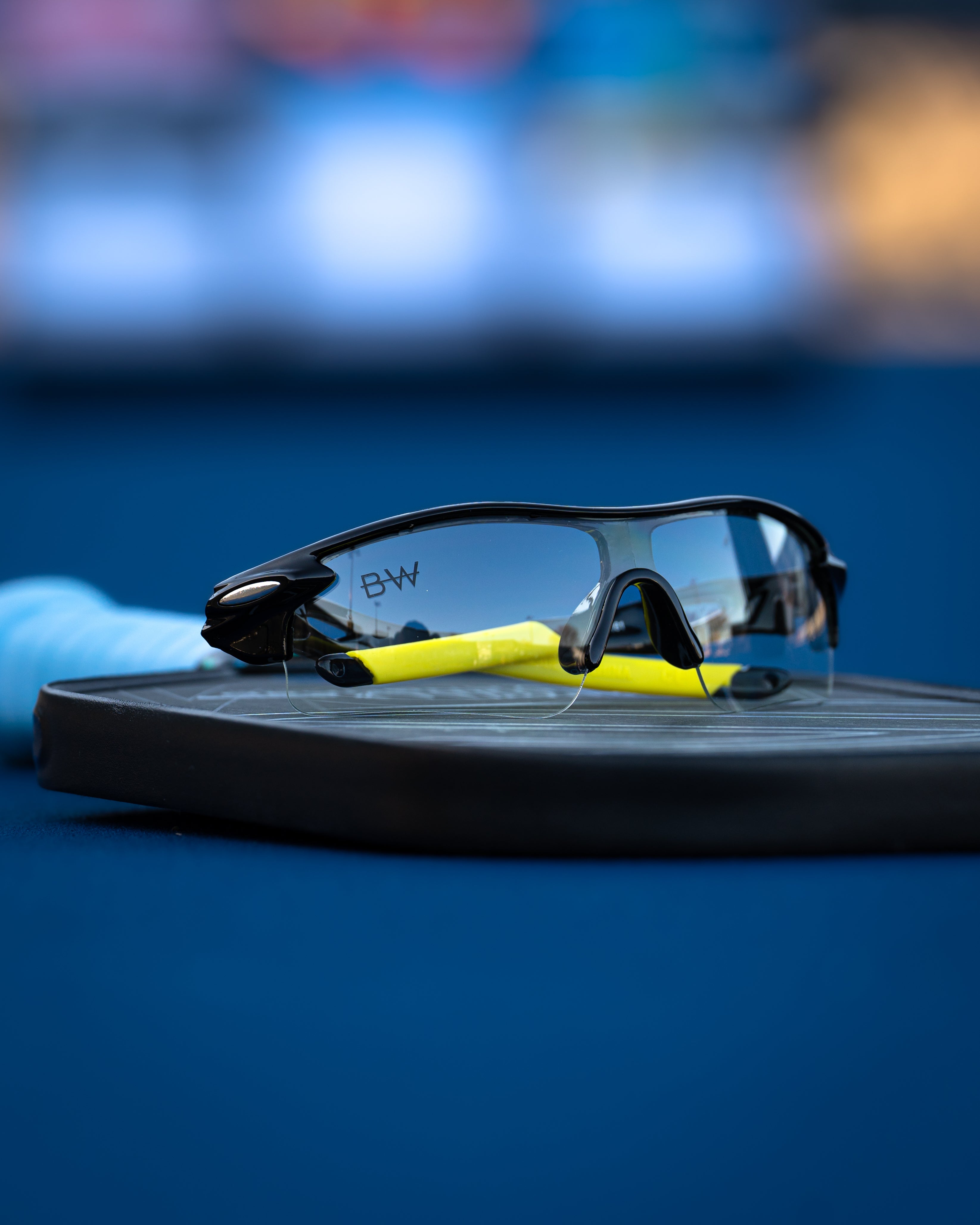
Durable Sunglasses vs. Regular Sunglasses: What’s Worth Your Investment?
Share
Durable Sunglasses vs. Regular Sunglasses: What’s Worth Your Investment?
Is it actually worth paying for sports-focused, durable sunglasses instead of using a regular pair? The answer depends less on marketing labels and more on how you use your eyewear, whether you need prescription correction, and which durability characteristics are actually documented.
For pickleball players and other active athletes, eyewear can encounter drops, equipment contact, repeated handling, sweat, travel, and long periods of wear. That makes characteristics such as impact resistance more relevant than they may be for sunglasses used primarily for casual daily wear.
But “durable” does not mean indestructible, and “regular sunglasses” does not automatically mean fragile. This guide compares sports-focused durable sunglasses with everyday sunglasses based on the characteristics that actually matter—so you can decide where spending more makes sense for your
Explore Pickleball Eyewear
Quick Answer: Are Durable Sports Sunglasses Worth It?
Durable sports sunglasses can be worth the investment when your eyewear is regularly exposed to active use and you value documented characteristics such as impact-resistant lenses.
The value proposition becomes especially relevant if you:
- Play pickleball or another sport frequently
- Wear eyewear through repeated practices and matches
- Travel with your sports eyewear
- Need prescription sports glasses
- Have previously damaged or broken casual eyewear during active use
- Want eyewear specifically intended for sports rather than relying on a casual pair
On the other hand, someone who primarily needs sunglasses for walking, driving, or casual everyday wear may prioritize different characteristics.
The useful comparison is therefore not simply “durable = good” and “regular = bad.” It is whether the eyewear's documented characteristics match the environment in which you intend to use it.
What Are “Durable Sunglasses”?
“Durable sunglasses” is a broad description rather than a universal technical standard.
When shopping, look past the word durable and identify the actual characteristics behind it.
Depending on the product, relevant characteristics might include:
- Impact-resistant lenses
- Sports-oriented frame construction
- Lightweight construction
- Prescription compatibility
- Replacement support
- Other product-specific durability characteristics that are explicitly documented
A product should not automatically be called scratch-resistant, shatterproof, anti-fog, hydrophobic, reinforced, flexible, or safety-certified simply because it is marketed for sports.
What Are “Regular Sunglasses”?
For this comparison, regular sunglasses means everyday eyewear primarily selected for general sunwear, lifestyle, fashion, or casual use rather than specifically for athletic activity.
That category is extremely broad.
Some everyday sunglasses may be well constructed. Others may be inexpensive fashion frames. Some may use impact-resistant lenses. Some may offer prescription options. Others may not.
Because of that variation, it would be inaccurate to claim that all regular sunglasses:
- Break easily
- Have poor lenses
- Cannot support prescriptions
- Only last one or two seasons
- Are unsuitable for every sport
The better approach is to compare verified characteristics rather than category stereotypes.
Durable Sports Sunglasses vs. Regular Sunglasses: Key Differences to Check
| Buying Factor | Sports-Focused Eyewear | Regular Sunglasses |
|---|---|---|
| Impact resistance | May be explicitly designed and documented with impact-resistant lenses | Varies by product; should be verified rather than assumed |
| Intended use | Designed with athletic or active use in mind | Often designed primarily for everyday or lifestyle use |
| Prescription options | Some sports collections offer dedicated RX models | Availability varies significantly by frame and retailer |
| Weight | Lightweight designs are common, but exact specifications vary | Can range from lightweight to heavier fashion designs |
| Fit during activity | Should be evaluated for the athlete and intended movement | May or may not work well for active use depending on the individual frame |
| Lens configuration | May include clear, tinted, RX, or other sport-oriented configurations | Varies widely |
| Protective certification | Must still be verified if a particular standard is required | Must still be verified if a particular standard is required |
| Replacement support | Depends on the brand and policy | Depends on the brand and policy |
| Style | Can range from performance-oriented to lifestyle-friendly designs | Extremely broad range of fashion and lifestyle designs |
The Biggest Difference: Intended Use vs. Actual Specifications
The easiest mistake when comparing sports sunglasses with regular sunglasses is assuming the category name tells you everything about durability.
It does not.
A frame that looks athletic does not automatically have impact-resistant lenses. Likewise, an everyday-looking frame should not automatically be labeled fragile without checking its specifications.
For athletes, the better buying sequence is:
- Identify how you will use the eyewear.
- Determine which characteristics matter for that use.
- Verify those characteristics on the exact product.
- Compare price only after you understand what you are actually buying.
This turns “Is this pair durable?” into a much more useful question: “Which documented characteristics make this pair appropriate for the way I plan to use it?”
1. Impact Resistance: One of the Most Important Differences for Sports
Pickleball and other sports can expose eyewear to accidental physical contact that may be less common during ordinary casual wear.
Examples include:
- Ball contact
- Accidental paddle or equipment contact
- Drops on hard surfaces
- Collisions
- Repeated transportation inside sports bags
That makes documented impact resistance an important characteristic to investigate when buying sports eyewear.
Blinded Wear sports lenses are impact-resistant.
However, impact-resistant should not be interpreted as:
- Shatterproof
- Unbreakable
- Guaranteed to survive every ball strike
- Guaranteed to prevent eye injury
- Automatically compliant with a particular protective standard
Those are different claims.
If a particular sports-eye-protection certification is important for your activity, verify the exact standard for the exact eyewear rather than assuming that “impact-resistant” and “certified protective eyewear” mean the same thing.
Impact Resistance Is Important—but It Is Not the Entire Durability Story
A pair of sunglasses is a complete piece of equipment. Lens impact resistance is one characteristic within that system.
Overall durability can also be influenced by:
- Frame construction
- Lens retention
- Connection points
- How the eyewear fits the wearer
- How frequently it is used
- How it is stored
- How it is cleaned
- The severity of impacts it experiences
This is why a single feature should not be converted into a promise about the lifespan of the complete pair.
Impact-Resistant vs. Shatterproof: Know the Difference
Impact-resistant does not mean shatterproof.
Impact resistance describes resistance to physical impact. No reasonable durability claim should imply that a lens or frame can never fail regardless of the force, angle, condition, or circumstances involved.
Be cautious when comparing eyewear using absolute claims such as:
- “Unbreakable”
- “Indestructible”
- “Impact-proof”
- “Guaranteed never to crack”
Specific, documented product characteristics are more useful than absolute marketing language.
Impact-Resistant Sunglasses vs. Certified Protective Eyewear
This distinction is particularly important when comparing eyewear for sports.
An impact-resistant lens characteristic does not automatically establish that a complete pair has been tested or certified to a particular sports or occupational protective-eyewear standard.
| Term | What It Tells You |
|---|---|
| Impact-resistant | A physical durability characteristic related to impact |
| Sports eyewear | Eyewear intended or marketed for athletic use |
| Certified protective eyewear | Eyewear documented as meeting the specific stated standard |
If certification is a requirement for your sport, league, workplace, or personal needs, look for the exact documented standard.
2. Frame Durability: Don't Judge Strength by Appearance
A thick frame is not automatically stronger, and a lightweight frame is not automatically weaker.
Likewise, an athletic-looking frame does not automatically establish:
- A specific frame material
- Reinforced hinges
- Flexible temples
- Non-slip components
- A particular impact rating
Those characteristics should be stated only when documented for the exact model.
When comparing frames, evaluate what is actually available:
- Frame dimensions
- Overall design
- Intended use
- Verified material information
- Documented product characteristics
- Your own fit and comfort
Does Lightweight Mean Less Durable?
Not necessarily.
Weight and durability are separate characteristics. A lightweight sports frame should not automatically be assumed to be fragile, just as a heavier frame should not automatically be assumed to be stronger.
Blinded Wear uses lightweight sports frames, but that characteristic should be described accurately:
Lightweight construction can contribute to a lower-weight wearing experience. It does not by itself prove impact resistance, secure fit, comfort for every wearer, or a particular lifespan.
3. Fit During Activity: A Major Part of Sports-Eyewear Value
Regular sunglasses may fit perfectly well for walking around town yet feel different when worn through repeated athletic movement.
When evaluating sports eyewear, consider:
- How the bridge feels
- How the temples feel
- Whether the frame position changes during your normal movement
- Whether you repeatedly adjust the glasses
- Whether the frame remains comfortable through longer sessions
Fit is individual. Avoid assuming that a product automatically “never slips” simply because it is designed for sports.
The best test is to wear the eyewear during normal practice before relying on it for an important match or tournament.
Do Sports Sunglasses Automatically Stay on Better?
No universal claim can be made for every sports frame and every face.
Sports-oriented designs may be intended for active use, but actual stability depends on the complete frame and the wearer.
Be careful with claims such as:
- “Never slips”
- “Guaranteed secure fit”
- “Stays locked in place”
- “Perfect fit for every athlete”
Instead, compare frame measurements and evaluate the eyewear during the movements you actually perform.
4. Prescription Compatibility Can Change the Investment Decision
The comparison becomes more important for athletes who require vision correction.
A non-prescription athlete can potentially switch between many different sunglasses. An RX athlete needs eyewear that also works with their prescription needs.
That makes prescription compatibility one of the first characteristics to check—not an afterthought.
Blinded Wear offers a dedicated collection of prescription sports eyewear for pickleball players and other active users.
Why the Value Calculation Is Different for RX Sports Eyewear
For prescription athletes, the purchase combines two needs:
- Vision correction
- Sports-oriented eyewear
That means the buying decision should account for:
- Your current eyeglass prescription
- Compatibility with the exact frame
- Impact resistance
- Frame fit
- Lens configuration
- Your playing environment
- How frequently you play
- Whether you need backup correction
Do not assume that every sports frame supports every possible prescription or lens configuration.
High-Index Prescription Lenses: What Are You Paying For?
Blinded Wear includes high-index prescription lenses at no additional cost with its RX sports eyewear.
High-index refers to a prescription lens-material characteristic. Depending on the prescription and configuration, high-index materials can be relevant when producing prescription lenses.
But high-index should not be used as shorthand for:
- Impact-proof
- Scratch-proof
- Anti-fog
- Hydrophobic
- Better ball tracking
- Faster reaction time
- Improved depth perception
With Blinded Wear RX eyewear, high-index prescription lenses and impact resistance are separately stated characteristics.
How Prescription Ordering Works
When ordering Blinded Wear prescription sports eyewear, customers provide a clear photo or picture of their eyeglass prescription.
Before ordering, confirm:
- Your prescription is current
- The information in the photo is readable
- The exact model is compatible with your prescription needs
- You understand the available lens configuration for that model
Prescription correction should be based on your actual eyeglass prescription rather than assumptions about what strength or lens type you need.
RX Sports Glasses vs. Regular Prescription Sunglasses
Prescription sports eyewear and everyday prescription sunglasses can both provide prescribed vision correction. The key difference is how the complete eyewear is intended to be used.
| Question | RX Sports Eyewear | Everyday RX Sunglasses |
|---|---|---|
| Provides prescription correction? | Yes, when configured for the wearer's prescription | Yes, when configured for the wearer's prescription |
| Intended for athletic use? | Yes, when designed as sports eyewear | Depends on the exact product |
| Impact resistance? | Verify the exact product; Blinded Wear sports lenses are impact-resistant | Varies by product |
| High-index availability? | Blinded Wear RX eyewear includes high-index prescription lenses at no additional cost | Depends on the optical provider and configuration |
| Fit for sport? | Still needs to be evaluated for the individual athlete | Still needs to be evaluated if used for sport |
What About Contacts With Non-Prescription Sports Sunglasses?
Prescription sports glasses are not the only possible setup for athletes who require vision correction.
Some players use appropriately prescribed contact lenses with non-prescription sports eyewear.
That can separate:
- The vision-correction component
- The external sports-eyewear component
Contact lenses themselves should not be treated as an external physical barrier for the eyes.
If you are deciding between these setups, compare the practical differences rather than assuming one solution is universally better.
5. Scratch Resistance: Don't Confuse It With Impact Resistance
One of the most common durability mistakes is treating scratch resistance and impact resistance as if they describe the same thing.
They do not.
| Characteristic | Relates To |
|---|---|
| Impact resistance | Physical impact |
| Scratch resistance | Resistance to surface scratching |
A lens should not automatically be called scratch-resistant merely because it is impact-resistant or marketed for sports.
Likewise, even documented scratch resistance should not be interpreted as scratch-proof.
Care Still Matters With Durable Sunglasses
Buying sports-focused eyewear does not eliminate the need for proper handling.
Good habits include:
- Using appropriate lens-cleaning materials
- Avoiding abrasive debris when wiping lenses
- Storing eyewear appropriately when it is not being worn
- Avoiding unnecessary compression inside bags
- Inspecting eyewear after significant impacts
- Checking the overall condition periodically
Durability should reduce neither your care nor your expectations for responsible equipment handling.
6. Does Lens Tint Make Sunglasses More Durable?
No. Tint and physical durability are separate characteristics.
A dark lens is not automatically:
- More impact-resistant
- More scratch-resistant
- Stronger
- Safer
- Better suited to every sport
Tint relates to the lens's visible-light characteristics. Durability claims should be evaluated separately.
This distinction matters when comparing clear sports eyewear with sunglasses: a clear lens is not inherently less durable simply because it lacks a dark sunglass tint.
Clear Sports Eyewear vs. Sunglasses
Not every pickleball environment calls for a dark sunglass tint.
Players who compete indoors, in the evening, under covered courts, or in other lower-light environments may prefer clear sports eyewear.
Clear does not automatically mean:
- Better contrast
- Better ball tracking
- Faster reactions
- Improved depth perception
It simply means the lens does not use a dark sunglass tint.
7. Does Polarization Make Sunglasses More Durable?
No. Polarization and durability are independent characteristics.
A polarization filter relates to reflected-light filtering. It does not establish:
- Impact resistance
- Scratch resistance
- Frame strength
- Protective certification
- Product lifespan
Blinded Wear sports lenses are non-polarized.
Some court players prefer non-polarized eyewear, but that preference should not be converted into claims that non-polarized lenses universally improve depth perception, reaction time, tracking, or athletic performance.
Do Durable Sunglasses Automatically Reduce Glare?
No.
“Durable” describes neither a specific glare-reduction technology nor a particular optical filter.
Do not assume that impact-resistant sports eyewear automatically:
- Reduces glare
- Enhances contrast
- Improves ball visibility
- Improves reaction time
Those claims require their own product-specific support.
8. UV Protection and Durability Are Separate Buying Questions
UV performance should not be inferred from impact resistance, tint darkness, polarization, price, or the word “sports.”
Likewise, a UV specification does not tell you how resistant a pair is to physical impact.
When comparing sunglasses, treat these as separate questions:
- What light-related characteristics are documented?
- What physical durability characteristics are documented?
This prevents one feature from being incorrectly used as evidence for another.
9. Anti-Fog Performance Is Not the Same as Durability
Sports eyewear may encounter heat, humidity, sweat, and changing environments, but impact resistance does not automatically mean a lens is anti-fog.
Likewise, high-index, clear, tinted, or non-polarized lenses are not automatically anti-fog.
If fog management is important to you, verify whether the exact product or lens configuration includes a documented anti-fog characteristic rather than assuming it is standard on all sports eyewear.
10. Do Durable Sunglasses Improve Sports Performance?
Durability itself should not be described as an athletic-performance enhancer.
Impact-resistant eyewear does not automatically give an athlete:
- Faster reactions
- Better depth perception
- Better ball tracking
- More accurate shots
- Better anticipation
- Greater court awareness
Those outcomes involve the athlete's vision, visual processing, skill, training, experience, decision-making, and movement.
The value of durable sports eyewear is more direct: it provides eyewear intended for active use with documented characteristics that may be relevant to the physical demands of that use.
Can Regular Sunglasses Work for Pickleball?
Some players may use everyday sunglasses for recreational play, particularly if they already like the fit and lens configuration.
Instead of automatically declaring the pair suitable or unsuitable, ask:
- Is impact resistance documented?
- Does the frame work for you during movement?
- Does the lens configuration suit your playing environment?
- Do you require prescription correction?
- Do you require a specific protective standard?
If the answers match your needs, the pair may satisfy your use case. If they do not, sports-focused eyewear may provide characteristics that are more relevant.
Who Is Most Likely to Benefit From Sports-Focused Durable Eyewear?
The investment becomes easier to justify as frequency and intensity of use increase.
Frequent Pickleball Players
Players who practice or compete regularly expose their eyewear to more repeated active use than someone who plays occasionally.
Tournament Players
Tournament days can involve multiple matches, travel, repeated handling, and longer wear periods.
Prescription Athletes
When eyewear also provides required vision correction, damage or loss can be more disruptive than losing a casual pair of sunglasses.
Multi-Sport Athletes
Players considering one pair for several activities may value sports-oriented construction, although suitability should still be evaluated for each intended activity.
Frequent Travelers
Eyewear that regularly moves between courts, bags, hotels, cars, and airports can face more handling than a pair kept primarily at home.
Who May Not Need to Prioritize Sports-Specific Durability?
Not every sunglasses buyer needs the same equipment.
A sports-focused pair may be less important if:
- You rarely participate in active sports
- Your sunglasses are primarily for casual lifestyle use
- You already own eyewear whose verified characteristics satisfy your needs
- You do not need prescription sports eyewear
- Your intended activity does not create the same durability concerns
This does not make sports sunglasses unnecessary as a category. It simply means the value depends on use.
Think in Cost Per Use, Not Just Purchase Price
A useful way to evaluate an eyewear investment is to consider how often you expect to wear it.
For example, imagine two hypothetical purchases:
- Pair A costs less but is rarely appropriate for your athletic use.
- Pair B costs more but becomes your regular practice and tournament eyewear.
Even without assuming that Pair B lasts longer, the second pair may deliver more practical value because it better matches the activity for which you purchased it.
This is the basic idea behind cost per use:
Purchase price ÷ number of times you actually use the product = approximate cost per use.
Because future lifespan cannot be guaranteed, avoid building the calculation around unsupported assumptions about exactly how many years either pair will last.
Is Buying Cheap Sunglasses Repeatedly More Expensive?
It can be, but it is not automatically true for every buyer.
The answer depends on:
- Purchase price
- How frequently the eyewear is used
- How frequently it actually needs replacement
- Whether you require prescription lenses
- Whether the product matches your intended activity
- Available replacement support
Instead of assuming a cheap pair will fail within a specific number of months or seasons, compare your real replacement history and usage.
A Better Way to Calculate Eyewear Value
For sports eyewear, think about value using several variables:
Value = useful characteristics + frequency of use + fit for your needs + available support relative to total cost.
This is not a literal financial formula. It is a way to avoid making a purchase based only on sticker price.
| Value Factor | Question to Ask |
|---|---|
| Use frequency | How often will I actually wear these? |
| Impact resistance | Is it documented? |
| Prescription value | Does the frame support the correction I need? |
| Fit | Does the frame work for me during normal movement? |
| Lens configuration | Does it suit where I normally play? |
| Replacement support | What happens if eligible eyewear breaks? |
| Style | Do I actually like the pair enough to wear it regularly? |
Do You Have to Sacrifice Style for Durability?
No. Style and durability should be treated as different parts of the buying decision.
First establish your functional requirements:
- RX or non-RX
- Impact resistance
- Lens configuration
- Frame fit
- Any required protective standard
Then choose among suitable options according to your personal style preferences.
You may consider:
- Frame shape
- Frame color
- Lens appearance
- Sport-forward versus lifestyle-oriented design
- Whether you want to wear the same pair away from the court
There is no reason an athlete must choose eyewear they dislike visually simply because durability matters.
What Blinded Wear Sports Eyewear Offers
When evaluating Blinded Wear against ordinary sunglasses, focus on characteristics that can be stated directly rather than unsupported performance promises.
- Impact-resistant sports lenses
- Non-polarized sports lenses
- Lightweight sports frames
- Prescription sports-eyewear options
- High-index prescription lenses at no additional cost with RX eyewear
- Clear non-prescription sports-eyewear options
- 50% lifetime replacement support if eligible eyewear breaks, subject to current policy terms
These characteristics should not be expanded into unsupported claims that every model is scratch-proof, anti-fog, hydrophobic, shatterproof, non-slip, safety-certified, or impossible to break.
Replacement Support Changes the Long-Term Value Equation
Durable does not mean permanent. Sports equipment can still break.
Blinded Wear provides 50% lifetime replacement support if eligible eyewear breaks, subject to current policy terms.
That is different from claiming:
- Free lifetime replacements
- A universal lifetime warranty against all damage
- Coverage for loss
- Coverage for every scratch
- Coverage for every possible accident or circumstance
Review the current policy terms when evaluating the long-term cost of ownership.
Example: Two Pickleball Players, Two Different Investment Decisions
Player A: Occasional Recreational Player
Player A plays pickleball occasionally and already owns sunglasses they find comfortable.
The useful question is not whether they must immediately replace those glasses. Instead, they can check whether their existing eyewear provides the characteristics they want for recreational play.
Player B: Frequent RX Tournament Player
Player B requires prescription correction, practices multiple times per week, competes in tournaments, and travels with their eyewear.
For this athlete, prescription compatibility, impact resistance, repeated-use comfort, backup planning, and replacement support may carry substantially more practical value.
The product category did not change. The use case did.
That is why the answer to “Are durable sports sunglasses worth it?” depends on the athlete.
Before You Spend More on “Durable” Sunglasses, Verify These 10 Things
- Impact resistance: Is it actually documented?
- Prescription compatibility: Does the exact model support your RX needs?
- Frame dimensions: How do they compare with eyewear you already wear?
- Lens configuration: Clear, tinted, or another option?
- Polarization: Is it polarized or non-polarized?
- Protective standards: Does it meet any specific standard you require?
- Additional coatings: Are scratch resistance or anti-fog properties actually documented?
- Replacement support: What exactly is covered?
- Use frequency: How often will you realistically wear it?
- Style: Do you like it enough to keep choosing it?
Durable Sunglasses Marketing Claims: What to Question
| Marketing Claim | Better Question |
|---|---|
| “Built to last forever” | Which durability characteristics are documented? |
| “Unbreakable” | Is impact resistance documented, and what exactly is being claimed? |
| “Scratch-proof” | Is scratch resistance documented? |
| “Maximum protection” | Does the eyewear meet a specific documented protective standard? |
| “Never slips” | What are the frame dimensions and documented fit characteristics? |
| “Enhances reaction time” | What evidence supports that athletic-performance claim? |
| “Perfect for every sport” | Does it meet the requirements of the specific activities I intend to use it for? |
Explore Blinded Wear Prescription Sports Eyewear
If prescription correction is part of your investment decision, compare individual RX models according to your prescription needs, frame preferences, and available configurations rather than assuming one frame is universally best.
- H Blue Shield RX →
- Lava Rock RX →
- Phantom II RX →
- Crystal Wave II RX →
- Havana Melt RX →
- Rocket Fire RX →
- Silver Line RX →
- Frost RX →
- Ocean Wave RX →
- Red Shine RX →
- Gray Hound RX →
Exact prescription compatibility and available configurations should be confirmed for the model being ordered.
Durable vs. Regular Sunglasses: The Investment So Far
The first half of the decision comes down to matching the product to the job.
| If You Mainly Need... | Prioritize... |
|---|---|
| Casual everyday eyewear | Fit, style, lens preferences, and the characteristics relevant to your normal use |
| Frequent pickleball eyewear | Sports-oriented design, documented impact resistance, fit, and appropriate lens configuration |
| Prescription sports eyewear | RX compatibility, correction needs, impact resistance, fit, and lens configuration |
| Tournament eyewear | Repeated-use suitability, travel planning, durability characteristics, and backup strategy where appropriate |
| Specific protective eyewear | The exact protective standard required for your intended use |
Next, the investment comparison needs to go deeper: lifespan myths, cost-per-wear scenarios, replacement economics, travel and tournament value, clear vs. tinted options, buying mistakes, and how to determine whether upgrading from your current sunglasses actually makes financial sense.
How Long Do Durable Sunglasses Actually Last?
One of the easiest ways to overstate the value of durable sports sunglasses is to assign them a guaranteed lifespan.
There is no universal rule that sports sunglasses last a certain number of years while regular sunglasses last only one or two seasons. Actual lifespan depends on the individual product and how it is used.
Factors that can affect longevity include:
- Frequency of use
- Number and severity of impacts
- How the eyewear is stored
- How it is cleaned
- Travel frequency
- Frame and lens condition
- Accidental drops or compression
- How the complete pair is handled between uses
A more useful question than “How many years will these last?” is “Does this pair have the characteristics I need, and am I willing to care for it appropriately?”
Durability Does Not Equal a Guaranteed Lifespan
| Characteristic | What It Can Tell You | What It Cannot Guarantee |
|---|---|---|
| Impact-resistant lenses | The lenses have a characteristic relevant to physical impact | That the complete pair will never break |
| Lightweight frame | The frame is designed with lower weight in mind | A specific number of years of use |
| Sports-oriented design | The eyewear is intended for active use | That it will survive every accident |
| Replacement support | There may be a replacement path for eligible broken eyewear | That damage cannot occur |
| Higher purchase price | You paid more for the product | Greater durability by itself |
When Is Upgrading From Regular Sunglasses Worth It?
If you already own sunglasses, you do not necessarily need to replace them simply because another pair is labeled “sports eyewear.”
An upgrade becomes easier to justify when your current pair does not match your actual needs.
Consider Upgrading If:
- You play pickleball or another sport frequently
- Your current eyewear does not have documented impact resistance and that characteristic matters to you
- Your current pair repeatedly shifts or becomes uncomfortable during your normal activity
- You need dedicated prescription sports eyewear
- You want separate sports eyewear instead of using your everyday glasses on court
- You regularly travel for matches or tournaments
- You want a replacement-support program for eligible breakage
- Your current eyewear is damaged or no longer appropriate for your needs
You May Not Need to Upgrade Just Because:
- A new frame is advertised as “performance eyewear”
- A product has more features listed on its page
- A lens uses a darker tint
- A frame looks more athletic
- A pair costs more
- A marketing claim promises better reaction time or ball tracking
Upgrade because the new eyewear solves a real problem—not simply because it has a longer feature list.
Replacement Economics: When Durability Can Affect Value
The purchase price is only one part of eyewear cost. Replacement frequency can also matter.
However, you should calculate that using your actual experience rather than assuming that inexpensive sunglasses always fail quickly.
Hypothetical Example
Suppose one athlete has repeatedly replaced casual sunglasses after damaging them during active use. That athlete could compare:
Total historical replacement spending = price per pair × actual number of replacements.
Then compare that history with the price and characteristics of sports-focused eyewear.
For another athlete whose everyday sunglasses have worked well for years, the financial calculation may look completely different.
The lesson is simple: durability has more economic value when breakage or replacement is already a real problem for you.
Why Replacement Can Matter More for Prescription Athletes
Breaking non-prescription sunglasses can be inconvenient. Breaking the prescription eyewear you depend on can create an additional problem: losing your normal vision correction.
That makes durability planning especially relevant for RX athletes.
Consider:
- How dependent you are on your prescription during play
- Whether your sports pair is also your only usable RX pair
- How difficult it would be to continue a tournament without it
- Whether you travel with backup correction
- Whether you have access to your current prescription information
For frequent RX players, a backup strategy can be as important as the durability characteristics of the primary pair.
One Better Pair or Multiple Cheaper Pairs?
This is not automatically a choice between “premium” and “cheap.” It is a question of how you use your eyewear.
One Primary Sports Pair May Make Sense If:
- You usually play in similar conditions
- The same lens configuration works for most sessions
- You have a reliable backup option if needed
- You want to simplify your equipment
Multiple Pairs May Make Sense If:
- You regularly alternate between indoor and outdoor environments
- You prefer clear eyewear in some conditions and tinted eyewear in others
- You require prescription correction and want redundancy
- You travel frequently for tournaments
- You participate in different activities with different eyewear needs
More pairs are not automatically better. The goal is to create an eyewear setup that matches how you actually play.
Clear vs. Tinted Sports Eyewear: Which Is the Better Investment?
Neither clear nor tinted eyewear is inherently the better investment. They address different preferences and playing conditions.
| Environment | Configuration to Consider | Why |
|---|---|---|
| Bright outdoor play | Tinted sports eyewear | Players may prefer a darker lens configuration in brighter conditions |
| Indoor courts | Clear sports eyewear | Useful when a dark sunglass tint is not preferred |
| Evening play | Clear sports eyewear | Useful when a dark sunglass tint is not preferred as available light decreases |
| Mixed environments | Potentially more than one configuration | Allows the athlete to select eyewear according to the environment |
Do not treat clear lenses as inherently better for reaction time or tinted lenses as inherently better for tracking and contrast. Those athletic outcomes should not be inferred from tint alone.
When Clear Sports Eyewear Can Add Value
If your only sports eyewear is a dark pair of sunglasses, there may be situations where you would rather wear a clear lens.
Clear sports eyewear can provide a non-dark-tint option for:
- Indoor pickleball
- Evening sessions
- Covered courts
- Other lower-light environments where you do not prefer dark sunglasses
Blinded Wear offers non-prescription clear sports eyewear through its dedicated clear-lens collection.
Explore Clear Non-Prescription Sports Eyewear
Players looking for a clear-lens alternative to sunglasses can explore:
Choose based on the exact product details, frame preferences, and intended playing conditions rather than assuming every clear model has identical features.
Why Tournament Players May Value Durability Differently
A recreational player who goes to the court once or twice per month has a different use pattern from someone who travels for tournaments.
Tournament eyewear may experience:
- Repeated matches in a short period
- Longer days of use
- Frequent handling between matches
- Transportation inside equipment bags
- Hotels and travel
- Indoor and outdoor venue changes
- Greater consequences if essential RX eyewear becomes unavailable
This does not mean tournament sunglasses must be indestructible. It means the athlete may place greater value on appropriate sports-oriented eyewear, storage, redundancy, and replacement planning.
Travel Can Change What “Worth the Investment” Means
Travel introduces risks that do not necessarily occur during a normal local session.
Your glasses can be:
- Packed next to other equipment
- Moved between multiple bags
- Handled repeatedly through a trip
- Left in unfamiliar locations
- Compressed by other items
- Needed far away from your normal optical provider
For frequent travelers, value may therefore include more than impact resistance.
A practical travel setup can include:
- Appropriate storage
- A consistent location for your eyewear
- Cleaning supplies
- Backup eyewear when appropriate
- Accessible prescription information for RX athletes
- Knowledge of your replacement-support options
Durable Sunglasses Still Need Protection During Travel
One of the worst assumptions you can make after buying impact-resistant eyewear is that careful storage no longer matters.
Impact resistance does not mean eyewear cannot be:
- Scratched
- Compressed
- Bent
- Misplaced
- Damaged at connection points
- Damaged under circumstances unrelated to lens impact resistance
Appropriate storage is therefore part of protecting the investment.
Durability vs. Travel Preparation
| Strategy | What It Addresses |
|---|---|
| Impact-resistant lenses | A lens characteristic relevant to physical impact |
| Appropriate storage | Unnecessary contact, compression, and handling during transportation |
| Backup eyewear | Immediate redundancy if the primary pair becomes unavailable |
| Accessible RX information | Keeping prescription information available while away from home |
| Replacement support | A longer-term replacement path for eligible broken eyewear |
No single part of this system replaces all the others.
Are Durable Sunglasses a Better Investment for Multi-Sport Athletes?
Potentially—but “multi-sport” should not be interpreted as universal suitability.
An athlete who plays pickleball, runs, cycles, or participates in other activities may prefer owning eyewear that can be used across several environments.
Before assuming one pair works everywhere, compare:
- Fit during each activity
- Lens configuration
- Prescription needs
- Impact considerations
- Any sport-specific protective requirements
- Lighting environments
A pair that works well for several activities can increase frequency of use, which may improve its practical value. But no pair should be called ideal for every sport without considering the requirements of each activity.
Can Sports Sunglasses Also Be Worth It for Everyday Wear?
Possibly. If you like the appearance, fit, and lens configuration, there is nothing inherently preventing sports-oriented eyewear from also being useful away from the court.
Using one pair in multiple appropriate settings may increase how often you wear it.
However, daily use does not automatically make a pair a better purchase. Consider whether you genuinely like:
- The frame style
- The fit
- The lens appearance
- The overall look away from sports
A pair you actually enjoy wearing may provide more practical value than a feature-heavy pair that stays in your bag.
Style Has Real Value—Even in Performance-Oriented Eyewear
Style is subjective, but that does not make it irrelevant.
If two products satisfy your functional requirements, appearance can reasonably become part of the final decision.
You might prefer:
- A minimal frame
- A bolder sports aesthetic
- A frame that resembles everyday sunglasses
- A particular color
- A design you would also wear casually
The mistake is not caring about style. The mistake is allowing appearance alone to substitute for verifying the functional characteristics you actually need.
Are Expensive Sunglasses Automatically More Durable?
No.
Price can reflect many things besides physical durability, including:
- Brand positioning
- Prescription configuration
- Lens options
- Frame design
- Manufacturing
- Distribution
- Packaging
- Available support
Two pairs with very different prices may not have a corresponding difference in impact resistance.
If durability is the reason you are spending more, verify the durability characteristic rather than using price as a proxy.
Are Cheap Sunglasses Automatically Bad for Sports?
Price alone cannot answer that question either.
An inexpensive pair should not automatically be labeled fragile, just as an expensive pair should not automatically be called durable.
Evaluate the actual product:
- What is its intended use?
- Is impact resistance documented?
- Does it work with your prescription needs?
- Does it fit you appropriately?
- Does the lens configuration suit your environment?
- Does it meet any protective standard you require?
Specifications are more informative than price stereotypes.
Don't Pay More Just for a Longer Feature List
Sports eyewear marketing can make a pair sound better simply by listing more technologies.
But a feature has value only if:
- It is actually present.
- You understand what it does.
- It is relevant to your needs.
For example:
- High-index lenses are relevant to prescription lens configuration, not automatic athletic performance.
- Non-polarized describes the absence of a polarization filter, not automatic durability.
- Clear lenses describe the lack of dark tint, not better reaction time.
- Impact resistance relates to physical impact, not automatic scratch resistance.
More terminology does not necessarily mean more useful eyewear.
Durability Claims Decoder: What Are You Actually Buying?
| Claim | What It Actually Tells You | What You Should Not Assume |
|---|---|---|
| Impact-resistant | Resistance to physical impact | Shatterproof or unbreakable |
| Lightweight | Lower-weight construction | Guaranteed comfort or secure fit |
| Sports eyewear | Intended for athletic use | Certification to a particular protective standard |
| High-index | Prescription lens-material characteristic | Anti-fog, scratch resistance, or better sports performance |
| Non-polarized | No polarization filter added | Improved depth perception or reaction time |
| Clear | No dark sunglass tint | Improved ball tracking |
| Tinted | A lens with tint | Improved contrast or physical durability |
| Scratch-resistant | Resistance to scratching when specifically documented | Scratch-proof |
| Anti-fog | A fog-management characteristic when specifically documented | Impact resistance |
Durable Sunglasses: Common Myths vs. Reality
| Myth | Reality |
|---|---|
| Sports sunglasses cannot break. | Sports eyewear can still be damaged. Impact resistance does not mean indestructible. |
| Regular sunglasses always break easily. | Construction varies widely between products. |
| A higher price guarantees greater durability. | Price alone does not establish impact resistance or lifespan. |
| Dark lenses are stronger than clear lenses. | Tint and physical durability are separate characteristics. |
| Polarized lenses are more durable. | Polarization is separate from impact resistance. |
| Impact-resistant means scratch-resistant. | They are separate characteristics. |
| Sports eyewear automatically meets safety standards. | A particular certification must be specifically documented. |
| Durable lenses improve reaction time. | Durability does not inherently improve athletic reaction time. |
| Lightweight frames are weak. | Weight alone does not establish frame strength. |
| One sports pair is automatically right for every activity. | Different activities and environments can create different requirements. |
12 Mistakes to Avoid When Investing in Sports Sunglasses
-
Buying based on the word “durable” alone.
Look for the specific characteristics behind the marketing term.
-
Assuming impact-resistant means unbreakable.
No eyewear should be assumed to survive every possible impact.
-
Assuming sports eyewear is automatically safety-certified.
Verify any exact protective standard you require.
-
Confusing scratch resistance with impact resistance.
They describe different characteristics.
-
Choosing solely by price.
More expensive does not automatically mean more durable.
-
Ignoring prescription compatibility.
RX athletes should establish their correction requirements early in the shopping process.
-
Assuming every frame supports every prescription.
Exact compatibility should be confirmed.
-
Buying based on tint alone.
Tint does not establish durability or athletic performance.
-
Ignoring fit.
A feature-rich frame still needs to work for the individual wearer.
-
Assuming durability eliminates the need for careful storage.
Sports eyewear still needs appropriate handling.
-
Believing unsupported performance promises.
Durability should not be converted into claims of better reaction time, tracking, accuracy, or depth perception.
-
Ignoring replacement terms.
Understand exactly what support is available before incorporating it into your value calculation.
Should You Replace Your Current Sunglasses? Use This Test
Before buying another pair, evaluate the eyewear you already own.
Question 1: What Do You Use Them For?
Casual wear and frequent competitive sports create different requirements.
Question 2: Is Impact Resistance Documented?
If impact resistance matters for your intended use, verify it rather than assuming.
Question 3: Do They Work During Normal Movement?
Pay attention to actual fit during practice rather than relying only on how they feel while standing still.
Question 4: Do They Meet Your Prescription Needs?
If you require RX correction, your sports setup needs to account for it.
Question 5: Does the Lens Configuration Match Where You Play?
Consider outdoor, indoor, evening, and mixed environments.
Question 6: Is the Pair in Good Condition?
Visible damage may be a reason to reassess the eyewear.
Question 7: Are You Replacing Similar Pairs Repeatedly?
If so, compare your actual replacement spending with a sports-focused alternative.
Question 8: Would You Actually Wear the New Pair Frequently?
A product cannot deliver much practical value if you rarely use it.
Sports Sunglasses Investment Scorecard
Use this simple checklist to determine how relevant dedicated sports eyewear may be to you. It is a needs checklist—not a product-performance rating.
- ☐ I play pickleball or another sport frequently.
- ☐ My eyewear is regularly exposed to active movement.
- ☐ Impact resistance matters to me.
- ☐ I need prescription correction while playing.
- ☐ I travel for sports.
- ☐ I play tournaments or long sessions.
- ☐ I have damaged or replaced eyewear during active use before.
- ☐ My current eyewear does not work well for my sports routine.
- ☐ I would wear dedicated sports eyewear frequently.
- ☐ Replacement support matters to me.
The more of these situations describe you, the more relevant sports-focused eyewear may become compared with buying purely for casual use.
Prescription Player? Start With RX Needs, Not Marketing Features
If you require prescription correction, use this buying order:
- Confirm your current eyeglass prescription.
- Choose from eyewear compatible with your prescription needs.
- Evaluate impact resistance.
- Compare frame dimensions and fit.
- Choose an appropriate lens configuration.
- Consider your normal playing environment.
- Consider whether you need backup correction.
- Review replacement support.
- Then compare style and price among appropriate options.
This keeps essential vision requirements ahead of secondary marketing features.
Non-Prescription Player? Start With Your Playing Environment
If you do not require prescription correction, your decision tree can begin with where and how you play.
Mostly Outdoor?
Explore sports sunglasses and choose a lens configuration that suits your preferences and typical conditions.
Shop Non-RX Sports Sunglasses →
Mostly Indoor or Evening?
Consider clear sports eyewear if you do not prefer a dark sunglass tint in those environments.
Play in Several Environments?
Consider whether separate configurations would be more useful than expecting one lens to handle every preference and condition.
How Blinded Wear's Replacement Support Affects the Investment
Even impact-resistant sports eyewear can eventually break.
Blinded Wear offers 50% lifetime replacement support if eligible eyewear breaks, subject to current policy terms.
From an investment perspective, that means an eligible broken pair may have a replacement pathway rather than requiring the next purchase to be evaluated completely independently.
It does not mean:
- Free replacements forever
- Every form of damage is covered
- Loss is automatically covered
- Scratches automatically qualify
- The eyewear is guaranteed not to break
Always review the current policy before relying on replacement support as part of a purchase decision.
Durable Sports Sunglasses vs. Regular Sunglasses: Decision Matrix
| Your Situation | What to Consider |
|---|---|
| Occasional casual use | Regular sunglasses may already satisfy your needs if their characteristics and fit work for you. |
| Frequent pickleball | Sports-focused eyewear with documented impact resistance may become more relevant. |
| Prescription pickleball | Prioritize RX compatibility, correction, impact resistance, fit, and appropriate lens configuration. |
| Indoor pickleball | Consider clear sports eyewear if dark tint is not preferred. |
| Outdoor pickleball | Compare sports sunglasses according to their documented lens characteristics and your preferences. |
| Tournament player | Consider repeated use, travel, backup eyewear, storage, and replacement planning. |
| Multi-sport athlete | Evaluate whether one pair actually meets the needs of each intended activity. |
| Frequent eyewear breakage | Compare your actual replacement history with sports-focused options and available replacement support. |
| Specific safety requirement | Verify the exact required protective certification rather than relying on a generic durability claim. |
Part 2 Bottom Line: Pay for Relevant Durability, Not Durability Marketing
The investment case for sports sunglasses becomes strongest when the product's characteristics solve problems you actually experience.
For frequent athletes, that may include:
- Documented impact resistance
- Sports-oriented construction
- Prescription compatibility
- A lens configuration suited to normal playing conditions
- Lightweight construction
- Replacement support
But spending more does not automatically buy a longer lifespan, better reaction time, greater clarity, better tracking, improved depth perception, or indestructibility.
The goal is not to buy the sunglasses with the most impressive marketing. It is to buy eyewear whose verified characteristics justify the cost for the way you actually use it.
In Part 3, the comparison moves into the final buying framework: side-by-side value scenarios, the complete pre-purchase checklist, when regular sunglasses may be enough, when dedicated sports eyewear becomes the stronger fit, verified Blinded Wear shopping paths, FAQs, and the final investment decision.
Final Investment Framework: Which Sunglasses Make More Sense for You?
At this point, the decision should be less about whether one category is universally “better” and more about whether the eyewear matches your actual use.
Use this order before spending money:
-
Define your primary use.
Are these mainly for casual wear, frequent pickleball, tournaments, travel, multiple sports, or a combination?
-
Establish your vision requirements.
If you require prescription correction, begin with compatible RX options rather than trying to add prescription needs later.
-
Identify the durability characteristics that matter.
For active sports, documented impact resistance may be particularly relevant.
-
Determine whether you require a specific protective standard.
Do not substitute generic “sports” or “impact-resistant” language for an exact certification requirement.
-
Choose the appropriate lens configuration.
Consider where you normally play and whether you prefer tinted or clear eyewear in those environments.
-
Evaluate frame dimensions and fit.
Sports-oriented eyewear still needs to work for your individual face and movement.
-
Compare verified features—not assumptions.
Separate impact resistance, scratch resistance, polarization, tint, anti-fog characteristics, UV specifications, and other features.
-
Consider frequency of use.
A pair worn several times each week has a different value proposition from one used a few times per year.
-
Factor in replacement and backup planning.
This becomes especially important for RX athletes and frequent tournament travelers.
-
Then compare price and style.
Once appropriate options remain, choose the one that makes sense for your budget and personal preferences.
Durable vs. Regular Sunglasses: Real-World Value Scenarios
| Player | Use Pattern | Most Important Buying Considerations |
|---|---|---|
| Occasional recreational player | Plays infrequently and already owns sunglasses | Check whether existing eyewear meets actual needs before purchasing another pair |
| Frequent outdoor player | Plays several times per week | Sports-oriented design, documented impact resistance, fit, and preferred outdoor lens configuration |
| Indoor player | Primarily plays inside | Sports-oriented eyewear and potentially a clear lens if dark tint is not preferred |
| RX recreational player | Needs prescription correction while playing | Prescription compatibility, correction needs, impact resistance, fit, and lens configuration |
| RX tournament player | Competes frequently and depends on corrective eyewear | RX compatibility, impact resistance, repeated-use suitability, backup correction, travel storage, and replacement planning |
| Multi-sport athlete | Wants to use one pair across several activities | Verify suitability for each activity rather than relying on a generic “multi-sport” label |
| Frequent traveler | Regularly transports sports eyewear | Durability characteristics, appropriate storage, redundancy, and replacement support |
| Casual lifestyle wearer | Rarely participates in active sports | Everyday sunglasses may already satisfy the use case |
When Regular Sunglasses May Be Enough
Dedicated sports eyewear is not automatically necessary for every person who occasionally steps onto a pickleball court.
Your existing sunglasses may satisfy your needs if:
- You play infrequently
- The eyewear works for your normal movement
- The lens configuration suits your playing environment
- You have verified any durability characteristics important to you
- You do not require a different prescription solution
- You do not require a specific protective standard that the pair lacks
The key word is verified. Do not assume everyday sunglasses lack impact resistance, but do not assume they have it either.
If your current pair already satisfies your actual requirements, buying new sports eyewear simply because it looks more athletic may provide little additional value.
When Dedicated Sports Eyewear Becomes More Relevant
Sports-focused eyewear becomes increasingly relevant as your activity places greater demands on the pair.
That may include situations where:
- You play frequently
- You compete in tournaments
- Your eyewear regularly encounters active movement
- You want documented impact-resistant sports lenses
- You need dedicated prescription sports eyewear
- You regularly travel with your equipment
- You have damaged casual eyewear during sports before
- You want a separate pair specifically for athletic use
In those situations, the value is not simply that a pair is labeled “durable.” The value comes from choosing characteristics that better match the environment in which the eyewear will actually be used.
What Matters Most When Buying Sunglasses for Pickleball?
Not every feature deserves equal weight.
Start With the Essentials
- Prescription correction if required
- Documented impact resistance if that characteristic matters to your use
- Any specific protective standard you require
- Frame dimensions and individual fit
- An appropriate lens configuration for where you play
Then Compare Secondary Characteristics
- Frame style
- Frame color
- Lens appearance
- Clear versus tinted preferences
- Polarized versus non-polarized preferences
- Product-specific coatings or additional features when documented
Finally, Consider Ownership Value
- Purchase price
- Expected frequency of use
- Storage needs
- Backup strategy
- Replacement support
This order helps prevent an eye-catching secondary feature from overshadowing the characteristics that actually determine whether the eyewear fits your needs.
Sports Sunglasses Feature Priority Guide
| Feature | Why It May Matter | Important Limitation |
|---|---|---|
| Prescription compatibility | Essential for athletes who require RX correction | Not every frame necessarily supports every prescription |
| Impact resistance | Relevant to physical impacts encountered during active use | Does not mean shatterproof or indestructible |
| Protective certification | Important when a specific standard is required | Must be specifically documented |
| Frame fit | Influences the individual wearing experience | No frame is universally secure or comfortable for everyone |
| Tint | Can be selected according to playing environment and preference | Does not establish impact resistance or better athletic performance |
| Clear lens | Useful when a dark sunglass tint is not preferred | Does not inherently improve tracking or reaction time |
| Non-polarized lens | Some court players prefer non-polarized eyewear | Does not inherently improve depth perception or tracking |
| Lightweight construction | Reduces eyewear weight | Does not guarantee fit, comfort, or durability |
| Replacement support | Can provide a pathway if eligible eyewear breaks | Does not make eyewear impossible to damage |
| Style | Can influence how often you want to wear the pair | Does not replace functional requirements |
The Sports Eyewear “Durability Stack”
Instead of looking for one magical feature that makes sunglasses durable, think of durability as a system.
1. Lens Characteristics
Impact resistance is particularly relevant to physical contact, but it should not be expanded into unrelated claims such as scratch-proof or shatterproof.
2. Frame
The complete frame matters. Evaluate documented construction details, dimensions, and the condition of the eyewear rather than assuming strength from appearance.
3. Fit
A pair intended for active use still needs to work for the individual wearer.
4. Handling
Repeatedly dropping, throwing, or mishandling eyewear can expose it to unnecessary damage regardless of how it is marketed.
5. Storage
Appropriate storage can help separate eyewear from equipment, abrasive objects, and unnecessary compression.
6. Inspection
Checking eyewear after significant impacts can help identify visible damage before the next session.
7. Backup Planning
When losing the primary pair would significantly affect your ability to play—particularly with RX eyewear—redundancy can matter.
8. Replacement Support
Even carefully handled sports eyewear can eventually break. Understanding what happens afterward is part of the ownership calculation.
No single layer makes eyewear indestructible. Together, these considerations create a more complete durability strategy.
How to Compare Two Pairs of Sunglasses Without Falling for Marketing
If you are deciding between two pairs, build a simple side-by-side comparison.
| Question | Pair A | Pair B |
|---|---|---|
| RX compatible if needed? | Verify | Verify |
| Impact resistance documented? | Verify | Verify |
| Required protective certification? | Verify | Verify |
| Frame dimensions suitable? | Compare | Compare |
| Preferred lens configuration? | Compare | Compare |
| Polarized or non-polarized? | Verify | Verify |
| Additional coatings documented? | Verify | Verify |
| Replacement support? | Compare terms | Compare terms |
| Price? | Compare | Compare |
| Would you wear it frequently? | Decide | Decide |
Do not award a pair an automatic “win” because it is more expensive, darker, lighter, more athletic-looking, or accompanied by more marketing terminology.
Durable Sunglasses: What to Verify vs. What Not to Assume
| Verify | Do Not Automatically Assume |
|---|---|
| Impact resistance | Shatterproof construction |
| Prescription compatibility | Every prescription is supported |
| Frame dimensions | Universal secure fit |
| Specific lens configuration | Better ball tracking |
| Polarized or non-polarized | Better depth perception |
| Any stated scratch-resistant characteristic | Scratch-proof lenses |
| Any stated anti-fog characteristic | All sports lenses are anti-fog |
| Exact UV specification when relevant | Every tinted sports lens has the same UV specification |
| Protective certification | “Sports” means safety-certified |
| Replacement-policy terms | Free lifetime replacements |
Should You Buy RX, Non-RX, or Clear Sports Eyewear?
Choose Prescription Sports Eyewear If:
- You require eyeglass correction while playing
- You want your sports eyewear itself to contain your prescription
- The exact frame supports your prescription needs
Blinded Wear RX sports eyewear includes high-index prescription lenses at no additional cost. Customers provide a clear photo or picture of their eyeglass prescription when ordering.
Choose Non-Prescription Sports Sunglasses If:
- You do not require prescription lenses in the eyewear
- You want sports-focused sunglasses for outdoor or brighter conditions
- The specific lens and frame characteristics match your needs
Shop Non-RX Sports Sunglasses →
Choose Clear Sports Eyewear If:
- You do not require prescription correction in the eyewear
- You want sports eyewear without a dark sunglass tint
- You frequently play indoors, in the evening, or in other environments where dark tint is not preferred
Explore Blinded Wear RX Sports Eyewear
There is no need to label one model the universally “most durable” without product-specific evidence supporting that ranking. Instead, compare available RX designs according to your prescription needs, frame preferences, and exact product configuration.
- H Blue Shield RX →
- Lava Rock RX →
- Phantom II RX →
- Crystal Wave II RX →
- Havana Melt RX →
- Rocket Fire RX →
- Silver Line RX →
- Frost RX →
- Ocean Wave RX →
- Red Shine RX →
- Gray Hound RX →
Confirm exact prescription compatibility and available configurations for the model you intend to purchase.
Explore Clear Non-Prescription Sports Eyewear
If a dark sunglass tint does not suit your normal playing environment, Blinded Wear offers clear non-prescription options including:
Clear describes the lack of a dark sunglass tint. It should not be interpreted as an automatic improvement in contrast, tracking, reaction time, or depth perception.
Is a Backup Pair a Better Investment Than Spending Everything on One Pair?
For some athletes, especially prescription players, redundancy can have significant practical value.
A backup pair may be worth considering if:
- You travel for tournaments
- You depend heavily on RX correction
- You compete across multiple days
- You would have difficulty continuing if your primary pair were damaged or lost
A backup does not necessarily need to duplicate every characteristic of the primary pair. Its purpose is to provide another usable option if the primary eyewear becomes unavailable.
Factor Replacement Support Into the Investment
One reason to avoid “buy it for life” thinking is that even sports-focused eyewear can eventually break.
Blinded Wear offers 50% lifetime replacement support if eligible eyewear breaks, subject to current policy terms.
This creates a replacement pathway, but it should not be confused with:
- Free lifetime eyewear
- A guarantee against all damage
- Automatic coverage for loss
- A guarantee that lenses cannot scratch
- A promise that eyewear cannot break
How to Protect Your Sports Eyewear Investment
Paying for more appropriate eyewear does not make care irrelevant.
Protect your investment by:
- Using appropriate lens-cleaning materials
- Avoiding abrasive debris when wiping lenses
- Storing eyewear appropriately between uses
- Keeping eyewear away from unnecessary compression inside equipment bags
- Avoiding intentionally testing how much force the frame or lenses can tolerate
- Inspecting eyewear after substantial impacts
- Checking the overall condition before important matches
Durability and good care work together. They are not substitutes for one another.
When Should You Replace Sports Sunglasses?
There is no universal replacement schedule based solely on age.
Instead, inspect the actual condition of the eyewear.
Visible reasons to reassess a pair can include:
- Lens cracks
- Chipped lens edges
- Significant frame damage
- Displaced lenses
- Damaged or unusually loose components
- Substantial changes in frame alignment
- A sudden change in fit after an impact
Do not deliberately continue stressing damaged eyewear to determine how much more force it can withstand.
15 Questions to Ask Before Buying Sports Sunglasses
- What will I primarily use these sunglasses for?
- How often will I realistically wear them?
- Do I need prescription correction?
- Is the exact frame compatible with my RX needs?
- Is impact resistance documented?
- Do I require a particular protective certification?
- What are the frame dimensions?
- Does the lens configuration suit where I normally play?
- Are the lenses polarized or non-polarized?
- Are any coatings or additional lens features specifically documented?
- Am I paying for features that are actually relevant to me?
- Would I wear this style away from the court?
- Do I need a backup pair?
- What replacement support is available?
- Does this pair solve a problem my current sunglasses do not?
Final Durable Sunglasses Buying Checklist
- ☐ I know whether I need RX or non-RX eyewear.
- ☐ I know my primary sport or use case.
- ☐ I have checked whether impact resistance is documented.
- ☐ I understand that impact-resistant does not mean shatterproof.
- ☐ I have checked any protective certification I specifically require.
- ☐ I have reviewed the frame dimensions and fit considerations.
- ☐ I know whether I prefer clear or tinted eyewear for my normal environment.
- ☐ I know whether the lenses are polarized or non-polarized.
- ☐ I have not assumed scratch resistance, anti-fog performance, or other coatings without verification.
- ☐ I understand that durability does not automatically improve athletic performance.
- ☐ I know how frequently I expect to use the pair.
- ☐ I have considered storage and care.
- ☐ I have considered whether I need backup eyewear.
- ☐ I understand the replacement-support terms.
- ☐ I like the style enough to actually wear the eyewear.
- ☐ I am comparing verified characteristics—not just marketing language.
FAQ: Durable Sunglasses vs. Regular Sunglasses
Are durable sunglasses worth the money?
They can be when their documented characteristics match how you use your eyewear. Frequent athletes, prescription players, tournament competitors, and travelers may place greater value on sports-oriented construction, impact resistance, and replacement planning than someone buying sunglasses primarily for casual use.
Are sports sunglasses more durable than regular sunglasses?
Not automatically. “Sports” and “regular” describe broad categories. Compare the documented characteristics of the exact products rather than assuming every sports frame is stronger than every everyday frame.
What makes sunglasses durable?
There is no single universal durability feature. Lens impact resistance, complete frame construction, handling, storage, frequency of use, and care can all contribute to the overall durability picture.
Are impact-resistant sunglasses unbreakable?
No. Impact-resistant should not be interpreted as shatterproof, indestructible, or guaranteed to survive every impact.
Are expensive sunglasses more durable?
Not necessarily. Price alone does not establish impact resistance, frame strength, scratch resistance, protective certification, or lifespan.
Are cheap sunglasses always less durable?
No. Evaluate the exact product specifications rather than assuming durability from price.
Do regular sunglasses work for pickleball?
They may work for some players depending on the exact pair, playing environment, fit, prescription needs, documented durability characteristics, and any protective requirements.
Are sports sunglasses safety glasses?
Not automatically. If you require eyewear certified to a particular protective standard, verify that exact standard for the complete product.
Are Blinded Wear sports lenses impact-resistant?
Yes. Blinded Wear sports lenses are impact-resistant. That should not be interpreted as shatterproof, indestructible, or automatically certified to a particular protective standard.
Are Blinded Wear sports lenses polarized?
Blinded Wear sports lenses are non-polarized. Some court players prefer non-polarized eyewear, but non-polarized lenses should not be claimed to universally improve depth perception, tracking, or reaction time.
Does Blinded Wear include high-index prescription lenses?
Yes. Blinded Wear includes high-index prescription lenses at no additional cost with its RX sports eyewear.
How do I order prescription sports eyewear from Blinded Wear?
RX customers provide a clear photo or picture of their eyeglass prescription. Exact compatibility should still be confirmed for the frame and prescription being ordered.
Are high-index lenses more durable?
High-index is a prescription lens-material characteristic. It does not automatically mean impact-resistant, scratch-resistant, anti-fog, or safety-certified. Those characteristics should be evaluated separately.
Are sports sunglasses scratch-proof?
Do not assume so. Scratch resistance is separate from impact resistance, and even a documented scratch-resistant characteristic should not be interpreted as scratch-proof.
Are sports sunglasses anti-fog?
Not automatically. Anti-fog performance should be verified for the exact product or lens configuration.
Are clear sports glasses as durable as sunglasses?
Clear versus tinted describes lens appearance and visible-light characteristics, not physical durability. Compare the documented durability characteristics of the exact products.
Are polarized sunglasses more durable?
No. Polarization and physical durability are separate characteristics.
Do darker lenses provide more protection from impact?
Not inherently. Tint darkness does not establish impact resistance.
Do durable sunglasses improve reaction time?
Durability itself does not inherently improve reaction time. Athletic reactions involve vision, visual processing, decision-making, skill, experience, and movement.
Do durable sunglasses improve depth perception?
Durability does not inherently improve depth perception. Appropriate prescription correction can address a wearer's prescribed vision needs, but durability should not be converted into a depth-perception performance claim.
How long should sports sunglasses last?
There is no universal lifespan. Frequency of use, impacts, storage, handling, care, travel, and the condition of the complete eyewear all matter.
Should I buy a backup pair?
A backup can be particularly useful for prescription athletes, tournament players, and travelers who would have difficulty continuing if their primary eyewear became unavailable.
What happens if my Blinded Wear eyewear breaks?
Blinded Wear provides 50% lifetime replacement support if eligible eyewear breaks, subject to current policy terms.
Does Blinded Wear offer free lifetime replacements?
No. The replacement support should not be described as unlimited free replacements. Review the current policy for eligibility and terms.
Continue Your Sports Eyewear Research
Value Beyond the Pair
For shoppers who also consider the company behind the product when deciding where to spend, Blinded Wear has a broader mission focused on supporting children's vision.
Need Help Narrowing Down Your Options?
If you know you want sports-focused eyewear but are still deciding where to start, use the Blinded Wear pickleball eyewear quiz to explore options.
Shop by What You Actually Need
| I Need... | Start Here |
|---|---|
| Prescription sports eyewear | Shop RX Sports Eyewear → |
| Non-prescription sports sunglasses | Shop Non-RX Sunglasses → |
| Clear sports eyewear | Shop Clear Sports Eyewear → |
| Help choosing | Take the Eyewear Quiz → |
| A complete pickleball eyewear guide | Explore the 2026 Pickleball Glasses Guide → |
| Replacement-policy details | Review Replacement Support → |
Bottom Line: Durable Sunglasses vs. Regular Sunglasses—What Is Worth the Investment?
The better investment is the eyewear whose verified characteristics match what you actually need it to do.
For primarily casual use, regular sunglasses may already satisfy your needs. There is no reason to assume every everyday pair is fragile or that every sports frame is automatically superior.
For frequent pickleball, tournament play, sports travel, or prescription-dependent athletes, dedicated sports eyewear can become more relevant because characteristics such as impact-resistant sports lenses, prescription compatibility, lightweight construction, and replacement support may align more closely with the demands of active use.
Blinded Wear sports eyewear features impact-resistant, non-polarized sports lenses and lightweight sports frames. RX options include high-index prescription lenses at no additional cost, and clear non-prescription options are available for athletes who do not prefer a dark sunglass tint in certain environments.
Eligible eyewear also receives 50% lifetime replacement support if it breaks, subject to current policy terms.
Those characteristics do not make the eyewear indestructible, scratch-proof, universally secure, anti-fog by default, or guaranteed to improve athletic performance.
That distinction is what makes a smarter purchase possible.
Don't pay more simply because a pair is called durable. Pay for verified characteristics that solve real problems for the way you play.