
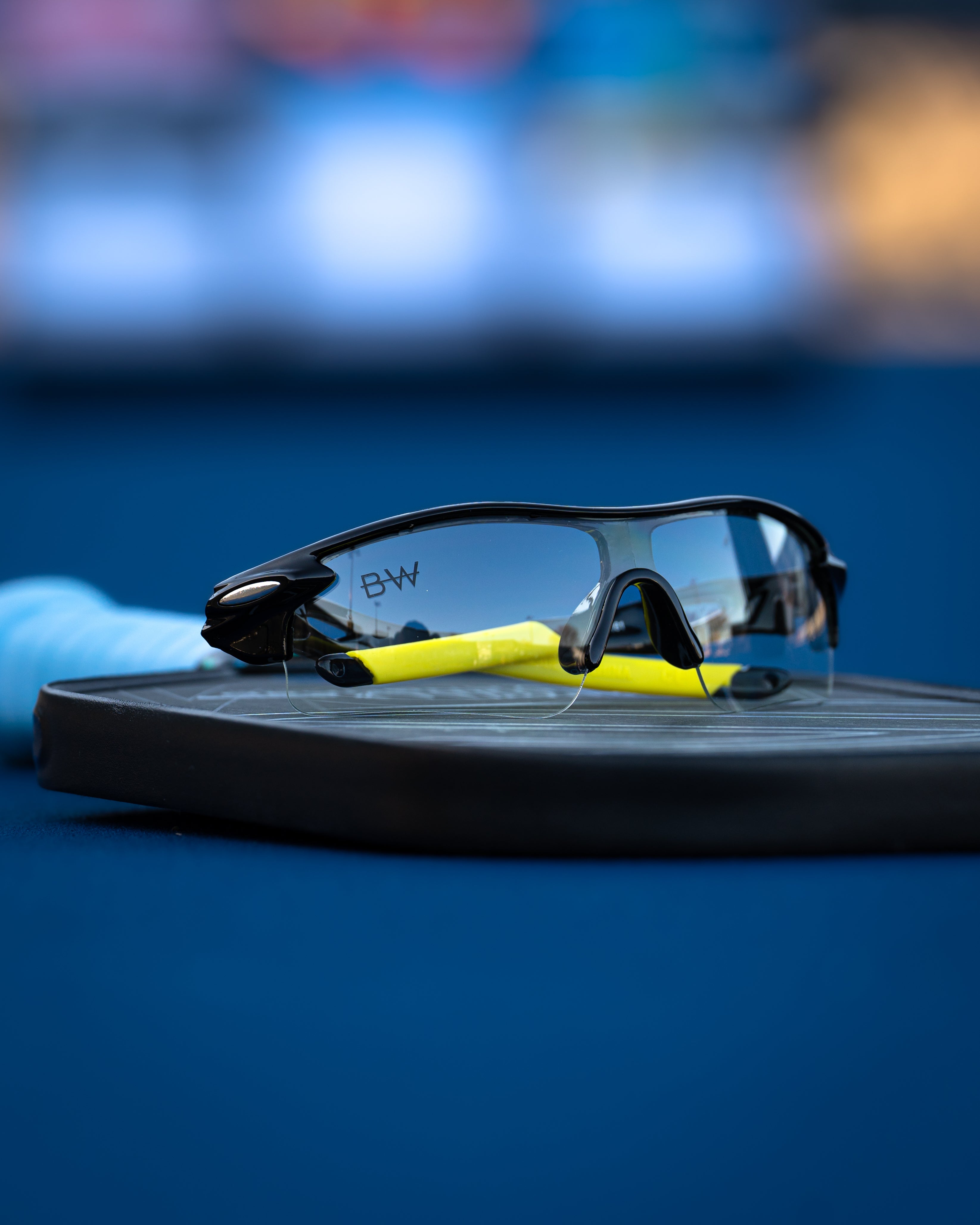
How to Prevent Prescription Glasses From Fogging During Play
Share
How to Prevent Prescription Glasses From Fogging During Play
Few eyewear problems are more distracting during pickleball, running, cycling, gym training, or another active sport than having your prescription lenses fog in the middle of play.
Fogging happens when moisture condenses on a lens surface. Temperature, humidity, perspiration, breathing, airflow, frame-to-face spacing, and changes between environments can all contribute. The original version of this guide correctly centered condensation and common triggers such as humidity, sweat, cold air, and close-fitting frames, but it also attributed anti-fog performance to specific frames and features that should not be assumed without verification. :contentReference[oaicite:0]{index=0}
The good news: while no pair of sports glasses should be assumed completely fog-proof, there are practical ways to reduce the conditions that encourage prescription glasses to fog during play.
Prescription Sports Eyewear Quick Access
Why Do Prescription Glasses Fog During Sports?
Lens fog is condensation.
Air can contain water vapor. When warm, moisture-rich air encounters a sufficiently cooler lens surface, tiny droplets can form on that surface. Those droplets scatter light and create the cloudy appearance we describe as fog.
During sports, several conditions can make this more noticeable:
- Body heat
- Perspiration
- Warm breath reaching the lenses
- High humidity
- Cold lenses entering a warmer environment
- Rapid temperature changes
- Limited airflow around the eyewear
- Frame-to-face spacing
This is why fogging is better understood as a moisture + temperature + airflow problem than as a problem caused by prescription lenses themselves.
What Makes Sports Glasses More Likely to Fog?
| Factor | How It Can Relate to Fogging |
|---|---|
| Perspiration | Adds moisture around the face and eyewear. |
| Humidity | Increases the amount of moisture already present in the surrounding air. |
| Temperature Difference | A cooler lens meeting warmer humid air can encourage condensation. |
| Breathing | Warm, humid exhaled air can reach the lenses depending on the situation. |
| Airflow | The movement of air around the lenses can affect local moisture and temperature conditions. |
| Frame-to-Face Spacing | The geometry of the frame and its position on your face can influence how air moves around the lenses. |
| Environment Changes | Moving between air conditioning, outdoor heat, cold weather, or humid environments can create rapid temperature differences. |
| Lens Treatments | A verified anti-fog treatment may change how condensation behaves on the lens surface, depending on the specific product and treatment. |
Do Prescription Lenses Fog More Than Non-Prescription Lenses?
Prescription correction itself is not the basic cause of fogging.
Both prescription and non-prescription lenses can fog when environmental conditions allow condensation to develop.
Instead of blaming the RX, evaluate:
- The temperature of the lenses
- Humidity
- How much you are perspiring
- Airflow around the frame
- How the frame fits your face
- Whether warm breath is reaching the lenses
- Any verified anti-fog treatment on the exact lens
Your prescription is still important for vision correction, but it should be treated separately from the physical conditions that cause condensation.
How to Help Prevent Prescription Glasses From Fogging During Play
No single method can guarantee completely fog-free lenses in every temperature, humidity level, sport, and playing environment. A better strategy is to address several contributors at once.
1. Keep Perspiration Away From the Eyewear
If sweat is collecting around your forehead and face, managing that moisture can help address one contributor to fogging.
Depending on the activity, you might use:
- A suitable sweatband or headband
- A clean towel between games or training intervals
- Other appropriate moisture-management clothing or gear
The goal is straightforward: reduce excess moisture accumulating around the eyewear.
2. Keep Your Lenses Appropriately Clean
Sweat, skin oils, fingerprints, and debris can accumulate on sports eyewear during use.
Follow the cleaning instructions appropriate for your exact lenses and any coatings or treatments they contain. Avoid assuming that every household cleaner, soap, wipe, or chemical is safe for every prescription lens.
A clean microfiber cloth can be useful when appropriate for the eyewear, but avoid aggressively wiping lenses while abrasive debris is present.
3. Evaluate Frame-to-Face Spacing
How a frame sits on your face can affect the space through which air moves around the eyewear.
A very close-fitting configuration may behave differently from a frame with more open space, but there is no universal spacing measurement that guarantees less fog.
The goal is not simply to create the largest possible gap. Fit, coverage, comfort, prescription compatibility, and intended use still matter.
4. Pay Attention to Temperature Changes
Fogging can become noticeable when eyewear moves quickly between substantially different temperatures.
Examples include:
- Leaving an air-conditioned building for a hot, humid outdoor court
- Entering a warm building after being outside in cold weather
- Using eyewear that has been stored in a substantially cooler environment
Allowing eyewear to adjust to the playing environment before intense activity may help reduce abrupt temperature differences, although it cannot guarantee that fog will not develop once you begin sweating.
5. Consider Airflow Around the Eyewear
Airflow matters, but avoid oversimplifying it into “more wrap equals more ventilation” or “flatter glasses never fog.”
The actual airflow around sports eyewear can depend on:
- Frame geometry
- Frame-to-face distance
- Open space around the frame
- Any actual ventilation features
- Your facial dimensions
- Your movement
- The surrounding environment
If a manufacturer claims a specific ventilation system, verify that feature for the exact frame.
6. Consider a Lens-Safe Anti-Fog Product When Appropriate
Some anti-fog products are designed to change how moisture behaves on lens surfaces.
Before applying one to prescription sports glasses, confirm that the product is compatible with your exact lenses and any existing coatings or treatments.
Follow the manufacturer's application and reapplication instructions rather than assuming that every spray or wipe is permanent or safe for every lens.
7. Address Warm Breath Reaching the Lenses
If fogging is connected to warm exhaled air moving upward toward your glasses, consider the source of that airflow.
This can be relevant when using:
- Face coverings
- Cold-weather gear
- Helmets or other equipment worn near the face
Any adjustment should preserve the proper and safe use of required equipment.
8. Test the Complete Setup During Real Activity
A pair of glasses that remains clear while you stand still indoors may behave differently after 30 minutes of intense movement in humid conditions.
Test new prescription sports eyewear during practice so you can evaluate:
- Fogging
- Fit
- Comfort
- Frame movement
- How the eyewear behaves as perspiration increases
Do Wraparound Sports Glasses Prevent Fogging?
No. Wraparound geometry does not automatically prevent lens fog.
A more curved or wrapped frame changes the physical relationship between the eyewear and your face. That can affect coverage and may influence local airflow, but the outcome depends on the complete frame and wearer.
A wrapped frame can still fog if:
- Humidity is high
- You are perspiring heavily
- Moisture accumulates around the lenses
- The lens temperature favors condensation
- The frame sits close enough to your face to affect local airflow
Do not buy a frame solely because it looks aerodynamic or wrapped and assume it has anti-fog performance.
Do Vented Sports Glasses Help With Fogging?
A frame with actual ventilation features may change airflow around the eyewear, but the presence and effectiveness of those features should be evaluated for the specific product.
Do not infer vents from:
- A sports-oriented appearance
- Wraparound styling
- Frame curvature
- A product being marketed for athletes
Likewise, avoid assuming that ventilation alone guarantees fog-free lenses. Humidity, perspiration, temperature, fit, and lens-surface characteristics still matter.
Do Clear Lenses Fog Less Than Tinted Lenses?
Lens color by itself does not determine whether prescription glasses will fog.
A clear lens is not inherently anti-fog, and a tinted lens is not inherently more likely to fog simply because it is tinted.
Choose clear vs. tinted according to the lighting environment and your preferences rather than as an anti-fog strategy.
| Lens Choice | Primary Consideration | Anti-Fog Guarantee? |
|---|---|---|
| Clear / Non-Dark | Useful to consider when a dark sunglass tint is not preferred, including many indoor or lower-light situations | No |
| Tinted | Can be considered when you prefer a tint for brighter conditions | No |
| Transition / Photochromic | Can be considered when a compatible configuration is available for changing lighting environments | No |
How to Reduce Prescription Glasses Fogging During Indoor Pickleball
Indoor play does not eliminate fogging. A player can still generate substantial heat and perspiration during rallies, drills, or extended matches.
For indoor pickleball, pay attention to:
- Facility temperature
- Indoor humidity
- How much you perspire
- Frame-to-face spacing
- Airflow around the eyewear
- Lens cleanliness
- Whether you are moving between different temperatures before play
If you prefer not to wear a dark sunglass tint indoors, a clear or other appropriate non-dark lens configuration can be considered—but clear should not be treated as an anti-fog technology.
How to Reduce Prescription Glasses Fogging During Outdoor Pickleball
Outdoor conditions can vary substantially from one match to another.
Heat and humidity can create a very different fogging environment from a cool, dry day. Rapidly leaving air conditioning for a humid outdoor court can also create a sudden temperature change around your lenses.
For outdoor play:
- Consider the temperature and humidity.
- Manage perspiration around your forehead and face.
- Keep the eyewear appropriately clean.
- Allow the eyewear to acclimate when moving between substantially different temperatures.
- Evaluate how the frame fits once you begin sweating.
- If using an anti-fog product, verify that it is safe for your exact lenses.
Why Glasses Can Be Harder to Keep Clear in Humid Conditions
High humidity means the surrounding air already contains substantial moisture. Combine that with perspiration, body heat, and changing lens temperatures, and condensation can become more difficult to manage.
This is why a strategy that seems effective in one environment may perform differently somewhere else.
A player should not assume that eyewear is defective simply because it can fog under demanding environmental conditions. Instead, determine whether the problem is primarily related to:
- The environment
- Perspiration
- Frame fit and spacing
- Temperature transition
- Lens cleanliness
- A combination of several factors
Do Anti-Fog Coatings Work on Prescription Sports Glasses?
Anti-fog treatments are designed to address condensation behavior on a lens surface, but they are separate from the fact that a lens is prescription, clear, tinted, or used for sports.
Before relying on an anti-fog claim, ask:
- Is the treatment actually included with this exact lens?
- Is it permanent or does it require reapplication?
- What cleaning instructions apply?
- Can other cleaners or wipes interfere with it?
- Is an aftermarket product compatible with the existing lens and coatings?
Do not assume Blinded Wear RX eyewear includes anti-fog treatment unless that feature is specifically listed for the exact product and configuration.
What About Anti-Fog Sprays and Wipes?
Commercial anti-fog sprays and wipes may be an option for compatible lenses, but follow the product instructions and the care requirements for your prescription eyewear.
Avoid blanket assumptions such as:
- Every anti-fog product is safe for every coating
- One application lasts all day
- The effect is permanent
- More product always works better
- Anti-fog treatment makes environmental conditions irrelevant
If you are unsure whether a product is compatible with your lenses, check with the lens or anti-fog product manufacturer before applying it.
How Should You Clean Prescription Sports Glasses?
Cleaning matters for visibility and lens care, but the safest cleaning method depends on the exact lens and any treatments applied to it.
As a general decision framework:
- Follow the eyewear manufacturer's care instructions.
- Use products identified as compatible with your lenses.
- Avoid abrasive materials that can damage lens surfaces.
- Do not assume household glass cleaners are appropriate for prescription eyewear.
- Keep a suitable clean cloth or lens-care product available during long sessions when appropriate.
Cleaning can remove sweat, oils, and debris, but cleaning alone does not make a lens fog-proof.
Should You Put Dish Soap or Shaving Cream on Prescription Glasses to Stop Fog?
Home anti-fog methods are frequently recommended online, but prescription lenses may have coatings or treatments with specific care requirements.
Before putting dish soap, shaving cream, household chemicals, or another improvised substance on sports eyewear, verify that it is compatible with the exact lenses.
A DIY method is not worth damaging a prescription lens or its existing treatment.
What Should You Do If Your Glasses Fog During a Match?
If your lenses become significantly fogged, prioritize restoring usable vision safely rather than trying to play through an obstructed view.
- Move to an appropriate safe opportunity to address the eyewear.
- Remove excess moisture when appropriate.
- Use a lens-safe cleaning method.
- Check whether sweat is accumulating around the frame.
- Notice whether warm breath or equipment is directing moisture toward the lenses.
- Reevaluate recurring fog after play rather than repeatedly accepting the same problem.
If fogging repeatedly interferes with your ability to see during play, investigate the underlying conditions instead of assuming that every sports frame will behave the same way.
Prescription Glasses Keep Fogging? Use This Troubleshooting Guide
| What You Notice | What to Investigate |
|---|---|
| Fog starts after heavy sweating | Perspiration management, humidity, frame spacing, and airflow |
| Fog starts immediately after going outside | Rapid temperature and humidity change |
| Fog appears when wearing a face covering | Whether warm exhaled air is being directed toward the lenses |
| Fog occurs mainly in humid weather | Environmental moisture combined with body heat and perspiration |
| Fog occurs only with one frame | Fit, geometry, frame-to-face spacing, and airflow differences |
| Fog persists despite changing frames | Look beyond frame shape at humidity, perspiration, temperature changes, and lens-surface factors |
| Anti-fog product does not last | Review the product's application, compatibility, care, and reapplication instructions |
Prescription Sports Glasses Fogging Myths
| Myth | More Accurate Explanation |
|---|---|
| “Prescription lenses fog because they are RX.” | Fogging is primarily a condensation issue, not a consequence of vision correction itself. |
| “Wraparound glasses prevent fog.” | Frame geometry can influence airflow, but wraparound styling does not guarantee fog prevention. |
| “Clear lenses fog less.” | Clear vs. tinted does not by itself determine fogging. |
| “Sports glasses are automatically ventilated.” | Any specific ventilation feature should be verified for the exact frame. |
| “All performance lenses have anti-fog coating.” | Anti-fog treatment should be verified rather than assumed. |
| “Cleaning permanently prevents fog.” | Cleaning removes contaminants but does not eliminate the environmental conditions that cause condensation. |
| “More curvature means better airflow.” | The relationship between frame geometry and airflow is more complex and depends on the complete fit. |
| “Fog-proof glasses never fog.” | Be cautious with absolute performance claims across all temperatures, humidity levels, activities, and wearers. |
FAQ: How to Stop Prescription Glasses From Fogging During Sports
Why do my prescription glasses fog when I sweat?
Perspiration adds moisture around your face. Combined with temperature differences and local airflow conditions, that moisture can contribute to condensation on your lenses.
How do I stop my glasses from fogging during pickleball?
Address several factors together: manage perspiration, keep the lenses appropriately clean, evaluate frame fit and spacing, account for temperature changes, consider airflow, and use a compatible anti-fog product when appropriate.
Can sports glasses still fog?
Yes. Sports-oriented eyewear can still fog depending on humidity, temperature, perspiration, fit, airflow, and lens-surface characteristics.
Do clear prescription glasses prevent fogging?
No. Clear describes the lens configuration rather than an anti-fog property.
Do tinted prescription sunglasses fog less?
Not simply because they are tinted. Lens color by itself does not determine whether condensation forms.
Do wraparound glasses stop fogging?
No. Wraparound geometry may change airflow and coverage, but it does not guarantee fog prevention.
Are anti-fog sprays safe for prescription glasses?
That depends on the exact product, lens, and existing treatments. Verify compatibility and follow the manufacturer's instructions before applying an anti-fog product.
Does cleaning glasses prevent fog?
Cleaning can remove sweat, oils, and debris and is part of good lens care, but it cannot guarantee fog prevention when temperature, humidity, and moisture conditions favor condensation.
How Frame Fit Can Affect Fogging During Sports
Frame fit matters because it influences how the eyewear sits relative to your face and how air and moisture move around the lenses.
However, there is no universal “anti-fog fit.” A frame sitting farther from your face does not automatically solve fogging, and a close-fitting sports frame does not automatically cause it.
When troubleshooting fit-related fogging, consider:
- How close the lenses sit to your face
- Whether perspiration collects around the frame
- Whether air can move around the eyewear during activity
- Whether another piece of equipment changes airflow
- How the frame behaves once you begin sweating
- Whether the frame remains comfortable during extended activity
If you are comparing a new frame with eyewear you already own, available frame dimensions can provide a useful starting point. Fit still needs to be evaluated on the individual wearer.
Does Lens or Frame Curvature Affect Fogging?
Curvature can change how a frame sits around the face, which means it can also influence the physical space through which air moves.
But curvature should not be treated as a simple anti-fog specification.
| Claim | What to Know |
|---|---|
| More wrap means less fog | Not necessarily. The result depends on the complete frame-to-face relationship and environment. |
| Flat frames always fog more | No. Fogging cannot be predicted from curvature alone. |
| More coverage prevents condensation | No. Coverage and condensation are separate considerations. |
| Curved lenses automatically improve airflow | No. Actual airflow depends on the complete frame geometry and fit. |
| A sports-looking frame is ventilated | Do not assume ventilation unless the exact frame includes a verified ventilation feature. |
How to Manage Sweat Before It Reaches Your Glasses
During intense play, reducing excess moisture around your forehead and face can help address one contributor to lens fog.
Practical options can include:
- Using a suitable headband or sweatband
- Keeping a clean towel available between games
- Drying excess perspiration during appropriate breaks
- Choosing suitable moisture-management clothing for your activity
- Keeping your eyewear appropriately clean throughout longer sessions
These strategies do not change the underlying physics of condensation, but they can reduce some of the moisture accumulating around the eyewear.
Can a Headband Help Keep Prescription Glasses From Fogging?
A headband cannot make prescription lenses fog-proof, but it may help manage perspiration before some of that moisture travels down your forehead toward your eyewear.
This can be particularly useful during:
- Long pickleball matches
- High-intensity drills
- Running
- Cycling
- Gym training
- Hot or humid conditions
Think of sweat management as one part of a broader anti-fog strategy rather than a complete solution.
How to Prevent Prescription Glasses From Fogging in Cold Weather
Cold-weather fogging often involves a substantial temperature difference between the lenses and warmer, moisture-rich air.
Fog can become noticeable when:
- You enter a warm building after being outdoors
- Warm breath travels upward toward cold lenses
- Cold eyewear encounters warmer humid air
- Face coverings or cold-weather gear redirect exhaled air
If a face covering or other equipment is involved, make sure any adjustment preserves its proper use. Do not compromise required safety equipment simply to reduce lens fog.
When possible, allowing eyewear to adjust gradually to a new environment can reduce an abrupt temperature difference, although condensation may still occur depending on moisture and temperature conditions.
How to Prevent Glasses From Fogging in Hot, Humid Weather
Hot and humid conditions can be especially challenging because the surrounding air already contains substantial moisture while exercise adds body heat and perspiration.
For humid outdoor play, focus on several variables together:
- Manage perspiration. Keep excess sweat away from the eyewear when practical.
- Keep lenses appropriately clean. Follow the care instructions for your exact lenses.
- Evaluate fit. Notice whether the frame position contributes to moisture collecting around the lenses.
- Consider airflow. Evaluate how air actually moves around the eyewear rather than relying on frame appearance.
- Plan for temperature transitions. Moving directly from strong air conditioning into humid outdoor air can create an abrupt change.
- Consider a compatible anti-fog product. Verify lens compatibility first.
No single step guarantees fog-free vision in extreme humidity, so combining multiple strategies is generally more practical.
Why Glasses Fog When You Leave Air Conditioning
Imagine your prescription glasses have been sitting in a strongly air-conditioned room. The lenses are relatively cool. You then walk onto a warm, humid outdoor court.
The cooler lens surface suddenly encounters warmer air containing substantial moisture. Under the right conditions, water can condense on the lens surface.
This explains why glasses can sometimes fog before you have even started exercising.
When practical, giving the eyewear time to approach the temperature of the new environment can reduce the abrupt temperature difference. Once play begins, however, perspiration and other factors can introduce additional moisture.
How to Keep Prescription Glasses From Fogging With a Face Covering
Warm exhaled air traveling upward toward the lenses can contribute to fogging when a face covering is being worn.
If this is happening, evaluate whether the covering is being worn according to its instructions and whether exhaled air is being directed toward the eyewear.
Any adjustment should maintain the intended function and safe use of the face covering. Do not create an unsafe fit simply to prevent fogging.
Helmets, Hats, and Other Sports Gear Can Affect Eyewear Airflow
Prescription sports glasses do not exist in isolation. Other equipment worn around your head or face can alter how a frame sits and how air moves around it.
This can include:
- Helmets
- Hats
- Headbands
- Face coverings
- Cold-weather gear
- Other sport-specific equipment
If fogging occurs only when you wear another piece of equipment, test the complete setup together rather than evaluating the glasses separately.
Required protective equipment should always be used appropriately.
Do You Need Prescription Sports Glasses to Reduce Fogging?
Switching from everyday optical glasses to sports-oriented prescription eyewear does not automatically solve fogging.
Sports eyewear can provide characteristics relevant to active use, but anti-fog performance should not be assumed simply because a frame is marketed for sports.
When comparing everyday and sports-oriented prescription eyewear, evaluate:
- Frame geometry
- Frame dimensions
- Frame-to-face spacing
- Comfort during movement
- Prescription compatibility
- Impact resistance
- Any actual ventilation features
- Any verified anti-fog treatment
Blinded Wear sports eyewear uses impact-resistant lenses and offers lightweight sports-frame options, but those characteristics should not be interpreted as an automatic anti-fog claim.
Prescription Sports Eyewear to Compare for Active Play
If you are replacing everyday eyewear with a sports-oriented RX setup, compare frames according to your prescription, fit, intended activity, and available lens configuration—not an unsupported promise that one model is “fog-proof.”
| RX Option | How to Evaluate It |
|---|---|
| Crystal Wave II RX | Compare the frame with your prescription, dimensions, fit preferences, and intended environment. |
| Frost RX | Evaluate according to your prescription, preferred frame style, available configuration, and individual fit. |
| Phantom II RX | Another prescription sports-frame option to compare based on your RX and fit requirements. |
| H Blue Shield RX | Compare with other RX options according to frame dimensions, prescription compatibility, and intended use. |
| Ocean Wave RX | Consider if its frame aesthetic and available RX configuration match your preferences. |
Do not infer anti-fog treatment, ventilation, adjustable components, non-slip materials, hydrophobic coating, anti-reflective treatment, exact UV specifications, or other technical characteristics from the product name or appearance. Verify any feature that matters to your purchase.
Do High-Index Prescription Lenses Affect Fogging?
High-index describes a prescription lens-material category. It should not automatically be treated as an anti-fog feature.
Blinded Wear includes high-index prescription lenses at no additional cost with RX eyewear.
High-index prescription lenses should not automatically be described as:
- Fog-resistant
- Anti-fog
- Hydrophobic
- Anti-reflective
- Better ventilated
Lens material and anti-fog treatment are separate characteristics.
Do Polarized or Non-Polarized Lenses Affect Fogging?
Polarization does not determine whether condensation can form on a lens surface.
A polarized lens can fog. A non-polarized lens can fog.
Blinded Wear sports lenses are non-polarized, meaning a polarization filter is not added. That characteristic should not be interpreted as an anti-fog feature.
Does Anti-Reflective Coating Prevent Glasses From Fogging?
Anti-reflective and anti-fog treatments serve different purposes.
An anti-reflective treatment is intended to address lens-surface reflections when included in a specific configuration. An anti-fog treatment addresses how condensation behaves on the lens surface.
Do not assume:
- Anti-reflective means anti-fog
- Anti-fog means anti-reflective
- Clear lenses include either treatment
- Prescription lenses include either treatment
- Sports lenses include either treatment
Verify each lens feature independently.
Are Hydrophobic and Anti-Fog Lens Treatments the Same?
No. These terms should not automatically be used interchangeably.
Different lens treatments can be designed to influence how water, oils, reflections, or condensation interact with a lens surface. The presence of one treatment does not establish the presence or performance of another.
If a particular coating matters to you, verify exactly what is included with the lens configuration rather than relying on broad terms such as “premium coating.”
Is Fogging Caused More by Temperature or Poor Airflow?
It does not have to be one or the other.
Condensation depends on moisture and temperature conditions at the lens surface, while airflow can influence those local conditions.
That means several variables can interact at the same time:
- The lens can be cooler than the surrounding air.
- The surrounding air can contain substantial moisture.
- Exercise can add perspiration and body heat.
- Breathing can introduce warm humid air.
- Frame geometry can affect how air moves around the lenses.
This is why solving persistent fog often requires troubleshooting the complete situation instead of searching for one universal cause.
Why Does Only One Lens Sometimes Fog?
If one lens consistently fogs more than the other, do not immediately assume that the lens itself is defective.
Possible variables to investigate include:
- How the frame sits on your face
- Differences in local airflow
- Perspiration patterns
- How other equipment interacts with the frame
- Whether one lens has more residue or contamination on its surface
If the problem persists and appears unusual, inspect the eyewear and follow the appropriate lens-care or support process for the product.
How to Prepare for Fogging Before a Pickleball Tournament
A tournament is not the ideal time to discover that your eyewear behaves differently once you are sweating heavily or playing in unfamiliar humidity.
Before competition:
- Practice in the eyewear. Test it during realistic movement and intensity.
- Check the expected environment. Indoor, outdoor, temperature, and humidity can all matter.
- Clean your eyewear appropriately. Follow the instructions for your lenses.
- Pack suitable lens-care supplies. Bring only products compatible with your eyewear.
- Plan for sweat management. A towel or appropriate headband may be useful.
- Test any anti-fog product beforehand. Do not experiment with a new lens treatment during an important match.
- Consider backup RX eyewear. This can be useful if you depend on prescription correction.
Preventing Fog When Traveling for Sports
Travel can expose eyewear to rapidly changing environments: a cold hotel room, warm vehicle, humid outdoor court, air-conditioned tournament facility, or changing weather.
For sports trips:
- Store prescription eyewear appropriately.
- Keep suitable lens-care supplies accessible.
- Avoid exposing lenses to unnecessary contamination.
- Allow for environmental transitions when practical.
- Pack a backup pair if you depend on RX correction.
- Test unfamiliar anti-fog products before competition.
Can the Way You Store Sports Glasses Affect Your Next Session?
Proper storage helps protect prescription eyewear between uses.
If eyewear has been stored somewhere substantially colder or warmer than the environment where it will immediately be used, the resulting temperature transition may contribute to temporary condensation.
Storage is also important for protecting lenses from unnecessary dirt, debris, or damage.
What Not to Do When Your Prescription Glasses Keep Fogging
- Do not assume the prescription itself is causing the fog.
- Do not assume a darker tint will solve condensation.
- Do not buy a frame solely because it is described as wraparound.
- Do not assume every sports frame includes ventilation.
- Do not apply random household chemicals without checking lens compatibility.
- Do not assume anti-reflective and anti-fog coatings are the same.
- Do not assume an anti-fog product works permanently.
- Do not aggressively wipe abrasive debris across prescription lenses.
- Do not wait until tournament day to test a new anti-fog strategy.
- Do not compromise required protective equipment solely to change eyewear airflow.
A Simple Anti-Fog Routine Before Every Match
Instead of searching for one magic solution, build a repeatable routine.
- Check the environment. Note temperature, humidity, and whether you are moving between substantially different conditions.
- Prepare your eyewear. Make sure the lenses are appropriately clean using a compatible method.
- Check the fit. Make sure the frame is sitting as intended.
- Prepare for sweat. Have an appropriate towel, headband, or other moisture-management option available if needed.
- Use anti-fog treatment only when appropriate. Confirm compatibility and follow its instructions.
- Warm up in the eyewear. Notice whether fog develops before competitive play begins.
- Reassess recurring problems. If the same issue happens every session, identify the recurring environmental or fit-related trigger.
More Questions About Foggy Prescription Sports Glasses
Why do my glasses fog as soon as I start exercising?
Exercise increases body heat and perspiration, adding warmth and moisture around the eyewear. Combined with lens temperature and local airflow, those conditions can encourage condensation.
Why do my glasses fog when I go from cold to warm?
Cool lenses encountering warmer, moisture-rich air can create conditions where water condenses on the lens surface.
Why do my glasses fog when I leave an air-conditioned building?
Cool lenses can encounter warm, humid outdoor air, creating a rapid temperature and moisture change that may produce condensation.
Does sweat cause glasses to fog?
Sweat can contribute by adding moisture around your face and eyewear, although temperature and airflow conditions also matter.
Can a headband stop glasses from fogging?
A headband may help manage forehead perspiration, but it cannot guarantee fog-free lenses.
Are there prescription glasses that never fog?
Be cautious with absolute “never fog” claims. Fogging depends on environmental conditions, perspiration, temperature, fit, airflow, and lens-surface characteristics.
Are anti-fog wipes permanent?
Do not assume permanence. Follow the specific product's instructions regarding application, duration, cleaning, and reapplication.
Can I use anti-fog spray on high-index prescription lenses?
Check compatibility with the exact lens and any existing treatments before applying an aftermarket product.
Does anti-reflective coating stop fog?
Anti-reflective and anti-fog treatments are different. The presence of an anti-reflective treatment does not automatically establish anti-fog performance.
Does polarization stop glasses from fogging?
No. Polarization and condensation are separate characteristics.
Do expensive prescription glasses fog less?
Price alone does not determine fogging. Evaluate frame geometry, fit, environmental conditions, airflow, lens-surface characteristics, and any verified anti-fog treatment.
Why do my glasses keep fogging even after I clean them?
Cleaning removes contaminants but does not remove humidity, perspiration, temperature differences, or other physical conditions that can cause condensation.
When Is Fogging a Reason to Replace Your Sports Glasses?
Fogging by itself does not necessarily mean your prescription glasses need to be replaced. Because condensation is influenced by the environment, a new pair can experience the same problem under similar conditions.
Before replacing your eyewear solely because of fog, investigate:
- Whether fogging occurs only in specific temperatures or humidity levels
- Whether heavy perspiration is a major trigger
- Whether the frame fit or position has changed
- Whether another piece of equipment is redirecting warm air toward the lenses
- Whether the lenses need appropriate cleaning
- Whether an existing lens treatment requires specific care
- Whether a compatible anti-fog product could be appropriate
Replacement may make more sense when the eyewear is physically damaged, no longer fits appropriately, is no longer suitable for your prescription needs, or you determine that a different frame or lens configuration better matches your activity.
What to Look for When Buying Prescription Sports Glasses if Fogging Is a Concern
If fogging has been a recurring problem, use your next eyewear purchase to evaluate the complete setup rather than searching only for a product labeled “anti-fog.”
| Buying Factor | What to Evaluate |
|---|---|
| Prescription Compatibility | Make sure the frame and lens configuration can support your required prescription. |
| Frame Dimensions | Compare available measurements with eyewear that already fits you well. |
| Frame-to-Face Relationship | Consider how the complete frame sits relative to your face rather than relying on appearance alone. |
| Ventilation | Verify any actual ventilation features rather than assuming a sports frame includes them. |
| Anti-Fog Treatment | Verify whether a treatment is included, how it works, and what care it requires. |
| Lens Care | Know which cleaners and aftermarket products are compatible with the exact lenses. |
| Impact Resistance | Consider impact resistance separately from anti-fog performance. |
| Playing Environment | Think about temperature, humidity, indoor/outdoor use, and how much you perspire during your activity. |
Sports Eyewear Features to Verify Instead of Assuming
Many characteristics commonly mentioned alongside “performance eyewear” are independent features. One does not automatically establish another.
| Feature | Does It Automatically Mean Anti-Fog? |
|---|---|
| Prescription Lenses | No |
| High-Index Lenses | No |
| Clear Lenses | No |
| Tinted Lenses | No |
| Non-Polarized Lenses | No |
| Impact-Resistant Lenses | No |
| Anti-Reflective Treatment | No |
| Hydrophobic Treatment | No |
| Wraparound Frame | No |
| Lightweight Frame | No |
| Sports Frame | No |
| Verified Anti-Fog Treatment | Designed specifically to address fogging behavior, but performance still depends on the exact treatment, care, environment, and use. |
Blinded Wear Prescription Sports Eyewear: What Is Verified?
When shopping for prescription sports eyewear, it is useful to separate verified product characteristics from features that should be checked for an exact configuration.
| Characteristic | Blinded Wear Sports Eyewear |
|---|---|
| Prescription Pickleball Options | Yes |
| High-Index Prescription Lenses | Included at no additional cost with RX eyewear |
| Impact-Resistant Lenses | Yes |
| Non-Polarized Sports Lenses | Yes |
| Lightweight Sports-Frame Options | Yes |
| Clear Lens Sports Options | Yes |
| Prescription Submission | Upload a clear photo or picture of your eyeglass prescription when ordering RX eyewear |
| Lifetime Replacement Support | 50% replacement support if glasses break, subject to current policy terms |
Anti-fog treatment, ventilation, hydrophobic treatment, anti-reflective treatment, scratch-resistant treatment, exact UV specifications, frame materials, adjustable components, and protective certifications should not be assumed across every Blinded Wear product unless they are specifically verified for that exact configuration.
Ordering Prescription Sports Eyewear for Pickleball and Active Play
If you need prescription correction during sports, start with your actual RX requirements before choosing a frame based on an anti-fog concern.
When ordering Blinded Wear RX eyewear:
- Choose a prescription sports-eyewear option.
- Confirm that the frame and configuration are appropriate for your prescription.
- Upload a clear photo or picture of your eyeglass prescription.
- Evaluate the available lens configuration for your playing environment.
- Verify any additional lens feature that matters to you.
- Test the finished eyewear during practice before relying on it in competition.
Blinded Wear includes high-index prescription lenses at no additional cost with RX eyewear.
What if Your Prescription Sports Glasses Break?
Fogging and physical breakage are different issues, but active eyewear can still be exposed to demanding conditions during training, matches, travel, and everyday use.
Blinded Wear provides 50% lifetime replacement support if glasses break, subject to the current policy terms.
This does not mean:
- The eyewear is unbreakable
- The lenses are automatically shatterproof
- Every type of cosmetic wear qualifies
- Lost eyewear is automatically replaced
- A changed prescription automatically qualifies for replacement
- The eyewear carries a specific protective certification
Pre-Game Checklist to Help Reduce Foggy Glasses
Use this quick checklist before pickleball, running, cycling, gym training, or another activity where your prescription eyewear tends to fog:
- ☐ My lenses are appropriately clean.
- ☐ I used only lens-care products compatible with my eyewear.
- ☐ My frame is sitting as intended.
- ☐ I know whether today's environment is especially humid.
- ☐ I have considered any major temperature transition before play.
- ☐ I have a suitable way to manage excess perspiration.
- ☐ Any anti-fog product I use is compatible with my lenses.
- ☐ I followed the anti-fog product's application instructions.
- ☐ Other equipment is not unnecessarily redirecting warm air toward my lenses.
- ☐ I have tested this setup during practice.
- ☐ I have a backup RX pair available when appropriate.
People Also Ask About Preventing Glasses From Fogging During Sports
What is the best way to stop prescription glasses from fogging?
There is no single method that guarantees fog-free lenses in every environment. A practical approach combines appropriate lens cleaning, sweat management, attention to temperature changes, suitable frame fit, airflow considerations, and a compatible anti-fog treatment when appropriate.
How do athletes keep their glasses from fogging?
Strategies can include managing perspiration, keeping lenses appropriately clean, evaluating frame fit and airflow, accounting for environmental temperature changes, and using compatible anti-fog products when appropriate.
Why do my glasses fog when playing pickleball?
Pickleball can generate body heat and perspiration. Combined with humidity, lens temperature, and local airflow, those conditions can allow moisture to condense on the lenses.
How do I stop my glasses from fogging when I sweat?
Managing excess perspiration with an appropriate towel, headband, or other moisture-management strategy can address one contributor. Lens temperature, humidity, airflow, and fit may still need to be addressed.
What can I put on prescription glasses to stop fogging?
Use only an anti-fog or lens-care product confirmed to be compatible with your exact prescription lenses and existing treatments. Follow the manufacturer's instructions.
Can I use dish soap to stop my glasses from fogging?
Do not assume a household product is safe for prescription lenses or their coatings. Verify compatibility with your exact eyewear before applying an improvised treatment.
Does shaving cream stop glasses from fogging?
DIY methods are commonly discussed, but prescription lenses can have treatments with specific care requirements. Verify compatibility rather than applying an unapproved substance to the lenses.
Do anti-fog wipes work on prescription glasses?
Some products are intended for compatible prescription lenses, but effectiveness, duration, application, and compatibility depend on the specific product and eyewear.
Why do my glasses fog indoors?
Indoor exercise can still generate heat and perspiration. Indoor humidity, airflow, facility temperature, and frame fit can also contribute.
Why do my glasses fog outdoors?
Outdoor fogging can involve humidity, perspiration, lens temperature, weather, and rapid transitions from air-conditioned environments.
Why do my glasses fog when it is cold?
Cold lenses can encounter warmer moisture-rich air from the environment or your breath, creating conditions where condensation forms.
Will a different frame stop my glasses from fogging?
A different frame can change fit, spacing, and airflow, but it cannot guarantee fog prevention because temperature, moisture, perspiration, and environmental conditions still matter.
Are there anti-fog prescription sports glasses?
Some eyewear configurations may include or support specific anti-fog treatments, but that feature should be verified for the exact product rather than assumed from the term “sports glasses.”
Can glasses be completely fog-proof?
Be cautious with absolute fog-proof claims across every wearer, activity, temperature, and humidity level. Environmental conditions can be demanding enough for condensation to remain possible.
Related Prescription Sports Eyewear Guides
Key Takeaways: Preventing Prescription Glasses From Fogging During Play
- Fogging is condensation. Moisture, lens temperature, and surrounding conditions are central to why it occurs.
- Perspiration, humidity, breathing, temperature changes, airflow, and frame-to-face spacing can all contribute.
- Prescription correction itself is not the basic cause of lens fog.
- Clear lenses are not automatically anti-fog.
- Tinted lenses are not automatically anti-fog.
- High-index lenses are not automatically anti-fog.
- Polarization or non-polarization does not determine whether a lens can fog.
- Anti-reflective and anti-fog treatments are different.
- Wraparound geometry does not guarantee better ventilation or fog prevention.
- A sports-looking frame should not automatically be assumed to include ventilation.
- Managing perspiration can reduce one source of moisture around your eyewear.
- Rapid transitions between different temperatures can contribute to temporary condensation.
- Use only cleaning and anti-fog products compatible with your exact lenses and existing treatments.
- Test your anti-fog strategy during practice rather than for the first time during competition.
- No single strategy can guarantee completely fog-free lenses in every environment.
Build a Better Prescription Sports Eyewear Setup
If fogging keeps interrupting your game, start by identifying when and why it happens. The solution may involve sweat management, lens care, temperature acclimation, frame fit, airflow, a compatible anti-fog treatment, or a combination of several factors.
If you are also replacing your everyday eyewear with a sports-oriented prescription setup, Blinded Wear offers RX pickleball eyewear with high-index prescription lenses included at no additional cost, impact-resistant sports lenses, non-polarized sports lenses, lightweight sports-frame options, and 50% lifetime replacement support if glasses break, subject to current policy terms.
Bottom Line: Control the Conditions That Cause Fog
The most useful way to prevent prescription glasses from fogging during play is to stop treating fog as a single-feature eyewear problem.
Fog forms when the moisture and temperature conditions around a lens allow condensation to develop. During sports, perspiration, humidity, body heat, breathing, temperature transitions, frame fit, and airflow can all influence those conditions.
That means the practical solution is often a combination of keeping lenses appropriately clean, managing excess perspiration, understanding temperature changes, evaluating frame fit and airflow, and using a compatible anti-fog treatment when appropriate.
Most importantly, separate verified eyewear features from assumptions. A lens being prescription, clear, tinted, high-index, impact-resistant, or non-polarized does not automatically make it anti-fog.
Identify your fogging trigger, address the factors you can control, and test the complete setup under the same conditions in which you actually play.