
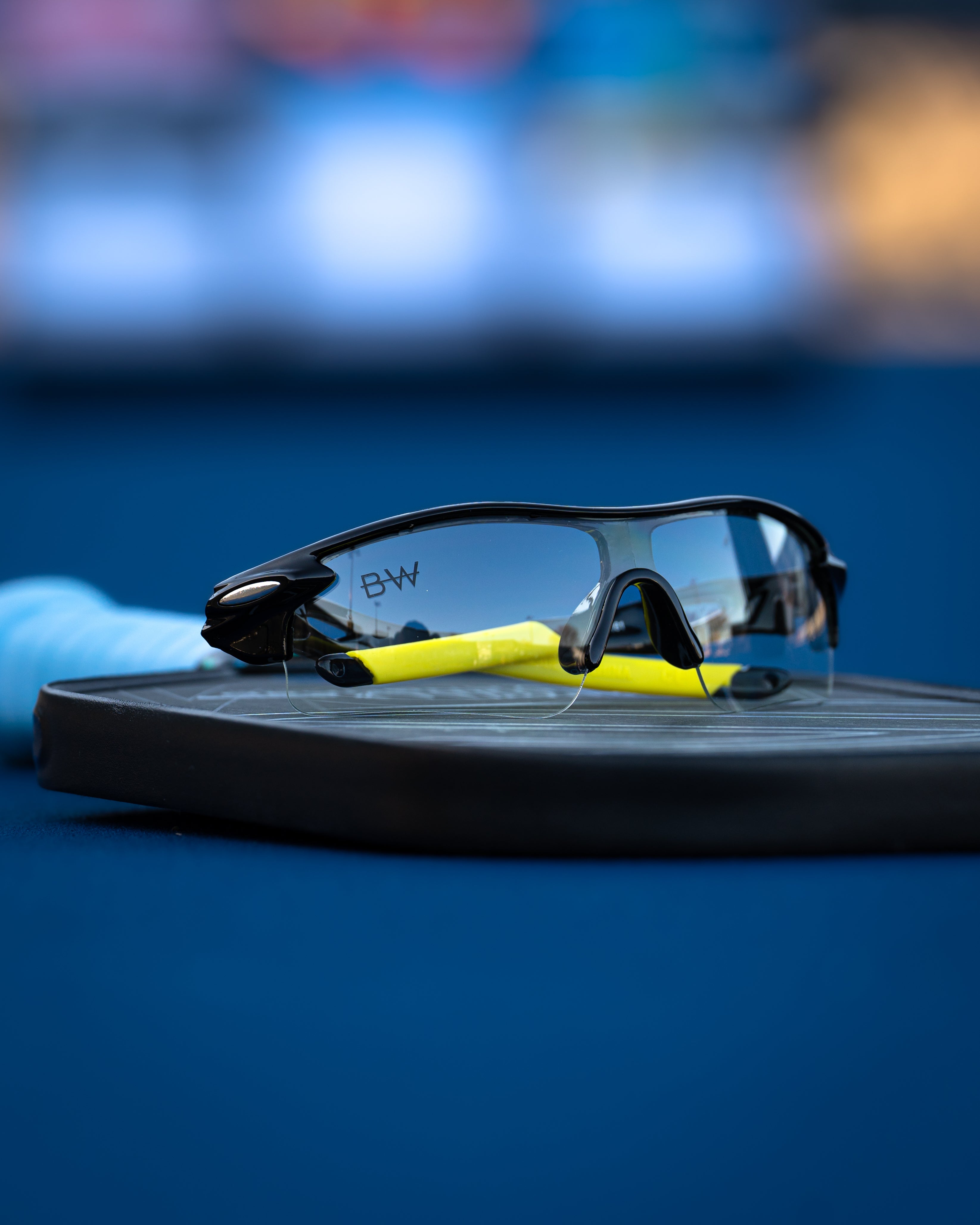
RX Lens Care Hacks for Clearer, Longer‑Lasting Vision 👓
Share
Protect Your Prescription Pickleball Glasses
Good RX sports eyewear is an investment. Learn how to keep your prescription lenses clear, reduce avoidable scratches, store them correctly, and know when it may be time to replace your pair.
RX Lens Care Hacks for Clearer, Longer-Lasting Vision
Your prescription sports glasses only work as well as the lenses you can see through.
Sweat, fingerprints, sunscreen, dust, salt, moisture, improper cleaning, and careless storage can all make otherwise good RX pickleball glasses harder to use.
And once prescription lenses become heavily scratched or damaged, cleaning will not restore them to new condition.
That makes proper care one of the simplest ways to protect the clarity and useful life of your eyewear.
In this guide, you'll learn how to:
- Clean prescription sports glasses safely
- Reduce avoidable scratching
- Handle sweat and sunscreen after pickleball
- Store RX glasses correctly
- Care for coated lenses
- Travel with prescription sports eyewear
- Recognize signs that lenses may need replacement
These principles can be applied to Blinded Wear Co. RX models such as Ocean Wave RX, Smoked Shadow RX, Gray Wash RX, and other prescription pickleball frames.
Shop Prescription Pickleball Glasses →
Why Proper RX Lens Care Matters
Prescription sports eyewear is exposed to conditions ordinary desk glasses may rarely encounter.
During pickleball and other active sports, your lenses can come into contact with:
- Sweat
- Sunscreen
- Skin oils
- Dust
- Rain
- Humidity
- Salt from dried sweat
- Repeated wiping during play
If those residues are rubbed across the lens carelessly, they can make cleaning less effective and may contribute to surface wear.
Good lens care helps preserve:
- Clarity: fewer smudges and distracting marks
- Comfort: cleaner lenses are easier to look through
- Appearance: frames and lenses stay cleaner between matches
- Longevity: careful handling can reduce avoidable damage
1. Start With the Safest Everyday Cleaning Method
The most important rule is simple:
Do not aggressively wipe a visibly dirty lens while it is dry.
Dust, sand, and other particles can be dragged across the lens surface when you wipe them directly.
A Better RX Lens Cleaning Routine
- Inspect the lenses for visible debris.
- When appropriate for your eyewear, rinse away loose particles with clean lukewarm water.
- Use a cleaner approved for optical lenses if needed.
- Gently clean the lens surface.
- Dry with a clean microfiber cloth or follow the manufacturer's care instructions.
If your exact lenses or coatings have specific cleaning instructions, follow those instructions first.
2. Use a Clean Microfiber Cloth
A microfiber cloth is one of the simplest tools for maintaining prescription eyewear.
But a dirty microfiber cloth can simply move oil, dust, and residue around the lens.
Best Practices
- Keep the cloth clean
- Store it somewhere protected from dust
- Do not leave it loose in the bottom of your pickleball bag
- Wash or replace it when it becomes noticeably dirty
- Use a separate clean cloth if your usual one is covered in sunscreen or sweat
There is no universal rule that says every microfiber cloth must be replaced after a specific number of months. Replace or wash it based on condition and the manufacturer's instructions.
3. Don't Clean RX Lenses With Your Shirt
Using your jersey, shirt, towel, or sleeve may be convenient, but those materials can carry dust or other particles.
That is especially relevant after you've been playing outside.
Your clothing may contain:
- Sweat residue
- Dust
- Sunscreen
- Small abrasive particles
A dedicated clean microfiber cloth is a better option.
4. Avoid Household Glass Cleaners
Products made for windows, mirrors, countertops, or household surfaces are not automatically appropriate for prescription lenses.
Depending on the formulation and your lens coatings, harsh cleaners may be unsuitable for optical eyewear.
Instead, use:
- A cleaner labeled for eyeglasses
- The cleaning method recommended by the lens manufacturer
- A mild method specifically approved for your lens type
If you're unsure, check the care instructions for the exact eyewear before experimenting with household products.
5. Be Careful With Soap
Mild soap is sometimes recommended for certain eyeglasses, but not every soap is the same.
Some products contain:
- Moisturizers
- Fragrances
- Oils
- Abrasive additives
These can leave residue or may not be appropriate for every coating.
If you use soap, make sure the method is compatible with your lenses and follow the eyewear manufacturer's care instructions.
6. What to Do With Sweat After Pickleball
Sweat is unavoidable during active play.
The problem is not that your RX sports glasses get sweaty. The problem is letting residue build up repeatedly without cleaning the frame and lenses appropriately.
After a Sweaty Match
- Allow yourself to cool down
- Remove visible residue from the eyewear appropriately
- Clean the lenses using a lens-safe method
- Wipe the frame carefully
- Make sure the eyewear is dry before long-term storage
Pay particular attention to areas where sweat tends to collect, such as the bridge, nose area, and temples.
7. Sunscreen Can Make Lenses Look Constantly Dirty
Outdoor pickleball players often deal with a combination of sweat and sunscreen.
Sunscreen transferred from your fingers, forehead, or nose can leave oily residue on both frames and lenses.
To reduce this:
- Wash or wipe your hands before handling the lenses
- Handle the frame rather than touching the optical surface
- Clean oily residue with an appropriate lens-safe cleaner
- Avoid aggressively rubbing a greasy lens with a dry cloth
8. How to Handle Your Prescription Sports Glasses
Good lens care starts before cleaning.
How you put your glasses on, remove them, and set them down can affect long-term wear.
Use the Frame
Whenever possible, handle your eyewear by the frame rather than touching the lens surfaces.
Remove Them Carefully
Using both hands can help avoid unnecessarily twisting or stressing the frame during removal.
Never Place Them Lens-Down
Setting the lenses directly against a table, bench, concrete surface, or other hard object creates unnecessary risk of scratching.
Place them in a case or position them so the lenses are not contacting the surface.
9. A Hard Case Is One of the Best Lens-Care Tools
Many scratches and broken frames happen when glasses are not being worn at all.
A pickleball bag can contain:
- Paddles
- Keys
- Water bottles
- Shoes
- Balls
- Phone chargers
- Other hard equipment
Loose prescription glasses can easily become scratched or crushed among those items.
A protective case provides a simple barrier between your eyewear and the rest of your gear.
10. Don't Store Wet RX Glasses for Long Periods
If your glasses are wet from rain, sweat, or cleaning, allow them to dry appropriately before sealing them away for extended storage.
That is especially useful after humid outdoor matches or tournaments.
Repeated moisture exposure can also leave spotting or residue that becomes harder to remove later.
11. Avoid Extreme Heat
Leaving prescription eyewear in very hot environments can be hard on certain frames and lens coatings.
A parked vehicle in direct sun can become particularly hot.
Whenever practical, keep your RX glasses in a more moderate environment rather than leaving them exposed to unnecessary heat for long periods.
12. Don't Try to Polish Scratches Out of Prescription Lenses
This is one of the most important corrections to many online “lens care hacks.”
If your prescription lens is scratched, do not automatically reach for toothpaste, baking soda, abrasive polish, or another DIY scratch-removal method.
Trying to polish a prescription lens can alter the surface and may damage coatings or optical quality.
A real scratch cannot usually be safely “cleaned away.”
If the damage interferes with vision, the better solution is to evaluate whether the lens should be replaced.
13. Be Careful With DIY Anti-Fog Hacks
Internet guides often recommend soap films, shaving cream, or homemade mixtures for fogging.
Those methods may not be appropriate for every prescription lens or coating.
If fogging is a problem:
- Use a product specifically labeled as compatible with your lens type
- Follow the eyewear manufacturer's instructions
- Consider whether frame ventilation or fit is contributing
- Make sure your lenses are already clean before applying anything
Avoid experimenting with an expensive RX lens just because a household hack works on another type of glass.
14. Can Prescription Lens Coatings Wear Out?
Lens coatings can show wear over time depending on the coating, usage, cleaning methods, environmental exposure, and overall condition.
Warning signs can include:
- Peeling
- Crazing or fine cracking
- Persistent cloudy areas
- Damage that does not disappear after proper cleaning
If a coating appears physically damaged, cleaning harder will not fix it.
15. Know the Difference Between Dirt and Damage
Before replacing your RX glasses, determine whether the problem is removable residue or permanent damage.
Likely Cleaning Issue
- Fingerprints
- Dust
- Sunscreen residue
- Dried water spots
- Sweat residue
Possible Damage
- Deep scratches
- Cracks
- Coating failure
- Chips
- Loose or damaged frame components
If the mark remains after appropriate cleaning, it may not be dirt.
RX Frames to Protect: Blinded Wear Co. Options
Good care principles apply across prescription sports eyewear, including popular Blinded Wear Co. RX models.
Ocean Wave RX
Ocean Wave RX is one prescription pickleball option worth protecting with careful lens cleaning and proper storage.
Smoked Shadow RX
Smoked Shadow RX is another RX sports frame where routine cleaning and safe storage can help preserve the overall condition of the eyewear.
Gray Wash RX
Gray Wash RX and other prescription pickleball styles should be cared for according to the exact lens and coating specifications supplied with the product.
Regardless of frame style, the fundamentals remain the same:
- Keep lenses clean
- Avoid abrasive wiping
- Store them protected
- Keep them away from unnecessary heat
- Inspect for damage
The 60-Second Post-Match RX Care Routine
If you don't want a complicated maintenance routine, use this simple version:
- Inspect: check for sweat, sunscreen, dust, or damage.
- Clean: use a lens-safe method appropriate for your eyewear.
- Dry: make sure the frame and lenses are reasonably dry.
- Store: put the glasses in a protective case.
That basic habit can do more for your eyewear than most viral “lens hacks.”
Protect the RX Glasses You Already Own
If your prescription sports glasses are still clear, comfortable, and working well, good care can help you avoid replacing them unnecessarily.
If they're already damaged, however, cleaning harder is not the solution.
View Blinded Wear Protection Plan Details →
Or compare current RX pickleball options if you're ready for a replacement:
How Often Should You Clean Prescription Sports Glasses?
There is no single schedule that works for every athlete.
If you wear your RX sports glasses several times per week, cleaning frequency should depend on how dirty they actually become.
For pickleball players, that may mean:
- Before play: remove fingerprints or visible smudges that could interfere with clarity.
- After sweaty sessions: clean away sweat, sunscreen, and other residue.
- During tournaments: clean only when needed using a safe method and clean microfiber cloth.
- Before storage: make sure heavy residue and moisture are not being sealed into the case.
You do not need to over-clean perfectly clean lenses.
The objective is simply to prevent buildup while avoiding unnecessarily aggressive handling.
How to Clean RX Pickleball Glasses After a Match
Sports eyewear can get much dirtier than regular prescription glasses because it sits directly against sweat and skin during physical activity.
Use this simple post-match routine:
- Inspect the lenses. Look for dust, sweat, fingerprints, and sunscreen.
- Remove loose debris carefully. Do not immediately grind visible grit into the lens with a dry cloth.
- Use an approved cleaning method. Follow the care instructions for your exact lenses and coatings.
- Clean the frame. Pay attention to the bridge, nose area, and temples where sweat accumulates.
- Dry the eyewear appropriately.
- Store it in a protective case.
This routine is especially useful after hot outdoor pickleball sessions when sunscreen and dried sweat can leave significant residue.
How to Clean Prescription Glasses Without Scratching Them
The key is minimizing friction from particles sitting on the lens.
One of the most common mistakes is seeing a dusty lens and immediately rubbing it with whatever fabric is available.
A safer sequence is:
- Remove loose debris first
- Use an appropriate lens-safe cleaning method
- Use a clean microfiber cloth rather than a dirty towel or shirt
- Use light pressure instead of aggressive scrubbing
A scratch-resistant coating, when present, does not mean a lens is scratch-proof.
Even durable prescription lenses deserve careful cleaning.
What Should You Never Use to Clean Prescription Glasses?
Unless the manufacturer specifically approves them for your lenses, avoid using random household cleaning products or abrasive materials.
Common things to avoid include:
- Window cleaner
- General-purpose household spray
- Paper towels
- Facial tissues with additives
- Dirty clothing
- Toothpaste
- Baking soda
- Abrasive polishing compounds
These products may leave residue, introduce scratches, or be incompatible with certain lens coatings.
When in doubt, use products intended for optical eyewear and follow the lens manufacturer's instructions.
Can You Use Alcohol Wipes on Prescription Glasses?
That depends on the exact lens and coating.
Some optical products are designed to tolerate certain alcohol-based cleaners, while others may have care instructions that recommend a different approach.
Do not assume that every disinfecting wipe is appropriate simply because it contains alcohol.
If you're using pre-moistened wipes, look for products specifically intended for eyeglass lenses and confirm compatibility with your eyewear.
Can You Wash Prescription Glasses With Water?
For many types of eyewear, clean lukewarm water can be useful for removing loose dust and debris before wiping, but the care instructions for the exact lens should always take priority.
Avoid extremely hot water.
Excessive heat can be inappropriate for some frames and coatings.
Think lukewarm, gentle, and lens-safe rather than extremely hot or abrasive.
Should You Soak Prescription Glasses?
Routine soaking is generally unnecessary.
Prescription sports glasses contain more than just lenses. Frames may include:
- Hinges
- Nose components
- Coatings
- Decorative finishes
- Other materials
Instead of automatically soaking the entire frame, use the cleaning method recommended for the product.
How to Clean Around Nose Pads and Frame Edges
The areas closest to your skin tend to accumulate the most sweat, sunscreen, and oil.
Pay attention to:
- Nose contact points
- Bridge area
- Temple tips
- Frame edges near the lenses
Use a gentle cleaning method rather than sharp tools or aggressive scrubbing.
If residue has collected in an area you cannot clean safely, professional optical cleaning may be preferable to forcing a household tool into the frame.
How to Prevent RX Sports Glasses From Fogging
Fog happens when moisture condenses on the lens surface, and pickleball can create ideal conditions for it: heat, sweat, humidity, and rapid temperature changes.
There is no single solution that eliminates fog for every person and every environment.
However, you can reduce the problem by considering:
- Frame airflow: more airflow around the lens can sometimes reduce moisture buildup.
- Clean lenses: residue can make visibility worse when moisture appears.
- Appropriate anti-fog products: use only products compatible with your lenses.
- Environmental transition: allow eyewear to acclimate when moving between significantly different temperatures.
- Fit: how close the lenses sit to your face can affect airflow.
If fogging is a major purchasing concern, compare frames based on design and documented product features rather than relying on DIY coating tricks.
Why You Shouldn't Use Toothpaste to Remove Lens Scratches
“Use toothpaste to fix scratched glasses” is one of the most common lens-care tips online—and one of the easiest to misuse.
Toothpaste can contain abrasive ingredients.
Attempting to polish a prescription lens may alter its surface or damage coatings without actually restoring the lens to its original optical condition.
A scratched prescription lens is fundamentally different from a dirty one.
Clean dirt. Replace significant damage.
Don't turn a small scratch into larger lens damage by experimenting with abrasive polishing.
Can Scratches on Prescription Glasses Be Repaired?
There is no universal safe DIY method for making a true prescription-lens scratch disappear.
Minor superficial marks may not interfere with vision, while deeper scratches can be distracting enough to justify replacement.
If the scratch is noticeable while you're tracking the pickleball, reading court lines, or driving, consider having the lens evaluated.
If replacement makes more sense, browse current RX options:
Shop Prescription Pickleball Glasses →
How to Tell If a Scratch Is Affecting Your Pickleball Vision
Not every cosmetic mark requires immediate replacement.
But a damaged lens becomes more important when the defect repeatedly enters your useful field of vision.
During a normal warm-up, ask yourself:
- Do I notice the scratch when tracking the ball?
- Does it create distracting reflections?
- Does it make part of the court appear unclear?
- Am I constantly trying to look around it?
If the answer is yes, replacement may provide a better experience than trying to live with the damage.
How to Store Prescription Sports Glasses Correctly
Storage is one of the easiest parts of RX lens care to get right.
When you're not wearing your glasses:
- Use a protective case
- Keep the lenses away from loose hard objects
- Avoid lens-down placement
- Do not leave the frame crushed underneath other equipment
- Keep the case somewhere you can easily find it
A dedicated compartment in your pickleball bag can make this habit even easier.
Should You Use a Soft Pouch or Hard Case?
A microfiber pouch can help protect against light surface contact, but a rigid case generally provides more protection against crushing or heavier objects inside a sports bag.
For travel, tournaments, or a packed equipment bag, a protective case is often the more practical option.
If you're carrying expensive prescription lenses, avoiding a crushed frame can be worth the small amount of extra space.
How to Travel With RX Sports Glasses
Tournament travel exposes eyewear to luggage, crowded bags, temperature changes, and repeated handling.
Keep Them Accessible
If you rely on your prescription, avoid burying your only usable pair deep inside checked luggage when practical.
Use a Protective Case
Do not assume a soft clothing layer will protect RX glasses from pressure inside a suitcase.
Carry a Clean Microfiber Cloth
Travel creates fingerprints quickly. Keeping a clean cloth accessible makes it easier to avoid using your shirt.
Bring an Appropriate Lens Cleaner
If you expect multiple days of competition, carrying a travel-sized optical cleaning product can make lens care easier.
Travel Checklist for Prescription Pickleball Eyewear
- RX sports glasses
- Protective hard case
- Clean microfiber cloth
- Lens-safe cleaner if needed
- Backup prescription pair when practical
- Indoor or outdoor alternative if your tournament uses multiple environments
A backup pair can be particularly useful for players whose prescription makes playing without corrective eyewear difficult.
Why a Backup RX Pair Can Be Worth It
If you play frequent tournaments, your glasses are part of your equipment.
A backup pair can help if your primary eyewear is:
- Lost
- Broken
- Heavily scratched
- Forgotten
- Wrong for an unexpected lighting condition
The backup does not necessarily have to be identical.
Some players prefer one outdoor RX pair and one clear or lower-light prescription setup.
How to Care for RX Glasses During a Tournament
You don't need to perform a full cleaning between every game.
Instead:
- Check for fingerprints and visible residue.
- Remove anything that noticeably interferes with vision.
- Keep the lenses protected when you're not wearing them.
- Avoid repeatedly rubbing sweaty lenses with your jersey.
- Do a more complete cleaning after the session.
Simple and consistent is better than aggressive over-cleaning.
When Is It Time to Replace Prescription Sports Glasses?
Even carefully maintained eyewear will not last forever.
Consider replacement or professional evaluation if you notice:
- Deep scratches in your normal field of view
- Cracked lenses
- Damaged or peeling coatings
- A frame that no longer stays secure
- Broken or loose components
- Persistent distortion
- A prescription that no longer provides the clarity you need
Your prescription can change even when the physical glasses still look fine.
Lens care protects the eyewear—it does not prevent your vision from changing over time.
Should You Replace RX Lenses or Buy New Glasses?
The answer depends on the frame, lens damage, prescription, product design, and replacement options available.
If you still love the frame and it remains in good condition, lens replacement may sometimes be worth exploring.
If the frame itself is worn, damaged, uncomfortable, or no longer fits your needs, replacing the complete pair may make more sense.
Compare current Blinded Wear Co. RX options here:
Compare RX Pickleball Glasses →
RX Lens Care vs. Lens Replacement: Quick Guide
| Issue | Clean / Maintain | Consider Replacement or Evaluation |
|---|---|---|
| Fingerprints | ✓ | |
| Sunscreen residue | ✓ | |
| Dust | ✓ | |
| Water spots | ✓ | |
| Deep scratch | ✓ | |
| Cracked lens | ✓ | |
| Damaged coating | ✓ | |
| Outdated prescription | ✓ | |
| Loose or damaged frame | Sometimes | ✓ |
How the Blinded Wear Protection Plan Fits Into RX Lens Care
Good maintenance can reduce avoidable wear, but accidents still happen.
Blinded Wear Co.'s Protection Plan can provide replacement benefits for eligible covered eyewear according to the current plan terms.
That can be useful for players who regularly expose their RX glasses to sports, travel, and tournament environments.
Always review the current coverage, eligibility requirements, and replacement terms before purchasing or filing a claim.
View Protection Plan Details →
The Most Expensive Lens-Care Mistakes
If you want your RX eyewear to last, avoid these habits:
- Wiping dusty lenses aggressively while dry
- Using your shirt after every point
- Putting glasses lens-down on benches or tables
- Throwing them loose into your sports bag
- Leaving them in extreme heat
- Using unapproved household chemicals
- Trying to polish prescription scratches with abrasive products
- Forcing a damaged frame back into shape
Most good RX lens care is not complicated. It is simply about avoiding unnecessary damage.
Build a Simple RX Lens-Care Kit
You do not need a drawer full of cleaning products.
A practical pickleball lens-care kit can be as simple as:
- A clean microfiber cloth
- An appropriate lens-safe cleaner
- A protective case
- A backup cloth for tournaments
- A backup pair of RX glasses if your vision correction is essential for play
Keep the kit in your pickleball bag so proper care becomes easier than using whatever happens to be nearby.
Protect Your Vision Investment
The best lens-care routine is the one you'll actually follow.
Keep it simple:
Clean safely. Handle carefully. Store properly. Replace damaged lenses when necessary.
If you're ready to upgrade your current pair:
Shop Prescription Pickleball Glasses →
Not sure which RX frame fits your needs?
Take the Pickleball Eyewear Quiz →
Frequently Asked Questions About RX Lens Care
What is the best way to clean prescription sports glasses?
Start by removing loose dust and debris so you do not grind particles across the lens. Then use a lens-safe cleaning method appropriate for your specific prescription lenses and coatings. Finish with a clean microfiber cloth rather than clothing, paper towels, or other potentially abrasive materials.
How often should I clean my pickleball glasses?
Clean them whenever sweat, fingerprints, sunscreen, dust, or other residue begins affecting clarity. Players who compete several times per week may need to clean their eyewear after most sessions, while occasional players may need less frequent cleaning.
Can I clean my prescription glasses with my shirt?
It is better not to. Clothing can contain dust, dirt, or other particles that may scratch a lens when rubbed across its surface. Keep a clean microfiber cloth in your pickleball bag instead.
Can I use dish soap on prescription glasses?
Some lenses can be cleaned using a small amount of mild, lotion-free dish soap with lukewarm water, but lens coatings vary. Follow the care instructions supplied with your lenses rather than assuming every soap is compatible.
Can I use hot water to clean RX glasses?
Avoid very hot water. Excessive heat may be harmful to certain lens coatings or frame materials. When water cleaning is appropriate for your eyewear, lukewarm water is generally the safer choice.
Why do my pickleball glasses keep fogging?
Fogging occurs when moisture condenses on the lenses. Sweat, humidity, limited airflow, temperature changes, and how closely the frame sits against your face can all contribute. A properly fitting sports frame combined with lens-compatible anti-fog products may help.
Can scratched prescription lenses be polished?
Trying to polish prescription lenses with toothpaste, baking soda, or other abrasives can damage the lens surface or its coatings. A significant scratch that interferes with vision is better evaluated for replacement than aggressively polished at home.
How should I store my RX pickleball glasses?
Keep them in a protective case when you're not wearing them. Avoid placing the lenses face-down or leaving the glasses loose in a pickleball bag alongside paddles, keys, water bottles, or other equipment.
How long do prescription sports glasses last?
There isn't one universal lifespan. How long a pair remains useful depends on lens condition, frame condition, frequency of use, prescription changes, care habits, and the demands of your sport. Inspect your eyewear regularly rather than replacing it according to an arbitrary schedule.
Should I have a second pair of prescription pickleball glasses?
Frequent players may benefit from a backup pair, especially if they cannot comfortably play without their prescription. A second pair can also provide another lens setup for different lighting conditions.
RX Lens Care Checklist for Pickleball Players
Before heading to the court, use this quick checklist:
- ✓ Lenses are clean and free of distracting smudges
- ✓ Frame feels secure on your face
- ✓ No obvious cracks or significant lens damage
- ✓ Microfiber cloth is clean
- ✓ Protective case is in your bag
- ✓ Lens-safe cleaner is packed for longer sessions
- ✓ Backup RX pair is packed for tournaments when available
After playing:
- ✓ Remove sweat and sunscreen residue when needed
- ✓ Allow moisture to dry appropriately
- ✓ Inspect the frame and lenses for damage
- ✓ Store the glasses safely instead of leaving them loose in your bag
More Prescription Pickleball Eyewear Guides
If you're researching RX sports glasses, lens performance, or eyewear maintenance, continue with these Blinded Wear Co. resources:
- How to Break in a New Pair of RX Sports Glasses
- Do RX Glasses Expire? When to Upgrade
- Top Reviewed RX Frames for Pickleball
You can also use our main pickleball eyewear guide to compare prescription and non-prescription options:
Read the Best Pickleball Glasses 2026 Guide →
Shop Prescription Pickleball Glasses
Good lens care can help preserve the eyewear you already own. But if your current prescription sports glasses are scratched, damaged, uncomfortable, or no longer match your vision needs, it may be time to compare a new pair.
Explore Blinded Wear Co.'s current RX collection for sports-focused prescription eyewear:
If you don't need prescription correction, browse our non-RX pickleball collection:
Shop Non-RX Pickleball Glasses →
Not Sure Which Pickleball Glasses to Choose?
Your ideal eyewear depends on more than appearance. Consider your prescription, court environment, typical lighting, preferred coverage, fit, and whether you primarily play indoors or outdoors.
Use the Blinded Wear Co. pickleball eyewear quiz to narrow down your options:
Take the Pickleball Glasses Quiz →
Protect Your Prescription Sports Eyewear
Sports glasses experience conditions everyday eyewear may never encounter: sweat, fast movement, equipment bags, travel, accidental drops, and repeated use on the court.
Good maintenance should always be your first line of defense, but you can also review Blinded Wear Co.'s current protection and replacement information:
View Protection & Replacement Information →
Final Take: Better RX Lens Care Starts With Better Habits
Prescription sports glasses are both vision equipment and athletic equipment. Treat them accordingly.
You don't need an elaborate maintenance routine. Focus on a few repeatable habits:
- Remove debris before wiping.
- Use products appropriate for your lenses and coatings.
- Keep a clean microfiber cloth available.
- Store your glasses in a protective case.
- Keep them away from excessive heat.
- Don't attempt abrasive DIY scratch repairs.
- Inspect your lenses and frame regularly.
- Replace eyewear when damage or prescription changes begin affecting your vision.
Those habits can help preserve clarity and keep your RX eyewear ready when the next match starts.
Ready for Your Next Pair?
Compare Blinded Wear Co. prescription eyewear designed for pickleball and active use.
Blinded Wear Co. — Keep your lenses clear. Keep your focus on the next point.