
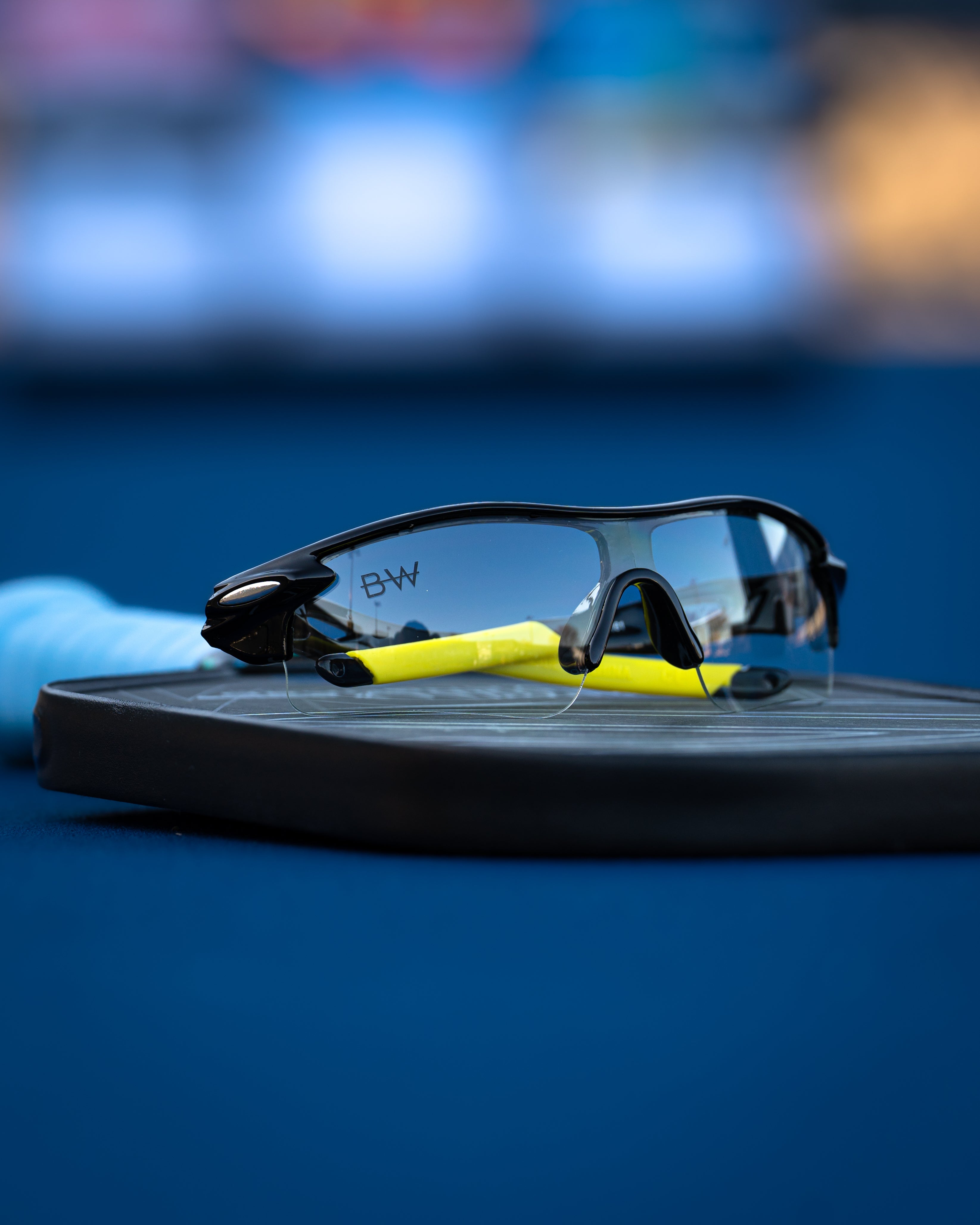
Why You Should Always Wear Eye Protection When Playing Pickleball
Share
Find Your Perfect Pickleball Glasses
Whether you need prescription (RX) or non-prescription glasses, our 2026 guide breaks down the top-performing models for clarity, comfort, and performance on every court.
Why You Should Always Wear Eye Protection When Playing Pickleball
Pickleball is fun, fast, social, and accessible to almost every skill level. But there is one part of the game that deserves much more attention: eye protection.
A pickleball can travel toward your face with very little warning, particularly during fast exchanges at the kitchen line. An opponent's paddle can also become a hazard, and outdoor play adds sunlight, glare, wind, dust, and debris to the mix.
Recent research has made the issue even harder to ignore. A 2025 study published in JAMA Ophthalmology found that pickleball-related ocular injuries increased substantially from 2021 through 2024, with researchers estimating more than 1,200 eye injuries associated with pickleball in 2024. The injuries included corneal abrasions, orbital fractures, retinal detachments, and other serious trauma.
The message is simple: eye protection should be treated as part of your pickleball equipment, not as an optional accessory.
In this guide, we'll explain why protective eyewear matters, what features to look for, and how prescription and non-prescription pickleball glasses can help you play with greater confidence.
The Biggest Reason to Wear Pickleball Eye Protection: Impact
1. Pickleballs Can Reach Your Face Before You Have Time to React
One of the biggest misconceptions about pickleball is that the ball is too light to cause meaningful damage.
Its lightweight construction doesn't eliminate the risk of an eye injury. During a fast exchange, the ball can travel directly toward a player's face from only a few feet away. At the kitchen line, there may be almost no time to move.
Deflections can make the situation even more unpredictable. A ball can change direction after contacting a paddle, net, court surface, or another player.
That means even experienced players can't simply rely on reaction time to protect their eyes.
2. Paddle Contact Is Another Risk
The ball isn't the only thing that can reach your face.
Pickleball is played in relatively close quarters, particularly during doubles and kitchen-line exchanges. Players can accidentally make contact with another player's paddle during a swing, movement, or attempted volley.
Protective eyewear creates an additional physical barrier between your eyes and these unexpected hazards.
3. Eye Injuries Can Be More Serious Than They Look
An impact around the eye may initially seem minor, but eye trauma can range from surface irritation and corneal abrasions to much more serious injuries.
That is why prevention matters. The goal of protective eyewear isn't to make you invincible. It is to reduce unnecessary exposure to an avoidable risk.
Current eye-safety recommendations also emphasize using sports-specific protective eyewear rather than assuming ordinary fashion sunglasses provide adequate impact protection.
What Makes Sports Eyewear Different From Regular Sunglasses?
Your everyday sunglasses may be excellent for driving, walking around town, or relaxing outdoors. That doesn't automatically make them appropriate for a fast-moving racket sport.
Pickleball eyewear should be selected with the demands of the sport in mind.
- Impact resistance: Helps provide protection from balls and accidental contact.
- Secure fit: Keeps the eyewear positioned during quick movement.
- Appropriate coverage: Helps shield the eye area from direct impacts and airborne debris.
- Optical clarity: Lets you track the ball without distracting distortion.
- UV protection: Important for players spending time outdoors.
- Comfort: Makes it more likely you'll actually keep the eyewear on throughout the match.
For players specifically looking for impact protection, polycarbonate is a commonly used lens material in sports eyewear because it combines low weight with strong impact resistance. The American Optometric Association also recommends polycarbonate protective eyewear for sports where eye injuries are possible.
Outdoor Pickleball Creates Additional Eye Risks
Impact protection is the biggest reason to wear protective eyewear, but outdoor players have another set of concerns.
UV Exposure
Hours spent playing outdoors mean repeated exposure to ultraviolet radiation. The CDC recommends wearing sunglasses that block at least 99% of UVA and UVB radiation as part of good eye-health practices.
For outdoor pickleball, look for eyewear that clearly states its UV protection rather than assuming every pair of sunglasses offers the same level of protection.
Glare
Bright sunlight can reflect from court surfaces and surrounding objects, making it harder to track the ball comfortably.
A suitable lens tint can reduce the discomfort caused by intense brightness while allowing you to maintain a clear view of the court.
Wind and Debris
Outdoor courts expose players to wind, dust, pollen, and other airborne particles. Protective eyewear can help create a barrier between these irritants and your eyes.
This is particularly useful during windy matches when keeping your eyes comfortable can become surprisingly difficult.
How Eye Protection Can Help You See More Comfortably
Eye protection isn't only about preventing an injury. The right pair can also make the visual experience of playing outdoors more comfortable.
When you're constantly squinting against bright sunlight, dealing with wind, or wiping dust from your eyes, you're adding distractions to an activity that already requires constant visual attention.
Good pickleball eyewear should help you focus on the ball, your opponent, and the court instead of thinking about your eyes.
Choose the Right Lens for Your Playing Environment
- Clear lenses: A practical choice for indoor courts, evening play, and lower-light conditions.
- Gray lenses: Useful for bright outdoor conditions while maintaining relatively natural color perception.
- Brown or contrast-enhancing tints: Can be useful for players who want more contrast in certain outdoor environments.
- Transition/photochromic lenses: Designed to adapt as lighting conditions change, making them useful for players who move between indoor and outdoor environments.
There isn't one universally perfect tint. Your best option depends on when you play, where you play, and how your eyes respond to different lighting conditions.
Do You Need Prescription Pickleball Glasses?
If you normally need prescription glasses, you shouldn't have to choose between clear vision and eye protection.
Prescription pickleball eyewear combines vision correction with a sport-oriented frame and lens setup, allowing you to see the ball clearly while maintaining protective coverage.
This can be especially valuable for players who don't want to rely on contact lenses during long matches or tournaments.
Crystal Wave II RX
The Crystal Wave II RX is designed for players who want prescription vision correction in a sport-focused frame. Its wrap-style design provides a performance-oriented fit for active play.
Zebra II RX
The Zebra II RX gives prescription-wearing players another option for combining corrective vision with pickleball-ready eyewear.
Gray Hound RX
The Gray Hound RX offers a neutral style for players who want prescription eyewear that can transition naturally from the court to everyday activities.
Shop Blinded Wear RX Pickleball Glasses →
Why Fit Matters Just as Much as Lens Quality
Protective eyewear only helps if you actually wear it.
If your glasses slide down your nose during every rally, pinch your temples, bounce when you move, or constantly need adjustment, they're going to become a distraction.
When choosing pickleball eyewear, look for:
- A stable bridge: Helps keep the frame positioned during movement.
- Secure temples: Reduces unwanted movement during quick lateral steps.
- A comfortable frame shape: Prevents unnecessary pressure during long sessions.
- Appropriate coverage: Helps protect the area around your eyes without restricting your vision.
- Lightweight construction: Makes extended wear more comfortable.
The best protective eyewear should eventually become something you stop thinking about.
Should You Wear Eye Protection Indoors?
Yes.
Indoor courts eliminate sunlight and some outdoor hazards, but they don't eliminate the possibility of an eye injury.
You still have a fast-moving pickleball, paddles, close-range exchanges, and unpredictable deflections.
For indoor play, clear sports lenses can provide protective coverage without unnecessarily darkening your view.
If you play both indoors and outdoors, you may prefer having different lens options—or choosing a lens system that works across multiple lighting environments.
What About Polarized Lenses?
Polarized sunglasses are popular because they can significantly reduce certain types of reflected glare. However, polarization isn't automatically the best choice for every pickleball player.
Pickleball requires you to constantly interpret visual information, including ball movement, spin, bounce, shadows, and the relationship between the ball and court.
Some players prefer non-polarized lenses because they provide a more consistent view of the playing environment.
Blinded Wear's pickleball eyewear is designed around non-polarized lenses, with the goal of maintaining natural visual cues while providing outdoor protection and comfortable vision.
If you have always played in polarized sunglasses and haven't experienced any issues, there's no reason to assume you must change. But if you find polarization distracting on court, non-polarized sports eyewear is worth considering.
How Blinded Wear Fits Into Your Pickleball Setup
At Blinded Wear Co., the goal is to make protective eyewear something players actually want to wear.
The collection includes both prescription and non-prescription options designed around active lifestyles, giving players choices based on their vision needs and playing environment.
Features vary by model and lens configuration, but the collection is built around the essentials pickleball players care about: comfortable fit, clear vision, outdoor protection, and sport-ready design.
For players who need vision correction, RX options make it possible to combine prescription lenses with a dedicated pickleball frame rather than relying on ordinary everyday eyewear.
Explore Non-RX Pickleball Eyewear →
Eye Protection Doesn't Have to Look Like Safety Equipment
One reason some players avoid protective eyewear is simple: they don't like how traditional sports goggles look.
Modern pickleball eyewear can combine protective function with a frame that looks natural on and off the court.
That matters because the more comfortable and wearable your glasses feel, the more likely you are to use them consistently.
For recreational players, competitive athletes, coaches, and tournament travelers, the ideal pair should feel like part of your normal gear—not something you only remember after an accident.
How to Make Eye Protection a Habit
The easiest way to wear eye protection consistently is to make it part of your normal pre-game routine.
Keep your pickleball glasses with your paddle, shoes, balls, and other court equipment. Put them on before the first serve rather than waiting until the sun gets bright or the game becomes competitive.
That small habit can make protective eyewear feel as normal as tying your shoes.
A Simple Pickleball Eye-Safety Checklist
- Wear sport-appropriate eye protection every time you play.
- Choose eyewear with appropriate impact protection for racket sports.
- Use reliable UV protection for outdoor play.
- Select a lens tint appropriate for your playing conditions.
- Make sure the frame fits securely without creating excessive pressure.
- Keep your lenses clean so dirt and smudges don't interfere with vision.
- Replace eyewear if the lens or frame becomes damaged or compromised.
Frequently Asked Questions About Pickleball Eye Protection
Do I really need eye protection when playing pickleball?
Yes. Pickleballs and paddles can reach the face quickly, particularly during close-range exchanges. Protective sports eyewear adds a physical barrier and can also provide UV and environmental protection when playing outdoors.
Can a pickleball really injure your eye?
Yes. Pickleball-related eye injuries can range from relatively minor injuries such as corneal abrasions to more serious trauma. Recent research has documented a significant increase in pickleball-related ocular injuries in the United States.
What type of lenses are best for pickleball?
The best lens depends on your environment. Clear lenses are useful indoors and in low light, while gray or other outdoor tints can be more comfortable in bright conditions. Transition lenses can be useful when lighting changes throughout a session.
Are polycarbonate lenses good for pickleball?
Polycarbonate is commonly used for sports eyewear because it is lightweight and impact-resistant. When choosing protective eyewear, look for products specifically designed and rated for the intended sport or activity rather than relying solely on the lens material.
Should I wear protective eyewear indoors?
Yes. Indoor courts still involve fast-moving balls, paddles, and close-range play. Clear protective sports eyewear can provide protection without unnecessarily reducing visibility.
Can I get prescription pickleball glasses?
Yes. Blinded Wear offers RX pickleball eyewear for players who need vision correction. Prescription options allow players to combine corrective vision with sport-oriented eyewear.
Are Blinded Wear pickleball glasses polarized?
Blinded Wear's pickleball eyewear is designed around non-polarized lenses. This approach is intended to maintain natural visual cues that can be important when tracking the ball and reading the court.
What should I do if I get hit in the eye while playing?
If you experience an eye injury, significant pain, vision changes, flashes, new floaters, bleeding, or other concerning symptoms after an impact, seek prompt evaluation from an eye-care professional or appropriate medical provider. Don't assume an injury is minor simply because the outside of the eye looks normal.
Related Pickleball Eyewear Guides
Want to learn more before choosing your next pair? Explore these related Blinded Wear resources:
- Best Pickleball Eyewear for Outdoor Courts
- Polarized vs. Non-Polarized Eyewear for Pickleball: Which Is Best?
- Best RX Pickleball Glasses: Buyer's Guide
Find Your Pickleball Eye Protection
You don't need to wait until an accident happens to take eye safety seriously.
Whether you're playing recreational doubles, competing in tournaments, or spending hours at the courts every week, protective eyewear is a simple addition to your equipment that can help reduce unnecessary risk while keeping your vision comfortable.
Protect your eyes before the first serve—not after the first accident.
Blinded Wear offers prescription and non-prescription pickleball eyewear designed for players who want protection, comfort, and sport-ready style in one pair.
👉 Shop RX Pickleball Glasses
👉 Shop Non-RX Pickleball Glasses
👉 Take the Pickleball Sunglasses Quiz
Sources for Pickleball Eye Safety
- JAMA Ophthalmology: Pickleball-Related Ocular Injuries Among Patients Presenting to Emergency Departments
- CDC: Taking Care of Your Eyes
- American Optometric Association: Sports Eye Safety
Note: Protective eyewear can reduce risk, but no eyewear can guarantee prevention of every eye injury. Choose equipment appropriate for your activity and follow the recommendations of qualified eye-care professionals.